
Restaurant roof work is scheduled around the prep crew, the lunch rush and the delivery that arrives at the back door before any of them. For an owner or property manager in Lee's Summit, MO, the first conversation is about hours and about the exhaust fans, because the kitchen decides how the roof ages and when anyone can be on it.
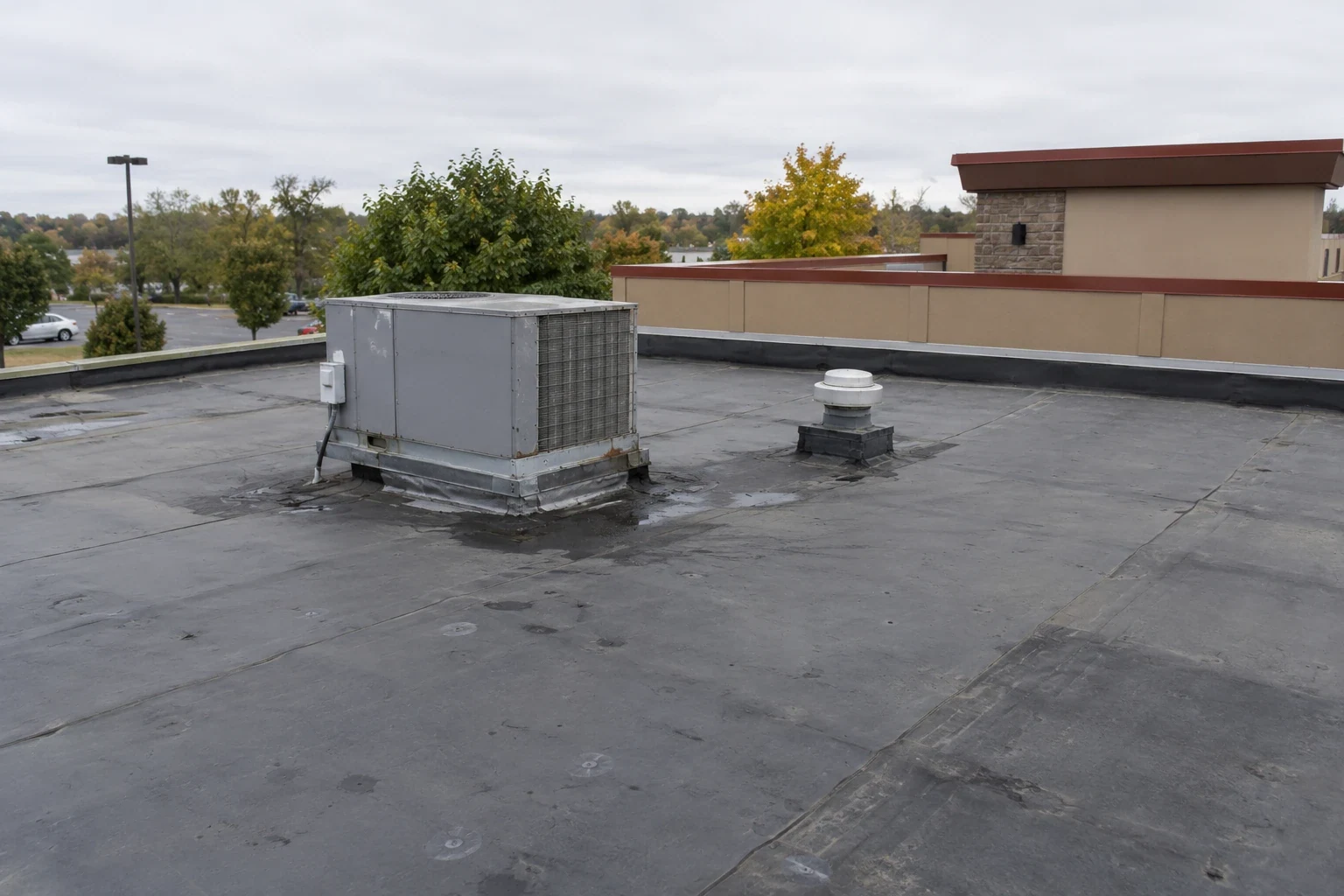
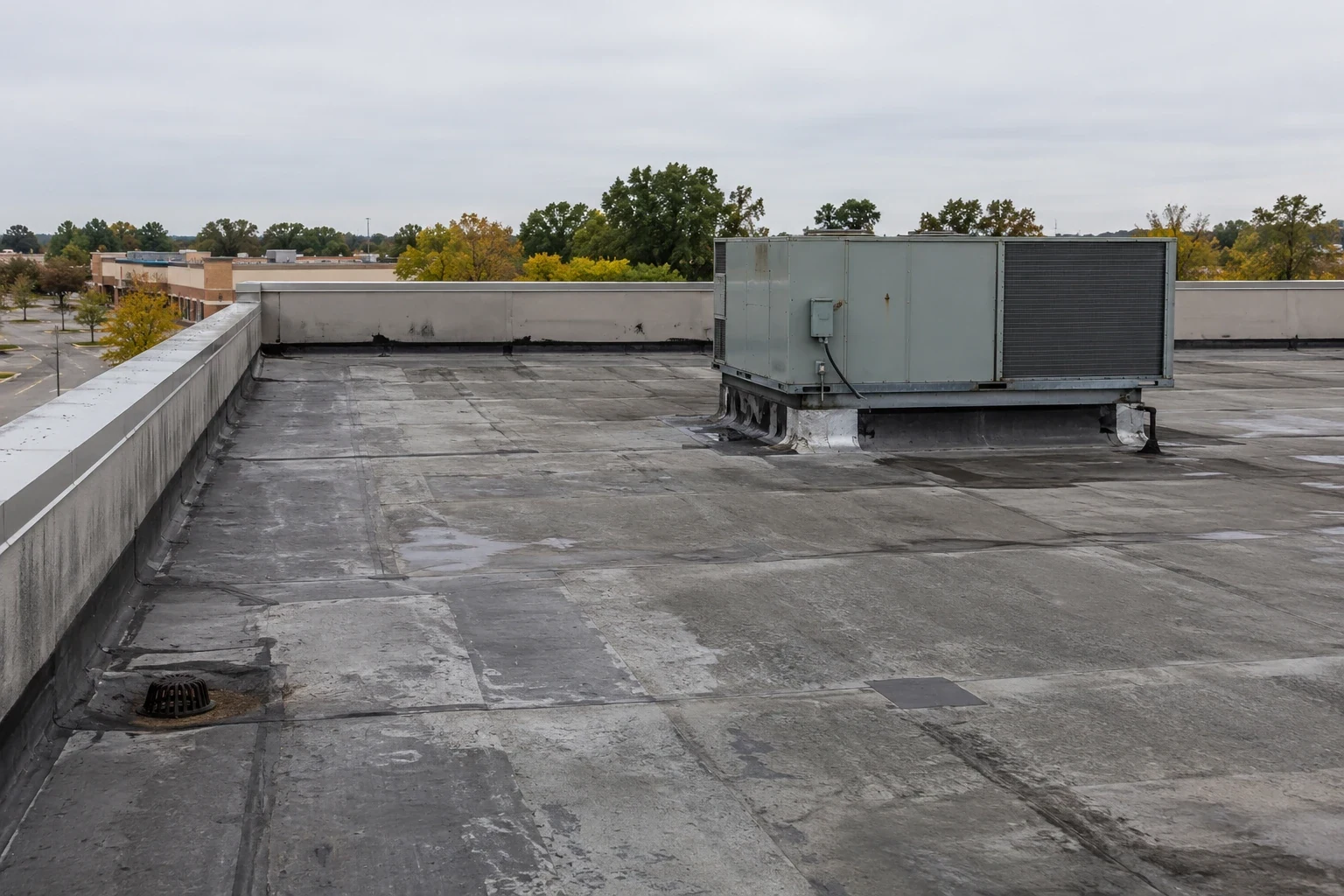
The roof condition that sets the first move is usually the ring of stained, soft membrane around a fan. We start there, then work out to the drains and the parapet.
The notice to the kitchen manager names the roof area, the days and the noise window. Work starts in the quiet part of the day, usually before prep, and stages material away from the front door and the delivery entrance. Hot work stays away from make-up air and fresh-air intakes.
For a replacement, the roof is divided into sections the crew can close before the evening service. The kitchen manager tells us which hours the exhaust must keep running. Hoods and fire suppression stay in service, and a kitchen that must close for a day gets the date early enough to order food.
Trash pickup and deliveries continue during the project. The crew's hoist and bins stay away from the delivery door and the dumpster enclosure. The sweep at the end of each shift covers the lot, the patio and the gutters, and any grease removed from the roof is bagged and taken off site, not rinsed into a lot drain.
Exhaust fans push a fine mist of cooking oil onto the roof around the fan. The film softens certain adhesives, stains the surface and collects dirt. A patch laid over a greasy surface will not bond, and a seam that touches grease lifts at the edge long before the rest of the seam shows age.
We find every discharge point, mark it on the roof drawing and clean the area with a degreaser matched to the membrane. The repair boundary clears the stained zone. A catch tray under the discharge slows the next round, and fan curbs get a sealant check because heat and vibration work at them every day.
Outdoor dining adds equipment too. Patio heaters, misters and string-light poles sometimes mount to the roof or parapet, and each mount is a penetration. We list them on the roof drawing and check the sealant at every base, because a mount that moves in the wind opens its own flashing.
A leak in the kitchen is a nuisance. A leak over a table costs the evening. The dining room often has a suspended ceiling and light fixtures, so water that enters at a wall flashing or a vent boot can follow a wire or pipe a long way before it shows.
We trace the water path from the interior stain back toward the roof, checking parapet flashing, skylights, rooftop heaters, pipe boots and drains along the line. Photographs mark each suspect spot with a distance from a fixed point. For an urgent leak, a temporary dry-in goes on the same day and the permanent repair waits for suitable weather.
Skylights over a dining room are a common source. Glazing seals age in the sun and curbs move with the heat. We check the seals, the curb flashing and the drain path below, and we write down whether the skylight is the leak or just the nearest object to it.
Storm lines arrive in spring. Lee's Summit takes in about 38 inches of precipitation a year, and the forecast office at Pleasant Hill issued a warning on April 27, 2024 that expected storm damage to roofs, siding and trees. A restaurant on a pad site can have a small roof with a parapet on three sides, so a single blocked scupper can hold a pond against the wall.
Winter ice matters too. A 2002 ice storm cut power to Kansas City residents for days or weeks, and ice in a scupper can push water into the wall of a small roof. We clear drains and scuppers before each season and look for low areas near the parapet.
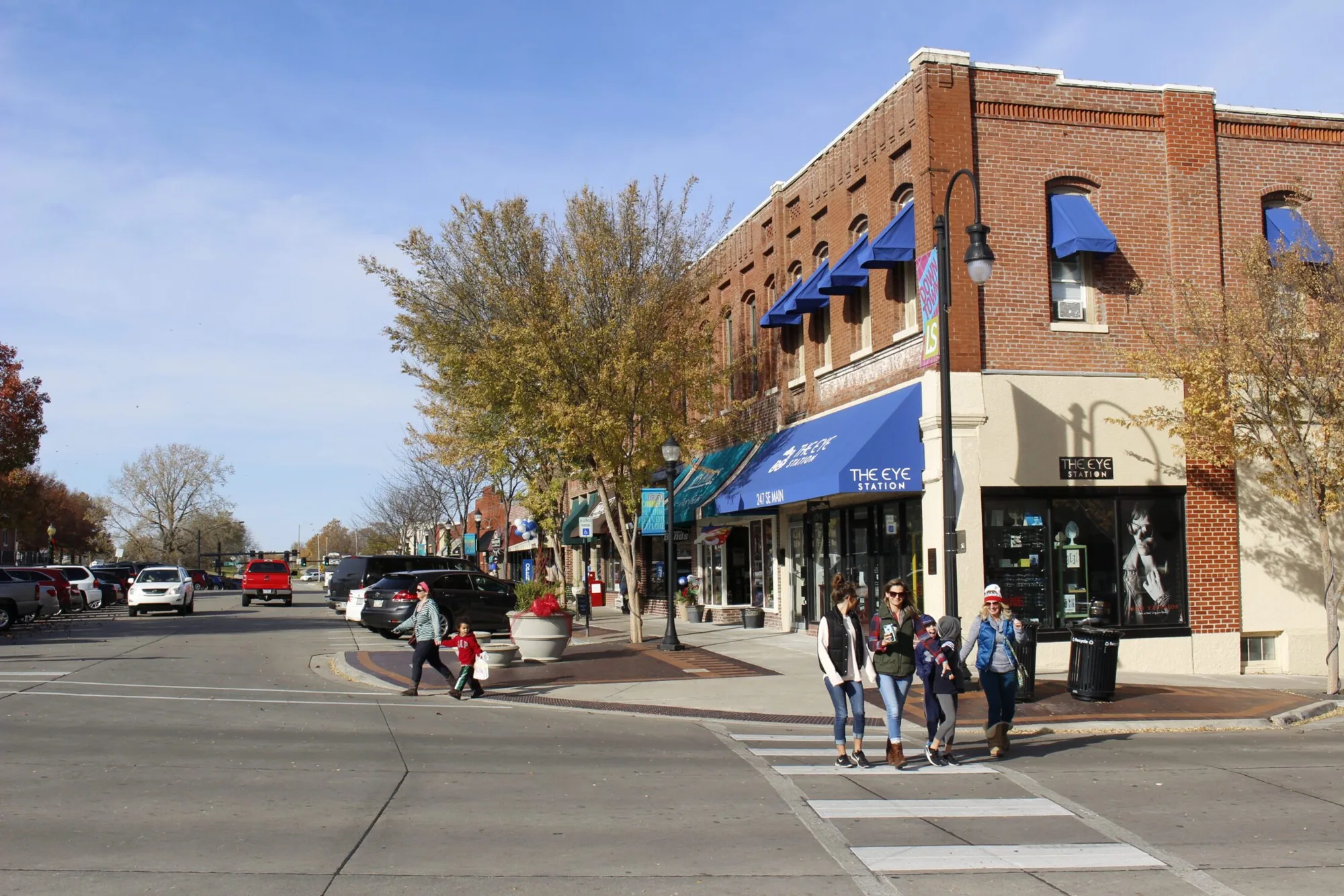
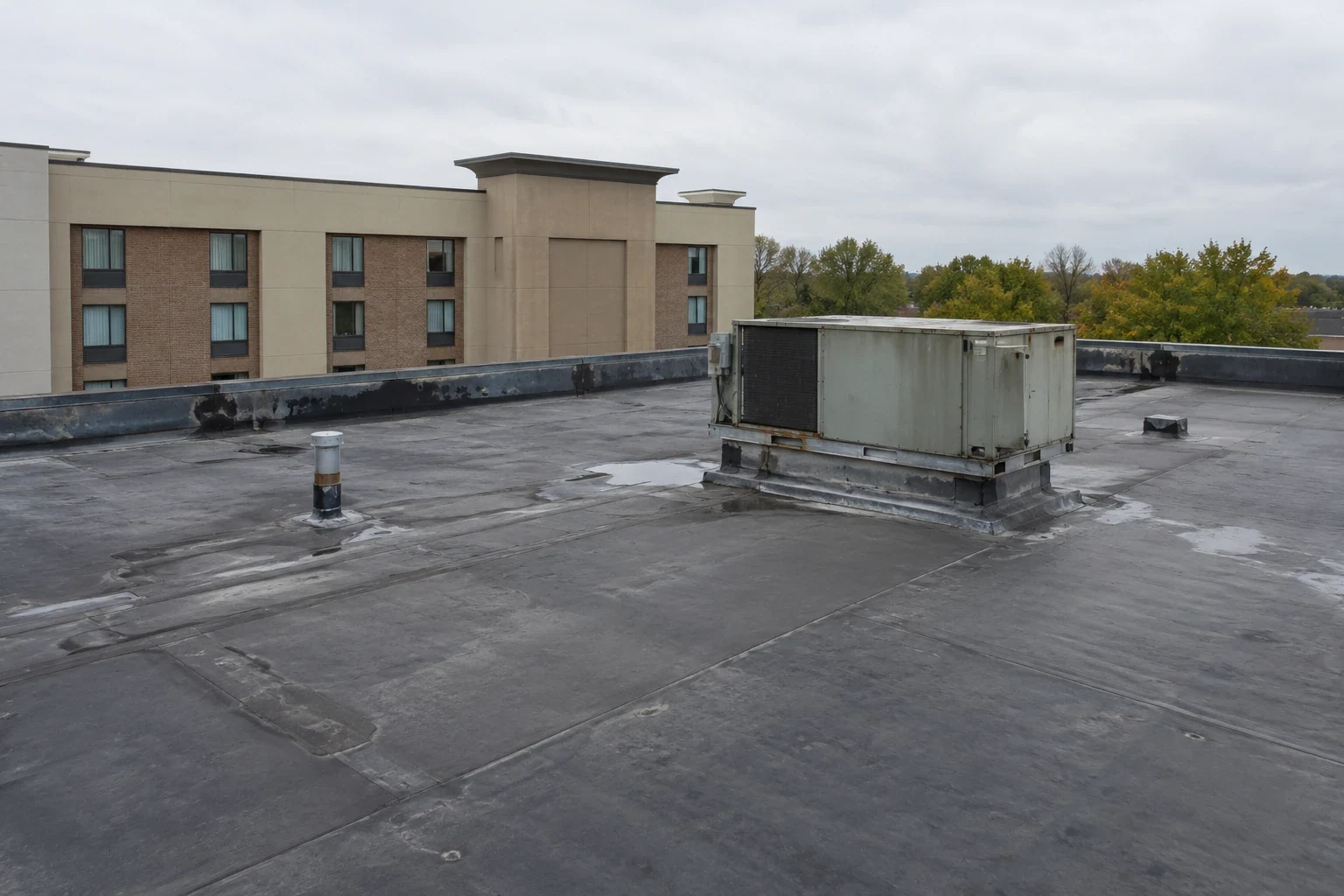
A restaurant in Lee's Summit may sit on a pad along I-470, US 50 or MO 291, or in an older storefront in the Downtown Historic District, where Italianate and Moderne commercial buildings date from 1850 to 1974. A restaurant in Downtown Lee's Summit may share walls and parapets with neighbors, and one in Martin City is part of a Kansas City district with its own improvement district. In either case the plan names the one place a lift can stand and the sidewalk that is covered. A restaurant in a strip is part of a shopping center roof, and one inside a hotel is part of a hotel roof.
Patio roofs and covered entries have their own drains and their own fasteners. We include them in the walk and note any that ponds above a table or a door. Heat lamps and fans hung from a patio roof add weight and holes that belong on the roof drawing.
Restaurant roofs are usually small enough that replacement can be broken into short sections, which makes the decision more about condition than disruption. A sound but stained membrane can take a coating restoration once cleaned. A reading that shows wet insulation points to replacing the wet areas, and a contained repair suits an isolated failed detail.
Each path is priced on surface area, insulation depth, the number of openings to flash and the route the crew takes to the roof. Which code book applies depends on when the project is submitted, since October 1, 2026 is the line between the city's 2024 and 2018 I-Codes, and the date goes on the plan.
Timing follows the restaurant's calendar. Product lead times stretch for weeks, so ordering happens ahead of the quiet season. Storm days are built into the schedule, and the scope sheet allows for them.
The owner is handed an image set by phase, a roof drawing marking every fan, curb and vent, test results, product sheets and a dated list of open items. Warranty notice dates are filed with them where a warranty applies. A lender or landlord who asks for roof documentation can be given the same file, and the deferred items on it carry a place and a date for the next look.
The ring around each exhaust fan, for staining, softness and loose edges. That is where the roof ages fastest.
Often, in sections and in the quiet hours. Hoods keep running, intakes are protected and each section is closed before service.
At the flashing, boots and drains along the line from the stain back toward the roof, then at the nearest low spot.
Oil on the surface keeps adhesive from bonding. We clean first and widen the repair boundary past the stain.
We work with whoever holds responsibility under the lease, and the written report gives both sides the same photographs.
Send the address list, kitchen hours and any open leak reports. We will walk the roof with you and write a sequence plan before any scope is priced.
Request a Roof Assessment