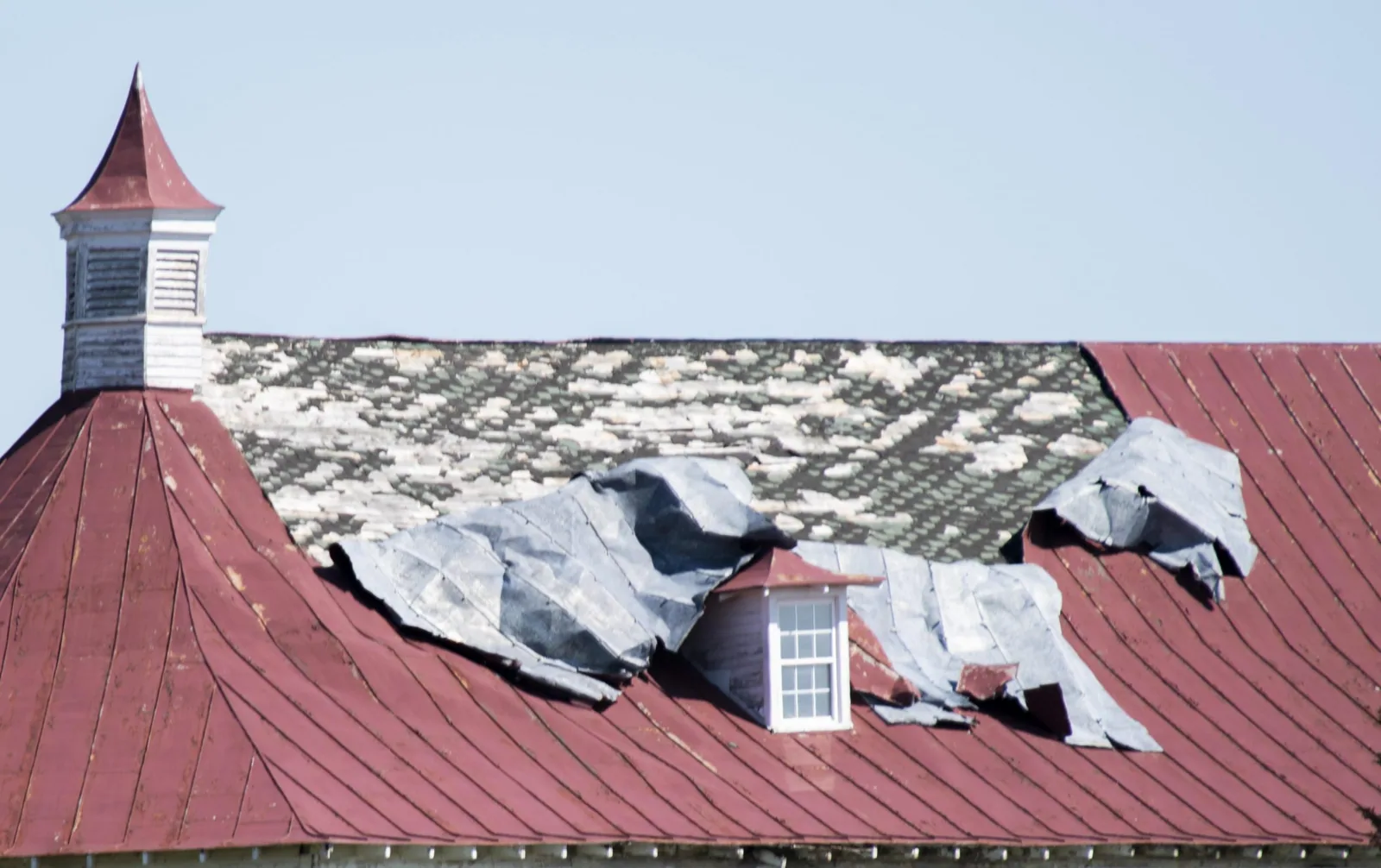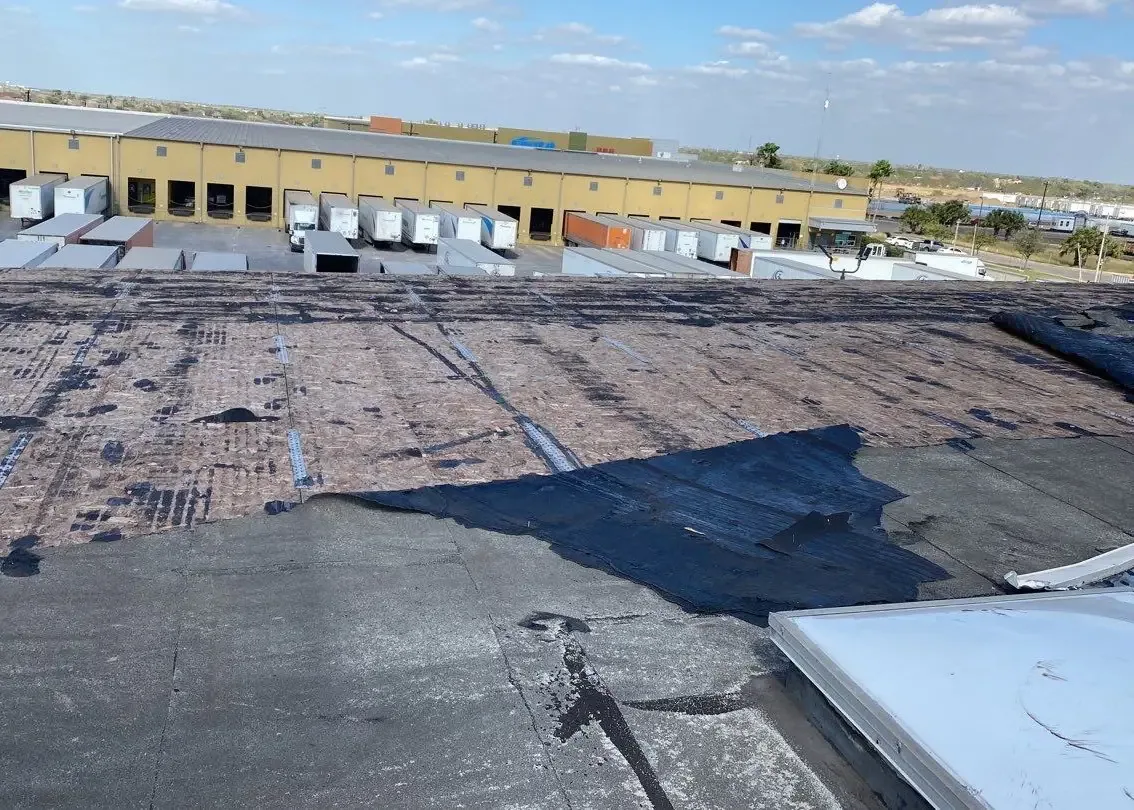

Damage repair starts with the dry-in point: the line after which no section stays open past the day. Before the repair is designed, the crew needs to know which tenants have been told, which roof hatch opens above a working suite and where the debris will travel. In Lee's Summit, MO, spring severe thunderstorm warnings set that urgency. The weather service warning of April 27, 2024 cited 60 mph gusts and penny-size hail and told the city to expect damage to roofs, siding and trees. A roof opened under a forecast like that has to be closed the same day.
Spring storms put the perimeter and the surface at risk first. Wind damage roof repair starts at the edges and rooftop equipment, hail damage roof repair starts with test squares and impact marks, and tornado damage roof repair starts with a safe-entry decision. On March 6, 2017 an EF3 tornado near the western edge of Oak Grove damaged 483 houses plus 12 businesses, which shows how fast a debris field can change a roof plan.
Lee's Summit has logged 108F at the top and minus 25F at the bottom, and a typical year brings about 4.5 inches of snow. Snow and ice roof damage repair looks at drains, gutters and edges where meltwater refreezes, and heat and UV damage repair looks at the surface that bakes through July, when the mean high is 88F.
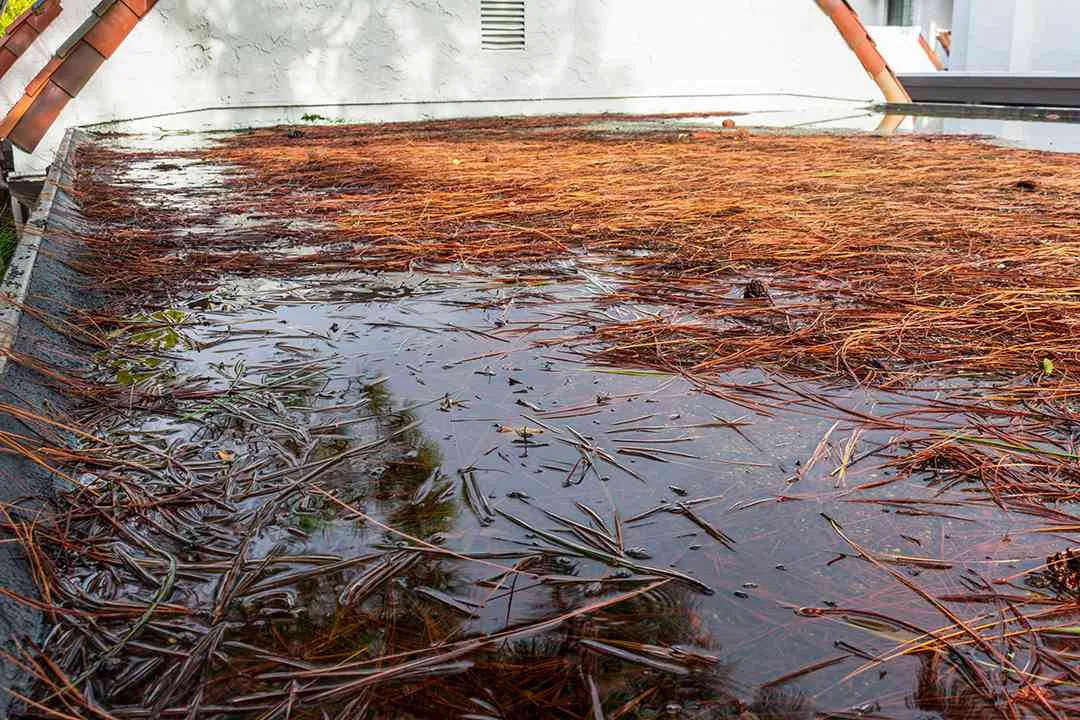
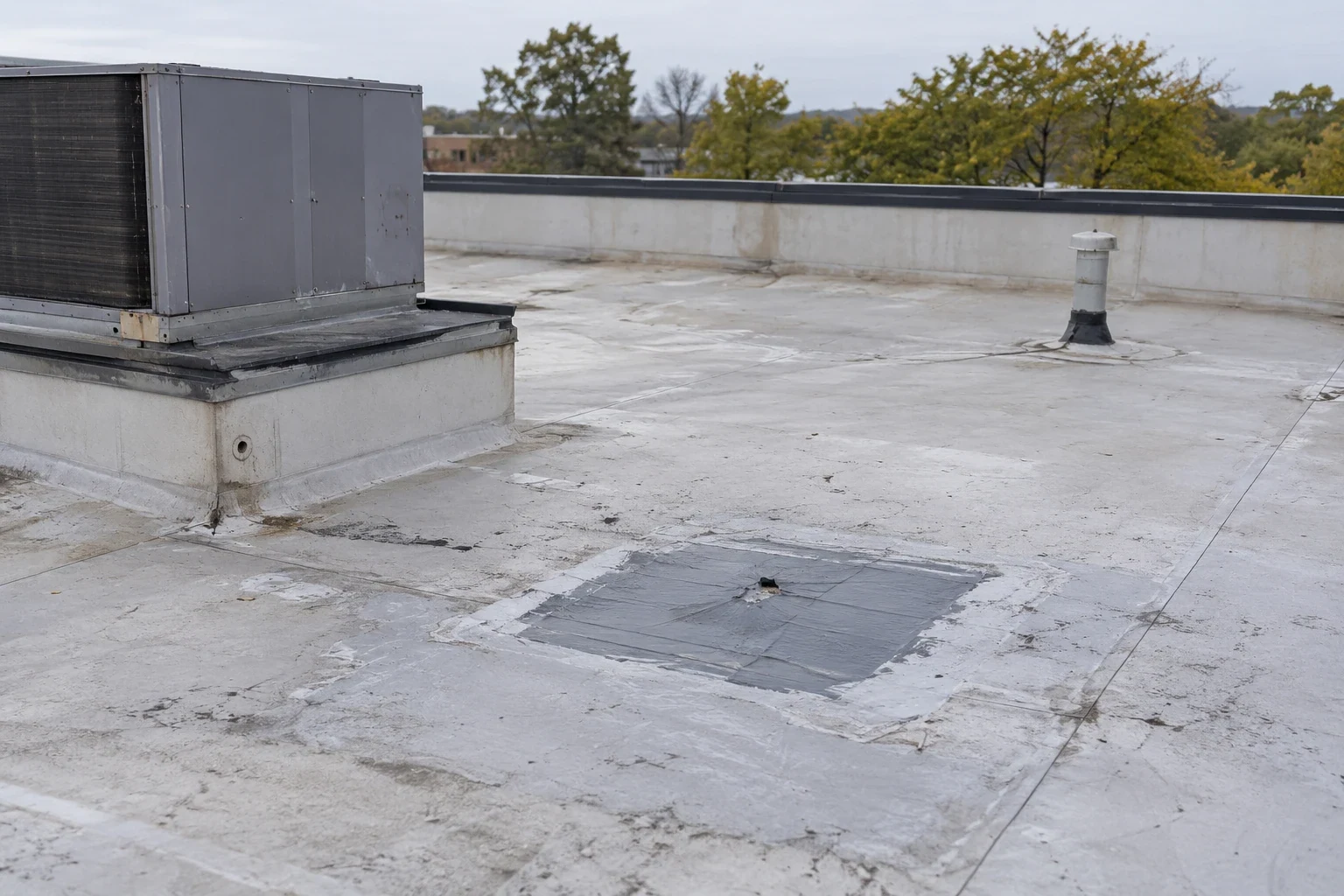
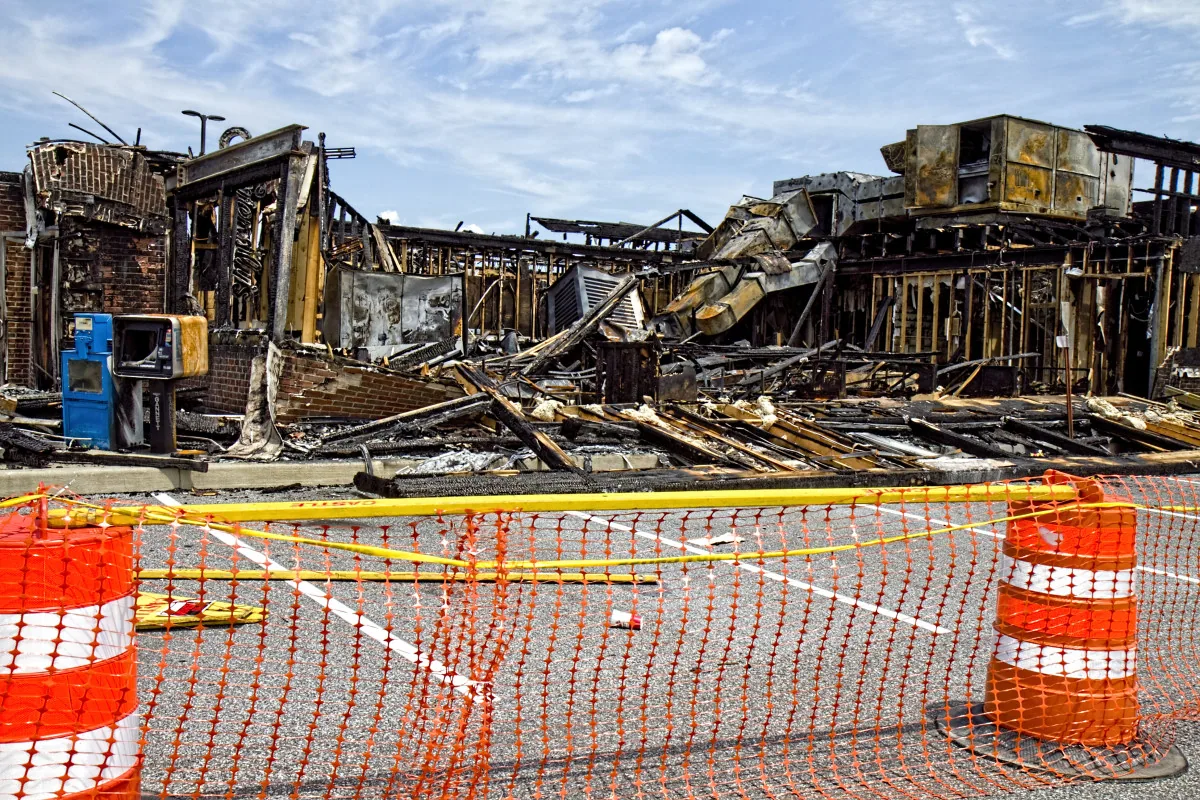
Not all damage comes from a storm. Ponding water roof repair, flashing failure repair, seam failure repair and membrane puncture repair deal with slow failures that appear as a stain after the storm that finally found them. Fire damage roof repair adds a structural check before any crew steps on the roof.
Emergency response covers every hour of the week, and the first visit makes the opening weathertight. A turnover package then logs each opened and closed area and sets the checks for the next walk. Owners with buildings in Lee's Summit and Blue Springs can keep the records in one format.
The opening is covered or sealed, interior areas are protected and photographs are taken. The permanent repair is written after the roof is dry enough to walk.
Each is labeled in the photo record and on the roof drawing. The permanent scope replaces the temporary work and states what is removed.
When cores show wet insulation beyond a clean cut line, or when the membrane is too worn to hold repairs. Dry material around a bounded area keeps the work to a repair.
It gets shorter and more specific. The notice names the area, the hours and the entry route, and the property manager approves it before it goes out.