Planned repair is the work a property manager schedules before the leak call, and it is the least expensive roofing a building will ever buy. In Lee's Summit, MO that means working through a roof area by area: seams that have opened, flashings that have pulled from a wall, sealant that has dried at a pipe, and membrane that has been punctured by a service technician's boot. Each is a small defect with a short repair, and each becomes a larger one if it sits through a season. Across Lee's Summit, from the I-470 and US 50 corridors to the older commercial blocks of the downtown historic district, the same small list shows up on roofs of very different ages.
We write the repair as a list the manager can read, approve and track. Every item carries a location on the roof drawing, a photograph, a method and a status, so the work can be done in a single visit and checked against the list on the way out.
The walk begins at the roof access point and follows the water. Drains and scuppers first, because a blocked outlet explains half of what is found elsewhere. Then walls and parapets, where flashing laps and counterflashing live. Then penetrations, curbs and rooftop units, and last the open field of the membrane.
Reading in that order lets us separate cause from symptom. A split seam beside a drain may be a ponding problem. A stain below a curb may be the curb flashing, or condensation inside the unit. A repair that treats the symptom fixes the interior stain for a month; a repair that treats the cause fixes the leak. When water is already entering, leak tracing runs alongside the walk so the active entry point is closed first.
Single-ply seams are either heat-welded or adhered, and each fails in its own way. A weld fails when it was cold, contaminated or under tension. An adhered seam fails when the adhesive aged or the lap was not rolled out. We probe every seam on the walk, mark the open ones, clean the surfaces, and re-weld or re-adhere to the manufacturer's method, using a cover strip where the original lap is too narrow to rework.
On TPO and similar membranes, probe results are written against the roof drawing so repeated failures along a single run can be seen as a pattern. A pattern along one line suggests movement in the deck or a fastening problem, not a bad day of welding.
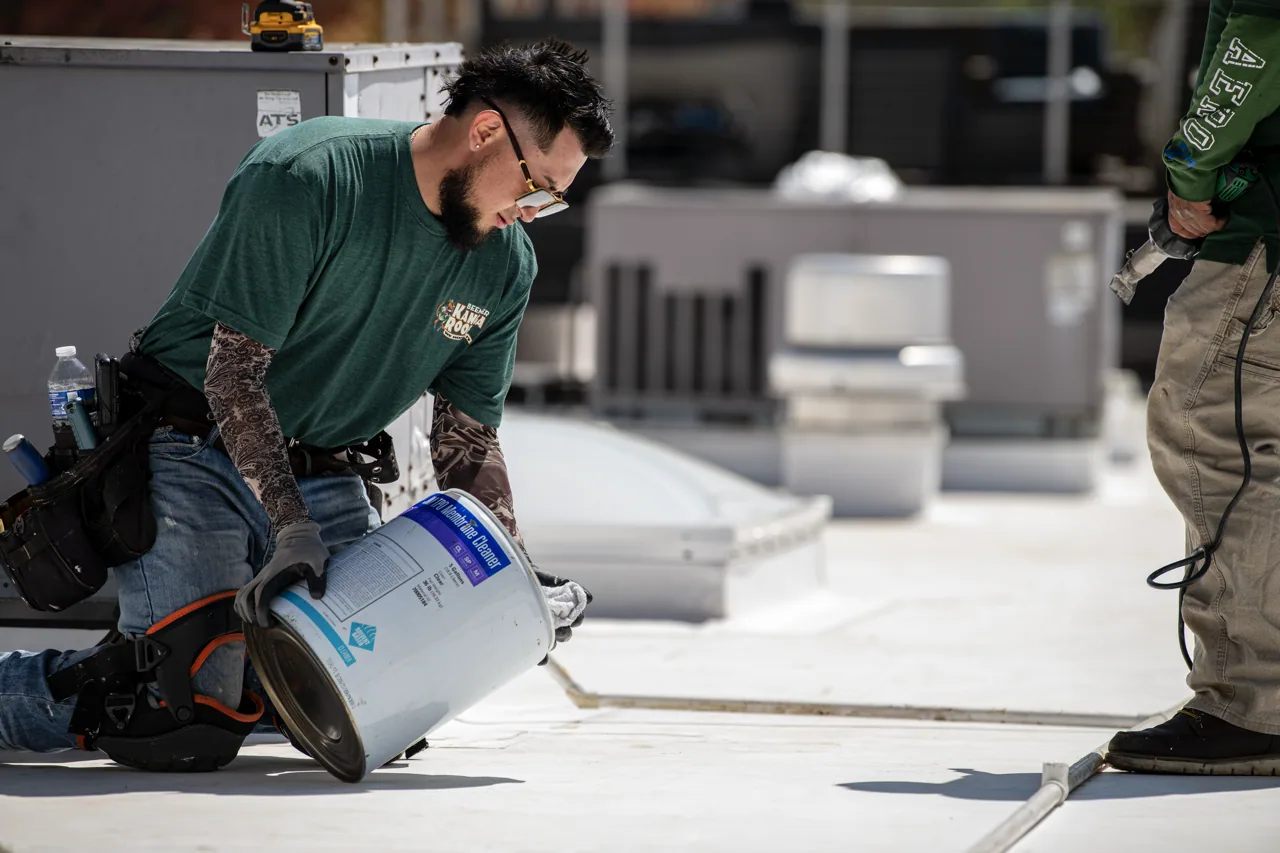
Flashing is where most low-slope roofs actually leak. Walls expand and contract against the roof, counterflashing sheds sealant, and pipe boots crack in sun. We replace sealant that has dried out, reset termination bars, rebuild corners with pre-formed pieces where possible, and re-lap base flashing onto the field membrane with the right primer and cleaner.
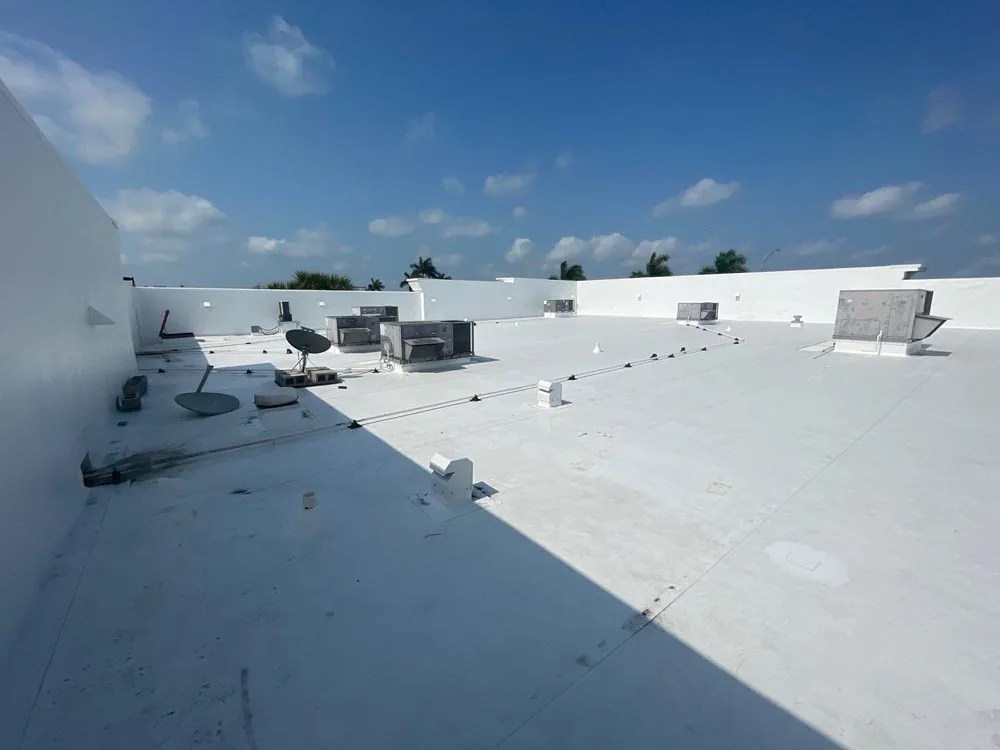
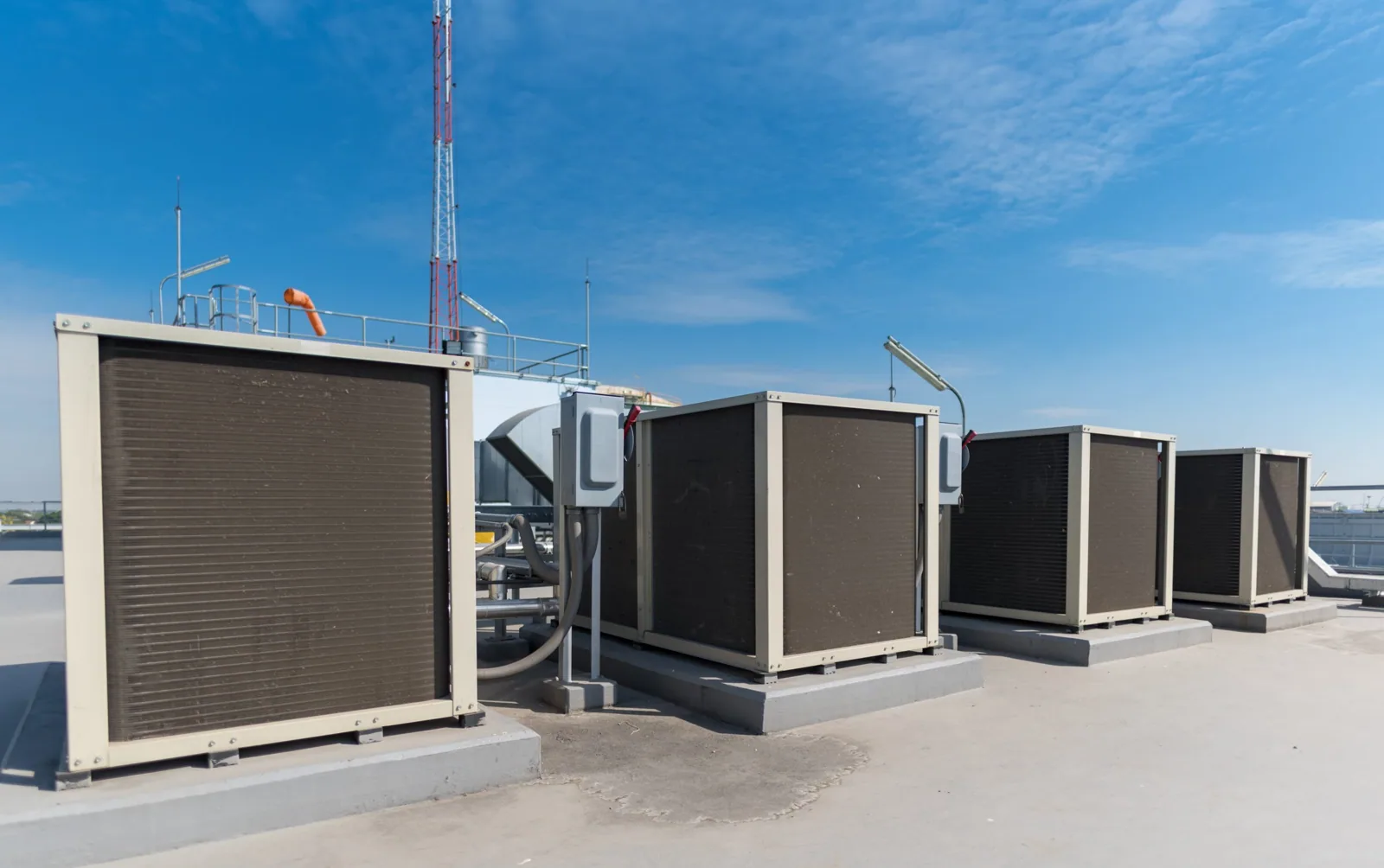
Rooftop equipment has its own demands. Maintenance traffic around equipment curbs is frequent, so walkway pads are added where technicians cross the roof, and loose conduit or refrigerant lines are supported so they do not rub through the membrane. Penetrations that serve abandoned equipment are removed and the opening patched, not capped with a bucket of sealant. Where a repair is only one of several defects on a failing edge, flashing failure repair is scoped as its own item so metal, termination and membrane are replaced together.
Punctures come from foot traffic, dropped tools and tree limbs, and are patched with the same material as the roof, welded or adhered over cleaned membrane. Blisters are examined before they are touched, since a blister over wet insulation is a different repair from one over dry insulation. A large area of wet material means the insulation is removed and replaced before the patch closes it.
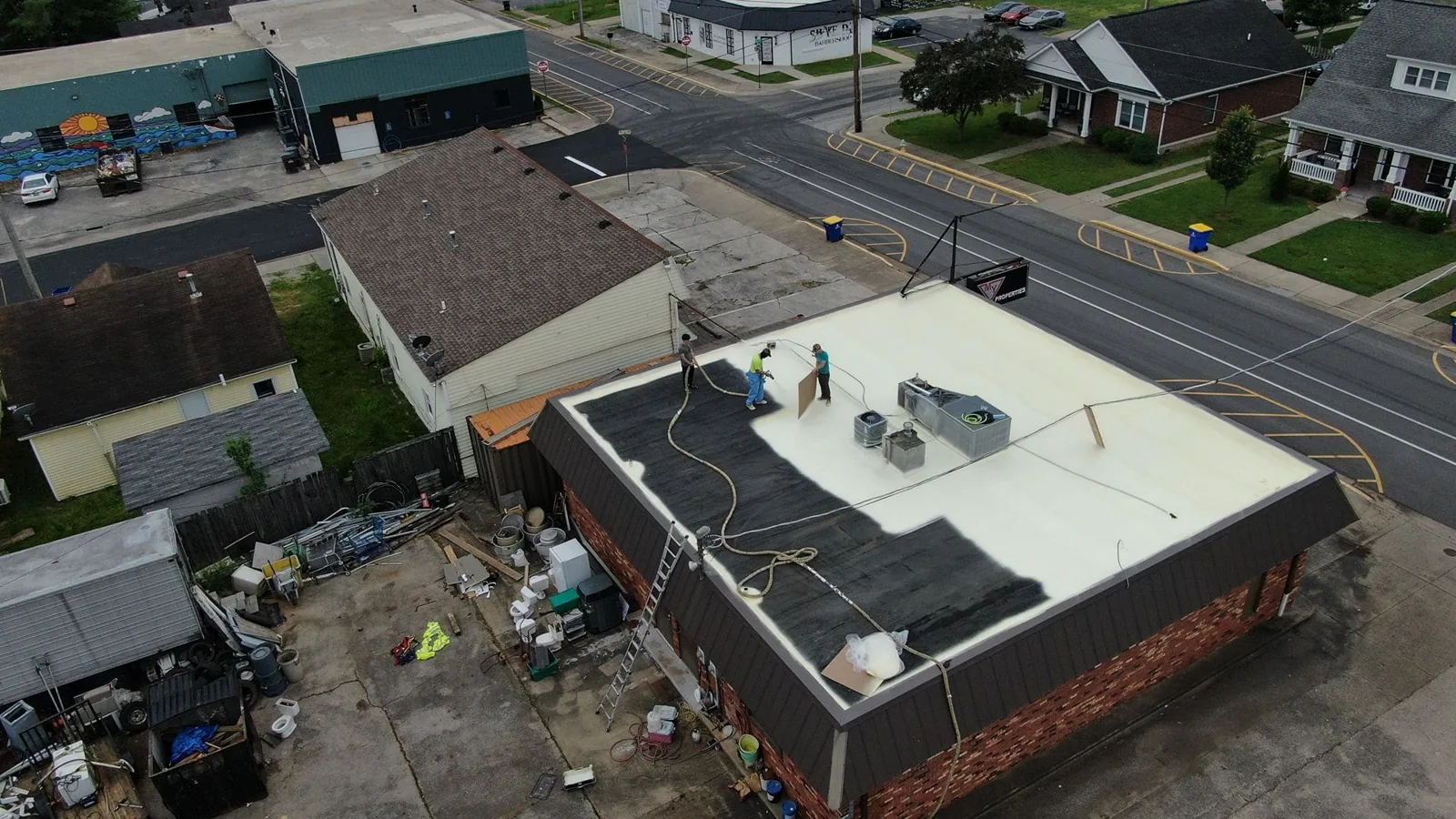
Surface wear on modified bitumen and built-up roofs shows up as exposed felts and lost granules. A localized repair with a new cap sheet and primer can renew those areas, and a coating restoration may follow when the wear is general across the field.
Repair timing in the Kansas City area follows the weather calendar. In Lee's Summit a cold January afternoon tops out near 39F and a July afternoon near 88F, with roughly 38 inches of precipitation across the year, so cold-weather adhesives and hot-weather welding both have working limits. Many seam and flashing repairs are best done in the shoulder months, and winter repairs are limited to temporary measures that hold until the temperature allows a permanent one.
The Pleasant Hill office of the National Weather Service issued a warning on April 27, 2024 that named Lee's Summit and warned of roof, siding and tree damage in a line of storms. A repair list completed in March gives a building a better chance of passing a storm line in April than a list written after one.
When the visit ends, the manager receives the annotated roof drawing with every repair, the before and after photographs, and a note on what was left alone and why. Items we could not complete in one visit, such as flashing that needs a mason or a unit that needs lifting, are listed with the trade that must act and a target date.
That file is the working history of the roof. It supports a warranty claim, an insurance conversation after a hail event, or the capital plan that eventually decides when the roof is replaced. Our roof condition reports use the same format, so the repair record and the condition record read as a single document.
Count the repair calls and the cost of tenant disruption, then compare against a written condition report prepared for the whole roof area, with photographs at each defect and a rating for the remaining service life of each assembly. If the same details fail year after year, or if wet insulation covers a large share of the field, replacement is closer than it looks. A scatter of unrelated small defects points to repair.
Temporary measures, yes: sealing, tarping or patching with cold-rated products. Permanent seam welds and adhesive work need temperatures the manufacturer allows, so we hold those to a mild day. If a leak is active and tenants are affected, stopping the water comes ahead of the ideal repair window.
The lease usually sets that, and the roof drawing helps. We photograph and map the damage, patch it, and give the manager the record to take to the tenant or the service company. Walkway pads around equipment reduce the odds of a repeat.
A planned list is priced by item and done in daylight with the right materials, while an emergency call often means after-hours labor and temporary measures that later need to be redone. Staying ahead of leaks also protects ceiling tile, insulation and stored goods.
Sealant is a short-term hold for a termination that can be resealed, such as a counterflashing joint, but it is a poor answer to a flashing that has pulled from the wall or cracked. Those need reset metal or new base flashing, and we mark which condition applies at each location.
Send the leak reports, the roof plan and your tenant hours. We will walk the roof, map each defect and return a written repair list with a method for every item.
Request a Roof Assessment