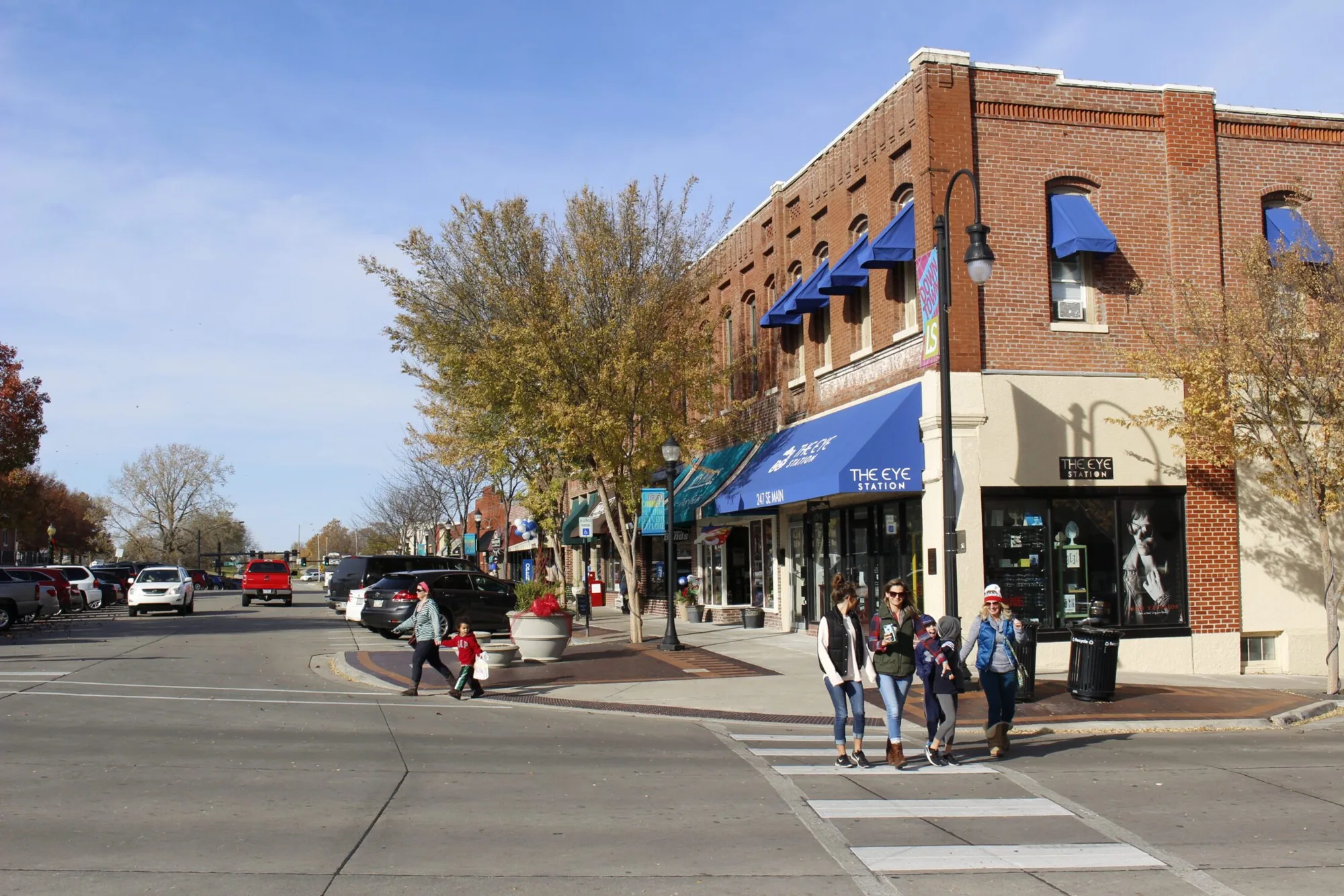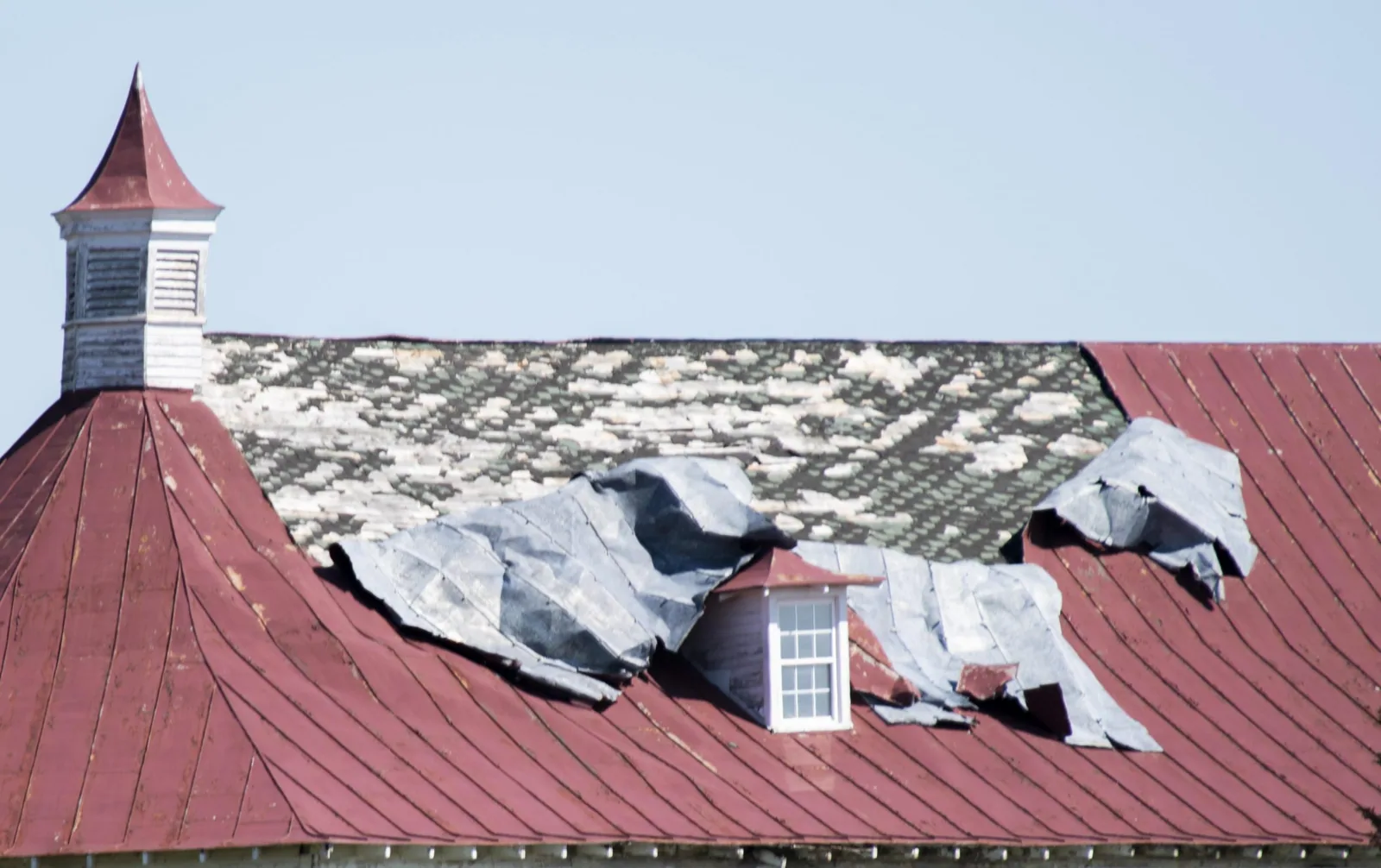

A restaurant roof in Martin City, Kansas City, MO has a service calendar that the crew has to respect: lunch prep, the dinner rush, a delivery at the back door and an exhaust fan that cannot be shut down at noon. The neighborhood's restaurants and businesses are organized in the Martin City Community Improvement District, which funds street and streetscape work, so sidewalks and curb lines may also be in motion. Roof work starts with a notice to the staff and a route for the trucks that avoids all of it.
Roof condition decides the first move. Grease at an exhaust fan, ponding near a drain or an open seam at a curb each call for a different repair, and the day-one site walk records which applies.
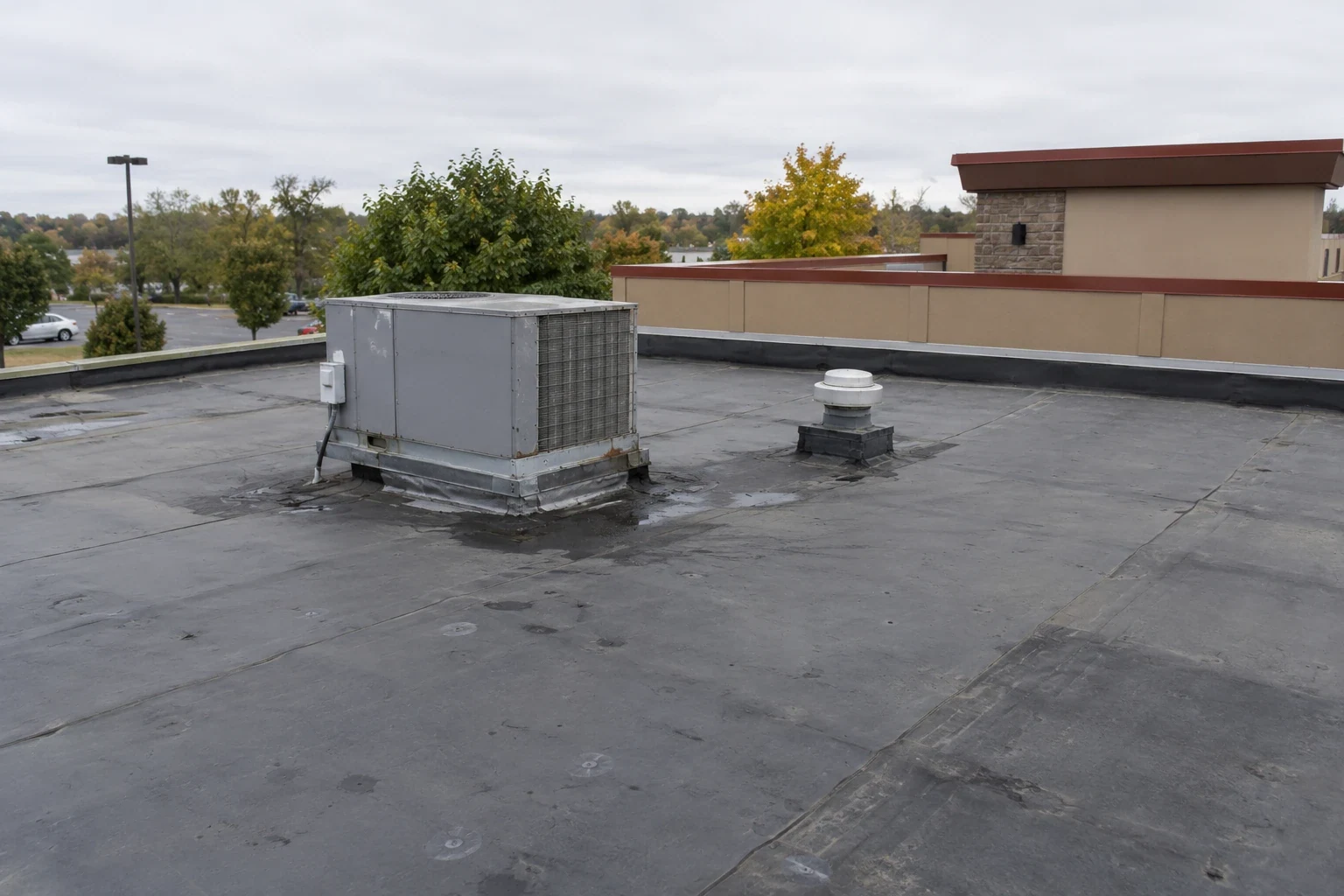
A restaurant roof carries kitchen exhaust, makeup air and often a grease containment tray. Work around those units is scheduled for the quiet part of the day, usually mid-afternoon or after closing, and the manager decides when the exhaust can be off. The hatch or ladder to the roof is logged, and kitchen staff are told when the crew is above them.
Small businesses beside restaurants have their own hours. The notice lists each door that may be affected, the hours of noise and a person to call. Plans for a street-front building include the sidewalk side, where the hoist and any fencing meet the public way.
Deliveries to the roof are planned like deliveries to the kitchen. Pallets arrive on a quiet morning, the truck parks where it will not block the service door, and the hoist lifts only what the crew installs that day. Trash and debris leave through an enclosed chute, away from outdoor seating and the path of customers.
If a patio sits below the work area, the plan covers it or closes it for the hours when material moves overhead.
Grease from a kitchen fan can soften some membranes and collect in drains and low spots nearby. We look at the area around each fan first: staining, softened or blistered sheet, clogged drains and a grease tray that has overflowed. Roof curbs and flashing around the fan are probed for openings, since heat and cleaning chemicals wear them faster than the rest of the roof.
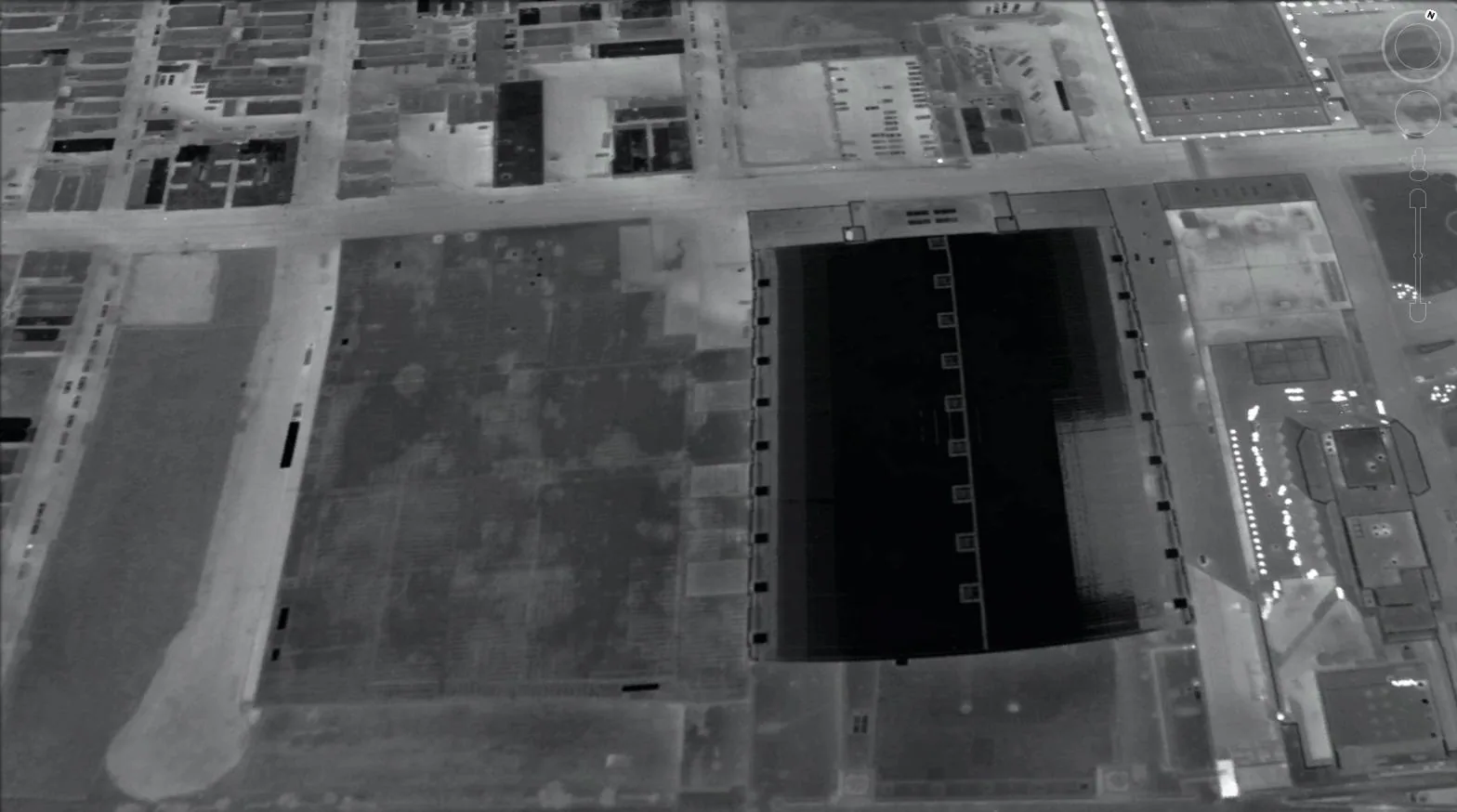
Where grease has reached the insulation, an infrared survey maps the damp area. The repair boundary then follows the damage, and a grease-resistant detail can be specified for the replacement.
Roof penetrations on an older restaurant roof tend to accumulate: a vent added for a new range, a line run for a walk-in cooler, a conduit for signage. Each one needs a boot or a flashing that has stayed bonded. We count them, photograph them and note which have been sealed with caulk alone, since caulk fails within a few seasons and flashing lasts longer.
When street and sidewalk work is underway, deliveries and staging have fewer places to go. We ask the manager what is planned and set the hoist where a lane is open. If a lane closes, the plan shifts to rear access or a crane lift at a quiet hour. Each change is recorded so the schedule matches the site.
A commercial roof repair on a small building may take a day, and a replacement a week or more. Either way, each section opened is closed against the weather by evening.
Order of work on a small building follows the water. Drains and gutters first, then edges and parapets, then penetrations and finally the field. Doing the work in that order means a section is never left with a new field and an old, failing edge. Each step is photographed so the manager sees progress on the drawing and not only in person.
Where the neighborhood's improvement district schedules street work, we ask for the dates early and keep a copy with the roof plan, so the two projects do not meet at the same curb on the same morning.
The 1957 Ruskin Heights tornado made about 85 percent of Martin City uninhabitable. That history is a reason to give the roof edge particular attention today, because wind damage starts there. We check coping, edge metal, parapet caps and the fasteners behind them, and we resecure what has loosened.
Spring work carries a weather hold rule. A storm warning issued for Lee's Summit on April 27, 2024 cited 60 mph gusts and likely roof damage. Open sections are closed whenever a line of storms approaches.
When a hold is called, the crew does three things in order: closes the open section with a temporary tie-in, secures loose material and covers rooftop equipment that was uncovered for the work. The manager receives a short note describing what was closed.
A small roof can look easy, but a single open corner can let in as much water as a large one. The dry-in point is set before the section is opened, with materials staged and tie-in membrane cut to size. If rain is forecast, work waits. If weather turns while the roof is open, the crew closes it first and packs up second.
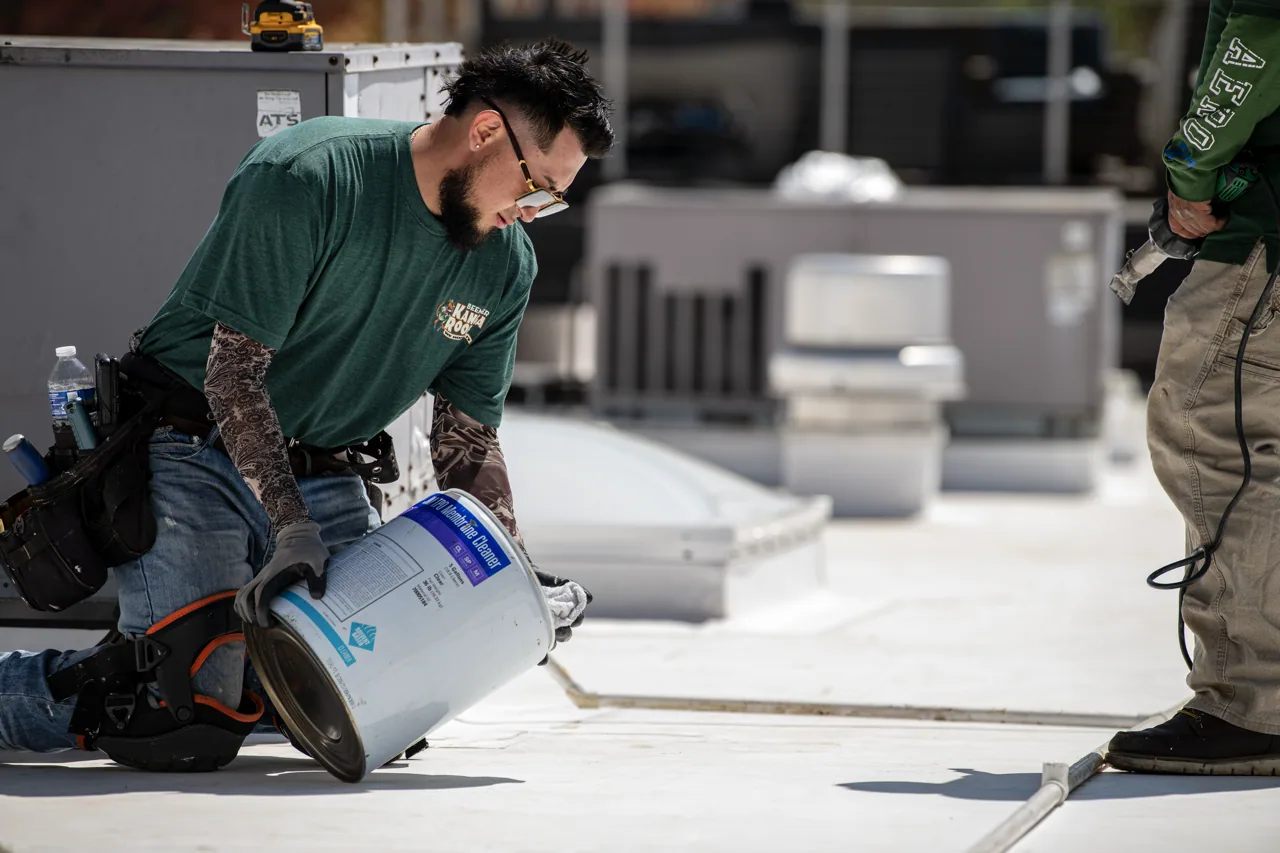
Rooftop equipment is protected during the work. Ductwork, condensate lines and electrical conduit are covered, and any disconnected unit is reconnected and tested before the crew leaves.
A walk-off sequence closes each day. The crew sweeps the roof, checks that drains are open and that no tools are left near a hatch, and reports to the manager before leaving. The next morning begins with a look at last night's closure, to confirm it held.
A small business owner or a landlord with a few buildings gets the same package as a large one: photographs of each phase, a drawing of what was repaired or replaced, a punch list, and the first things to look at on the next visit. Owners with buildings in Hickman Mills or Grandview can keep the files together for lenders and insurers. The roof condition report becomes the baseline for later visits.
The package also records the exhaust fans, curbs and grease trays by location, so a later cleaning contractor or a kitchen remodel starts from a known roof. That list prevents new penetrations from being cut through flashing that was just renewed.
Usually. The plan schedules noisy work for quiet hours, protects kitchen equipment and coordinates exhaust shutdowns with the manager. Open sections are closed each evening so the building is weathertight overnight.
It softens some membranes, builds up around drains and can reach the insulation through small openings. Cleaning, a containment tray and a grease-resistant membrane at replacement reduce the damage.
The plan switches to rear access, a crane lift at a quiet hour or a smaller delivery schedule. The manager is told in advance, and the change is written into the plan.
Wind lifts a roof from the edge inward, and loose coping or edge metal gives it a place to start. Securing the edge is a modest cost compared with the damage it can prevent.
Service hours, door and dock locations, any roof drawings and open leak reports. From these we write a sequence plan the owner can read before a price is discussed.
Send the building address list, tenant hours and any open leak reports. We will walk the roof with the property manager and offer a written sequence plan before any scope is priced.
Request a Roof Assessment