A coating job begins with a question the property manager can answer in one afternoon: is the roof dry underneath? If the insulation is wet, no coating belongs on top of it, and the project becomes a repair or a recover instead. If it is dry, a restoration coating can add years to a sound membrane without a tear-off, without a dumpster in the lot and without reroofing noise over tenants. In Lee's Summit, MO, that is a schedule advantage as much as a cost one.
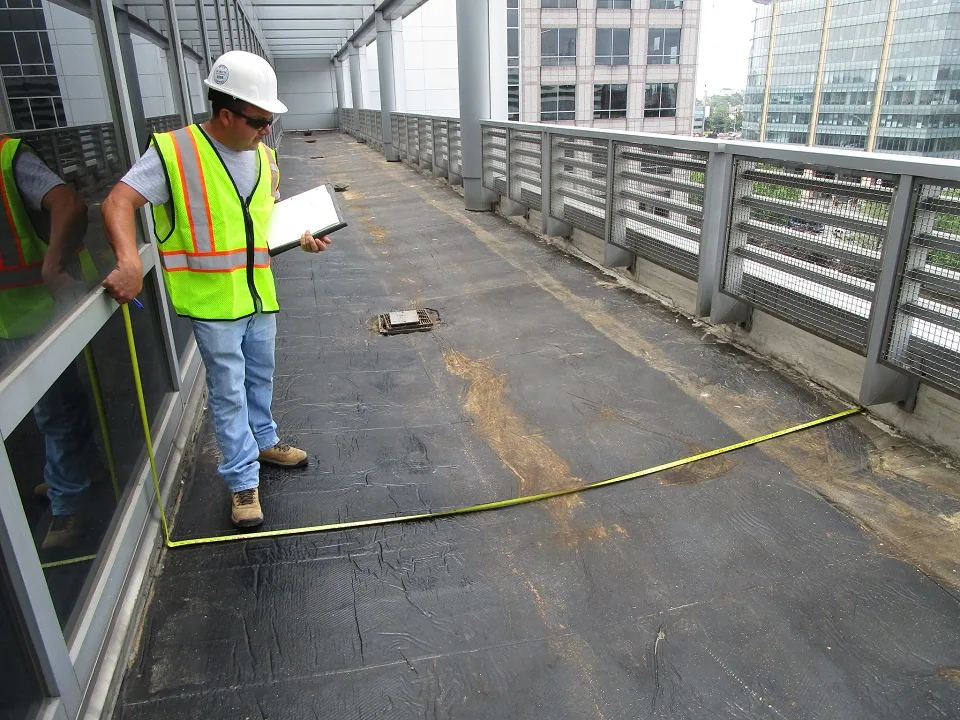
We walk the roof with the property manager first, confirm access and staging, and then test for moisture before anyone prices a coat. The written sequence plan follows, so tenants know which section is next. A commercial roof inspection supplies the starting facts: membrane type, age, seam condition, flashing, drains and any earlier repairs. The inspection also tells us whether the existing surface will accept a coating at all, since a roof covered in old, incompatible coatings may need stripping first.
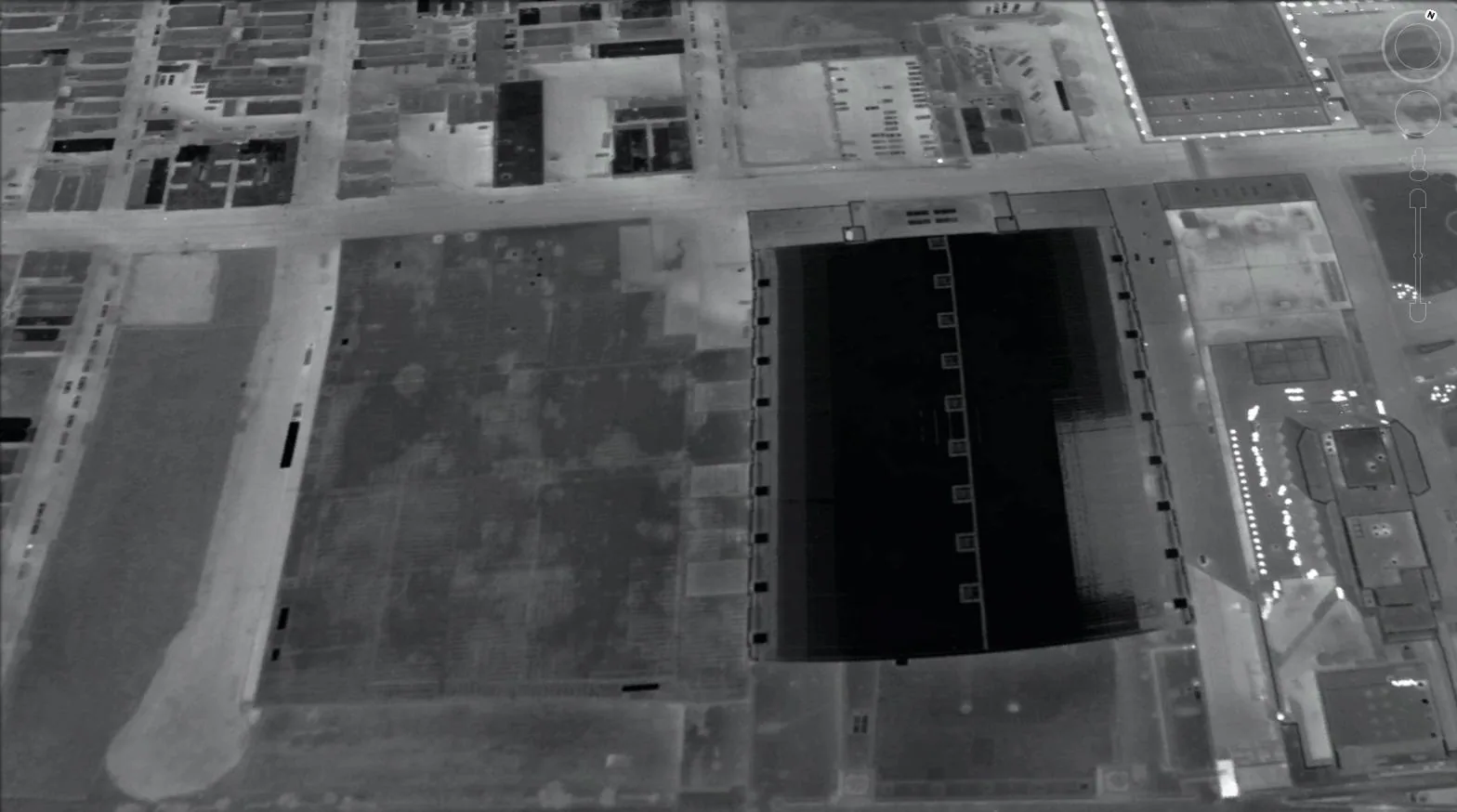
Moisture proof comes from two tools. An infrared moisture survey maps warm and cool patches on the roof surface, and core cuts confirm what the scan suggests. The result is a drawing of wet and dry areas with a boundary line, dated and attached to the file.
Wet areas come out and are replaced before coating starts. A coating applied over wet insulation traps the water, and the roof blisters within a season. For that reason we do not price a coating until the moisture drawing exists, and we say plainly when the drawing rules coating out.
Acrylic coatings cure by evaporation, reflect sunlight well and cost less per coat, but they dislike standing water. Silicone coatings tolerate ponding, stay flexible through cold snaps and shed dirt poorly. Polyurethane systems resist foot traffic and impact but cost more. The choice follows the roof's drainage, its traffic and its budget.
The same roof may take two systems. A well-drained field might receive acrylic while a ponded corner receives silicone, with a clear lap line between them recorded on the drawing. The scope names each product type, its thickness in mils and the area it covers, so the invoice matches the plan. The turnover package includes the product data sheets; they state the minimum thickness, the cure time and the recoat window, and they are what a warranty claim would cite.
Preparation takes longer than application. The surface is cleaned, loose material is removed, and rust is treated on metal. Seams are reinforced with fabric and sealant, blisters are cut and patched, and flashing is repaired or replaced. A primer goes on where the substrate or the product maker requires one.
We also test adhesion on a small area before coating the whole roof, with a cross-hatch cut and a pull test photographed beside a scale. Failed adhesion at that stage costs an hour; failed adhesion after the whole roof is coated costs the project. A coating that peels in the first season almost always peeled because of the surface, not the product. The adhesion test and the cleaning method go into the record so a later crew can see what was done and why.
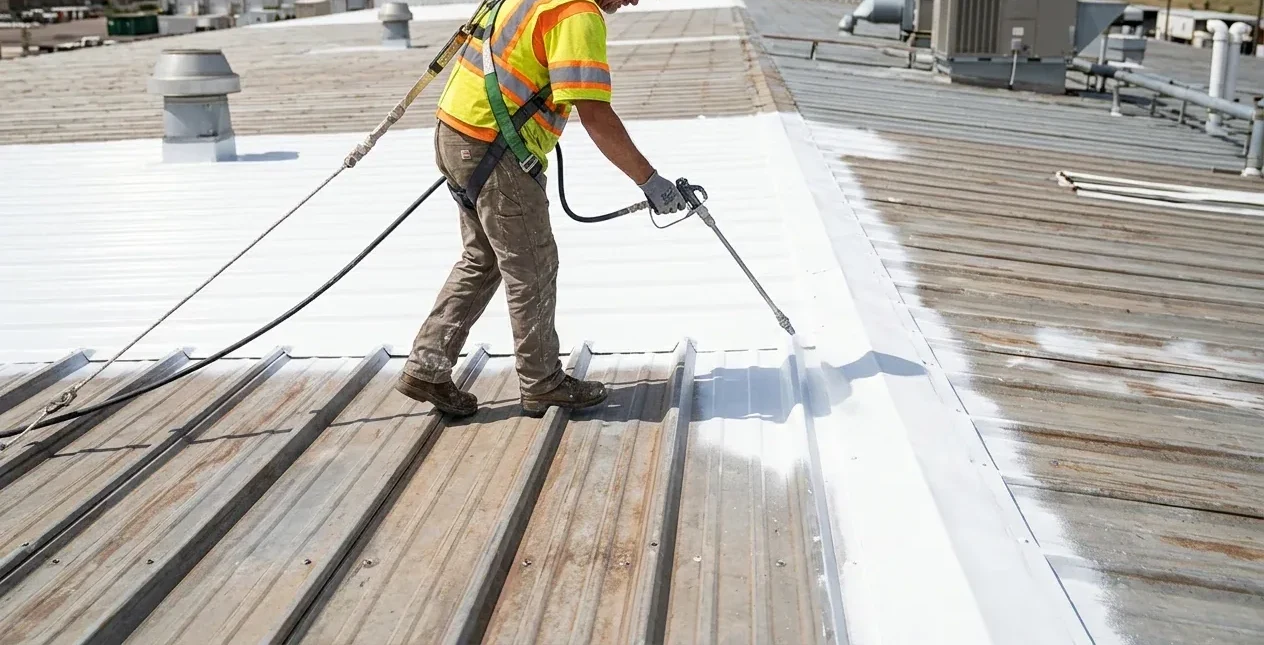
Coatings are friendlier to tenants than a tear-off, but they still bring crews, hoses and odor to the roof. We mark phase boundaries on the roof drawing so each section is prepared, coated and cured in a defined window, with the dry-in point set before the day starts. Rain on a fresh coat can wash it out, so a section is not started when a storm line is forecast, and a section already coated is covered and checked before the weather arrives. The spring storm window gets a standing rule: no new area opens when a warning is in effect, and the foreman tells the property manager by phone, not by email.
Odor from solvent-based products can reach air intakes. We map the intakes, keep application away from them and choose lower-odor products when the building needs them. Tenants on the top floor receive notice with the days and the expected smell, and the schedule shows the hold rules for weather. Crews stage hoses, pumps and drums in a defined footprint, away from loading doors, fire lanes and customer entrances, and the footprint is marked on the site plan before the first day. At the end of each day the sprayed area is walked, photographed and signed off, so a section is never left in an unknown state overnight.
A humid continental climate gives Lee's Summit roughly 38 inches of precipitation, a January afternoon average near 39 degrees and a July afternoon average near 88. Its record high is 108 and its record low is minus 25. Coatings expand and contract through that range, so a good coating stays flexible while a poor one cracks at seams.
Application needs dry surfaces and moderate temperatures, so most coating work runs in late spring through early fall. April and May carry the spring storm window, and a coating job scheduled for those months includes weather holds. A recoat, when needed, goes on a clean surface after the first thaw or in early fall, once the washing crew has removed the winter's dirt and the thickness readings have confirmed how much coating is left.
On the code side, the city has adopted the 2024 I-Codes: submittals from October 1, 2026 onward come under them, and anything filed earlier stays under the 2018 set. Which edition governs a coating project depends on the submittal date and whether a permit is needed at all. We ask the building department before we write the scope, and we record the answer.
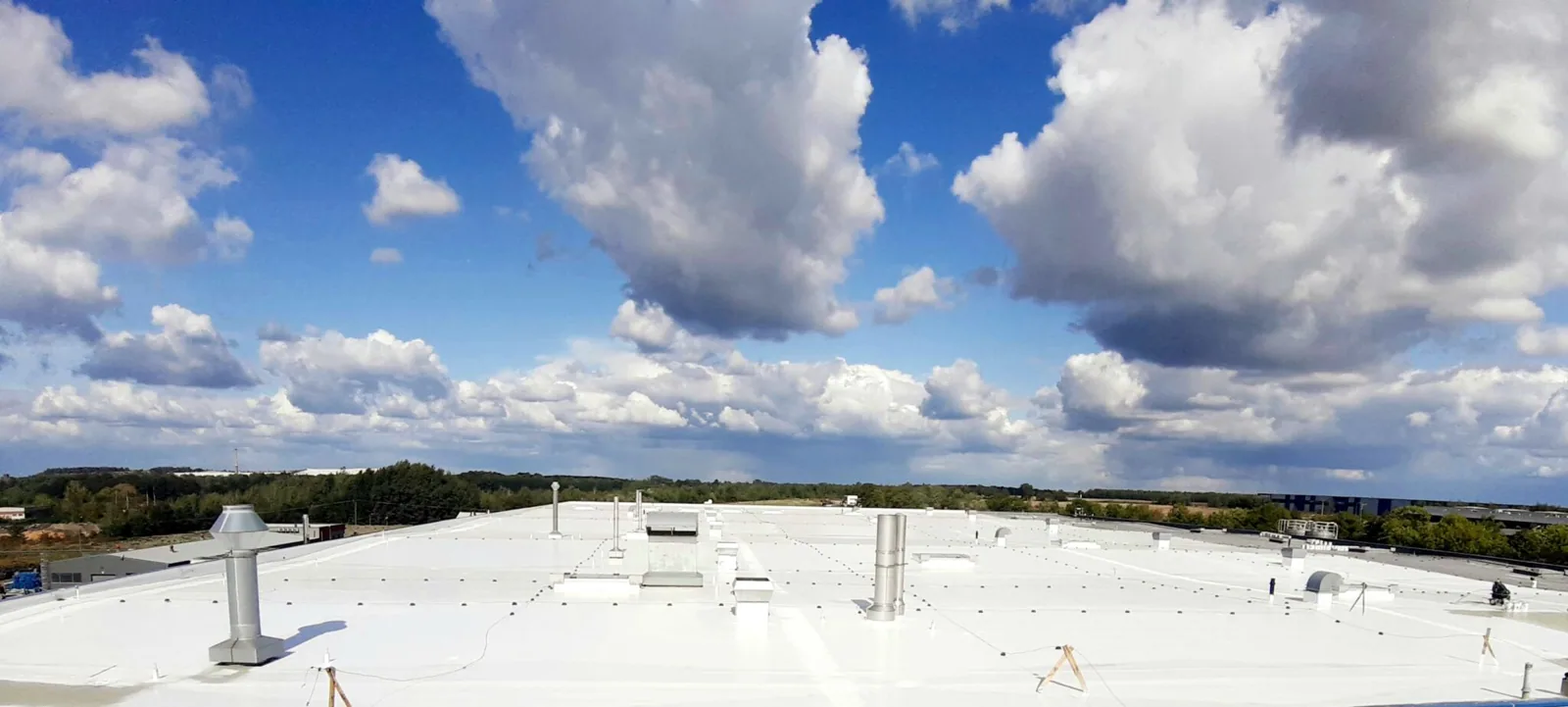
Reflectance and insulation requirements come with the edition. A reflective coating is one route to a cool roof, and the plan states which product and which reflectance rating apply.
At the end the property manager receives the moisture drawing, the adhesion test, the product data, the coating thickness readings by section and photographs before and after. The package also states the recoat interval, which depends on measured thickness loss and not on a rule of thumb.
If the roof was close to the end of its life, the package says so and gives a budget range for a replacement, so the owner can decide whether coating is a bridge or a destination. Roofs along I-470 and US 50, in Lee's Summit and in Belton, receive the same package format.
Not by itself. The leak is traced and repaired first, the moisture drawing confirms the insulation is dry, and only then does a coating make sense.
Wet-film readings are taken during application and dry-film readings after cure, section by section, and they go into the turnover package.
Less than a tear-off. Odor and crew traffic are planned with notice to affected suites, and application stays away from air intakes.
When moisture covers a wide area, the membrane has lost adhesion or the seams are open throughout. The drawing shows it, and the scope changes.
It depends on measured thickness loss. We read it on each maintenance walk and put the date in the package.
Send the building address list, tenant hours and any open leak reports. We will test for moisture first and give you a written sequence plan, so you can see what a coating can and cannot do.
Request a Roof Assessment