
Street frontage, delivery access and the hours of the shops and restaurants below: downtown roof work is staged inside constraints that decide the schedule before any membrane is chosen. The Downtown Historic District in Lee's Summit takes in the blocks around Second, Douglas, Fourth and Market Streets, next to US 50 and MO 291. Its commercial buildings, such as the Hartley Building with restaurant and retail space below second-floor offices, sit under roofs that have to be repaired, replaced or maintained without taking business away from the tenants beneath.
We begin with the access route and the tenant notice, then read the roof for the condition that decides the first move.
The National Register listing for the district covers 1850 through 1974 and names Italianate and Moderne as its styles. That span means a block can hold buildings from different generations, with different wall construction, different parapet heights and different roof edges, even when the storefronts look related from the street.
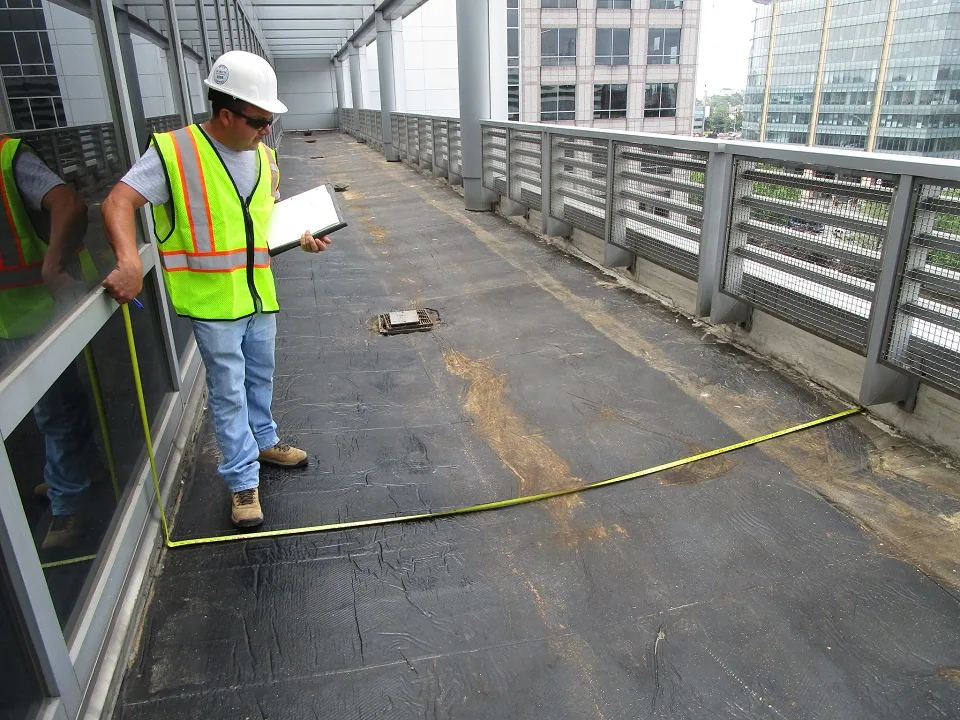
For that reason each downtown building is read on its own. The walk confirms what the deck is made of, how the walls are finished at the roof edge and what has been added over time. Drainage gets the same attention: a roof that sheds water to an interior drain, to a scupper through a parapet or to a gutter at the edge each has its own failure points, and a blocked outlet on a parapeted roof turns the whole field into a shallow pond within a single storm. Where earlier repairs have left layers on the roof, a commercial roof inspection that records each layer keeps a repair from bonding to material that will not hold it.
A mixed-use building such as the Hartley Building, a 15,353 square foot property with restaurant and retail space and second-floor offices, shows how many users can sit under one membrane. A leak that enters at a parapet corner can reach a second-floor office ceiling while the shop or restaurant beneath it is open.
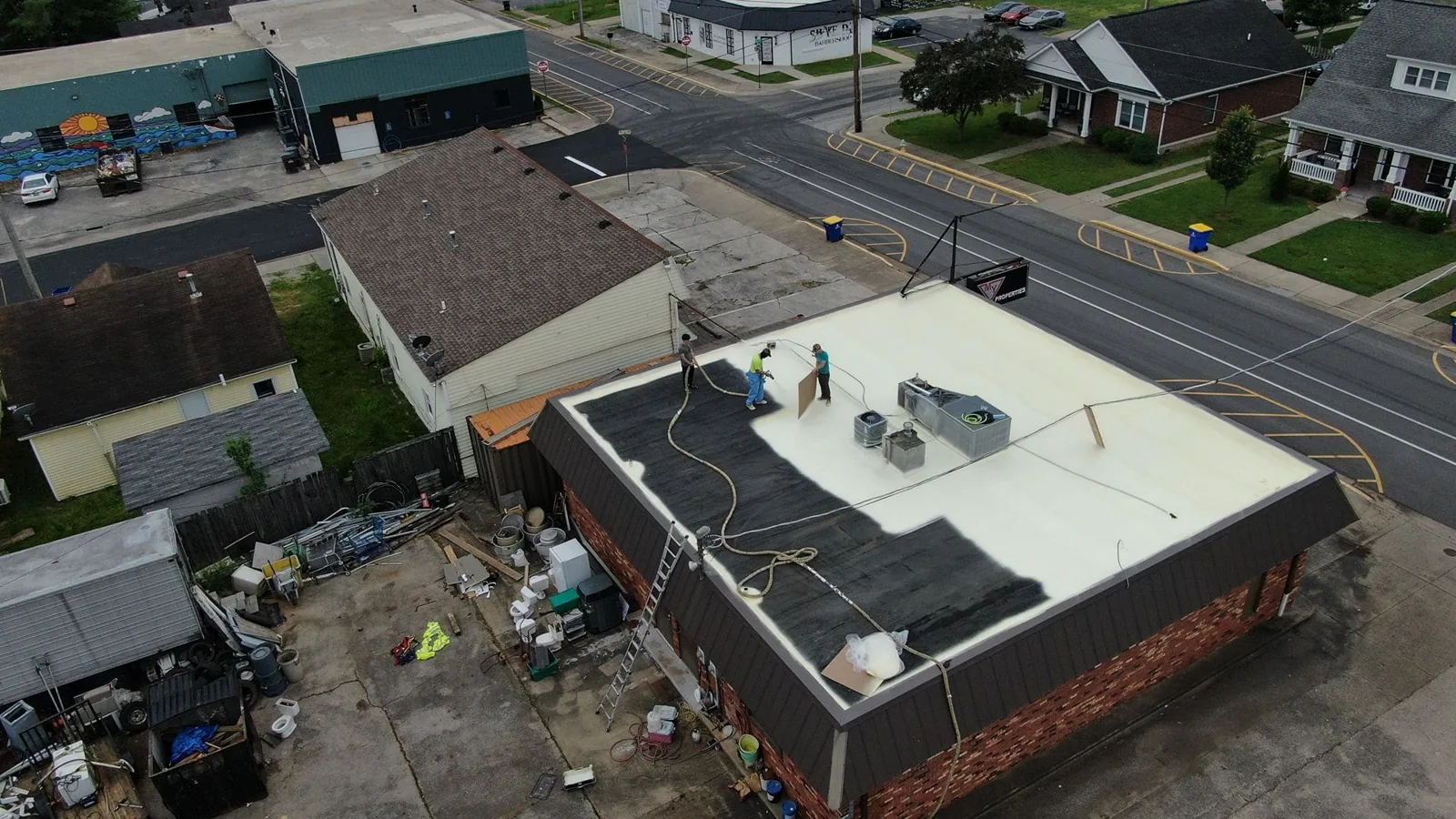
That arrangement changes the plan. Each occupant gets its own notice, covering noise, access and what happens if rain closes the roof early. Kitchen exhaust and rooftop units are catalogued before the membrane is touched, and the work is split into small phases so that no section is open overnight. Insulation and cover board are laid in the same shift as the membrane, since a board left uncovered overnight can take on water from a passing shower and then be sealed in wet. When an interior ceiling already shows water, leak repair traces the entry point before the roof plan is finalized.
On older low-slope buildings the leak often starts where the roof meets a wall. Parapets collect water, mortar joints open, copings crack and counterflashing detaches as the wall moves with the seasons. Lee's Summit's record range of 108F to -25F, with a January mean high near 39F, puts that movement on every long run of parapet.
Water takes the shortest path into a building, so the repair order follows it: coping and parapet first, then counterflashing, then base flashing and the membrane. Where a masonry repair is needed, we coordinate with the mason so the flashing is not replaced before the wall is sound, and the repointing, the coping reset and the counterflashing are sequenced on adjacent days so scaffolding comes down once. A related item is edge metal and coping, which is replaced in lengths with fasteners and sealant detailed for movement.
Downtown Lee's Summit sits next to US 50 and MO 291, which helps trucks reach the area, but the last few yards are the difficult part. A hoist may need a street closure permit, a lift may need to share an alley with deliveries, and dumpsters have to be placed where they do not block a service door.
We settle those details at the day-one site walk with the property manager, then put them in the tenant notice. Loud work is placed in the hours the restaurants and offices have said they can accept. Material is delivered early, lifted in batches and kept off the sidewalk, and the crew stops when the plan says it stops, so the next day's customers see a clean frontage.
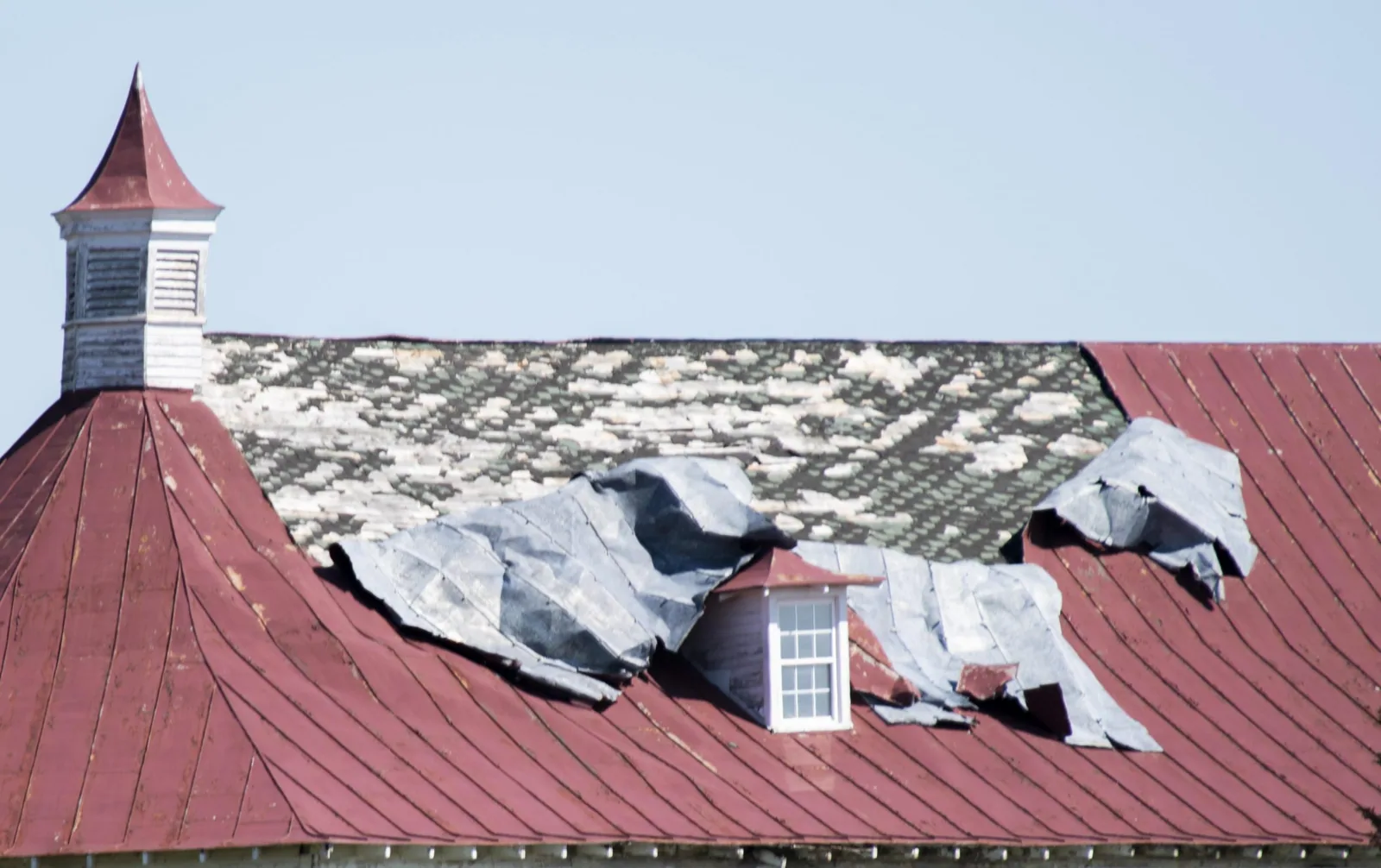
Lee's Summit gathers about 38 inches of precipitation over a year, and on April 27, 2024 the National Weather Service told the city to expect roof damage from 60 mph gusts and penny-size hail. Loose coping, lifted flashing and open seams are the first things a storm line finds on any roof edge.
A March visit checks the edge metal, drains, scuppers and flashing laps, and records them, with loose items on the roof removed or tied down so a gust does not turn them into projectiles above the sidewalk. After a storm, the same list is walked again, which separates fresh damage from old wear and supports an insurance conversation with dated photographs. The wind damage roof repair list starts at the perimeter for the same reason.
Once the roof is dry and the punch list is closed, the manager gets a roof drawing with the phases marked, photographs of every wall junction and a list for the next walk. Buildings that change hands in the district carry that file with them, and a buyer's survey reads faster against dated photographs of the parapets, the drains and the flashing laps than against a verbal history.
The same file serves a larger plan. A downtown owner who also holds property along I-470 can add these records to a wider roof asset management schedule, and neighboring work in Lee's Summit and Raymore can follow the same format.
In small phases, with exhaust and rooftop equipment mapped first and noise placed outside the busiest hours. The kitchen is told which days its roof area is open, and the section is closed by evening. Grease-resistant membranes are discussed when the exhaust discharges onto the roof.
No. A listing names styles and dates, not wall construction. We confirm the walls, deck and roof layers on the roof itself and choose flashing and attachment methods from what we find, not from the street view.
The path of the water, starting at the nearest parapet, drain or penetration and moving upslope. Moisture scans help find wet insulation, which can sit far from the stain. The entry point is closed before the full repair list is written.
Sometimes, depending on the building's frontage and alley. If a hoist must sit on a public way, the permit and traffic plan are handled with the city before the date is set. Where the alley works, deliveries are timed to avoid the businesses' own receiving hours.
As staining on a wall below the roof line, often several feet from the failed joint, since water travels inside the wall. The coping is checked for open joints and fasteners, and the wall is tested before any interior finish is repaired.
Share the address list, who occupies each floor and any leak reports. We will walk the roof with the property manager and return a written sequence plan before any scope is priced.
Request a Roof Assessment