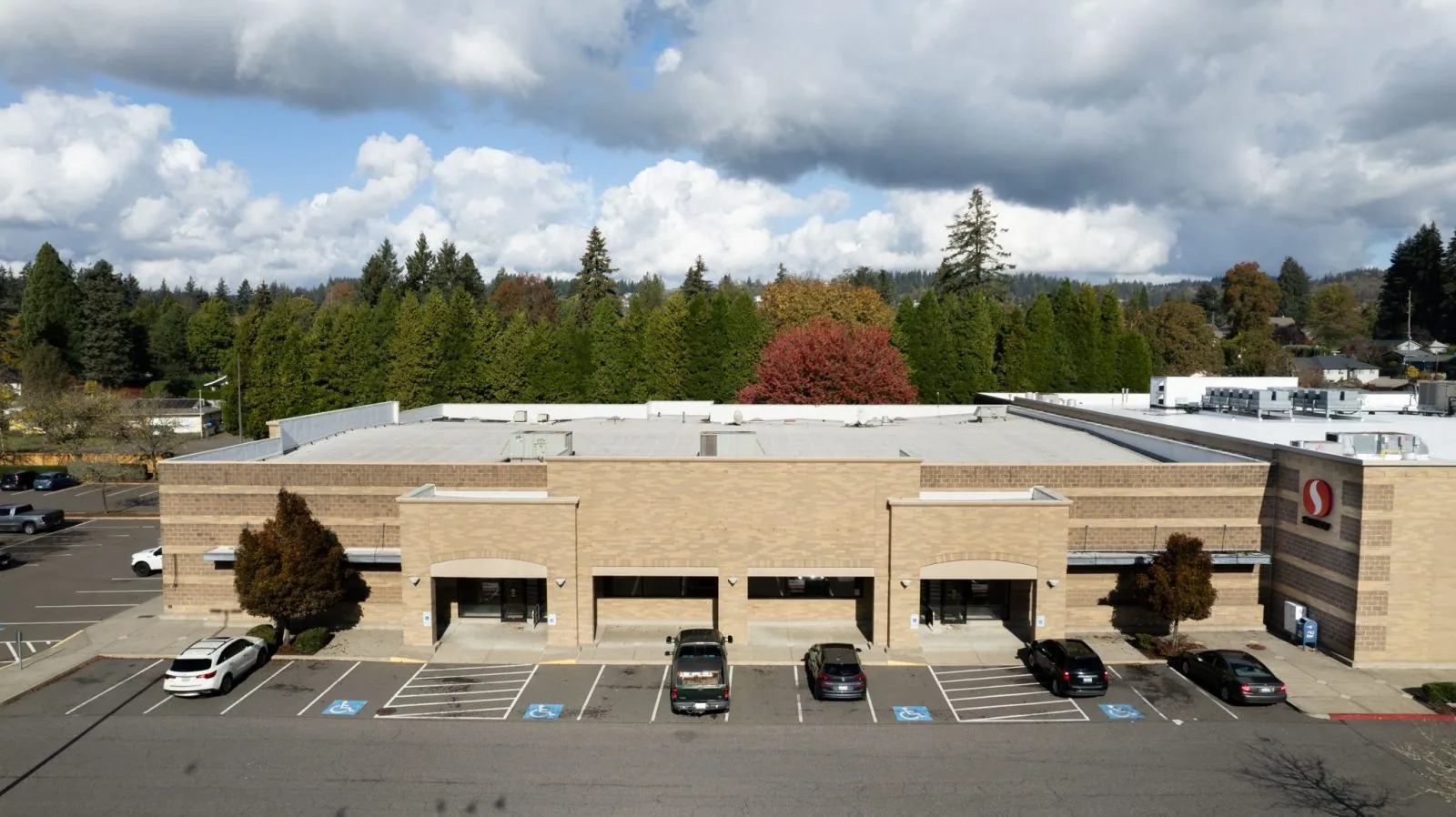
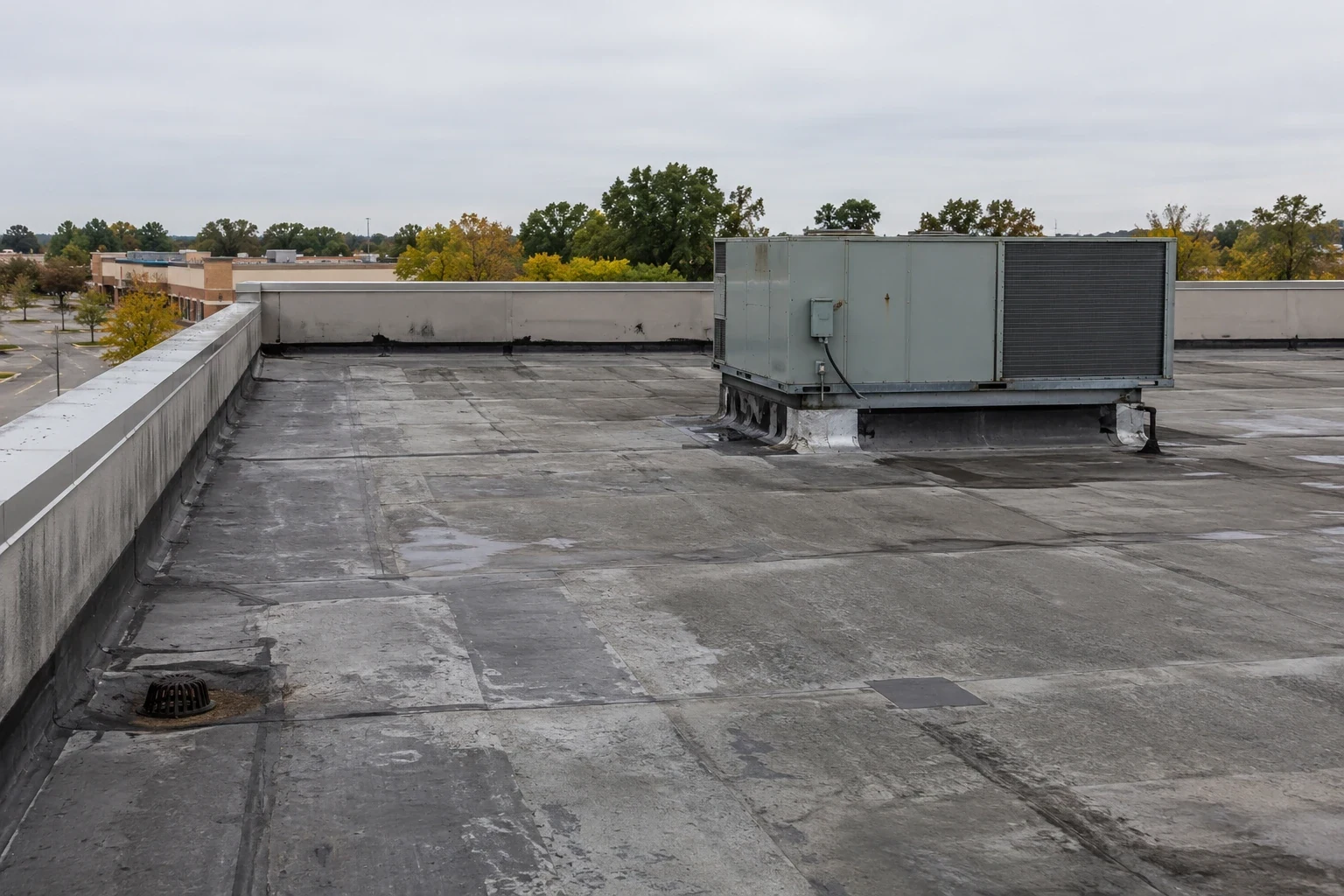
A big-box roof job begins at the receiving dock, not on the roof. The store manager knows which hours the trucks arrive, which doors cannot be blocked at noon, and which part of the sales floor is stocked the night before. For a store in the I-470, US 50 and MO 291 commercial belt, those facts set the order of work, and the roof condition decides which section goes first.
Our day-one walk covers the dock, the lot, the roof hatch and the drains, and the written sequence that follows is shared with the manager before any scope is priced.
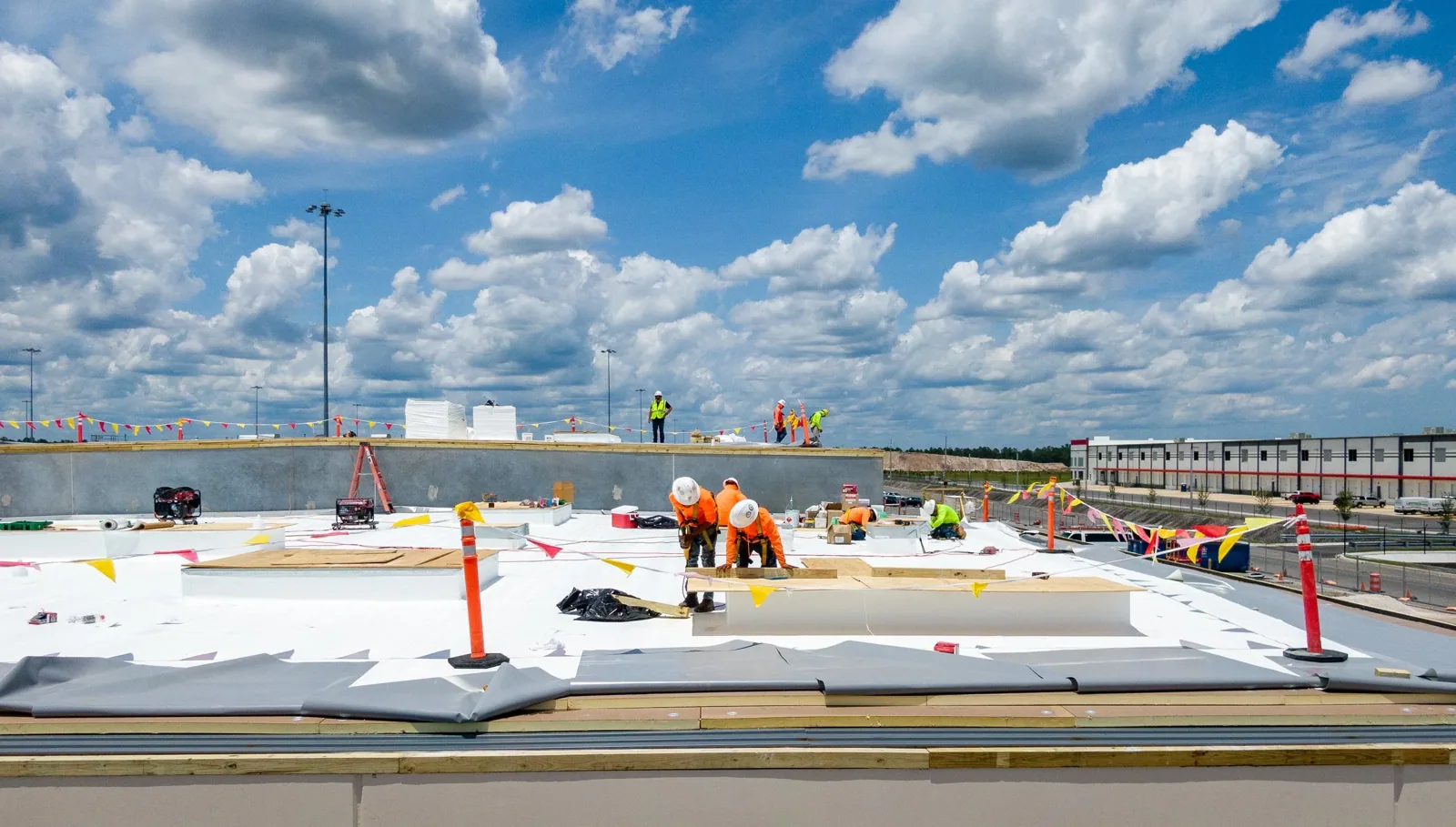
A store does not close for a roof. We split the work into sections that match the receiving schedule, stage material near the loading area and use night or early-morning shifts for tie-ins near interior spaces. Tear-off is done in areas small enough to close each day.
Noise and smell matter in a store that sells food, clothing or home goods. Hot-applied systems stay away from fresh-air intakes, and low-odor adhesives or mechanically fastened systems are chosen when the floor cannot be vacated. The crew signs in with the manager daily and keeps fire lanes clear.
Garden centers, tire shops and outparcel pads attached to a store have their own roofs and their own hours. We list them on the roof drawing and give each a separate notice. A pharmacy drive-through canopy over a lane gets its own fenced walk-off sequence, since a falling fastener there lands where customers wait.
A freestanding store has a deck that runs a long way in each direction with a small number of interior drains and a few overflow scuppers. That arrangement works only when every drain stays open and the roof stays on its design slope. A clogged strainer or settled insulation turns into a shallow pond that grows with each storm.
We map the drains on the roof drawing and check each strainer, clamping ring and the slope toward it. Ponding that lasts more than a day after rain is measured and photographed. Where a roof has internal drains and no overflow, the report says so, because a plugged drain sends water to the nearest wall opening.
Roof drains on a wide roof should have overflow paths, and scuppers should sit at the right height above the membrane. We check the height, the opening and the condition of the scupper box. A roof without a secondary path gets an overflow option priced, because a plugged drain on a roof like that is a leak waiting for the next storm line.
Spring is the storm window. The weather service office at Pleasant Hill named Lee's Summit in an April 27, 2024 warning that put roofs on its damage list, and a store with a wide roof has more edge and corner to lose than a small building. Wind presses at corners before the field, so edge metal and perimeter fasteners are the first things we check after a storm line.
The hold rule is part of the plan. No section opens when a line of storms is on the radar, and sections are sized to what the crew can close before the weather arrives. Annual precipitation runs near 38 inches, and heat is just as hard on a dark sheet: July mean highs near 88 and a record of 108 push the surface well above the air. Adhesives and welds go in during the cooler morning hours, and material stays in shade until needed.
Big-box roofs carry rows of heating and cooling units, and many stores add refrigeration condensers or kitchen exhaust. Each unit sits on a curb that has to stay flashed to the membrane. A technician who walks to the same unit every week also wears a path in the sheet.
We check curb flashing, fasteners at the base of each unit and wear along service routes. Walkway pads between the hatch and the busiest units protect the membrane. Where refrigerant lines or conduit cross the roof, supports lift them clear of the surface and each penetration is sealed.
Satellite dishes, cameras and sign supports add small penetrations that nobody tracks. Each gets a boot or a pitch pocket check. A cracked boot is a quiet leak that can show up as a stain near a register long after the rain that caused it.
Poles on the lot side get the same check: base flashing, sealant and loose fasteners, with any pole that moves in the wind logged. A walk-pad route from the hatch to the busiest units is marked on the drawing, so the store's own maintenance staff and outside technicians cross the sheet in the same places every visit.
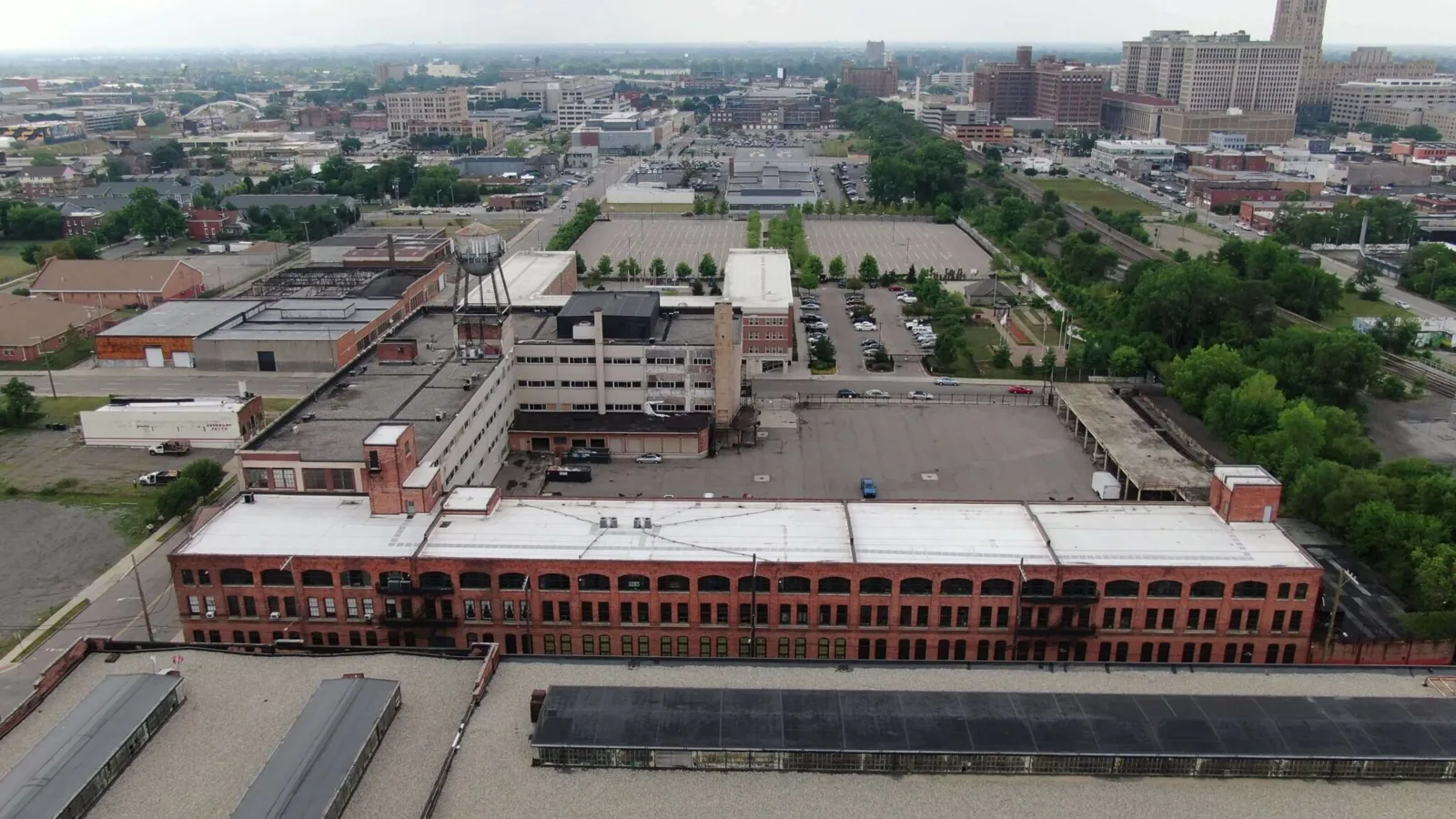
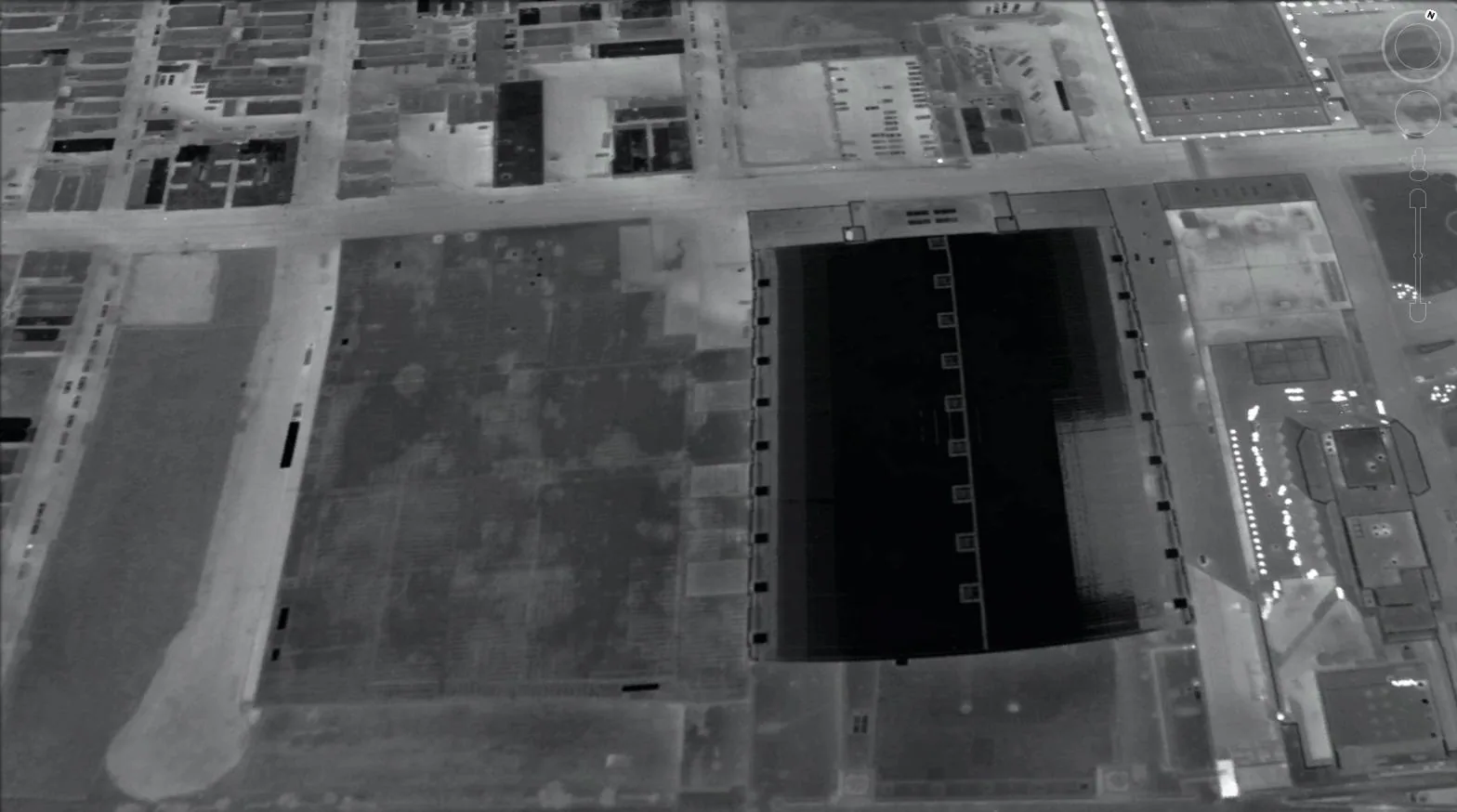
A recover adds a new membrane over dry insulation and keeps the store open with less disruption than tear-off. A replacement suits wet insulation spread across several areas. A moisture survey maps the wet boundary, so evidence, not a guess, picks the path.
Cost follows roof area, insulation depth, the number of curbs and penetrations, hoisting to a rear dock and how many sections the store allows to be open at once. A shopping center roof attached to the same lot may follow a separate schedule, and a grocery store roof adds condenser lines and food-safety steps.
Timing follows the retail calendar. Large tear-offs avoid the holiday season, and since membrane and insulation can take weeks to ship, the order is placed ahead of the work window. The scope sheet lists the section order and a margin for weather, and it names the daily point at which the roof is closed and the crew can go.
Submittal date picks the code book. A submittal dated October 1, 2026 or later is reviewed under the 2024 I-Codes; anything earlier stays under the 2018 set, which is why the date sits beside the specification. For stores in Blue Springs or Raymore, the local permit office confirms its own requirements before anything is ordered.
The operator gets an image set by phase, the boundary drawing, moisture or core results, product sheets and a dated list of open items. Across a chain, one package per store makes the portfolio readable: the worst roofs rise to the top of the budget, and a repair at one store informs the next. Warranty notice dates are logged where they apply. Deferred repairs carry a location and a review date, and untested items are named as untested.
The receiving schedule. We walk the dock and lot, then write a sequence plan the manager approves before any scope is priced.
Decks deflect and insulation settles, so low spots form between supports. Tapered insulation or an added drain corrects it during a recover or replacement.
With night or early shifts near interior tie-ins, low-odor materials near intakes and sections that close each day.
A weather hold rule. Sections stay closed when a line of storms is forecast, and open sections reach their dry-in point before the crew leaves.
The same package on each store, so roofs can be ranked and a repair at one store informs the plan for the next.
Send the address list, trading and receiving hours and any open leak reports. We will walk the roof with you and write a sequence plan before any scope is priced.
Request a Roof Assessment