
A grocery roof job is sequenced around the produce delivery, the bakery's early shift and the case that cannot lose power. For a store manager in Lee's Summit, MO, the notice to staff, the route for the first truck and the point on the roof where the crew will stand all come before the membrane. Usually the first move is set by a finding near the equipment: a condenser pad, a vent stack, a kitchen exhaust.
We begin at those details with the manager's list of rooms that cannot take water, then write the sequence.
The first page names the roof area, the days, the hours and a contact on each shift. Receiving keeps its dock lane, and the crew's hoist stays on the opposite side of the building. Stores that run long hours get a contact for overnight staff, so anyone who sees water inside during the work has a clear line to call.
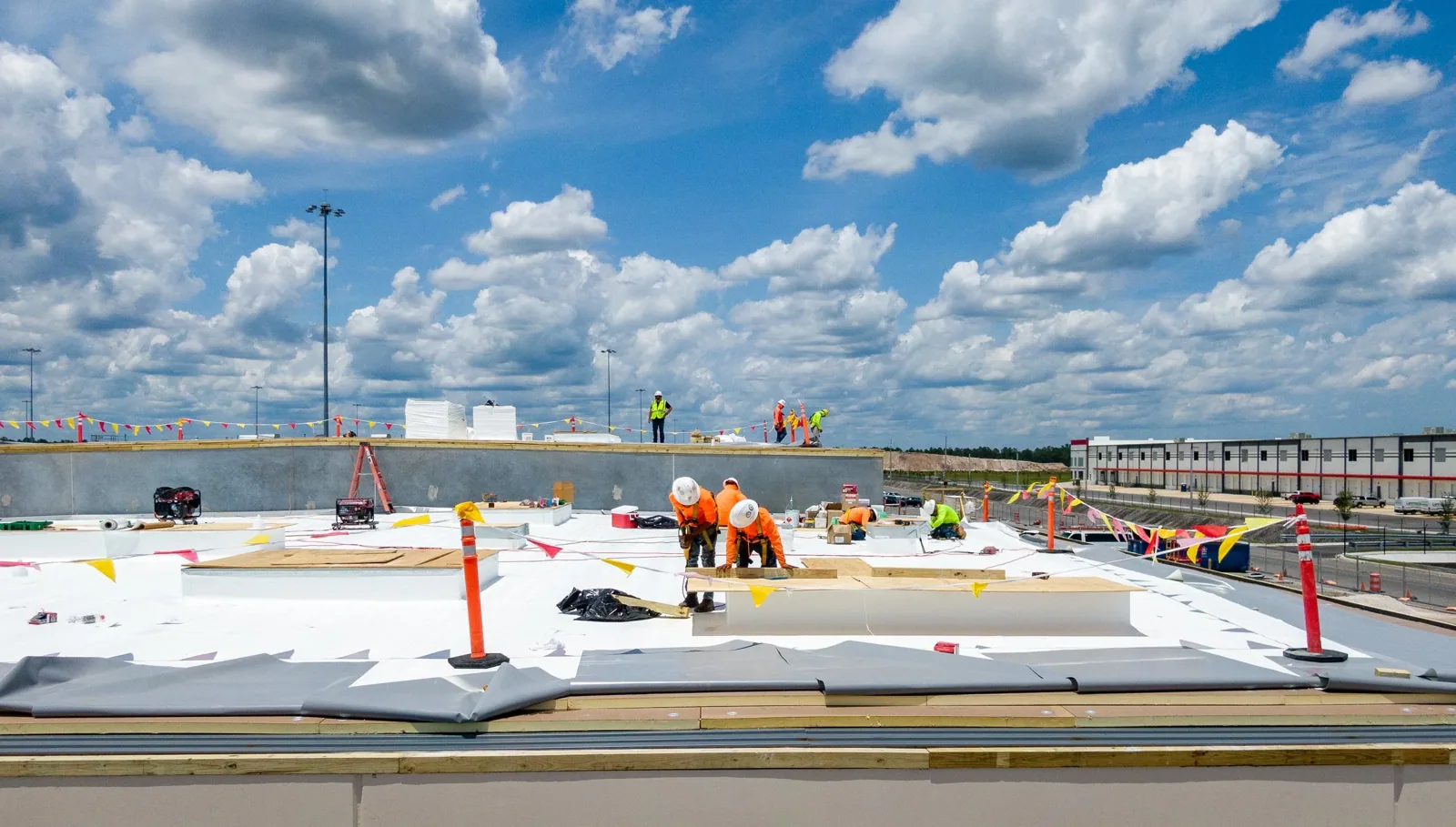
Noisy work goes before opening or after closing. Material stages away from the entrance and fire lanes. Safety zones are marked at the doors below the work so customers and staff do not walk under a hoist line.
Roof access is usually through a hatch in a back room or a fixed ladder at the dock end. We note who holds the key and what is stored beneath the hatch. A hatch blocked by pallets costs a morning, and an open one is a security question the manager should settle before the crew arrives.
Deliveries from trucks that reach the store by I-470, US 50 or MO 291 get a written window, and the crew's own vehicles park away from the receiving lane. The lane to the dock stays open and a spotter watches the crossing.
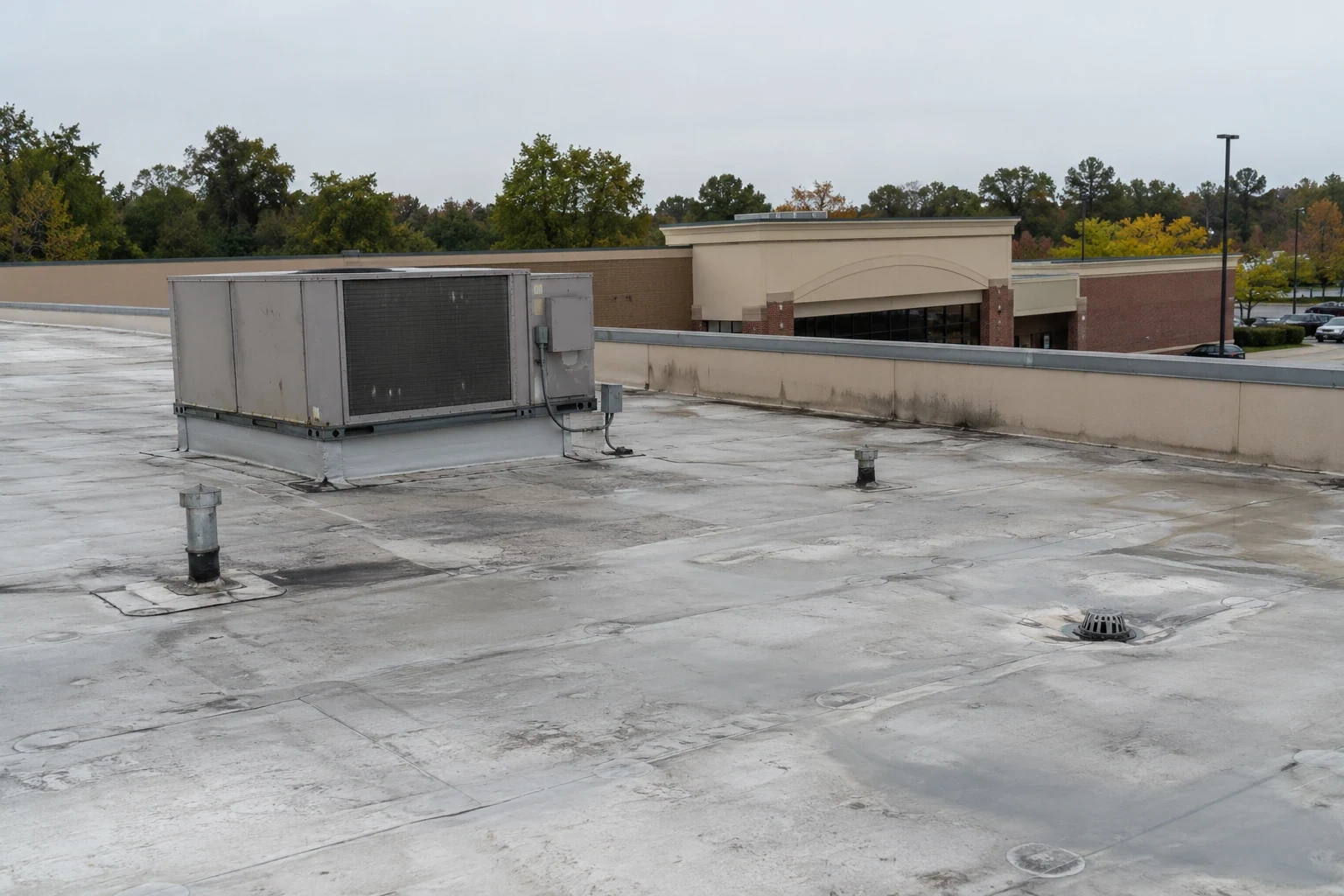
A supermarket roof carries refrigeration condensers, makeup air units, deli and bakery exhaust and the usual heating and cooling equipment. Condensers vibrate, and the vibration works at sealant around supports and at flashing on the lines that run to the units. Heat from the equipment ages the nearby membrane first.
We check support legs, pitch pockets, line penetrations and curb flashing and probe the seams within reach of each unit. If a leak has been reported, we follow the water back along the line to the opening instead of stopping at the nearest stain. Exhaust grease is cleaned before any patch, since oil keeps adhesive from bonding.
Pads laid along the route from the hatch to the busiest units spare the membrane from the technicians who service them weekly. Condensate lines that drain onto the roof surface are rerouted or protected, because a steady trickle in one spot wears a membrane faster than rain does.
Refrigeration lines that run across the roof in a tray or on supports are checked for chafe points. A line that rubs through insulation or lies on the membrane can wear a hole in either, and the repair involves two trades. We note the chafe point and the contractor who owns the line.
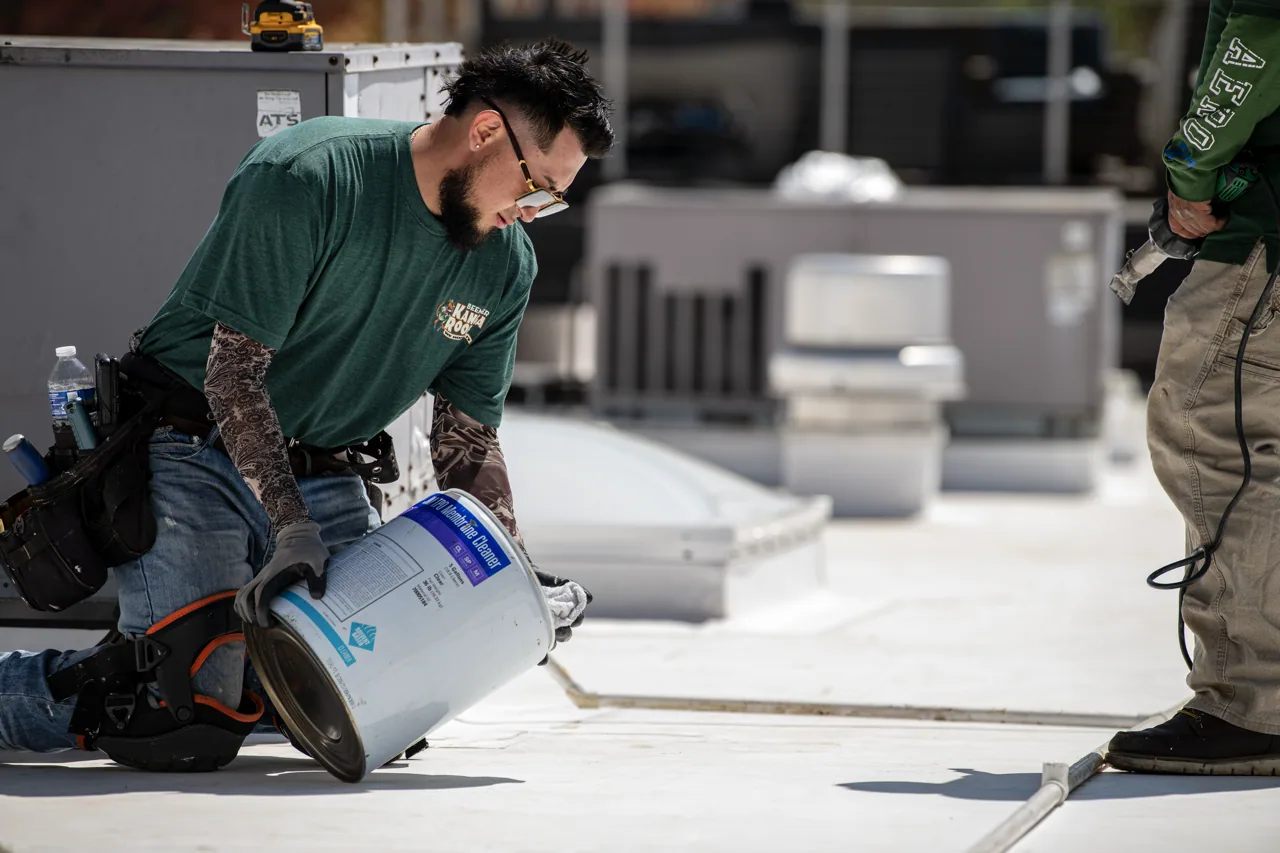
Before cutting begins, we agree with the manager on which areas below need to be covered, which cases need protection and which doors serve as the safe route for materials. Dust, debris and odors stay off the sales floor and out of the stockroom. We avoid open torches and strong solvents near intakes and choose low-odor adhesives or mechanically fastened systems where intakes sit close to the work.
A drip over a produce case or a stockroom shelf is a food-safety problem before it is a roofing problem, so the dry-in plan is written first. Tarps, sandbags and standby material are staged, and the open section is closed and swept at the end of each shift.
Cleaning belongs in the plan. Roof debris, fasteners and scraps go into a covered bin, never near the loading area. A magnet sweep covers the dock apron and the lot at the end of each shift, because a stray screw under a pallet jack is a hazard for the store's own staff.
Spring storm lines are the risk to plan for. The area records about 38 inches of precipitation a year, and the weather service named Lee's Summit in a severe thunderstorm warning on April 27, 2024, listing roofs among the expected damage. A store that leaks after a storm needs a repair sequence ready, so the plan names a standby crew whenever rain is forecast over an open section and a hold rule that keeps other sections closed.
Summer works the equipment. A July mean high near 88 degrees keeps condensers at their hardest, beside a membrane hotter than the air, so heat-sensitive tie-ins go in the morning. After any storm line, we walk the roof, set fresh photographs beside the last set and log each change by zone, equipment first.
A recurring leak near the same condenser often calls for more than another patch. We price each path on what drives it: how much insulation must come out, how many units have to be disconnected and reset, and whether refrigeration contractors must work alongside the roofers. A repair, a recover and a replacement each get a written line.
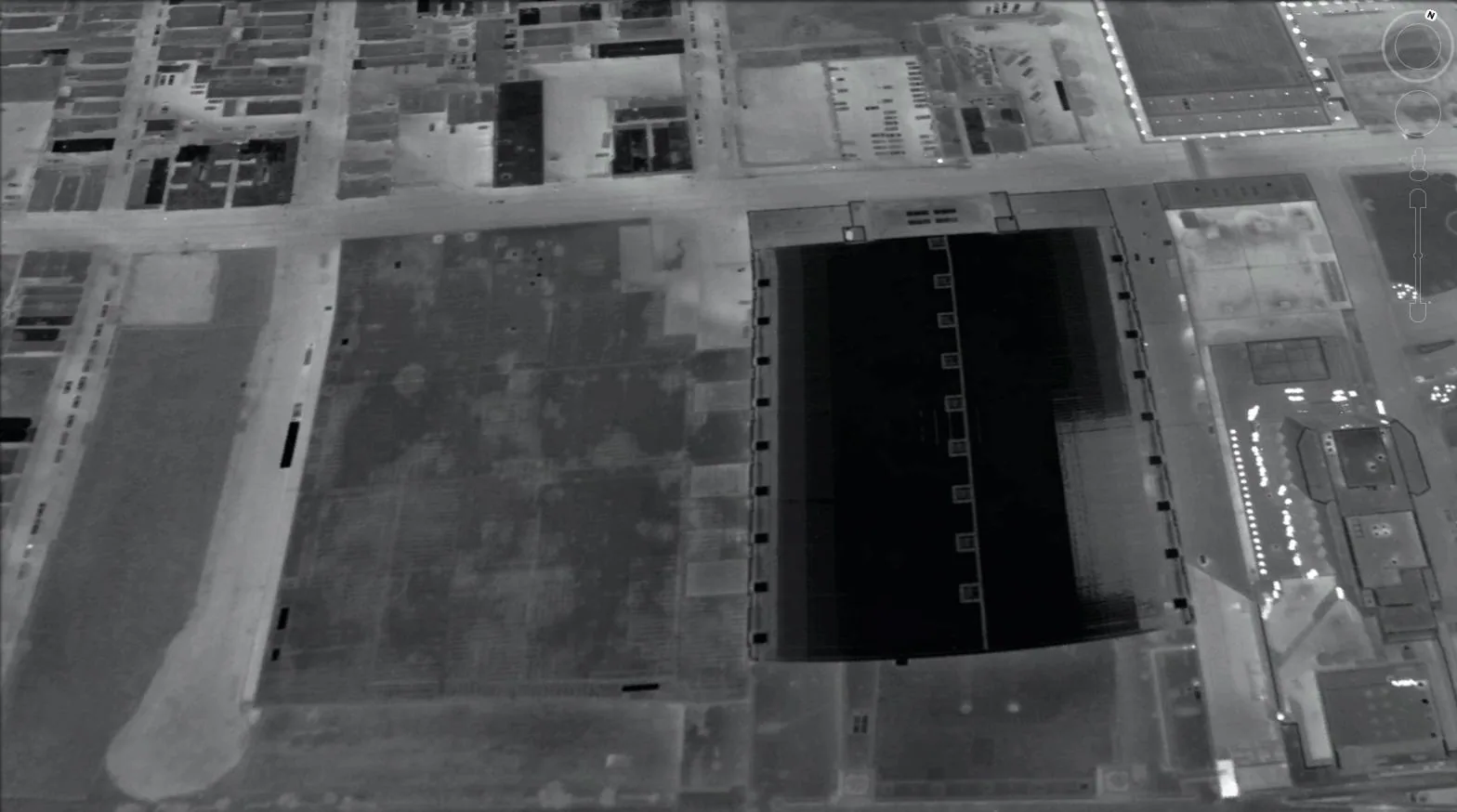
An infrared moisture survey maps wet insulation, so the repair follows the wet boundary. A big-box retail roof and a shopping center roof raise related questions.
Timing follows the store's calendar and the weather. Holiday weeks are avoided for large tear-offs, and the order is placed early because material lead times run to weeks. A roof walk after the first hard freeze checks sealants and seams that moved with the cold, since the record range here runs from -25 to 108 degrees.
For a grocery reroof, the submittal date picks the I-Code book: 2024 after October 1, 2026 and 2018 before it. The submittal date goes on the plan next to the specification. Stores near Grandview or Raytown confirm their own permit office.
The manager gets a handover binder: images by phase, the boundary drawing, test results, product sheets and a dated punch list. Photographs are labeled by roof section and by the room below, so a call about a drip near the deli leads to the roof above it quickly. Warranty notice dates are recorded where they apply, and deferred items keep a location and a review date for the first spring walk.
The delivery and receiving schedule, then the equipment details. The crew's hoist stays opposite the dock, and noisy work goes before opening.
It may not be. Cold lines and cases can sweat. We compare the drip date with the weather and check the roof above for open flashing and cracked sealant first.
Only when a unit must be lifted or disconnected. We schedule the refrigeration contractor with our crew to keep food loss low.
It keeps adhesive from bonding. We clean the area first and recommend a containment tray at the exhaust discharge.
Standby material is on site, the section is dried in before the crew leaves and the call is written in the daily log.
Send the store address list, receiving hours and any open leak reports. We will walk the roof with you and write a sequence plan before any scope is priced.
Request a Roof Assessment