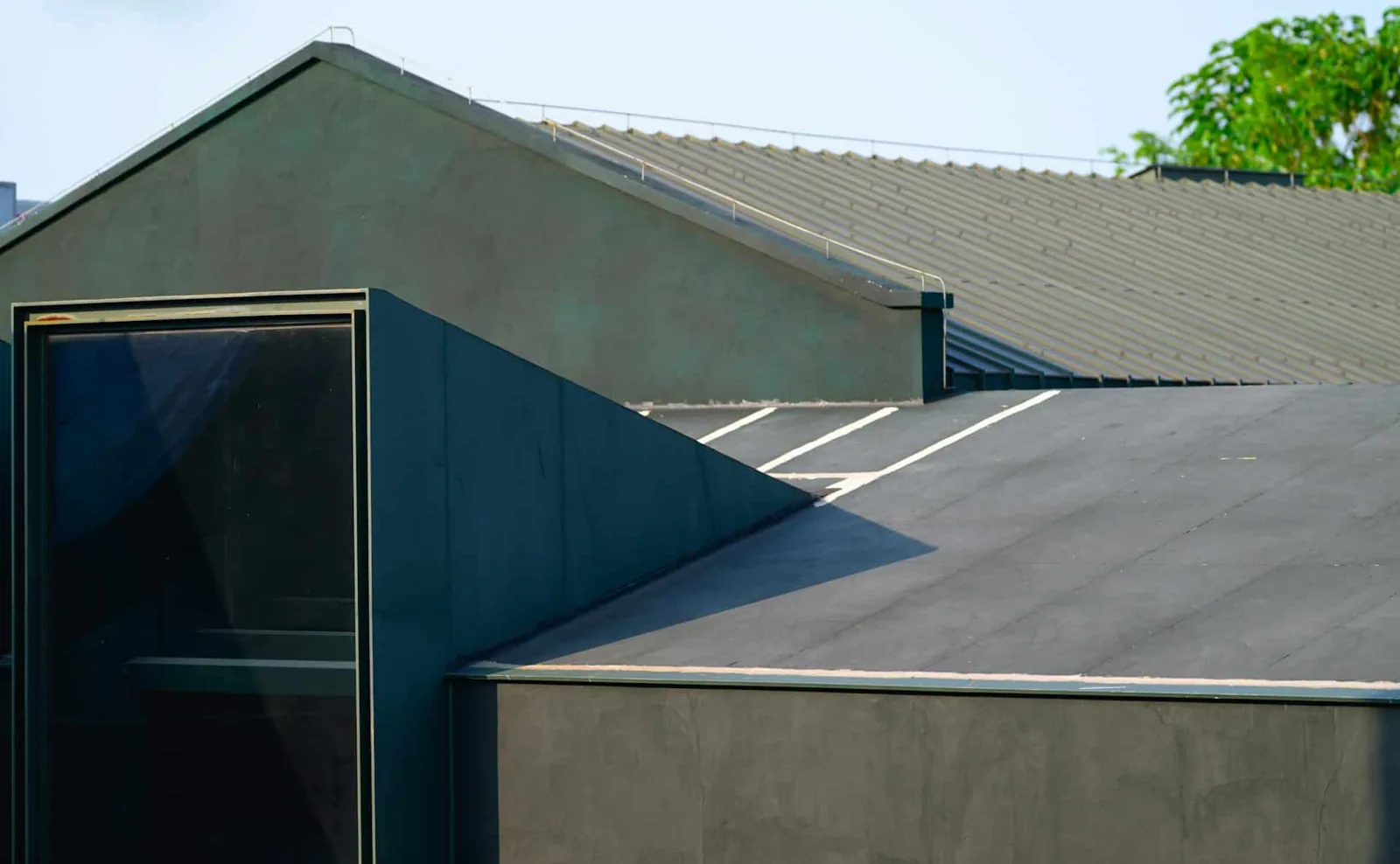

Before a single ply of a built-up roof goes down, someone has to decide where the kettle or the adhesive tanker sits, and which tenant doors are closed while it does. That sequence is the real shape of a BUR job. The roof itself is layers of reinforcing felt or fabric mopped or bonded together with bitumen, then finished with a cap sheet or a layer of gravel. For a flat roof over a suite of offices or a retail strip in Lee's Summit, MO, the system has a long record behind it, and it asks the property manager for more advance notice than most single-ply options do.
A built-up membrane is assembled in place. Alternating layers of felt, fiberglass or polyester reinforcement are set into hot asphalt, cold-applied adhesive or a similar bonding agent, and each pair of layers adds thickness and redundancy. If one ply carries a flaw, the plies above and below still hold. That redundancy is the reason BUR remains a serious option on a roof that will see traffic and repairs.
The top surface does a separate job. Gravel embedded in a flood coat shields the bitumen from sun and from foot traffic, and a mineral-surfaced cap sheet does the same with a lighter load. Smooth-surfaced roofs take a reflective coating instead. Lee's Summit sees an 88.3F July mean high and a record of 108F, so a surface that sheds heat matters as much as the plies beneath it. The right choice depends on what the deck can carry and what the roof drains can pass.
Traditional BUR uses heated asphalt, and heated asphalt comes with rules. The kettle needs a stand-off from the building, an extinguisher within reach and a fire watch that stays after the last mop is laid. Insurers and some landlords add their own written conditions, so the first day-one site walk collects those before the date is set. Hot work permits, if the city or the building owner requires them, belong in the turnover package.
Where open heat is a problem, the same multi-ply idea can be built with cold-applied adhesives or with self-adhered plies. Those cost more in materials, produce fewer fumes at the air intakes, and let the work continue on roofs above clinics, classrooms and suites with operable windows. The access route for the adhesive drums or the rolls is then the question to settle, because a hoist and staging footprint that crosses a parking lot has to be coordinated with tenants well before it is rented.
On a flat roof beside I-470, US 50 or MO 291, every tenant buildout can leave its mark: a new rooftop unit curb, a cut for a vent, a patch beside a drain. We start by walking the roof for blistered plies, alligatored coal-tar or asphalt surfaces, exposed felt where gravel has scoured away, and open laps at flashings. Infrared scanning shows wet insulation that the surface does not.
If the plies below are sound and the insulation is dry, a restoration may make sense: a coating over a prepared surface, or a new cap sheet over a repaired field. When the insulation is saturated, a tear-off to the deck is the cleaner answer, and the written scope shows which areas fall into which group. A recover over the existing roof is also on the table where the structure and the code allow it, and the submittal date decides which code edition the permit office applies.
Gravel-surfaced BUR takes hail better than a bare membrane because the stone absorbs part of the blow. After the severe thunderstorm warning of April 27, 2024, which cited penny-size hail, 60 mph gusts and roof damage, the gravel on a built-up roof is the first thing worth checking. Scoured gravel, displaced flood coat and fractured plies show up as dark, bare patches under the surface.
Winter is the other load. Winter brings modest snow, about 4.5 inches, plus a January high near 39F and a record low of -25F, and a stiff, aged bitumen layer cracks where those swings flex it. A hail damage repair scope on a BUR roof usually combines a gravel recharge with spot replacement of the cracked plies, and the weather hold rule written into the plan keeps hot work off the roof when the forecast turns wet.
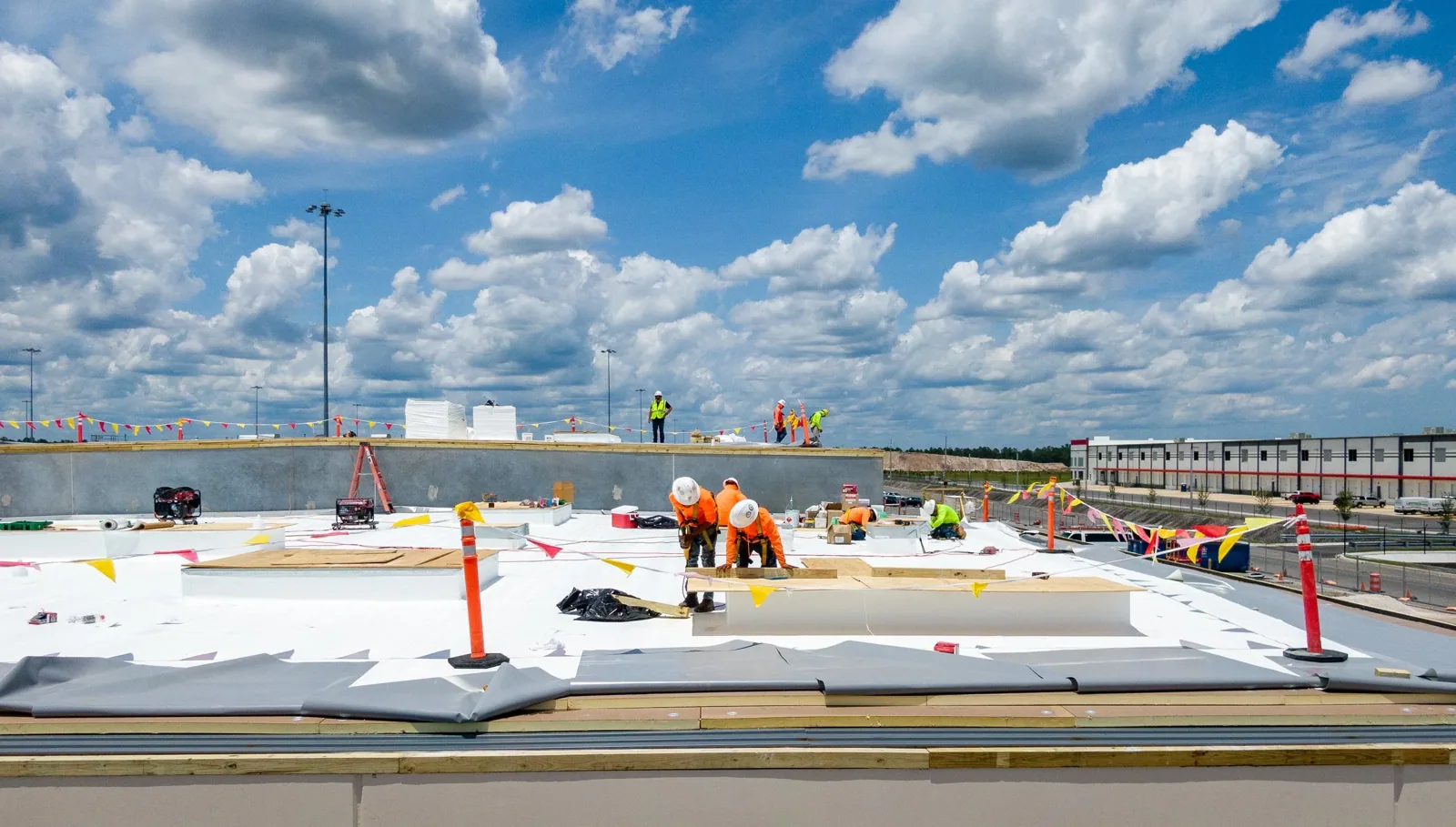
Because BUR is assembled in place, the dry-in point on each day is planned rather than assumed. A section is stripped, the deck is checked, insulation is set, and the plies are laid and flood-coated before the crew leaves, so no open insulation waits overnight for rain. Tenant notice goes out ahead of the odor and the noise, and the access route keeps loading doors clear during delivery hours.
That kind of planning matters at employers with fixed schedules, such as a school roof for the Lee's Summit R-VII School District, which is best scheduled around the academic calendar, or a medical office near University Health Lakewood Medical Center, where dock and entry hours set the delivery window. The roof drawing marks each phase boundary, the walk-off order is written in advance, and the punch list is closed before the last section is handed back. Details such as roof drains and scuppers and edge metal get their own pass, since they are where a multi-ply roof is most often tested first.
A built-up roof is not the lightest, fastest or cheapest option, and it does not need to be. It earns its place on roofs with heavy traffic, many penetrations or a requirement for a thick, redundant membrane. A modified bitumen roof shares the asphalt lineage with fewer plies, while a TPO roof gives a heat-welded single sheet with a faster install. The fair comparison starts from what the existing deck, insulation and drainage allow.
An owner in Lee's Summit who wants the longest planning horizon should start with a condition report. It lists the roof areas by age and condition, flags the ones where BUR still has life, and gives the property manager a basis for scheduling work over several budget years instead of one.
Enough to move cars out of the staging footprint and to plan around odor at the air intakes. We write the notice with the property manager after the day-one site walk, and we date it against the weather hold rules so a postponed section does not leave tenants guessing.
Sometimes. The deciding factor is whether the insulation under the plies is dry, which an infrared survey and a few core cuts will show. Dry insulation and sound plies allow a restoration coat or a new cap sheet, and wet insulation points to tear-off.
Gravel protects the bitumen from sunlight and from foot traffic, and it adds some hail resistance. Where the structure or the drains cannot handle the stone, a mineral cap sheet or a reflective coating takes its place.
Moisture or air trapped between plies expands in July heat, and Lee's Summit reaches an 88.3F mean high that month. A small blister can be cut and repaired, while a field of them signals trapped moisture across the deck.
The package lists which areas were opened and closed each day, the materials used in every layer, photographs of the details, hot work records and a punch list marked complete. The next inspection starts from those records.
Send the building address list, tenant hours and any open leak reports. We will walk the roof with the property manager and return a written sequence plan for the built-up scope before any price is set.
Request a Roof Assessment