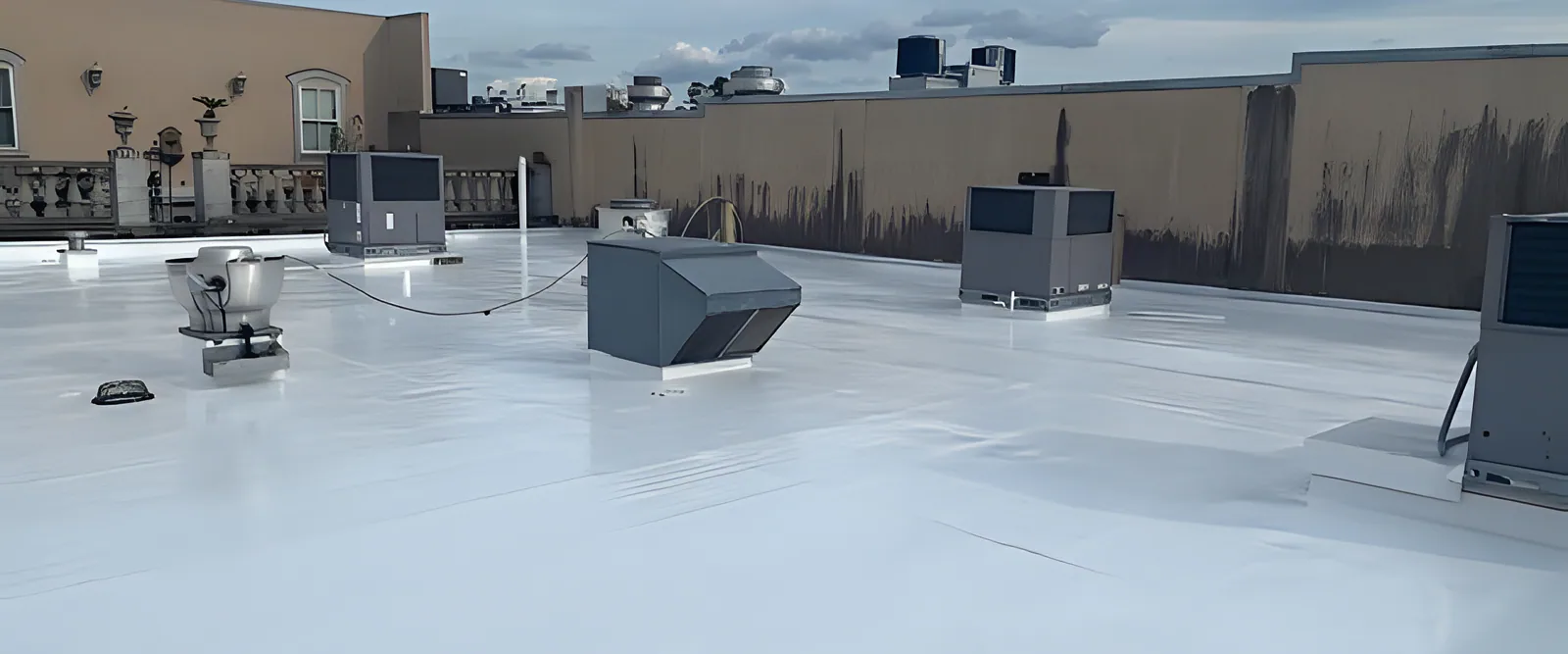
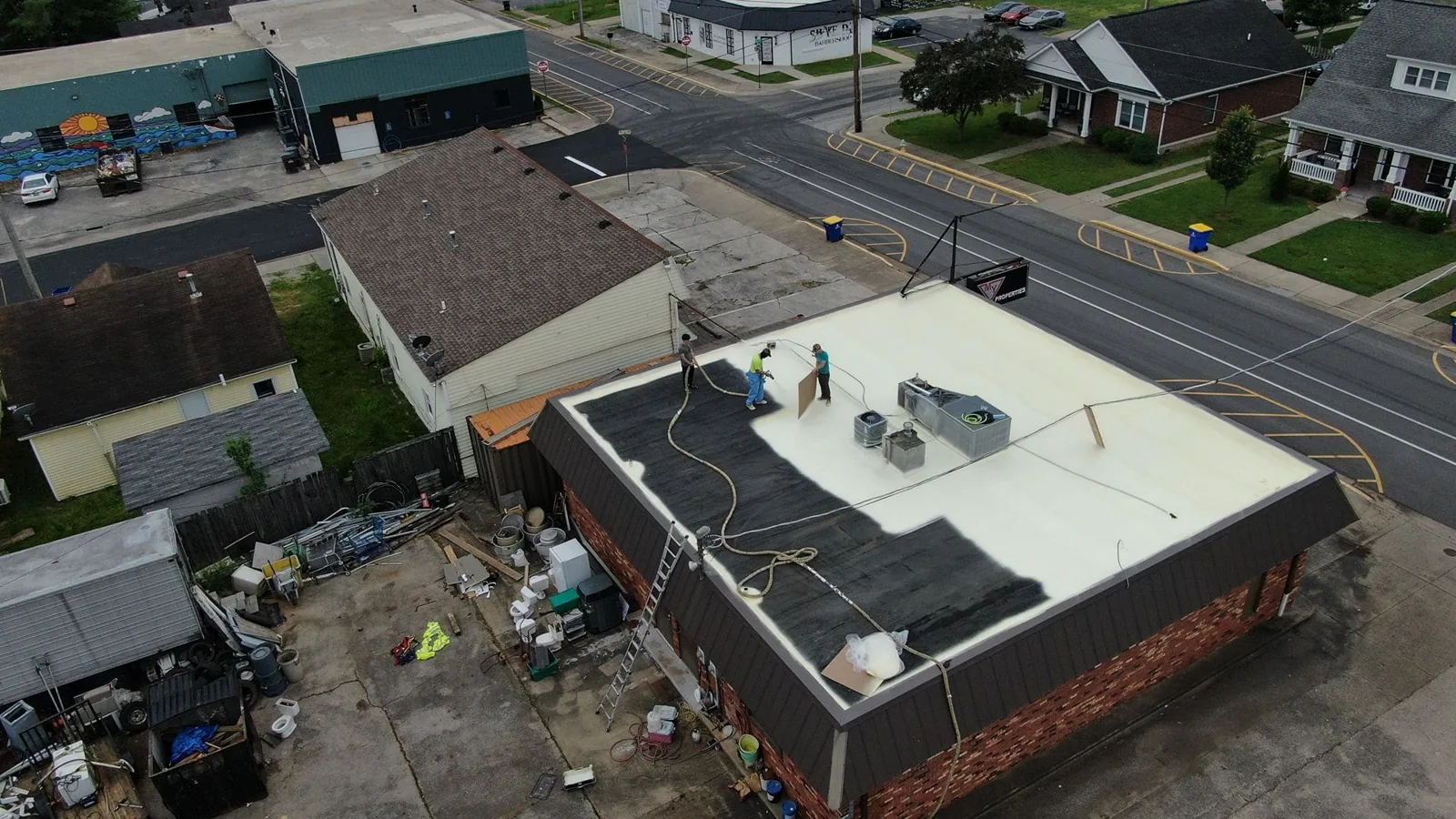
Drainage work shows up in a property manager's life as a ceiling stain after a hard rain or as a pond on the roof that is still there on Thursday after the storm on Monday. In Lee's Summit, MO, with about 38 inches of precipitation a year, the water arrives often enough that a blocked bowl or a scupper set too high shows its effect within a season. The first visit confirms the access route, the tenant hours and the roof sections served by each outlet, and then the roof is walked from the outlets outward.
The work covers everything that moves water off a flat roof: drains, scuppers, gutters, downspouts, crickets and the slope corrections that make them effective. Done in order, it takes a day or two per roof section and returns a roof that sheds a storm within a day.
The inventory comes first. Every drain and scupper is numbered on the roof drawing, photographed and flushed with water, and the flow is timed. A bowl that fills and drains slowly points to a partial blockage in the line. A bowl that does not drain points to a full one. Scuppers are checked for opening size, height above the membrane and the condition of the collector box and downspout.
The numbers go into a table the property manager keeps. Over the next seasons, the table shows which outlet clogs first and how fast. When a pattern points to a larger fault, such as a line that leaks inside the wall, the next step is a leak repair visit that traces the water to its entry point before anyone cuts a ceiling. Trees nearby, a neighbor's roof draining onto yours and a rooftop unit's condensate line all show up in that pattern.
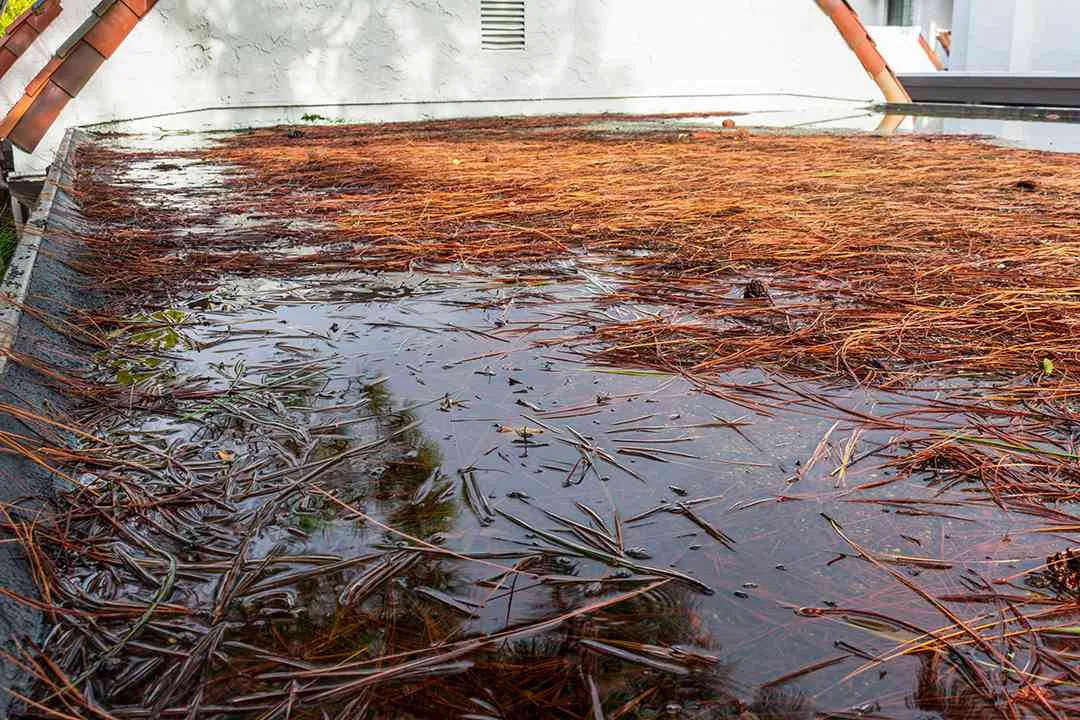
A pond that has drained by morning tells us nothing, so the best time to measure is the day after a rain. We note the depth at the deepest point, the area covered and how far it sits from the nearest outlet. Photographs go in from fixed points. A pond is a symptom, and its cause may be a blocked drain, a short slope, a sagging deck or a scupper set too high.
Each cause has a different fix, and a different price. A property manager deciding between them needs the depth, the age of the membrane and the tenant impact side by side. A cleared line costs an hour. A tapered insulation layer costs a section of roof. A new drain costs interior access and a permit. The scope compares the three against the depth, the age of the roof and what the roof will do next. Persistent ponding calls for ponding water roof repair alongside the outlet work, and the pond's measured depth goes into the file so the next rain test has a number to beat.
Where a roof drains through the parapet, the scupper is the outlet. If its sill sits an inch or two above the membrane, a permanent pool stands along the wall. A throat narrowed by sealant or debris slows flow, and a downspout packed with silt sends water back through the scupper. The correction is sometimes a cleanout and sometimes a rebuilt scupper with new flashing and a larger collector.
Gutters on low-slope buildings are checked for hanger spacing, joint seals and slope. Downspouts must discharge away from entries and walks, so a thaw does not leave an ice patch at a door. A frozen downspout on a quiet weekend is a small version of what the 2002 Kansas City ice storm did at scale: no one is there to clear it until the water has found a way in. The edge metal, coping and gutters around these outlets are checked on the same visit so a repaired scupper is not left attached to a failing wall cap.
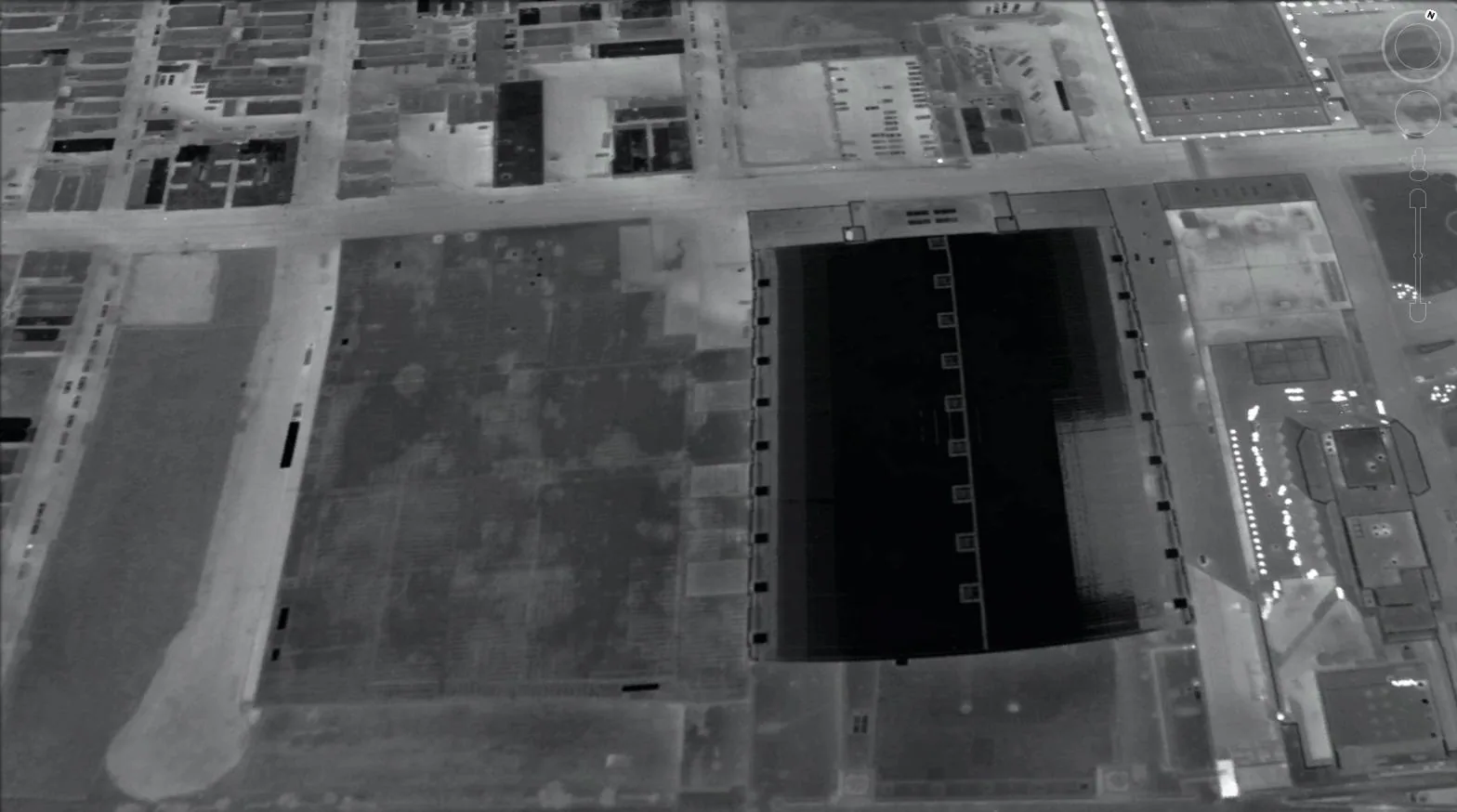
A pond that sits for weeks can push water through a weak seam, and the insulation below soaks. Draining the surface does not dry what is already wet. An infrared moisture survey maps the damp insulation, core cuts confirm it, and the boundary becomes the repair limit for the section.
If the insulation is wet, it comes out before any slope correction goes in. Tapered insulation over wet material seals the moisture in and hides the next failure. The scope orders the work: dry, then slope, then membrane, with the dry-in point set so a section opened in the morning is closed by evening. Crews stage insulation boards at the hoist footprint, keep the access route clear for tenants and carry away the wet material in covered containers, so nothing drips across a walkway on the way down.
When the outlet is clear and water still stands, the roof surface has to change. A tapered insulation layer re-slopes a section so water runs to an existing outlet. A sump around a drain deepens the low point and speeds entry. A cricket, a small ridge behind a curb or a unit, steers water around an obstruction instead of letting it pool.
Each option raises the roof surface or alters a curb height, so wall flashings and equipment curbs may need to be extended. The scope lists those details, and the layout drawing shows each board and its thickness. A new insulation and cover board layer is the natural time to build the slope in.
Slope work needs dry surfaces, so most of it happens between the spring storm window and the first freeze. A weather hold rule stops new openings when a warning is in effect, and covered sections are checked before the storm arrives. Drainage provisions, including secondary or overflow outlets, are reviewed against whichever I-Code edition governs the submittal, the 2024 set for filings from October 1, 2026 or the 2018 set before.
Sizing matters, and so does the pipe behind it. A replacement drain or scupper has to carry the water from the roof area it serves, and the existing outlet may have been sized for a smaller roof. The scope records the area served and the outlet size so the plan can be reviewed.
A long commercial roof along I-470, US 50 or MO 291 can have many outlets, and a parapeted storefront in Downtown Lee's Summit, where the historic district runs from 1850 to 1974, may drain through scuppers. Drain work in Lee's Summit, Belton and Grandview follows the same inventory, flow test and turnover table.
Water still there a day or two after rain has stopped needs a cause. We measure depth and duration so the finding is not a guess.
They can clear a strainer on a safe roof. Flushing the line and checking the bowl seal are better done on a roof walk, where a failing connection can be seen.
A small sloped ridge built behind a curb or a unit so water flows around it instead of pooling.
Often it needs interior access for the pipe. We confirm routing and tenant impact before proposing one.
It leaves a permanent pool along the wall, which stresses the flashing there. Lowering or rebuilding it is a common fix.
Send the building address list, tenant hours and any open leak reports. We will number the outlets, run the flow test and give you a written sequence plan before any slope work is priced.
Request a Roof Assessment