
A hail storm sends the property manager through a predictable list: notify tenants that a roof inspection is coming, find out whether anyone has reported a drip, and decide who will let the inspectors onto the roof. In Lee's Summit, MO, the severe thunderstorm warning of April 27, 2024 named 60 mile-per-hour gusts and penny-size hail and said to expect damage to roofs, siding and trees. A warning like that gives the manager a reason to inspect and does not itself say what happened to a building. The roof condition that decides the first move is whether the hail broke the surface or only marked it.
Hail inspections go better when they are scheduled, not improvised. We ask the manager for the hatch or ladder location, the hours when roof access is allowed and the names of tenants under areas with known leaks. A short written notice goes to those tenants before the crew arrives, and the staging footprint is set where the lift will not block a dock or an entry.
Timing matters because marks fade. Fresh impact marks on metal and membrane are easier to read in the first weeks, and spatter marks on a coated surface wash off with rain. A walk within two weeks of the storm gives the adjuster the clearest record.
After a storm line, buildings along I-470 and US 50 can be inspected in a batch. A manager with several properties can set one notice format, one access checklist and one weather hold rule for all of them, and the inspection records line up for comparison. The order of inspection follows risk: roofs with reported leaks first, roofs over sensitive tenants second, and the rest by distance.
The inspection uses test squares, areas of fixed size marked on each roof slope. In each square we count and photograph hail marks, measure them and note the material they sit on. Soft marks on a single-ply sheet, dents in metal edge and flashing, cracked granules on a modified bitumen cap and bruising on an old built-up surface are recorded separately, since each material shows hail differently.
We also record what is not there. Roofs without dents, with undisturbed granules and with no soft spots under the probe are documented as such, with photographs. That record is as useful to an owner as a damage list, because it shows the roof was checked and found sound.
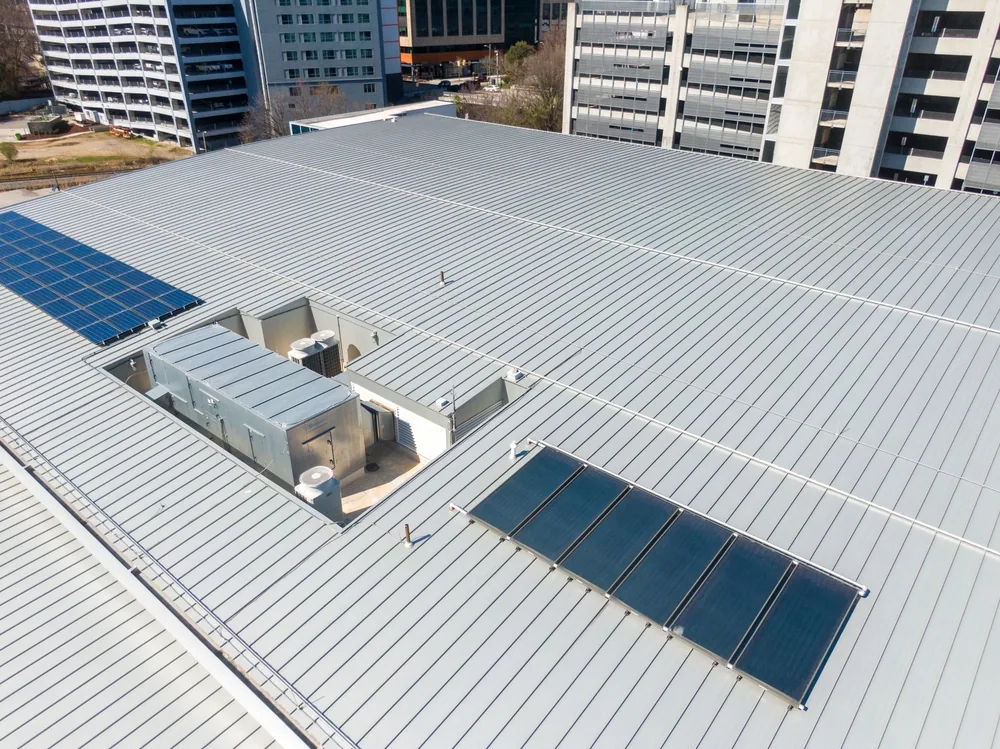
Edge metal, coping, vent hoods, skylight domes and rooftop unit housings are checked as well, since they show hail more clearly than the membrane does. Dents on a unit housing or a pipe vent are photographed with a scale, and their size gives an idea of the stones that fell. Skylight domes are checked for cracks that can leak without any mark on the membrane around them.
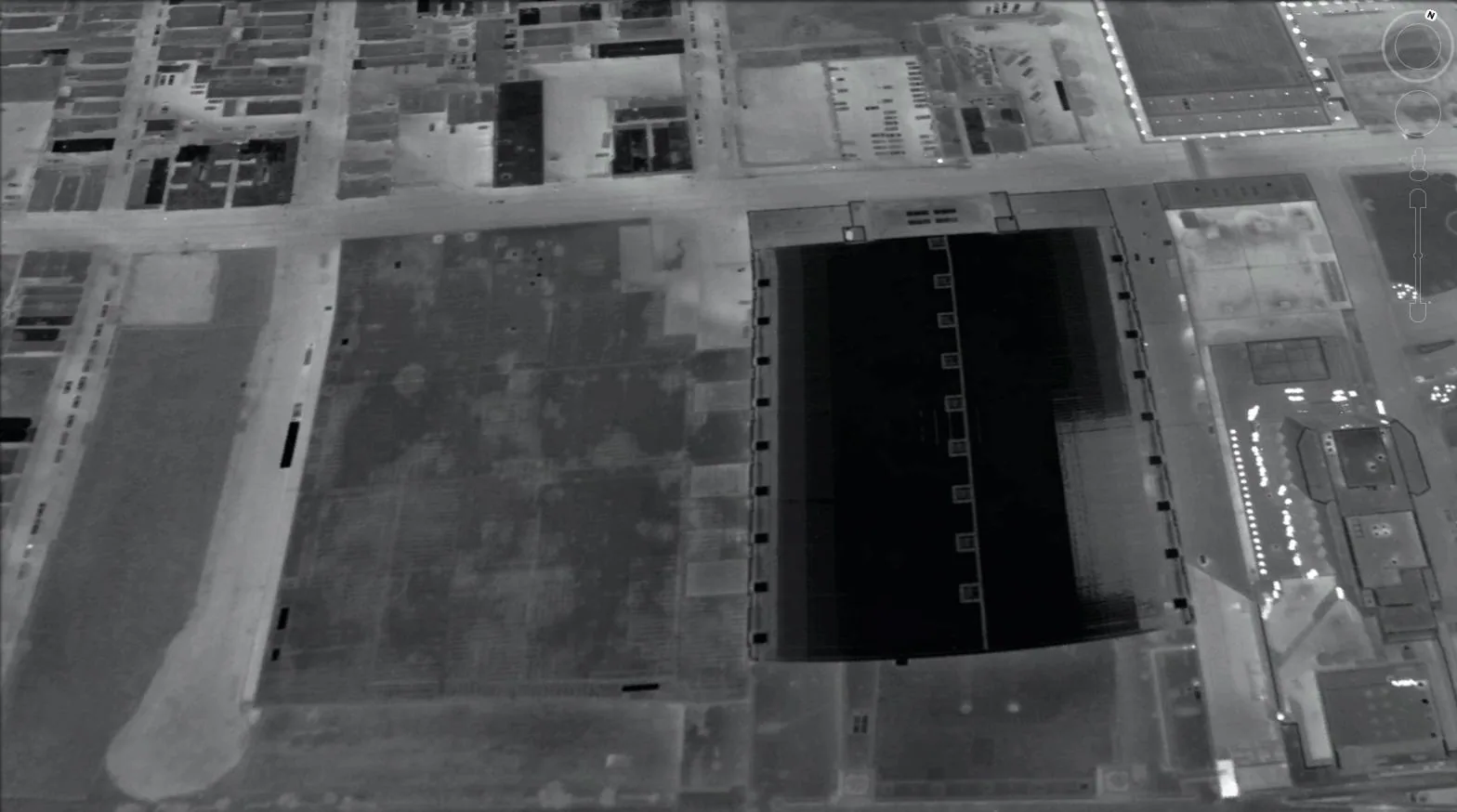
A hail mark that stays at the surface is a cosmetic or wear issue, and one that breaks the sheet or crushes the insulation under it is a leak path. To tell them apart, we probe each marked area, look for fracture lines under magnification and take moisture readings below the surface. An infrared moisture survey maps wet insulation, and core cuts confirm the results at a few points.
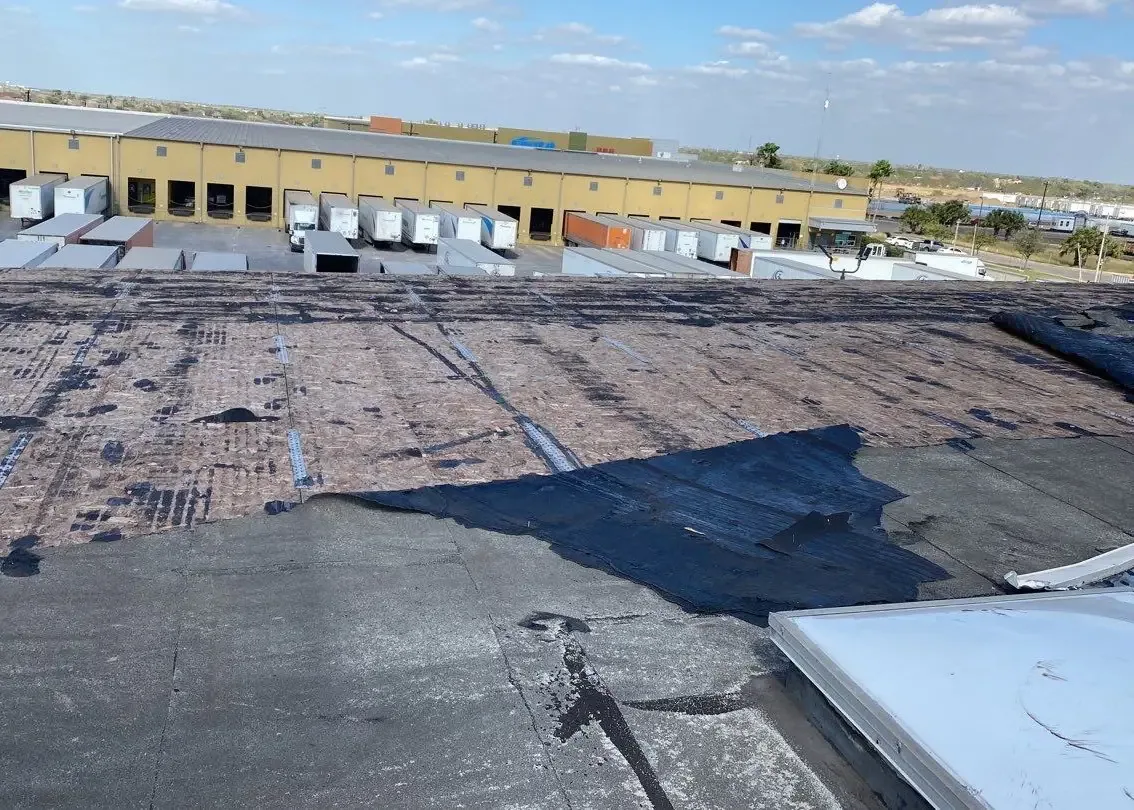
Where the sheet is brittle with age, small hail can crack it. Where the sheet is flexible, hail can bruise the insulation under it without breaking the surface, and a bruise can show later as a soft spot or a slow leak. The report names the cases found and the evidence for each.
Heat and cold both play a part. Lee's Summit's mean July high is about 88 degrees and its January high about 39, and a sheet that has gone through many such cycles is stiffer than a young one. We note the visible age of the roof, since a stiff old sheet cracks under stones that a young one shrugs off.
An adjuster reads a hail claim with an eye for older wear. Blistering, ponding stains, previous patches and ordinary UV cracking can all be mistaken for storm damage, and a fair report separates them. Our insurance claim documentation keeps hail marks, older wear and temporary protection in separate lists, each with photographs, dates and a location on the roof plan.
Drone images help on large roofs. A drone roof inspection shows the pattern of marks across a roof and finds areas that need a closer walk, and the images are dated and kept with the report.
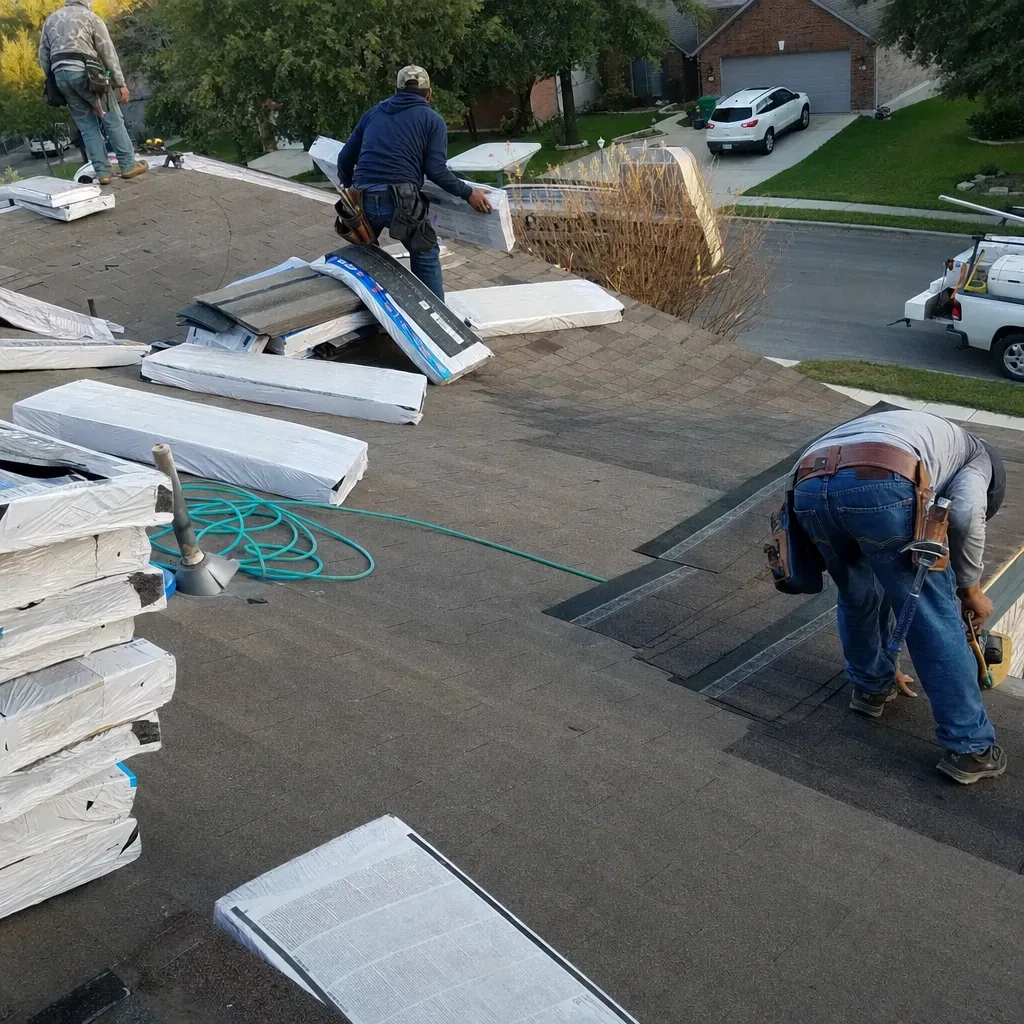
If hail has opened the roof, the dry-in point comes first: cracked areas are sealed, exposed insulation is covered and loose pieces are secured. The permanent scope follows the evidence, from spot patches at fractured areas to section replacement where bruised insulation covers a large share of a slope. A storm damage roof repair scope states which marks are repaired, which are monitored and which are left because they did not break the surface.
Weather hold rules apply. Spring storms can return within days, so no more roof is opened than can be closed the same evening, and permanent adhesive or weld work waits for temperatures the manufacturer allows.
Cost depends on the number of fractured areas, the amount of bruised insulation, the roof system, lift access and the hours tenants allow, and the proposal names each driver. The manager can approve the work in stages, beginning with fractured areas over occupied space, and the remaining items follow once the adjuster has reviewed the report. Related drainage problems that show after a storm are handled as in ponding water roof repair.
The turnover package gives the manager the test square data, the photographs, the moisture readings and the repair plan with each mark accounted for. A baseline of this kind is the strongest evidence if a later storm adds damage. Owners of buildings in Lee's Summit and Blue Springs can repeat the walk before the next spring window, and tornado or wind events are handled with tornado damage roof repair.
The package also lists items for the next walk: marks to re-probe after a thaw, a bruise to recheck for moisture and any temporary repair with its replacement date.
Within a few weeks if possible. Fresh marks are clear and spatter on coated surfaces fades with rain. A walk in that window gives the adjuster the best evidence.
No. Marks that stay at the surface are often cosmetic. Those that fracture the sheet or crush the insulation are leak paths, and probing and moisture readings separate the two.
A fixed-size area marked on each roof slope in which marks are counted and photographed. The counts give a consistent basis for the report and the repair scope.
It can, if the insulation below was bruised. A moisture survey and probing find that kind of damage, which shows later as a soft spot or slow leak.
Dated photographs, the roof plan with marks located, moisture readings, a list of older wear and a list of temporary protection. Keeping the lists separate helps the adjuster.
Send the building address list, tenant hours and the date of the storm. We will walk the roof with the property manager and provide a written sequence plan before any scope is priced.
Request a Roof Assessment