
US 24 runs through Buckner, MO, and a commercial building on that road gives a roofing crew a defined approach and a tight frontage. Customers, deliveries and a hoist all want the same strip of pavement. So the plan starts with that strip: where the container sits, where the lift stands and which door stays open at noon. The tenant notice follows. Then we read the roof, because its condition decides how large the first section can be and how quickly it can be sealed.
Buckner is in northeastern Jackson County and part of the Kansas City metropolitan area, with 2,945 residents in the 2020 census. A building on US 24 sees passing traffic and customers who arrive from the highway, so the entrance the public uses is the one we protect first. Trucks and lifts go to a side lane or the rear, and the notice tells tenants which side is affected on which day.
Deliveries are timed for the quiet hours. Insulation, membrane and flashing stock arrive in the order they will be installed. A flag person, if needed, is named in the plan. The foreman walks the lot with the manager on the first morning and signs off on the staging layout, and any change is made then.
Signage helps. A sign at the closed entrance points to the open one, and a cone line keeps customers from walking under a lift. Where the building has a drive-up window or a pickup lane, the lane is identified on day one and kept clear. These details sound small, but they decide whether tenants notice the roof job as a nuisance or as a few quiet days.
Lee's Summit's January highs average near 39F and its July highs near 88F, and the records stretch from minus 25F to 108F. A low-slope roof moves through that range each year. Seams open a little in winter and soften in summer, sealants harden, and flashing pulls at its terminations.
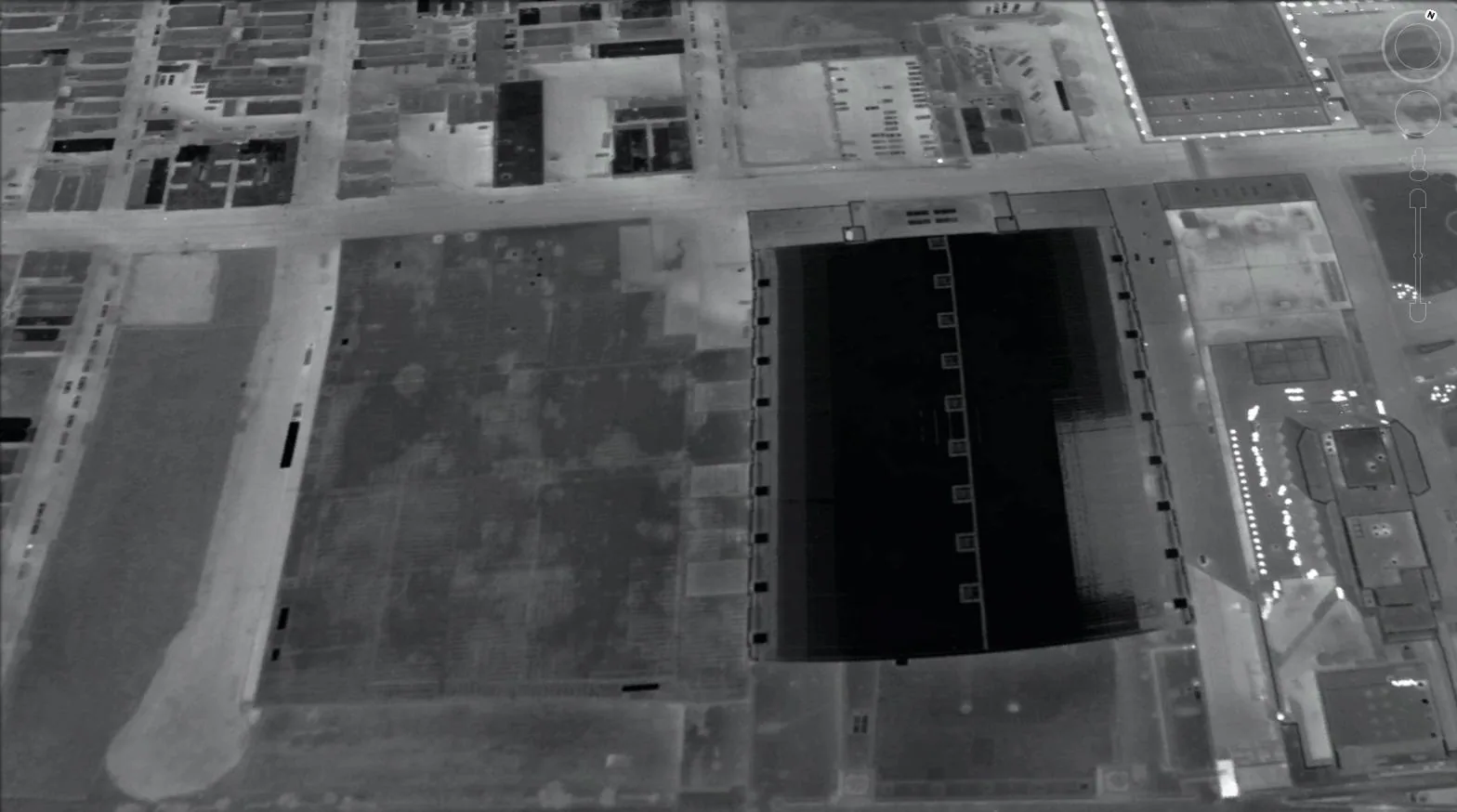
On the first walk we probe seams and laps, press on flashing terminations and look at sealant for cracks. We check drains, scuppers and any ponding ring. Rooftop unit curbs, vent boots and edge metal are photographed on a drawing. Where a stain inside does not match a defect, we trace the deck, and an infrared moisture survey shows wet insulation without opening the roof.
Edges and corners are checked early on any exposed building. Coping caps, drip edge and termination bars carry the first load in a hard wind, and a loose cap lets water behind the membrane. We press on each, check fasteners and sealant, and photograph anything that moves. Fixing an edge in a dry week costs far less than repairing the wet wall and ceiling that follow a long-running leak.
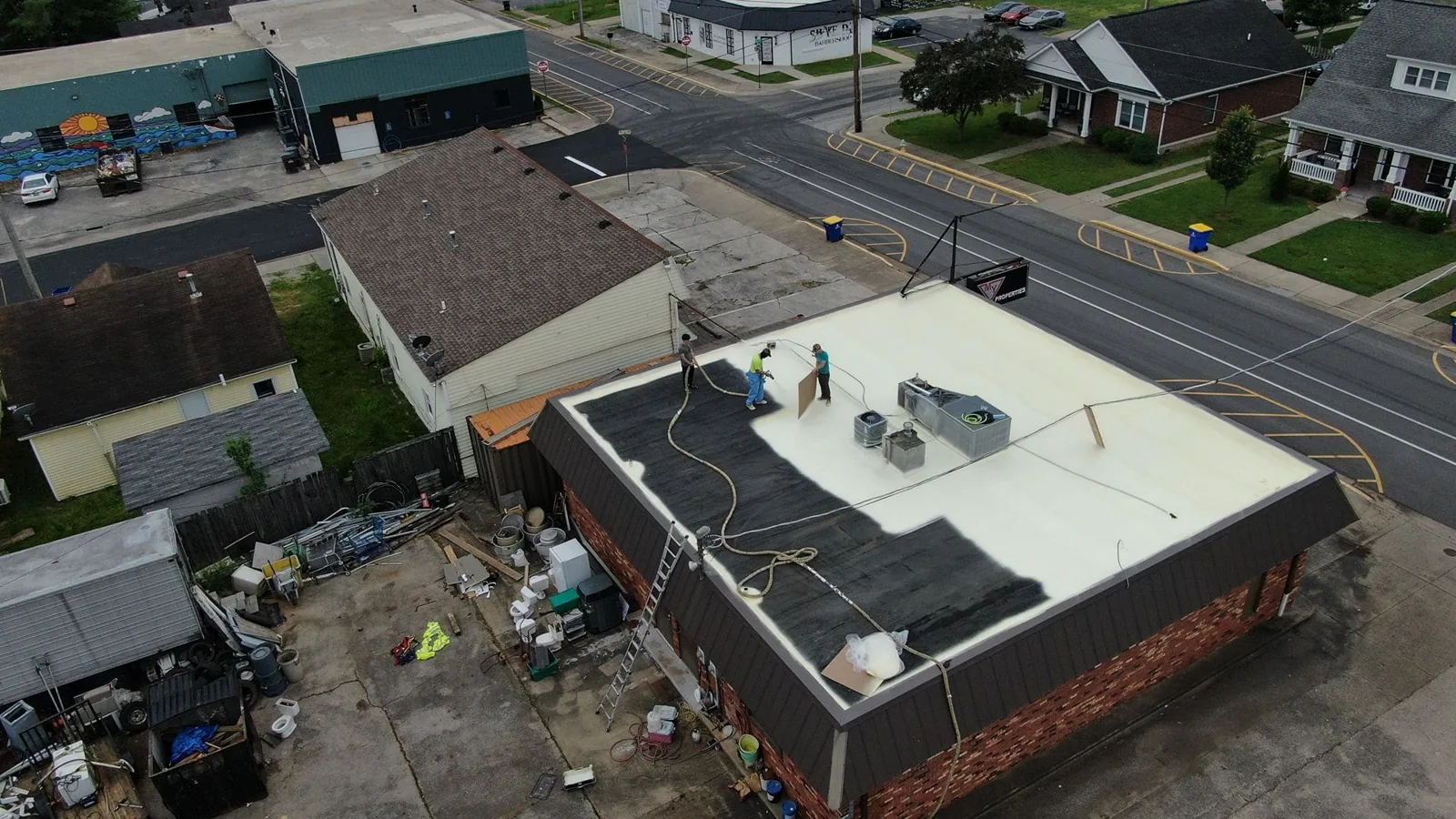
Day one is the walk, the notice and the staging setup. Day two opens the first section, which is sealed by evening. The following days repeat the cycle, and each seam between sections is sealed before the crew leaves. The plan lists the dates and hours of loud work, and the manager can answer a tenant's question without calling us.
A repair visit uses the same notice and a shorter plan. A commercial roof leak repair begins with the trace from the interior stain, so the patch lands on the opening. If the trace shows wet insulation over a wide area, the scope is priced both ways, a section repair and a full replacement, and the owner decides.
If wet insulation turns up that was not visible before, the foreman stops, photographs it and tells the manager the same day. The manager decides whether to widen the scope, and the change is written down before more material goes on. A scope that grows silently is how a short job becomes a dispute, and the written change order prevents it.
Kansas City's 2002 ice storm kept the lights off for hundreds of thousands of residents for days or weeks. Ice loads a roof, blocks drains and opens seams. Snow in Lee's Summit totals about 4.5 inches in a year against roughly 38 inches of total precipitation, and an April 27, 2024 National Weather Service warning there cited roof damage from gusts of 60 mph and penny-size hail.
Those facts shape two rules. In winter, drains and scuppers are checked for ice and debris before a storm. In spring, a hold rule stops the work at the next safe point when a storm line is forecast. After hail or ice, the first walk covers perimeter metal, curbs and drains. A snow and ice damage finding is documented before the next thaw.
Wind-driven rain is the quiet risk in spring. A gust lifts a loose edge, rain follows behind it and the leak shows days later. That is why the early-season walk of the perimeter matters, and why open edges are sealed before the crew leaves, even when the sky looks clear.
With a highway nearby, debris control is a safety matter. Cut scrap and fasteners never sit loose on a roof edge, where wind can move them toward the road or the lot. Material is tied down at the end of every shift, and a magnet sweep clears the pavement of screws and cut metal.
The dry-in point is set before the first cut. If the forecast shifts, the open area shrinks. Temporary seals are tested and logged. Rooftop units are scheduled with the manager and the mechanical contractor, so that heat or cooling is not off longer than the notice states. Drains are covered during work and tested when the crew finishes.
Pedestrian safety on the ground matters as much as roof safety. A barricaded strip runs under the work zone, with signs at both ends. Ladders are locked at the end of each shift. Hatches are secured. The foreman does a last walk of the lot before leaving and photographs the clean pavement for the log.
The turnover package lists what was opened and closed, photographs of each layer and a punch list. It names what to watch next: drains after the first heavy rain and sealant after the first hot week. The roof condition report records the state of the roof as handed back.
An owner with property in Independence or Grain Valley can use the same format for every roof, and the files can be compared when the capital plan is set.
The public entrance stays clear, trucks and lifts use a side or rear lane, and sections are sealed before evening.
It blocks drains, loads the deck and opens seams and flashing. We check outlets before a storm and document damage after one.
At once. Send the address, the stain location and any photos. We trace the water before quoting any work.
Some repairs can. Adhesives and sealants have working temperatures, so cold-morning work waits for a warmer hour or day.
Photographs of each layer, a list of what was installed, a punch list and the first items to check next.
Send the building address list, tenant hours and any open leak reports. We will walk the roof with the property manager and offer a written sequence plan before any scope is priced.
Request a Roof Assessment