
Winter roof damage reaches the property manager after the thaw, when a stain appears below a drain, a downspout stays frozen, or an edge piece hangs loose over a walkway. The sequence begins with a safe route onto a roof that may still be icy and with notice to the tenants under the stained areas. Lee's Summit, MO averages about 4.5 inches of snow in a year, a January mean high near 39 degrees and a record low of -25, so snow load is usually modest while repeated freezing and melting is routine. The roof condition that decides the first move is the drain, because meltwater that cannot leave the roof finds a seam.
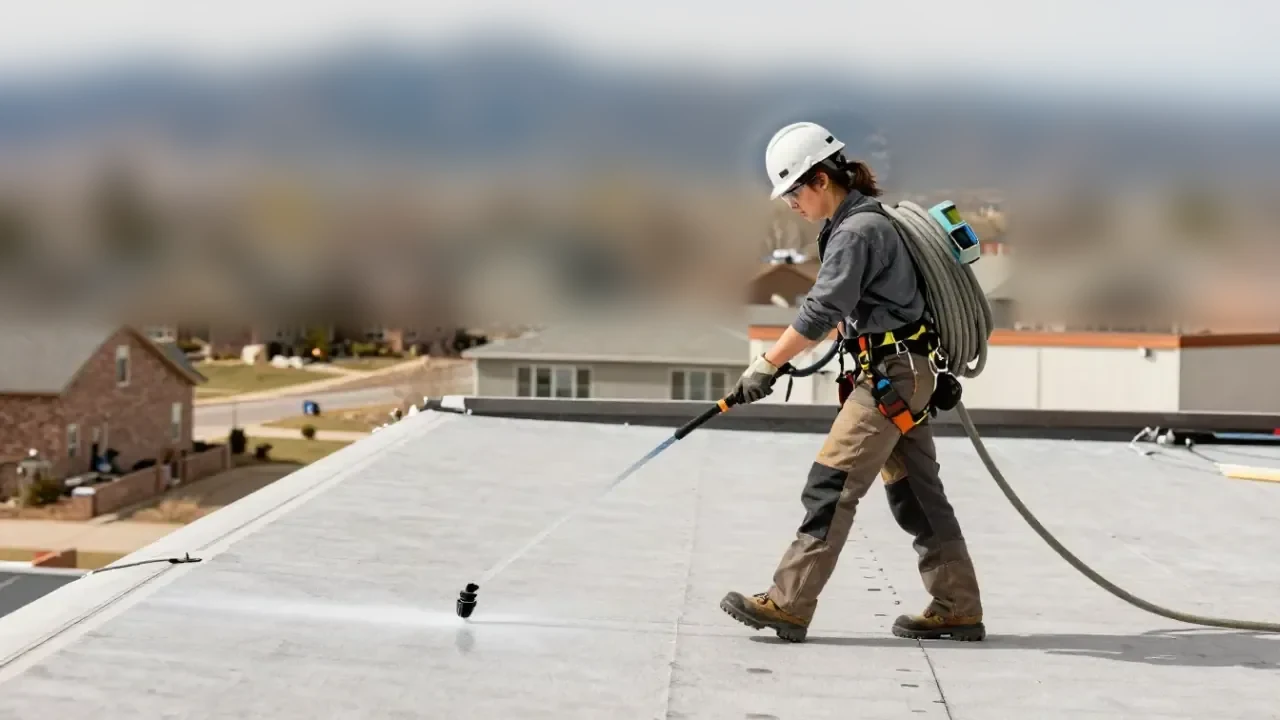
A roof walk in winter starts at the hatch or ladder, not at the membrane. We check for ice on the access route, set fall protection at edges and skylights that may be hidden under snow, and wait for conditions when the surface is too slick to cross. Tenants are told when the crew will be on the roof and which suites are under the inspection area.
Staging in winter is limited by snow piles and frozen ground. The lift needs a pad that will hold, and delivery trucks need a clear route, so the footprint is agreed on the first walk and revisited when the weather changes. If the building has a loading dock, deliveries are timed away from dock and entry hours.
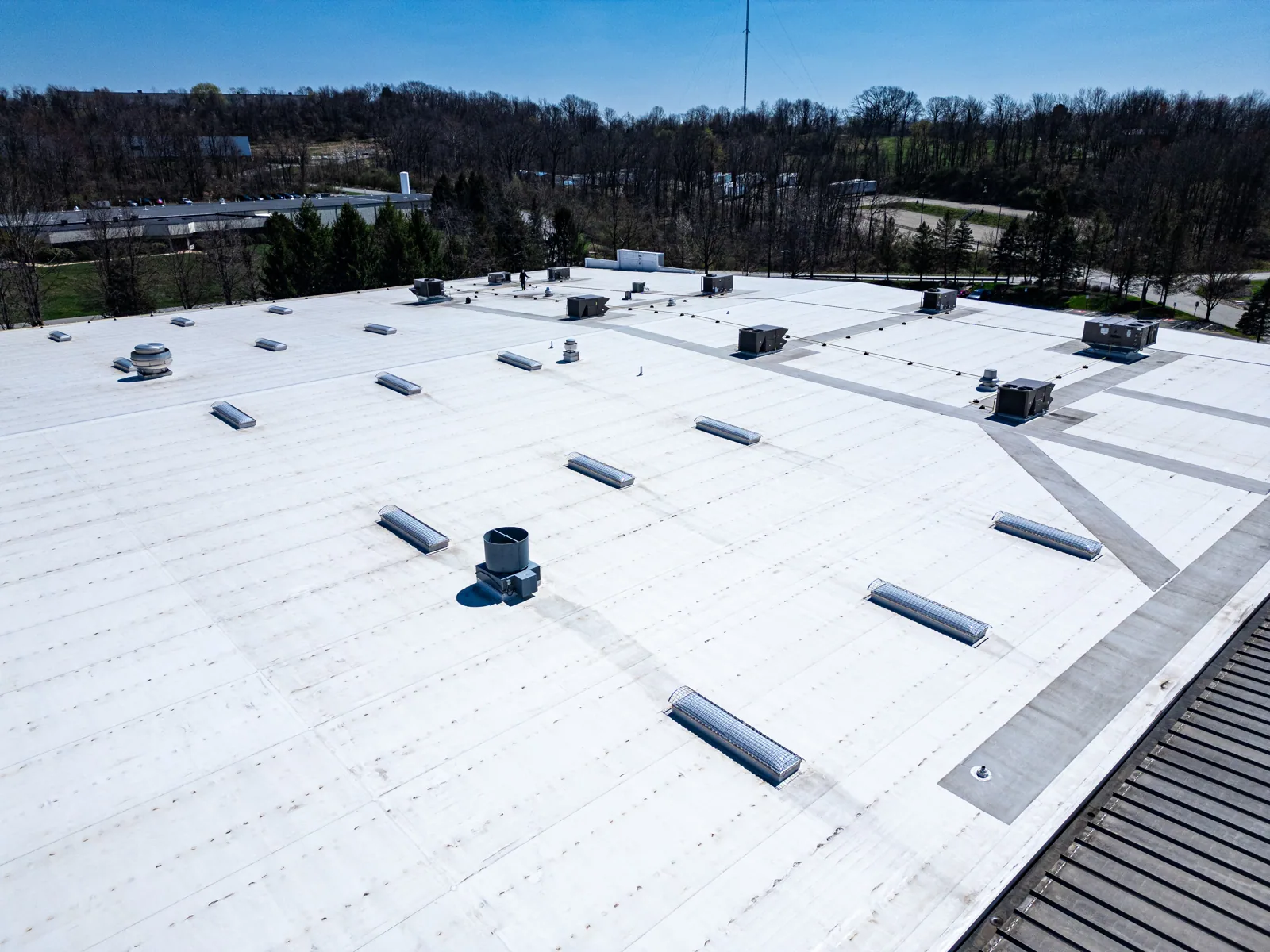
Snow on the roof hides skylights, hatches and low parapets, so the plan marks every opening before anyone crosses the surface, and the crew works from the access route outward.
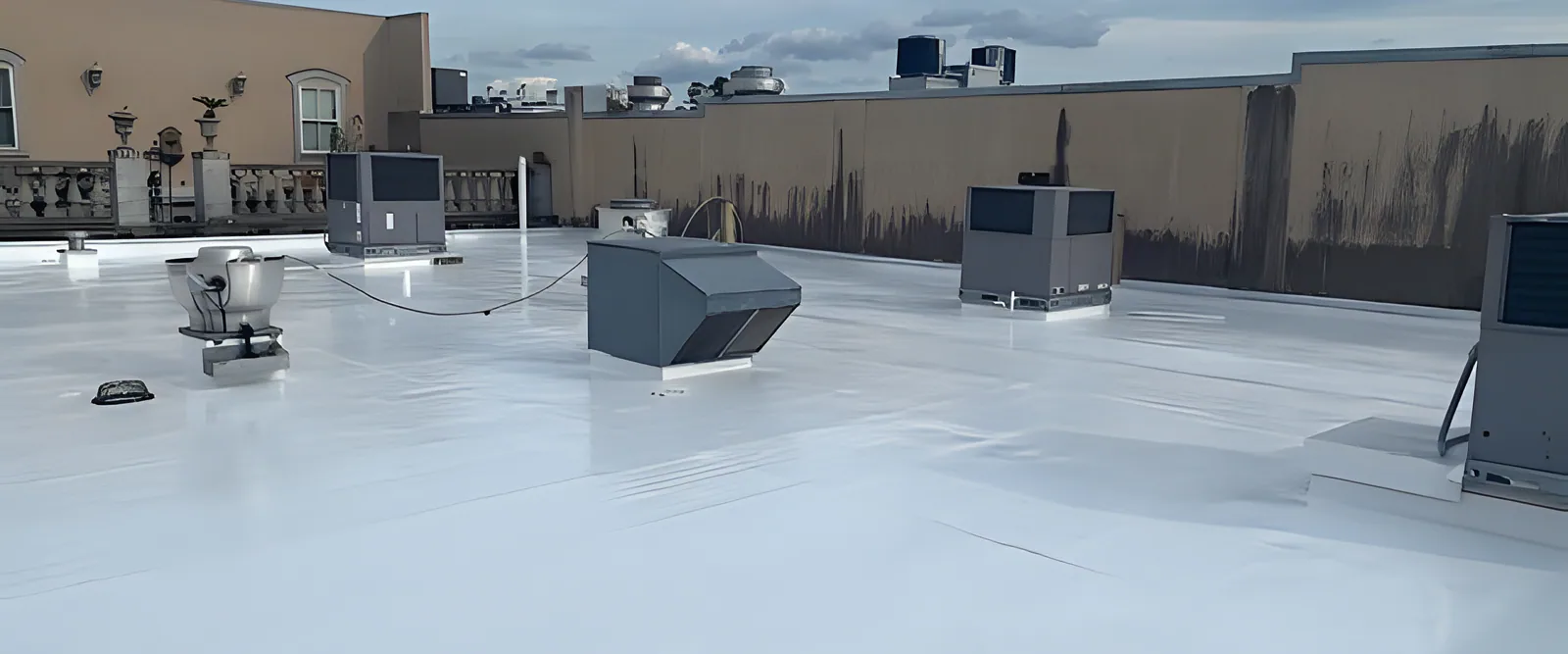
Drains are the first stop after a freeze. Ice in a bowl, a frozen line below the roof or debris packed in a strainer all leave meltwater standing against flashings and seams. We clear the immediate area, pour warm water to confirm flow where the line allows, and record any pond that remains once the drain runs.
Our drain and scupper work covers reseating cracked bowls, adding overflow scuppers and recommending heat trace cable where the same drain freezes year after year. An overflow outlet set slightly above the primary drain gives water a second way off the roof when ice blocks the first.
Moisture is checked after the drain runs. Water that stood against a flashing for days may have reached the insulation, so an infrared scan on the first dry afternoon maps any wet area, and core cuts confirm it. The repair boundary follows the wet area, and the report shows the manager whether the freeze caused a leak or only a pond.
Water that enters a small gap at a seam or flashing freezes at night, expands and widens the gap, and the next thaw lets in more. A pinhole becomes a split over a season. The signs on the roof walk are lifted edges along laps, cracked sealant at terminations and torn flashing where snow slid or loaded the metal.
The repair for each follows its own method. Seam failure repair restores a lap by welding, bonding or capping, and flashing failure repair rebuilds a wall base or curb. In cold weather we place temporary seals and return for the permanent bond on a day the manufacturer's temperature range allows.
Ice dams form where heat from the building warms the roof surface and melts snow that then refreezes at a cold edge. On low-slope roofs the same effect happens at parapets and at drains beside a warm penthouse or rooftop unit. The dam holds a shallow pool behind it, and any weakness in the lap or flashing below that pool leaks. Better insulation and ventilation below the roof reduce the effect, and we point out the heat sources that feed it.
Snow on a flat roof drifts behind parapets, beside rooftop units and at the step between a high roof and a low one, and those spots carry more load than the field. Slides from an upper roof strike lower roofs, rooftop equipment and edge metal, and gutters that were hung for light loads pull away. A roof edge with ice tracks, bent metal or missing fasteners shows where the load landed.
Signs of overload are specific: doors that stick in a room below, bowed ceiling panels, new cracks in interior walls and a deck that looks dished between supports. Any of those goes to the owner's engineer, and the roof repair waits for the structural answer. Edge metal, coping and gutter repairs replace failed lengths with heavier attachment where the site calls for it.
Weather hold rules apply to repairs. Sealants and adhesives only cure on dry surfaces within the manufacturer's temperature range, so winter repairs are temporary by design, listed with a replacement date and checked after each storm. Roof sections are not opened when a front is forecast within the cure window, and the manager is told by message the evening before.
The 2002 ice storm cut power to hundreds of thousands of Kansas City residents for days or weeks. A building in that position has no heat, no pumps and no heated drain lines, and a roof with a frozen drain cannot shed meltwater. The practical lessons are modest: know where the overflow scuppers are, keep drains clear before winter, and have a contact list for emergency dry-in.
Our emergency roof repair response runs day and night, holidays too, and a manager who has the roof drawing and the tenant list ready can brief the crew by phone before they arrive.
The turnover package lists drains cleared, seams and flashings repaired, edge metal replaced and items held for a warm day, with before and after photographs. We recommend a spring check after the last freeze to read what the season did. Owners of buildings along I-470 and US 50 in Lee's Summit, and in Raymore, can repeat the same checklist each year, and a preventive maintenance plan places the fall drain check on the calendar before the first freeze.
Records from the walk go into the roof file: the date, which drains ran freely, which ponded, which seams opened and which repairs were made. The next spring, the same list shows whether the repairs held, and a drain that froze in two consecutive winters earns a permanent fix such as heat trace or a relocated outlet.
After the thaw, while stains and water marks are fresh. A second check in fall, before the first freeze, clears drains and tightens details.
Yes, especially where drifts build or an older deck has weakened. The average snowfall is modest, so drifts behind parapets and at roof steps are the places to look.
Only if a structural or leak concern calls for it. Clear around drains first and keep tools off the membrane, because shovels cut sheet more often than snow does.
A secondary outlet set higher than the main drain. If ice blocks the drain, water leaves through the overflow before it can rise above the flashing.
Not necessarily. Many thaw leaks trace to one blocked drain or one split seam, and a roof walk shows.
Send the building address list, tenant hours and any leak reports from the thaw. We will walk the roof with the property manager and provide a written sequence plan before any scope is priced.
Request a Roof Assessment