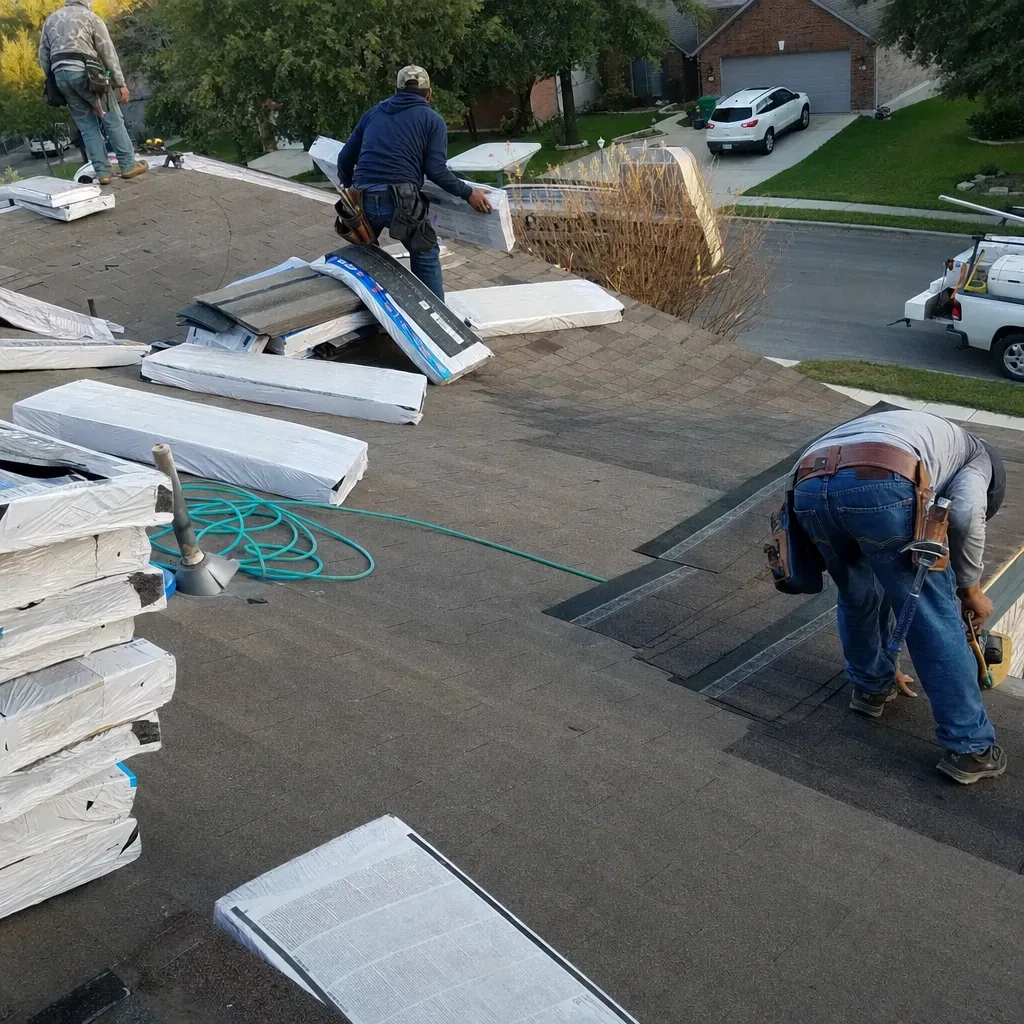

A leak call has a logistics problem inside it: someone has to reach the roof, find the opening, stop the water and keep the building running while that happens. In Lee's Summit, MO we start by asking where the water is showing, which suite is affected, when it began and what the weather did in the days before. Those answers set the route across the roof before anyone climbs a ladder, and they matter as much for a medical office near Lee's Summit's hospitals as for a warehouse, because the tenants lose different things when a ceiling drips.
Tracing a leak is a process of elimination, and the order matters. We start with the plain explanations, such as a clogged drain or an open seam, and move toward the harder ones only when the plain ones are ruled out. The target is a repair that stays dry through the next storm, not a patch that satisfies the next phone call.
The first conversation covers the interior symptom and its timing. Water that appears only in heavy rain from the east suggests a wall flashing on that side. A stain that grows slowly after every rain suggests wet insulation spreading along the deck. Drips that appear during a thaw suggest ice dams at drains or condensation, not a membrane opening at all.
The Pleasant Hill office of the National Weather Service sits only about ten miles southeast of Lee's Summit, so storm timing can be matched to its warnings. We also ask for the building's roof records and any previous repair invoices. Past patches are clues, because water often returns to the same detail. If a ceiling tile has been replaced several times in the same bay, the roof is telling the manager where to look. Water that shows up during a thaw usually points to snow and ice damage, where frozen drains, not an open seam, are the cause.
On the roof we begin at the nearest drain and clear it, because a blocked outlet turns a field of membrane into a shallow pond whose weight and depth stress every seam. From the drain we follow the slope uphill toward the interior stain, checking seams, patches, penetrations, and the base of any wall that sits uphill from the leak.
Water entering a roof rarely drops straight down. It follows a deck flute, an insulation seam or a pipe, and can emerge several feet away from where it came in. That is why we look uphill and sideways from the stain, and why a single suspect detail is confirmed before we call it the cause.
When visual inspection does not settle the source, we isolate. A controlled water test starts at the lowest suspect area and moves uphill in stages, with someone inside watching for the first drip. The test is run section by section so the detail that admits water is identified rather than guessed at.
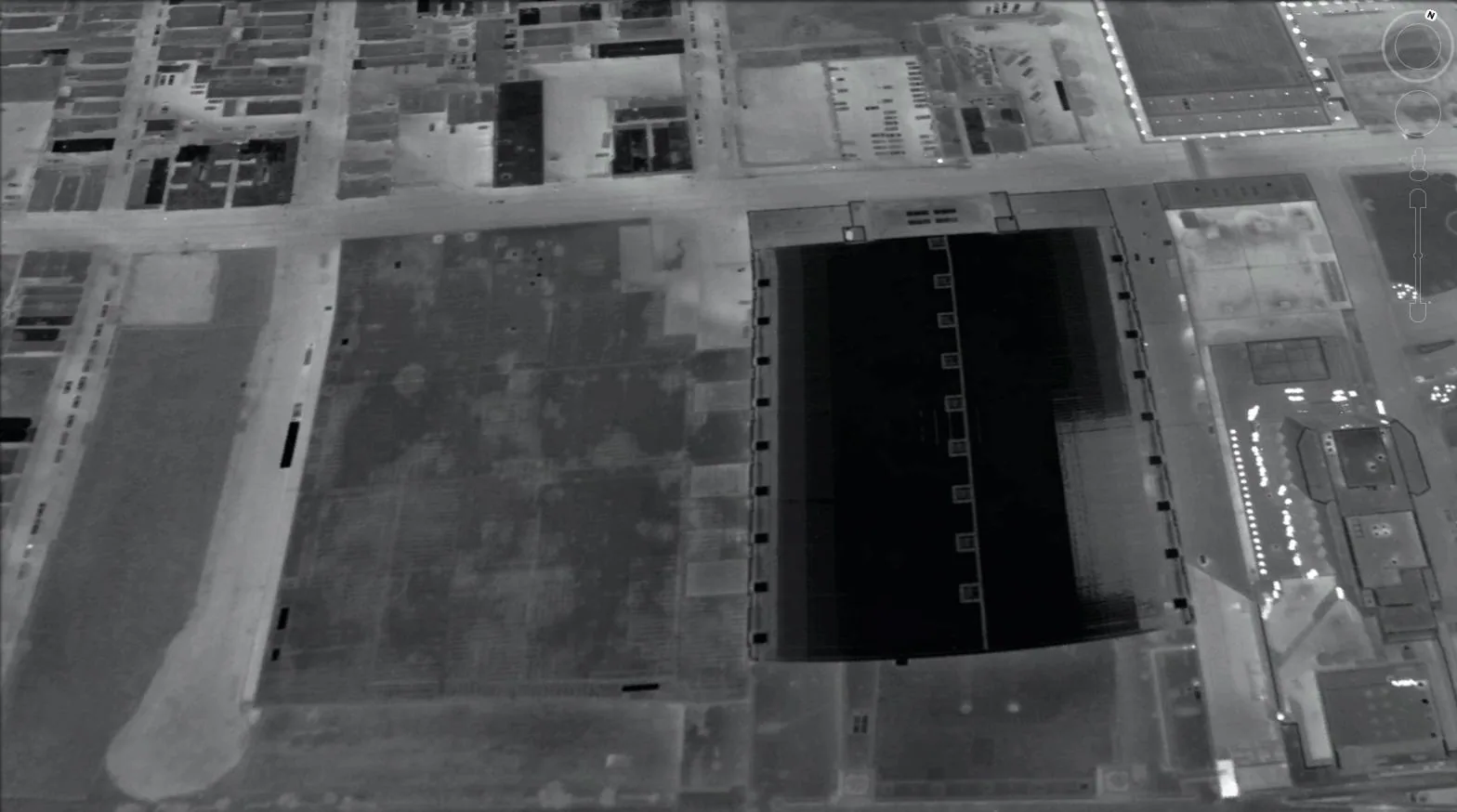
For roofs with wide wet areas we add a moisture map using infrared and core cuts, the same method used in an infrared moisture survey. The map shows how far the water has spread through the insulation and whether the repair is a patch or a larger section replacement.
Penetrations, flashings and seams are the usual suspects. Pipe boots crack, counterflashing separates, and curbs under rooftop units lose sealant at their corners. Scuppers and gutters leak at their joints, and where a parapet cap loses its seal, rain enters the wall and runs onto the roof deck.
Skylights are their own case: curb flashing, glazing seals and condensation can each produce a drip, so we look at skylight and penetration flashing as separate details.
Cold or wet conditions often limit what can be done on the first visit. A temporary seal, a patch or a tarp stops the water long enough to protect the interior, and the permanent repair is scheduled for suitable weather. The manager receives a clear note on which one was done, what it will hold against, and when the permanent fix should follow.
Lee's Summit sees about 38 inches of precipitation a year, and spring brings storm lines like the one the National Weather Service warned about on April 27, 2024, with damage to roofs, siding and trees expected. A leak found just after such a line is as likely to be storm damage as old wear, and the record we keep, with dated photographs of the interior and the roof, supports both the repair and a possible insurance claim.
Water stops, but the building is still wet. We advise on ceiling tile removal, covering stock and equipment, and drying the space, and we note what was seen in the plenum and on the deck so the manager can brief tenants and any restoration contractor.
Follow-up is part of the plan. After the next significant rain the manager reports whether the area stayed dry, and we return to the roof if it did not. Where the same building leaks twice from different details, we step back to a full roof inspection rather than continue chasing individual drips along the I-470 corridor and elsewhere in Lee's Summit. Photographs of the stained ceiling, the plenum and the deck, taken before anything is cleaned up, give the manager and any restoration contractor a record of how far the water traveled.
Water follows the path of least resistance along the deck, a steel rib or a seam in the insulation, so it can travel many feet before it drops through a ceiling. Finding the opening means working uphill and sideways from the stain, which is why a quick patch above the stain often fails.
Short-term stops can be made on a damp roof, such as tape-based patches, mastic or a tarp, but most permanent repairs need a dry, clean surface. We separate the two in the report so the manager knows which work is temporary and when the permanent repair is planned.
Two stains in one storm usually mean two sources, a shared one such as a blocked drain, or one source with a long travel path. We check shared drainage first, then work from each stain, and test the sections separately so one repair is not credited for the other.
No. A leak at a single penetration, a seam or a flashing is usually a repair. Replacement comes up when the moisture survey shows wide wet insulation, or when repeated leaks at many details show the membrane has aged out. The tracing record gives the evidence either way.
Report it the same day if you can, with photographs of the interior and the time of the storm. Early reports let us separate fresh storm damage from a long-running leak, and they support any claim that follows. Water left sitting in insulation also spreads, so delays make the repair larger.
Send the suite or bay, the date it began and any photographs. We will start with the drains and work uphill, then report the source, the stop and what comes next.
Request a Roof Assessment