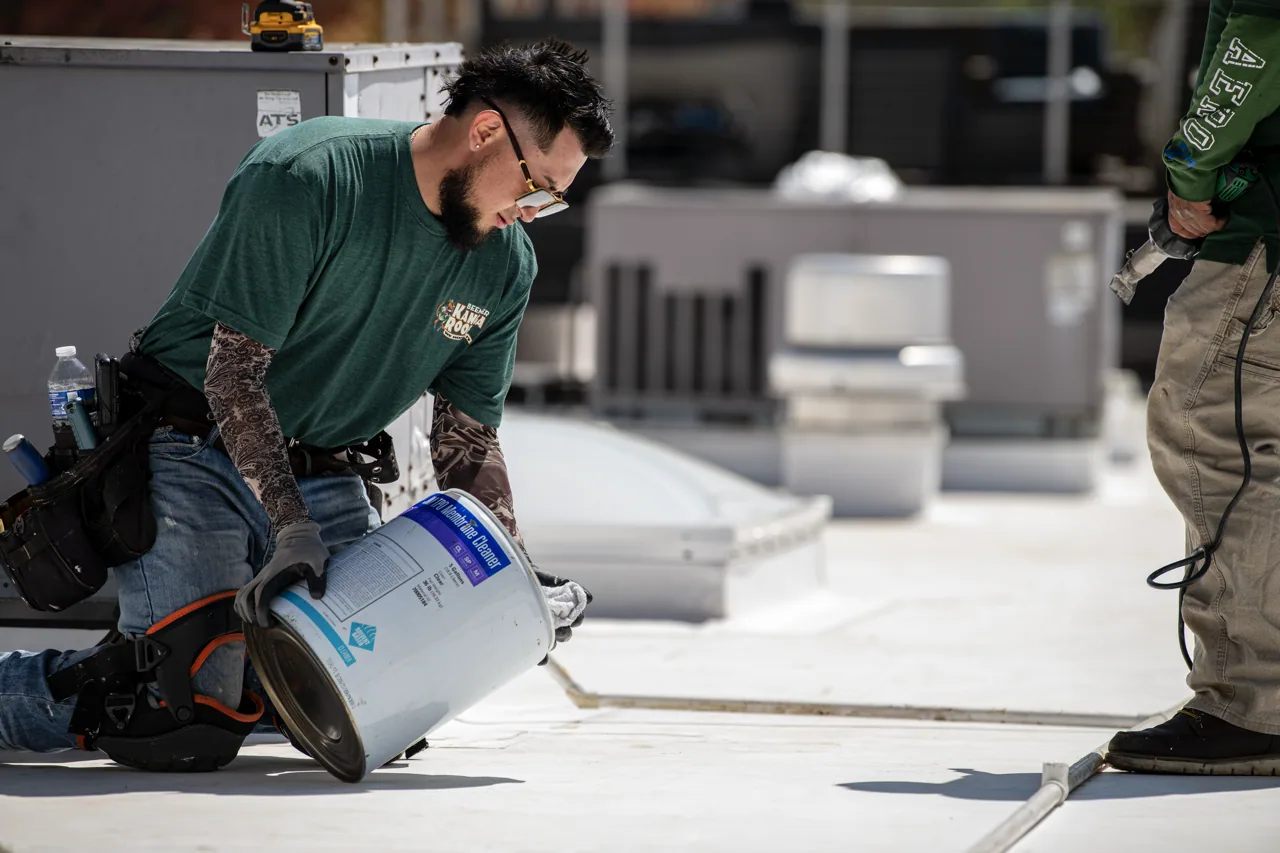
A condition report is the document the property manager actually hands to someone else: an owner deciding on a budget, a lender reviewing collateral, an insurer reading a loss or a buyer in an inspection period. It has to make sense to a reader who was never on the roof. In Lee's Summit, MO, the reader may be looking at a building along US 50 or I-470, a downtown block or a property in a neighboring city, and the report has to carry the same structure for each. We prepare it from a site walk planned around tenant notice, the access route and the staging footprint, and we write it as the walk is done.
The report opens with a one-page summary: the roof system and approximate age as read on the roof, an overall rating, the three most important findings and a recommendation in plain terms. The pages after it follow the roof in order. Drainage comes first, then the membrane and seams, then flashings and edges, then penetrations and rooftop equipment, then insulation and moisture where it has been measured.
Each finding has a number that matches a mark on the roof drawing, a photograph, a short description, a recommended action and a priority. A reader can follow one finding from the summary to the photograph to the drawing without hunting.
The first page also lists the walk details: date, weather, who was present, the access route used and any limits on the walk, such as an area that could not be reached. A reader who sees that a section was not accessible knows not to rely on the report for it, and the manager has a to-do for the next visit.
An appendix holds the raw photographs, the moisture images and the core logs, so a reader who wants more than the summary can check the evidence directly.
Photographs carry the report, and they follow rules. Every roof zone is photographed from a fixed point first, then each drain, curb, seam run and edge. Close views have a scale in the frame, dates are embedded, and the order is the same on every building so two reports can be compared page for page.
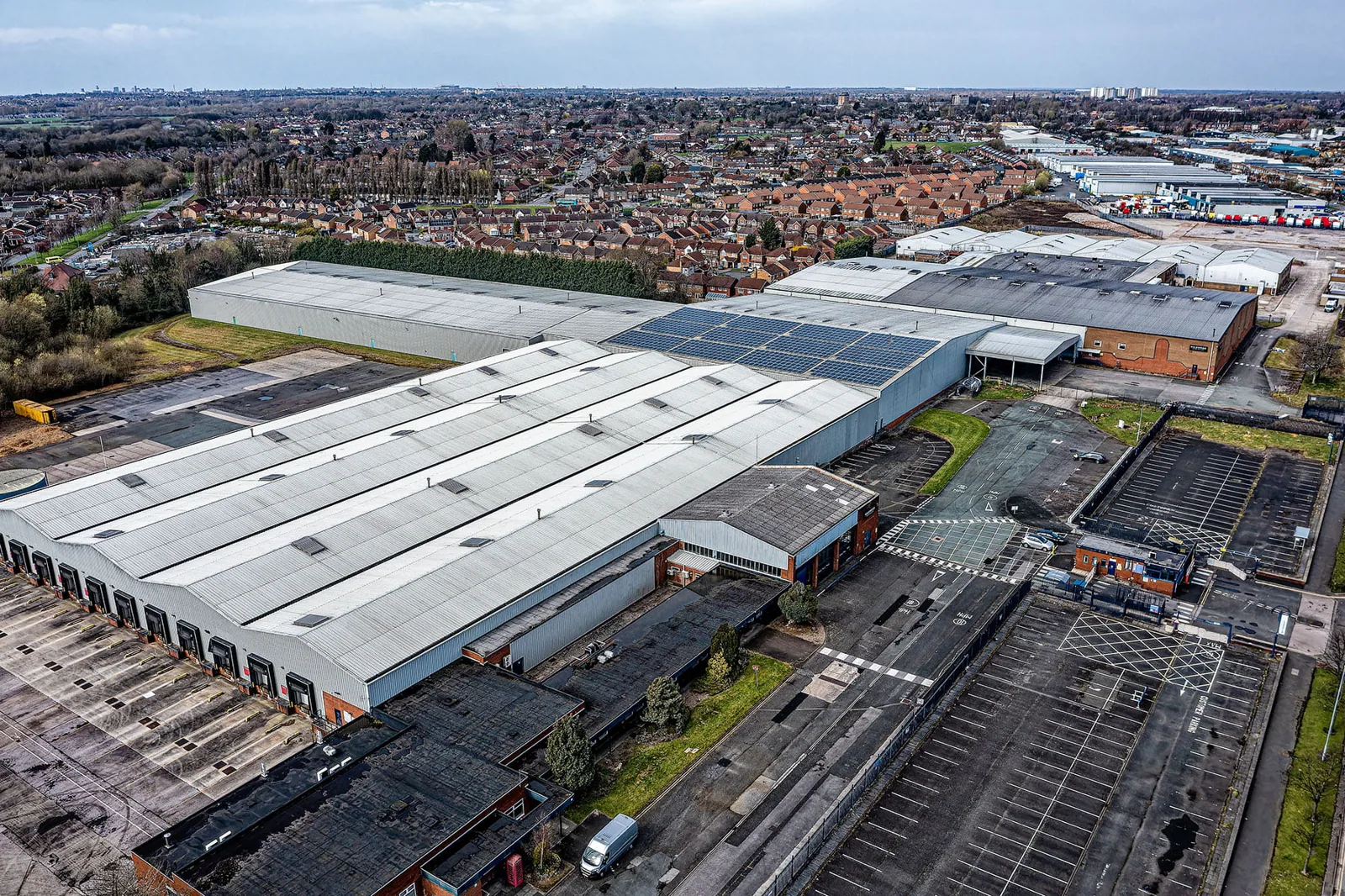
Drone images supplement the walk on large roofs. A drone roof inspection shows ponding, discoloration and displaced equipment from above, and the images are filed with the report with notes on light and weather so the reader can judge how far to trust them.
Weather and light are logged beside the images. A wet roof hides stains and a dry roof shows them, a low sun exaggerates blisters, and a dusty sheet looks older than it is. We note conditions so the reader can weigh the pictures, and we repeat a view in better light when the first is unclear. Tenant notice for the photographic walk is brief, and the staging footprint is only needed if a lift is used for a high roof.
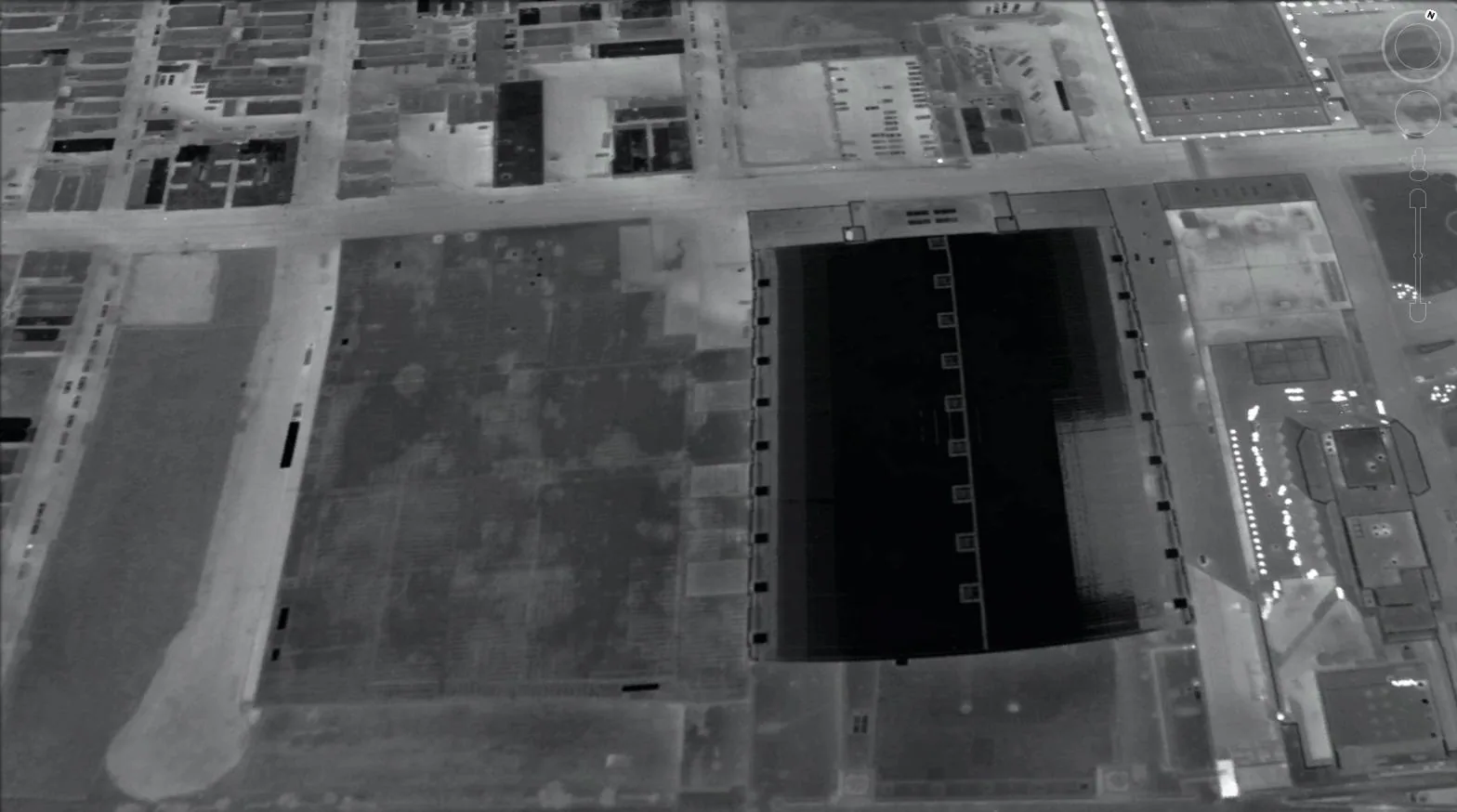
Where water is suspected, the report includes a moisture map. An infrared moisture survey run on a dry afternoon after the sun has warmed the roof shows wet insulation as a thermal pattern, and core cuts at selected points confirm it with a layer-by-layer photograph and a meter reading. The cut is sealed the same day.
The map and the cores tell the reader where the repair boundary sits. A wet area of a few square feet around a drain is a repair, while a wet band across half a slope is a section replacement, and the report states which the evidence supports and what would change the conclusion.
The report rates the roof overall and by zone on a simple scale and gives a remaining service life as a range. The range is a judgment from evidence, and the report lists the evidence: membrane flexibility, seam condition, moisture, drainage, repair history and exposure. A reader who disagrees with the rating can see what drove it.
Limits are stated. A report based on a walk and a few cores does not see under every square foot of the roof, and the report says which areas were tested and which were observed only. A lender or buyer relies on the document for a decision, and that clarity serves them.
Heat, cold and storms shape the rating. Summer afternoons near 88 degrees and winter days near 39, with extremes from -25 to 108 across the record, mean roofs here age by cycling. The report records the visible signs of that cycling and ties each to the rating.
The ranked list sorts findings into immediate, near-term and watch categories. Immediate items include active leaks over working space and wet insulation near electrical equipment, near-term items include failing details on a roof that is otherwise sound, and watch items include aging that has not yet caused damage. Each carries a method and a note on what would move its price.
The list lets the manager approve work in stages. A commercial roof repair scope can be priced from the immediate items, while the near-term items feed the budget in roof capital planning.
Every item has a status that carries across reports: open, scheduled, complete or watched. The next report starts from the previous list, so completed work drops off and new findings are marked as new. A manager can see the roof's history at a glance, and an owner can see whether money spent on repairs is shrinking the list.
Owners can approve items one at a time or as a group, and the report keeps the approval date beside each.
Owners look for the cost and the timeline, lenders look for remaining life and reserves, insurers look for the line between storm damage and wear, and buyers look for anything that will cost them in the first two years. The report is written to answer each, and an acquisition survey uses the same pages with a purchase-specific summary.
The same record supports claims. When a storm line like the April 2024 warning passes, a dated report from before the storm shows what the roof looked like, and a walk after it shows what changed. Owners in Lee's Summit and Grandview can keep these reports in one folder.
The site walk takes hours for a typical roof, and the written report follows in days. Larger roofs and those needing a moisture survey take longer, and the timeline is agreed before the walk.
Not always. Core cuts are taken only where moisture or layers need confirming, and they are sealed the same day. A report on a dry, sound roof may need none.
Yes. The structure is designed for lenders, buyers and insurers, with a one-page summary, a rating, remaining life as a range and a ranked repair list.
The evidence behind the rating is in the report, so the owner can see what drove it. We will review the findings on the roof with the owner or the owner's consultant.
Each spring is a good rhythm, with extra updates after severe storms. The same photograph sequence is repeated so changes show clearly.
Send the building address list, tenant hours and the names of the parties who will read the report. We will walk the roof with the property manager and provide a written sequence plan before any scope is priced.
Request a Roof Assessment