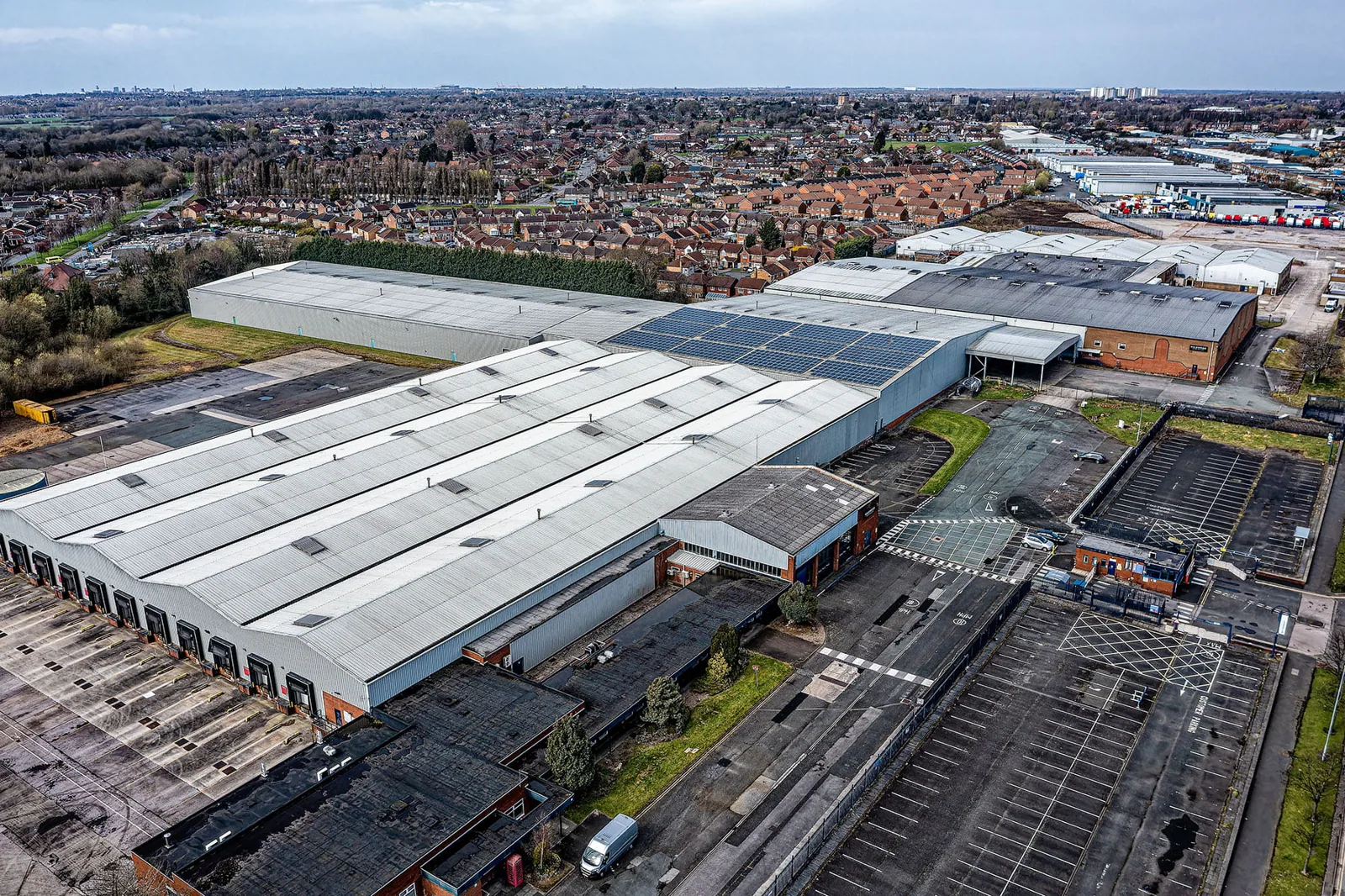

A hands-on roof inspection is a walk with a purpose: to leave the manager with a ranked list of conditions, not a general impression. In Lee's Summit, MO we start from the roof drawing and the building's leak history, mark the route across each roof section, and record what is found against the same drawing. The inspection ends with photographs, measurements and a rating for each assembly that can be compared with the next visit.
Waiting for a leak call to start an inspection gets the order backward. A planned inspection reverses it. It catches ponding, open seams and sealant loss while they are cheap to correct, and it gives an asset team the dated evidence it needs to schedule replacement before an emergency does it for them.
Before we climb, we review past reports, warranty terms, roof plans and repair invoices. The review tells us which details have failed before and which areas the manager already suspects. A warehouse with few penetrations is read differently from an office with a crowded mechanical roof, so the route and the time on site follow the building type and not a fixed template. We confirm roof access, hatch and ladder conditions, safety tie-off points, and any tenant restrictions on hours or noise.
The inspection is scheduled around the weather. Dry roofs show seam and flashing conditions clearly, while a visit shortly after rain shows where water collects. For roofs along the I-470 and US 50 corridors in Lee's Summit, where a building may share lots and dock doors with neighbors, we coordinate arrival with the manager so equipment and ladders do not block a tenant's dock.
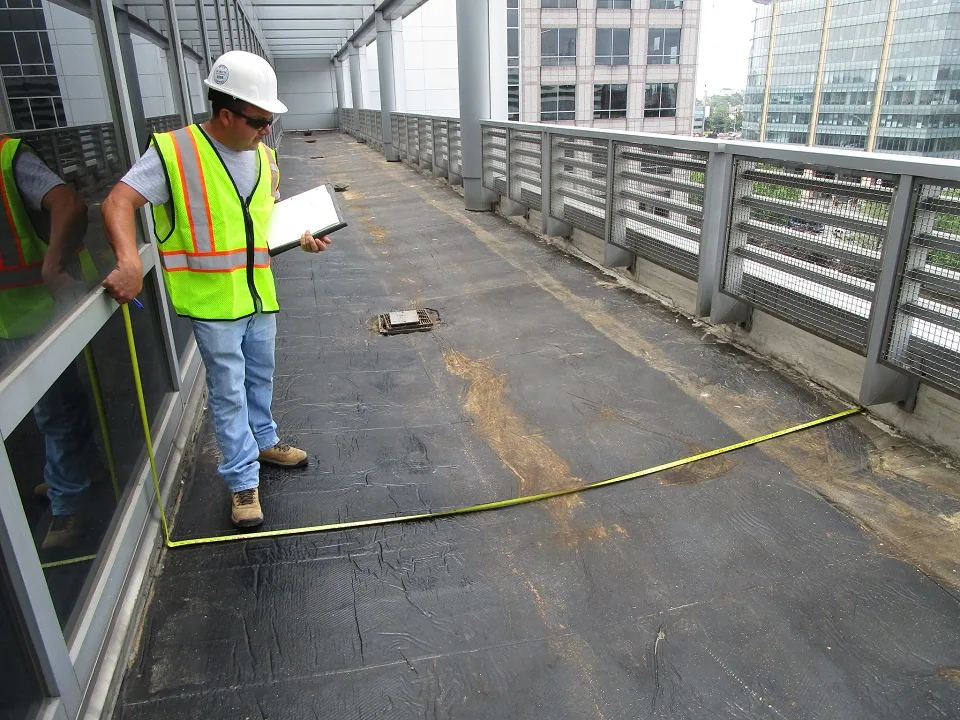
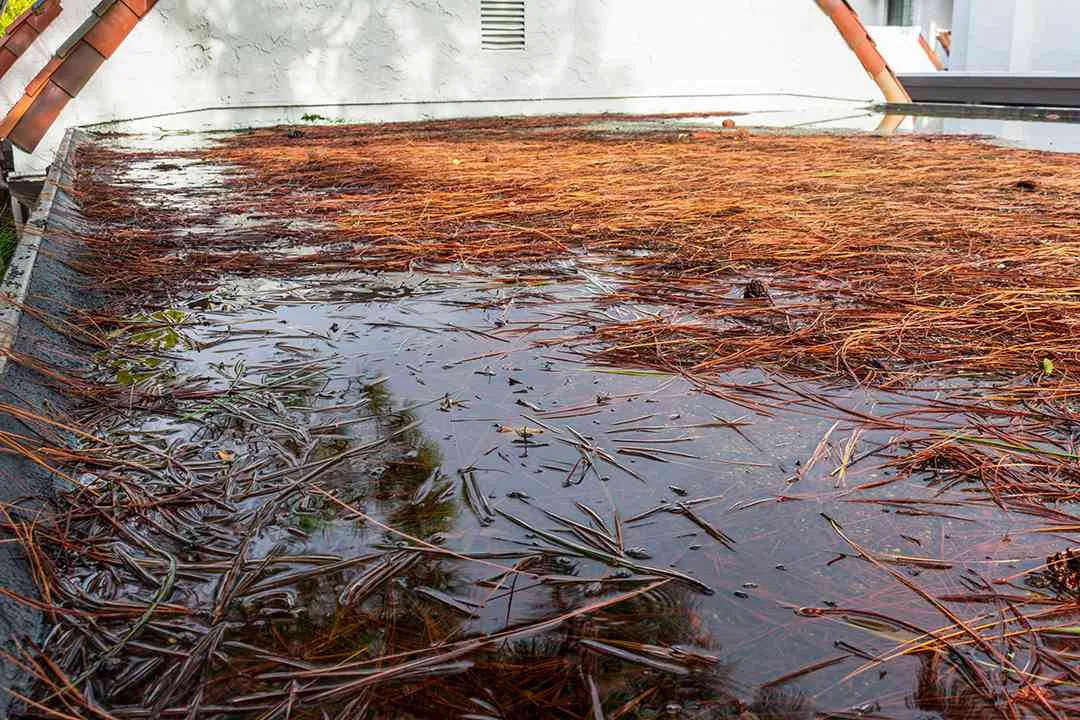
Water is the first thing we check. Drains, scuppers, gutters and downspouts are cleared and tested, and low areas are measured for depth of ponding. Standing water that remains more than a short time after rain points to either a blocked outlet or a deck that has sagged, and the two have different remedies. Persistent ponding is measured with a level and a tape, and the depth and extent go on the drawing.
We also check overflow scuppers and secondary drainage, because code requires an emergency path for water when the primary drains fail. A missing or blocked overflow is a risk that can add significant weight to a roof during a heavy storm, so it is recorded as a priority item even if the roof looks dry.
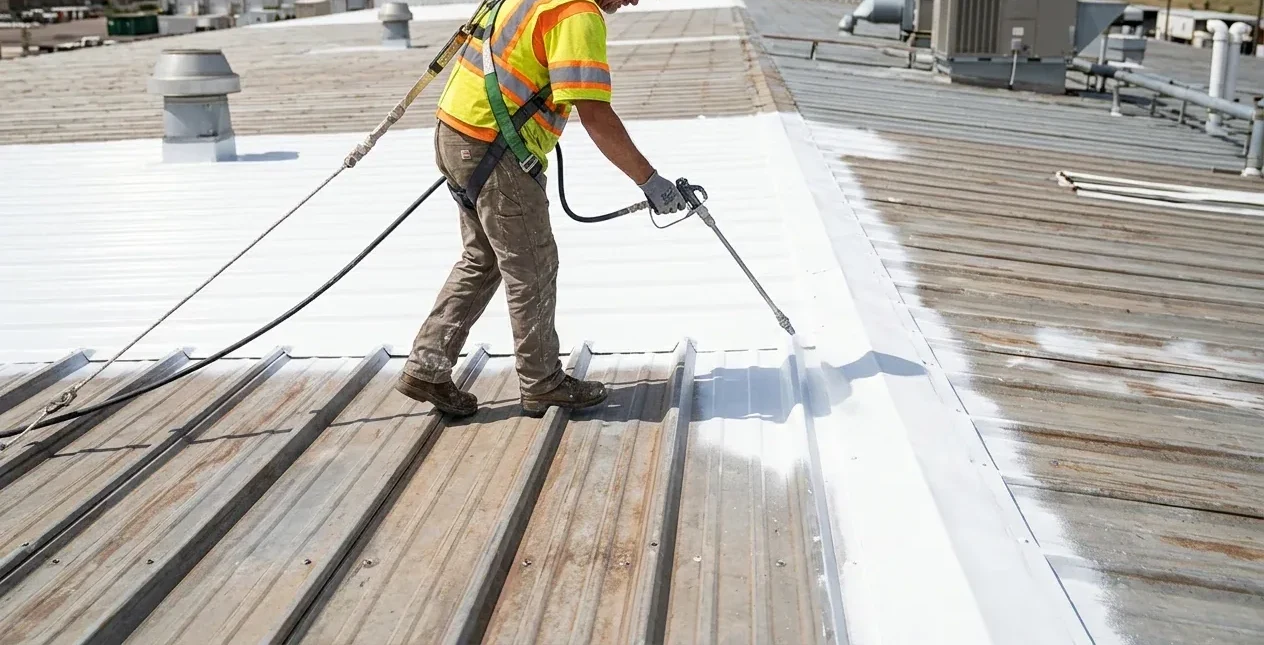
Across the field of the roof we look for punctures, blisters, splits, fastener backout and surface wear. Seams are probed, and open or lifting laps are marked. On built-up and modified bitumen roofs we look for exposed felts, alligatoring and lost granules, and on metal roofs we check fasteners, panel laps and the condition of sealant at ridges and seams.
Each condition is rated and located, and the photograph is taken from a fixed vantage point so the same view can be repeated next year. A split seam near a drain is not the same as a worn patch in a low-traffic corner, and the report says why. Where the surface is general-wear but sound, the rating notes the remaining service life and links to options such as coating restoration.
Flashings, curbs, parapets, edge metal and penetrations are inspected one by one. We look for sealant that has hardened, counterflashing that has pulled away, termination bars that have loosened, and mortar joints that allow water into walls. Rooftop units are examined for damaged supports, unsupported lines and condensate that drains onto the membrane.
Edges matter for wind. Loose coping or edge metal is an early casualty in strong gusts, and the first piece to lift can start a progressive failure. We record fastening condition and spacing so any weakness is corrected well before spring storms, which in this part of Missouri can include severe thunderstorm warnings that call out roof damage, as one covering Lee's Summit did on April 27, 2024.
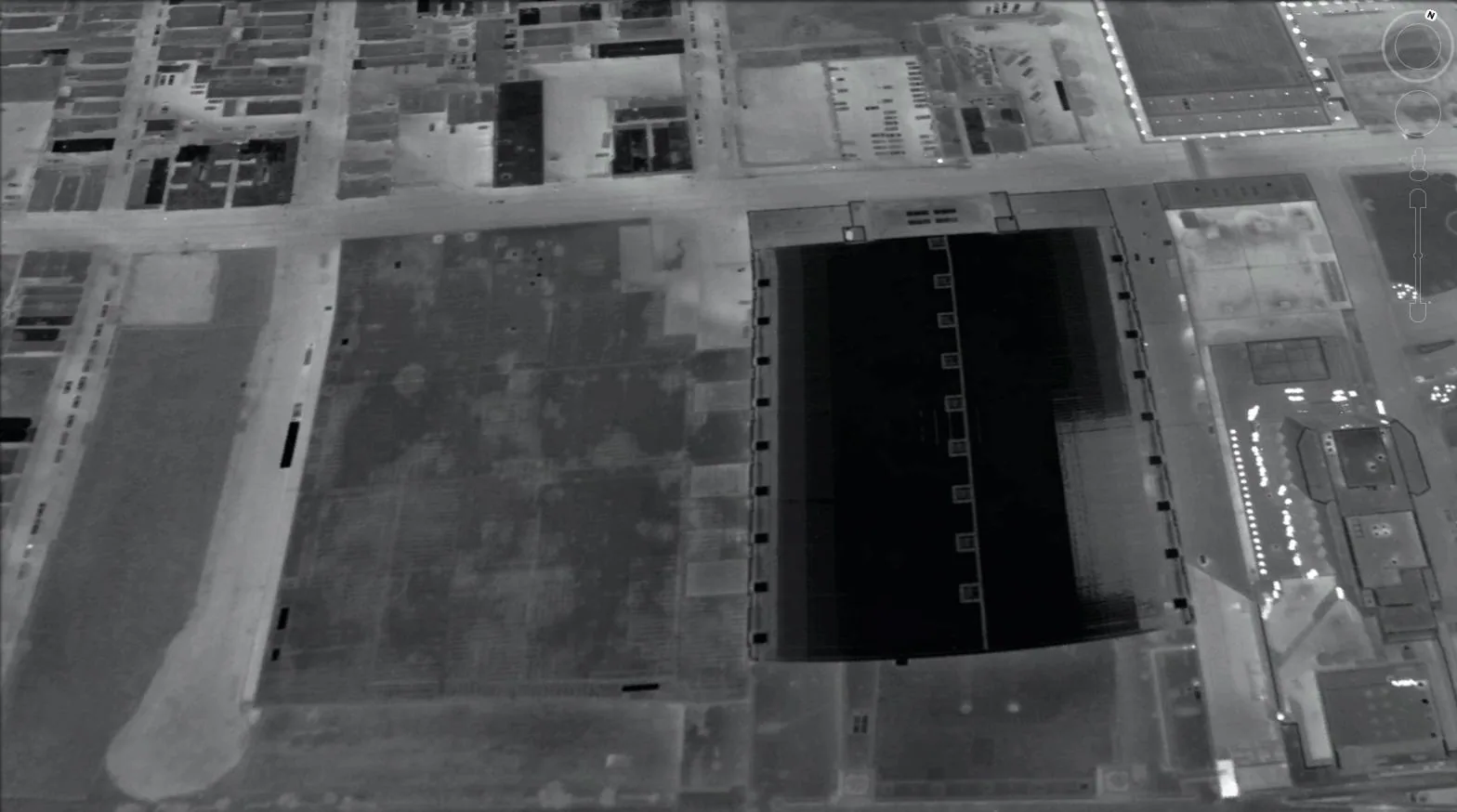
A visual inspection cannot see wet insulation, so we add moisture checks where signs suggest water is present. Infrared scanning and core cuts identify wet sections, and a nuclear or capacitance meter can be used for confirmation. For larger roofs or roofs with repeated leaks, we recommend a full infrared moisture survey and, where access is difficult, a drone roof inspection for the field and edges.
The moisture findings change the decision, and they also change who needs to be told. A wet section over a stockroom or a server closet moves up the list because the loss is not only the roof. A roof with dry insulation and sound seams can be repaired with confidence, while one with widespread wet areas points toward replacement or a section tear-off.
The report lists every condition with a photograph, a location on the drawing, a priority and a recommended action. Priorities run from immediate safety or water-entry items to routine maintenance, and each action carries a method rather than a price range, so the manager can compare it to other options.
The report also gives an overall rating and an estimate of remaining service life for each roof section, based on what was found rather than on age alone. That is the figure an asset team needs for capital planning, and it forms the baseline for the next inspection. When the same roof is walked a year later, the manager can see which items were corrected, which were deferred and which have changed rating, and the repair budget can be adjusted to the roof as it is now. For a buyer or lender, the same document supports a due-diligence review of a building in Lee's Summit.
Anything that lets water in or puts people at risk goes first: open seams, failed flashings, blocked drains, missing overflows and loose edge metal. Maintenance and cosmetic items follow. Each finding has a photograph and a location, so the manager can assign the work in order.
A maintenance walk looks for visible problems. An inspection measures ponding, probes seams, tests drainage, checks moisture where it is suspected, and documents every finding on a drawing. That record can be used for planning, warranty claims and insurance, which a casual walk cannot supply.
Late fall gives time to correct drainage and sealant issues before freezing weather, while spring shows damage from winter and sets up repairs before storm season. Roofs with known problems benefit from both. After a significant hail or wind event, an immediate inspection is the priority.
It provides dated evidence of condition, cause and maintenance, which a manufacturer or insurer typically asks for. The warranty terms control what is covered, and we read them before the walk so the report addresses what the claim will require.
The address list, roof access instructions, any available roof plans, warranty documents and past repair invoices. Tenant hours and noise restrictions matter too. With those in hand, we can plan the route and the time on site, and the report arrives in a format that fits the building's file.
Share the buildings, access instructions and any past reports. We will schedule the walk, record every finding on the drawing and deliver a ranked report.
Request a Roof Assessment