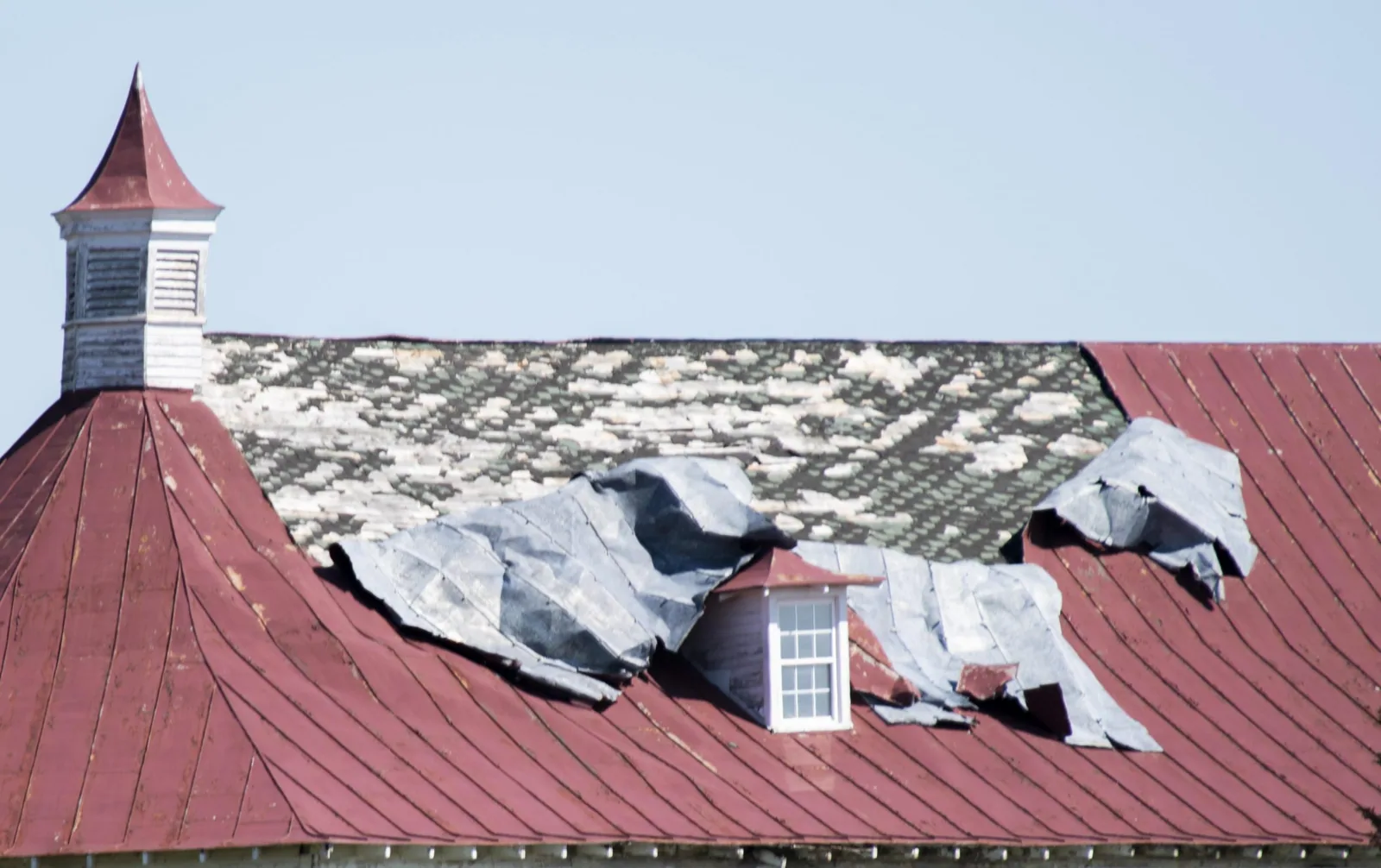
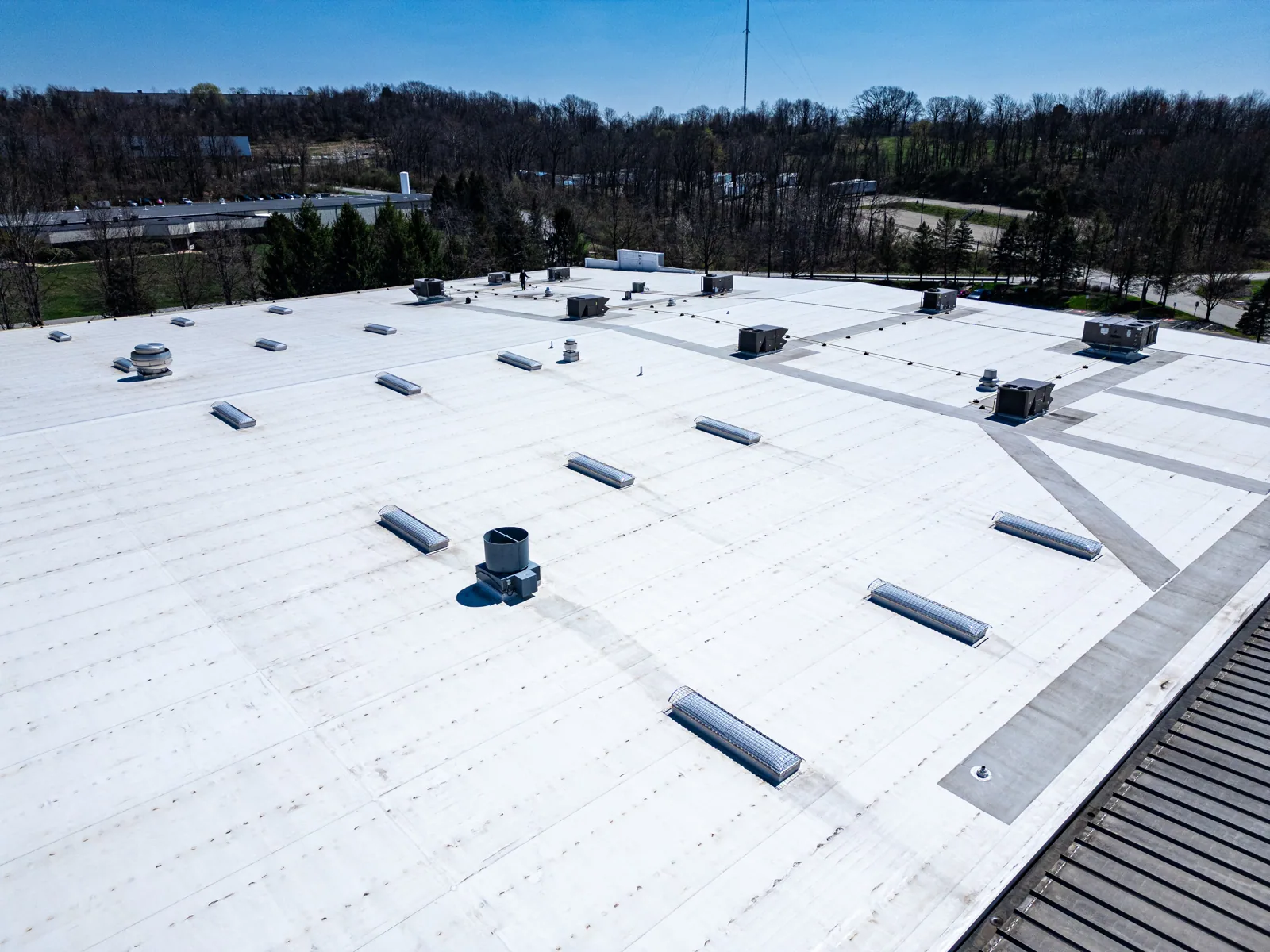
After a wind event, the property manager's first calls are to tenants, and the first useful fact is where the noise or the drip was reported. In Lee's Summit, MO, a spring storm line can pass in an hour and leave a roof with loose edge metal, a lifted corner of membrane and a rooftop unit that no longer sits square on its curb. The roof condition that decides the first move is the edge, because wind enters a low-slope roof at the perimeter and works inward. We plan the first site walk around tenant notice, the access route and the staging footprint, then open at the corners where the damage usually begins.
The day-one walk is short and ordered. We confirm the access route with the manager, check that the hatch or ladder is safe to use after the storm, and walk the perimeter before the field. Loose coping, bent drip edge, torn flashing at a parapet and sheet that has lifted from its attachment are marked on the roof drawing with a number and a photograph, so the repair list can follow the same numbering.
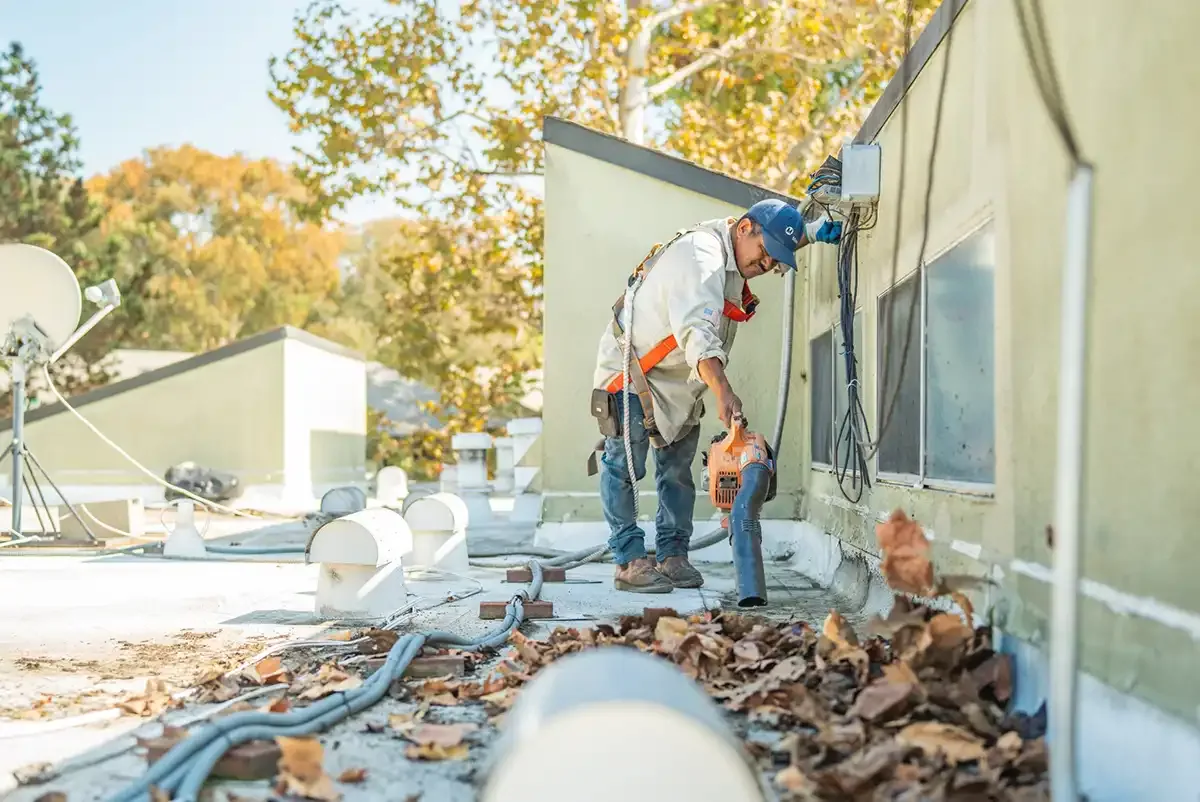
Debris is recorded as well. A displaced vent hood or a loose conduit can pin a section of membrane, and the item that caused damage often sits within a few feet of the damage itself. Where the building has more than one roof level, each level gets its own page in the walk record.
Tenant notice belongs in this first step. A short written message to the occupants of the suites under each damaged area tells them when the crew will be on the roof, which entry they will use and whom to call if a ceiling tile stains. Notice sent the same day keeps the manager ahead of the phone calls that follow a storm.
The Pleasant Hill forecast office's warning of April 27, 2024 for Lee's Summit cited gusts near 60 miles per hour and possible damage to roofs, siding and trees. A warning like that is a reason to walk the roof the next morning, and it does not by itself describe what happened to any given building. The walk record does that, with dated photographs.
The same record helps with the insurer. Our insurance claim documentation keeps storm damage, older wear and temporary protection in separate lists, so an adjuster can see which marks belong to the event.
If wind has opened the roof, the first scope item is the dry-in point, the moment a damaged section is closed against rain. We secure loose sheet with temporary fasteners or ballast, cover exposed insulation, and tie down equipment that can still move. Our emergency roof repair response answers around the clock, holidays included, and the manager receives a written note of what was closed and what remains open.
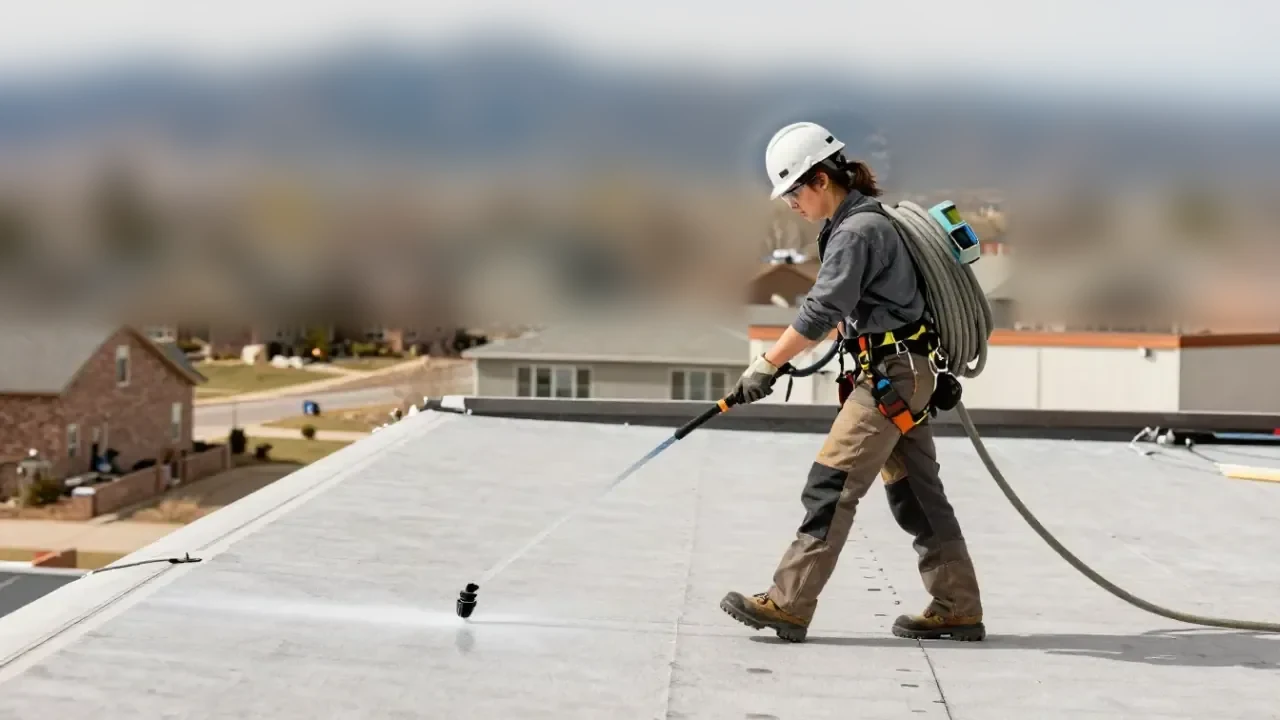
Wet insulation under a lifted area is marked for removal. A moisture reading is taken on the first visit and again before the permanent repair, so the repair boundary follows the wet area instead of the visible tear.
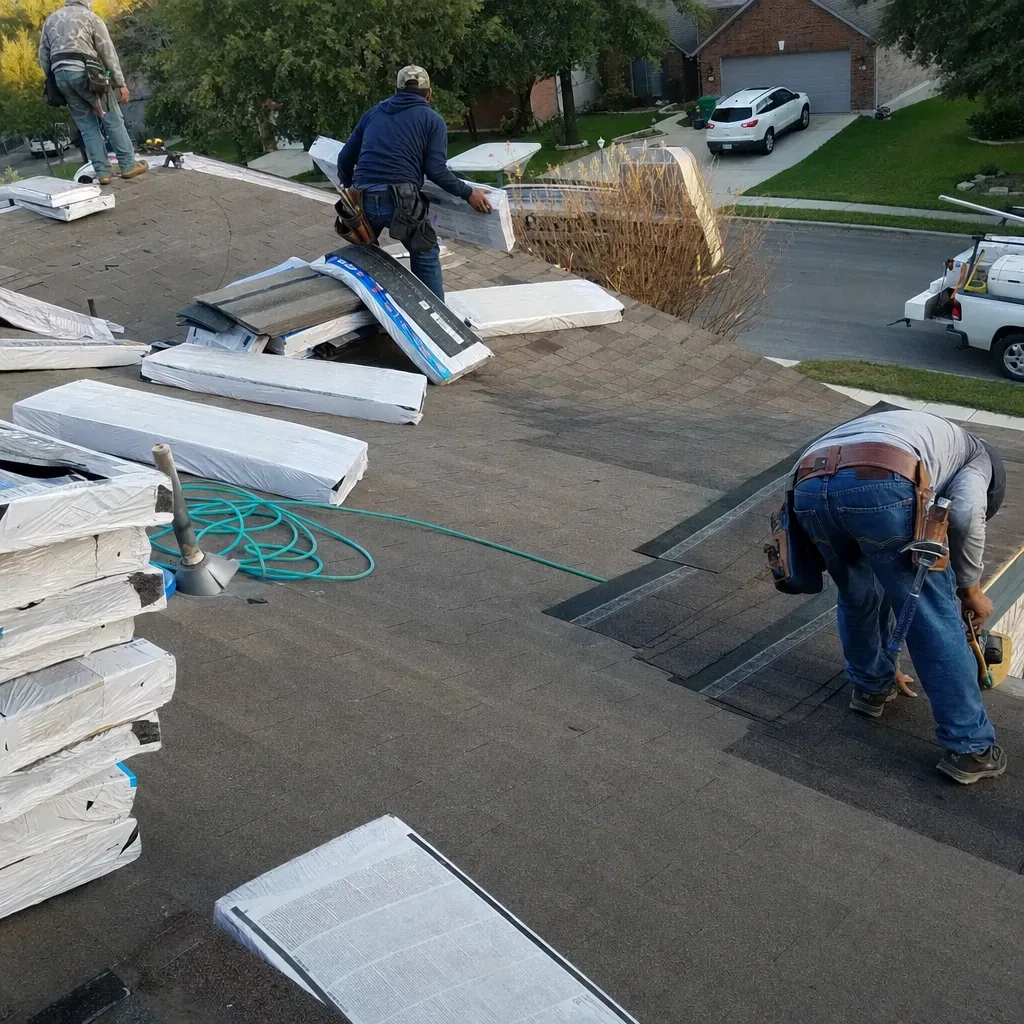
Weather hold rules are written into this stage. Spring weather in the Kansas City area can return within days of a line of storms, so each opened section has a defined close-in time, and the crew stops adding open area when the forecast turns. The crew keeps to the staging area set on the first walk, clear of dock doors and the main entry, and the hoist is placed where it will not cross a tenant walkway.
The permanent repair follows the walk numbering. Edge metal comes first, because it holds the membrane down, and we replace bent coping with a stronger cleat and a closer fastener pattern. Lifted membrane is reattached by the method that suits the system, adhesive and plates for a fully adhered sheet, new fasteners for a mechanically attached one, and heat welds for thermoplastic seams.
Where the perimeter has failed repeatedly, a wider band of adhesive or added fasteners near the corners costs more than a patch and reduces the chance of a repeat claim. Seam damage found on the walk is handled with seam failure repair, and torn wall details with flashing failure repair.
Rooftop equipment is reset last. A unit that shifted on its curb is lifted, the curb flashing is inspected, and the unit is secured with the hardware its manufacturer specifies. Conduit and refrigerant lines that were pulled loose are supported so they do not rest on the sheet. Each reset item is photographed and checked off on the punch list.
The I-470, US 50 and MO 291 corridors are lined with commercial, industrial and mixed-use areas, and a manager there may have dock hours and entry hours that limit when a lift can stand. We write those hours into the sequence before the crew arrives, and we keep hoisting away from active doors.
Buildings in Lee's Summit, Grandview and Blue Springs face the same spring window, so a manager with several properties can use one walk format and one weather hold rule across all of them.
Roof hatches and ladders get a safety check after wind, since a ladder cage bent by a gust or a hatch that no longer latches is a hazard to the next visitor. We note both and the manager can have them fixed before the crew or a service technician climbs.
At turnover the manager receives the numbered drawing, the before and after photographs, the moisture readings and a punch list of anything left open for weather. We recommend a follow-up walk after the next heavy rain, since wind damage can loosen neighboring areas that looked sound the first day. A preventive maintenance visit before the spring window tightens edge metal and secures equipment before the next line arrives.
The package also records the access route used, the hours worked and the tenants notified, so the next storm response starts from a known procedure instead of a blank page. A manager with more than one building can compare the packages and see which roof took the most damage, which is useful when deciding where an edge upgrade belongs in the next budget.
As soon as the hatch or ladder is confirmed safe and the roof is dry enough to stand on. Lifted corners and loose edge metal admit water on the next rain, so a delay of several days can turn a repair into a wet-insulation problem.
Usually, when the field of the membrane is sound and the insulation below is dry. Reattachment and edge metal replacement cover most events, and a moisture reading confirms that the repair boundary can stay small.
Dated photographs of fresh tears, bent metal and displaced equipment, a plan showing where each was found, and a clear line between that damage and older wear. Temporary protection should be photographed too.
Because the cleat that holds it was designed for the first storm, not the fifth. A heavier cleat and tighter fastener spacing at corners cost little compared with a lifted sheet.
Temporary measures cannot wait, and permanent adhesive or weld work should follow once temperatures allow. Mechanical attachment can proceed in cold weather, so the dry-in and edge work usually go first.
Send the building address list, tenant hours and any open leak reports from the storm. We will walk the roof with you and provide a written sequence plan before any scope is priced.
Request a Roof Assessment