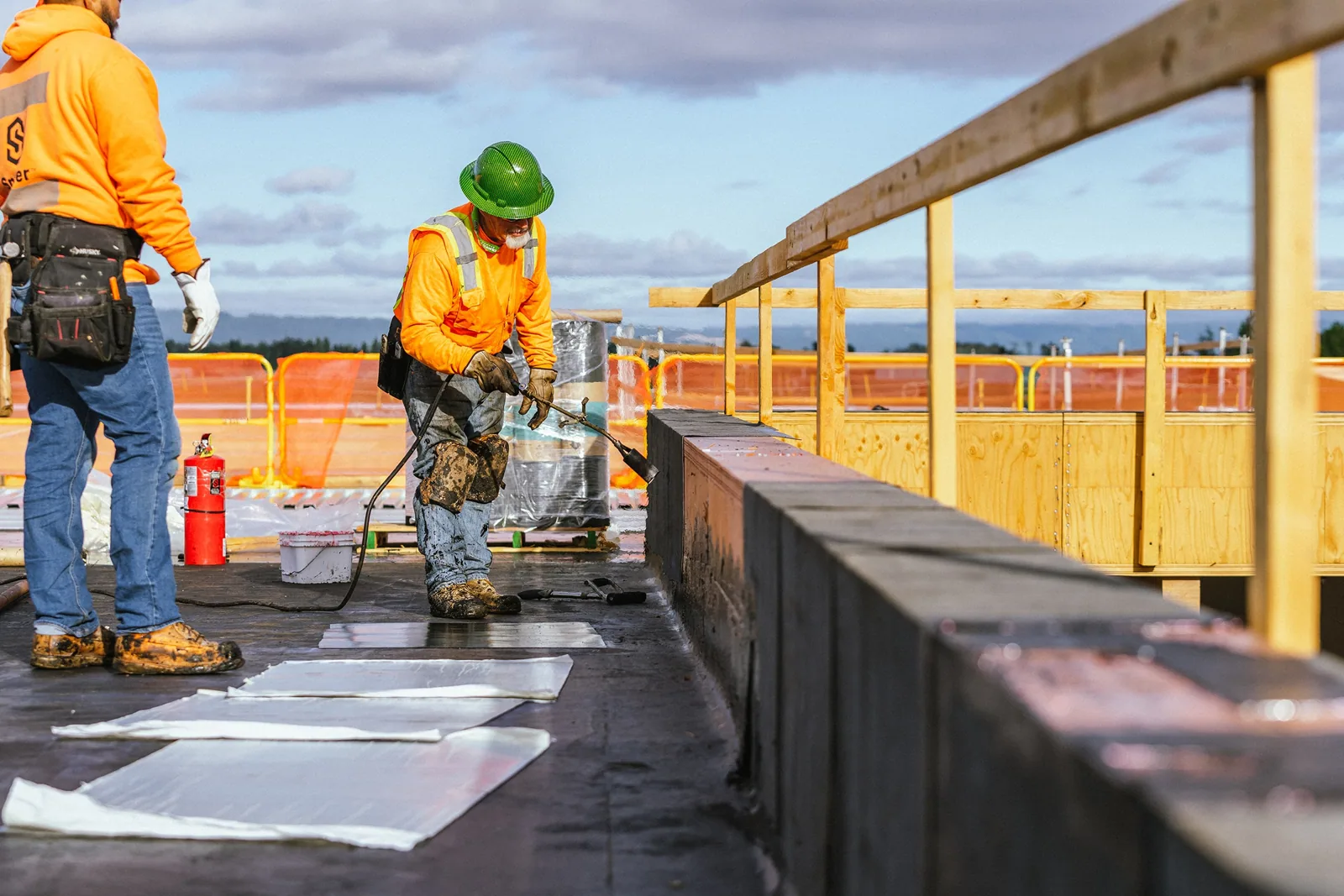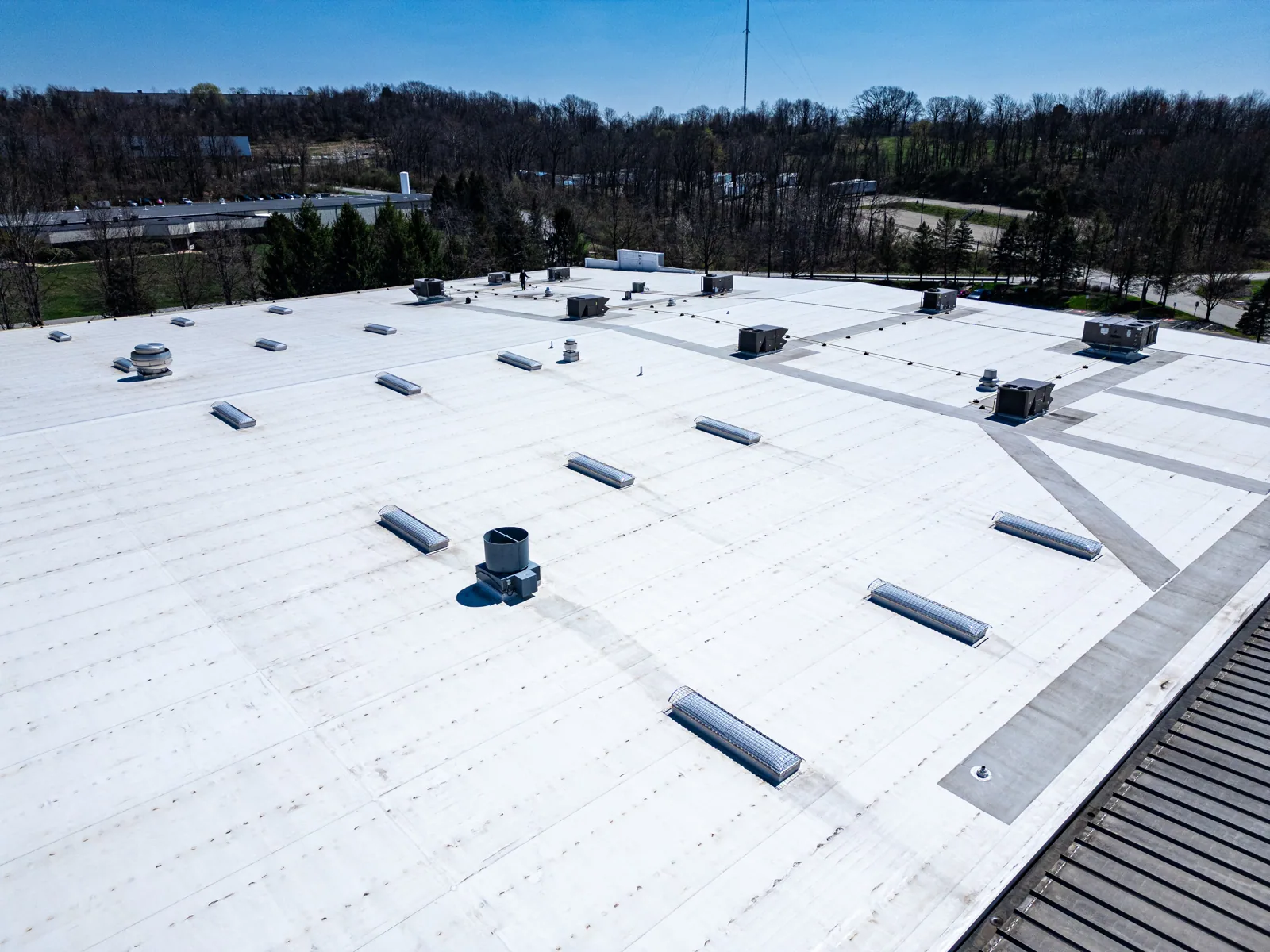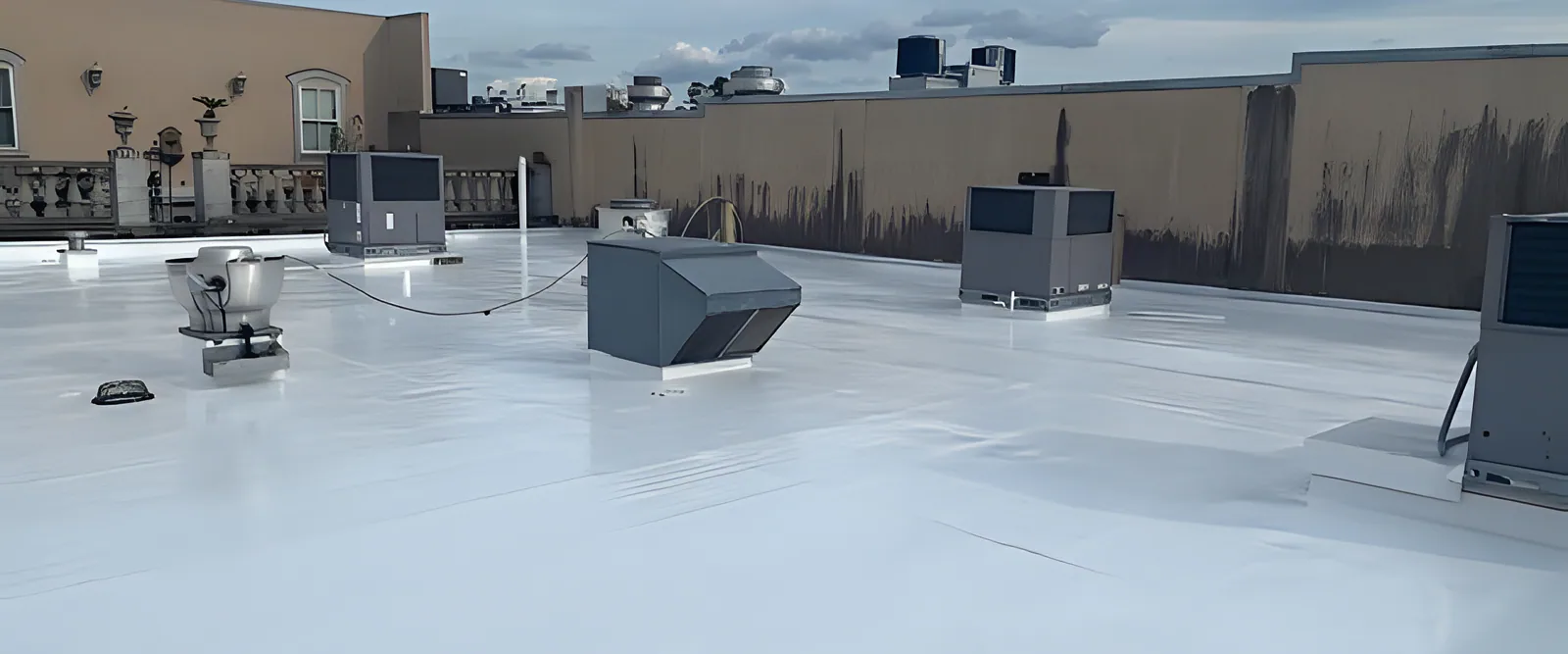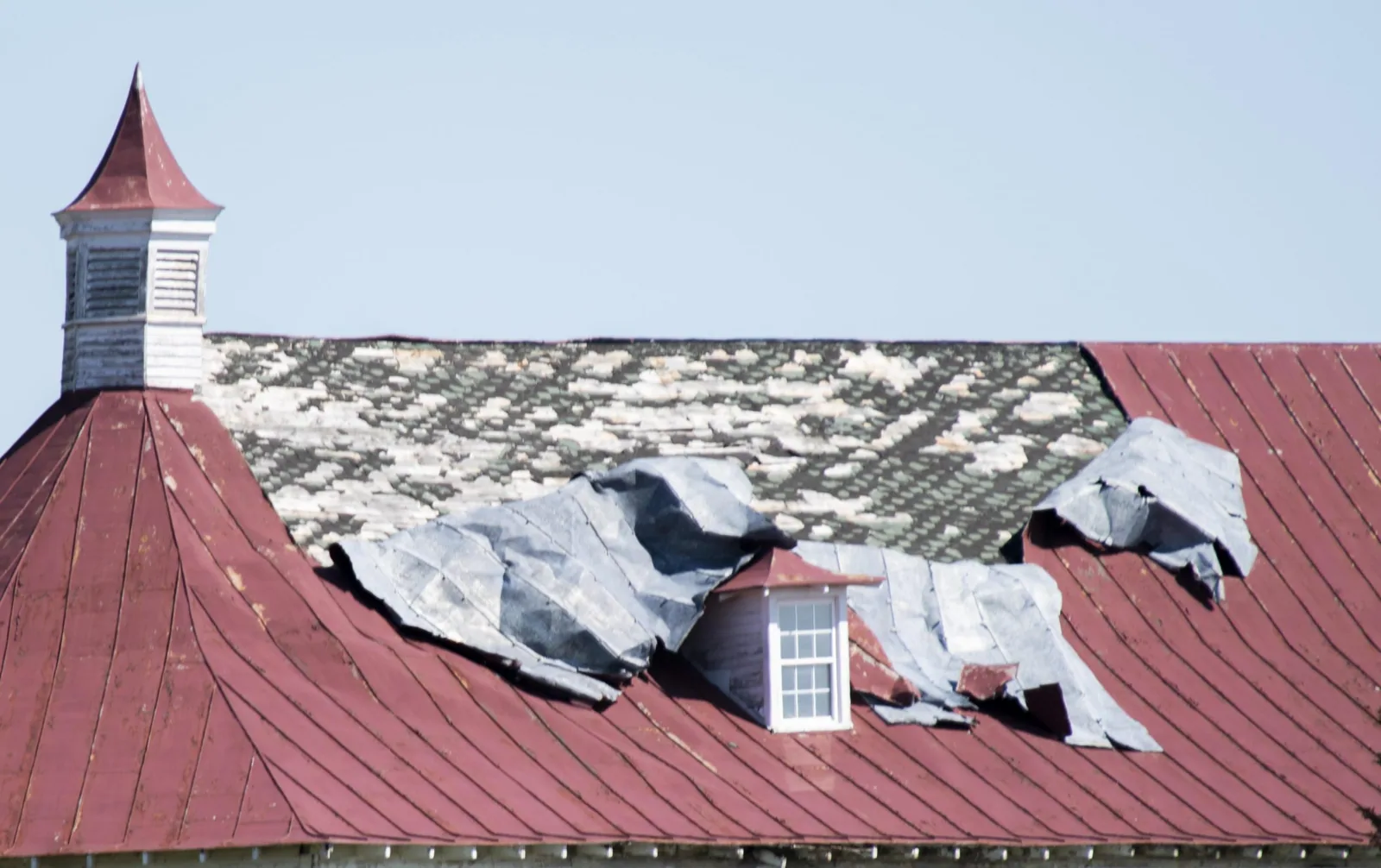

Edge work puts a crew at the building's front door, so the sequence starts with the entrance picture: which doors tenants and customers use, where a lift can stand without blocking a fire lane, and which hours are quiet. In Lee's Summit, MO, the perimeter of a commercial roof is also the first place spring wind finds a weakness, so the roof condition that decides the first move is almost always a loose length of metal.
The edge is the narrowest strip of the roof and the one that takes the most abuse. Drip edge, fascia, coping, gutters and downspouts hold the membrane down, send water away from walls and protect the wall top from rain. When any of them fails, the membrane behind it is next.
A roof lifts from the edge inward. When metal is loose or poorly fastened, wind catches the lip, peels the metal back and gets under the membrane. The first few feet of a roof carry the highest uplift, which is why edge metal is fastened at close spacing on a continuous cleat. A gust of 60 mph, the figure in the April 27, 2024 warning for Lee's Summit, is enough to test an edge detail that has been working loose for a year.
On the day-one walk we press and tug every length of metal, look for gaps at joints, check that fasteners are seated and not backing out, and see whether the membrane beneath is still bonded. Joint sealant shrinks and cracks in sun, and a bead that looks fine from the ground may be split. Each loose length is photographed and marked on the roof drawing with a number, and the numbers carry into the repair scope so a quantity on the invoice always traces back to a photograph. A preventive maintenance visit includes the same tug test every spring.
A parapet is a place where water can enter from three sides, so the coping cap does serious work. It sheds rain, covers the wall top and protects the flashing beneath. Coping joints are the weak point: if the splice plates fail or the sealant opens, water runs into the wall and shows up later as staining on interior finishes.
Older facades in the downtown historic district, where Italianate and Moderne commercial buildings span 1850 to 1974, can carry parapets and cornices that need their own details. What sits under any one cap is found, not presumed. We check slope, laps, fasteners under the cap and the wall flashing beneath, and a leak at a parapet is often paired with a flashing failure repair so both are sound afterward.
Where a roof drains to gutters, the downspout discharge matters as much as the gutter. It must land away from entrances, walks and loading doors, or a heavy rain turns the entry into a puddle and a freeze turns the puddle into ice. We check hanger spacing, joint seals, slope toward the downspouts, end caps and the splash block or pipe at the bottom.
Hangers that have pulled loose are replaced with stronger ones at closer spacing, and a gutter bent by ice is replaced rather than straightened, because a straightened gutter holds its shape only until the next heavy load of water or ice. Where a building has no gutters and drains through scuppers, the related repair is drain and scupper correction, and the two are examined together.
Edge metal on commercial roofs is commonly galvanized or coated steel, or aluminum, and each fails differently. Steel rusts at cut edges and scratches once the coating is breached. Aluminum resists rust but dents and moves at joints. Where unlike metals touch, galvanic corrosion attacks the less noble one, so isolation and compatible fasteners matter.
The scope names the material, thickness and finish for each piece, and the finish is matched to what is on the building when possible. Laps and sealants are chosen for the movement the metal will see, and long runs are broken with expansion joints at the spacing the metal maker specifies. A run without joints buckles in July and splits in January, and neither shows until the weather turns. A temperature range that runs from a record low of minus 25 degrees Fahrenheit to a record high of 108 makes long runs of metal expand and contract by a visible amount, and the joints have to allow it.
The line where the membrane ends under the edge metal is critical. On many systems the membrane is secured at the perimeter with a bar or cleat and then covered with the metal. If the membrane has pulled back or the securement has failed, replacing only the metal leaves the real problem in place.
We lift a section of metal at a sample location to look at the termination before writing the scope. When the membrane is sound, the repair is limited to the metal. When it has lifted or split, the edge repair includes a new termination. Where wind has already done damage, wind damage repair restores the membrane and the metal in one visit, with a before and after photograph of each length.
Edge work is phased by building face. One elevation is completed, walked off and handed back before the next begins, so no entrance is closed longer than a day or two. Tenants receive a notice that names the face, the dates and the access route to the door that remains open. Lifts and material staging go on the side away from customer parking where the site allows, and a flagger stands at any walkway that passes beneath the work.
Weather holds follow the spring storm window, and they are written before the job starts so no one decides under pressure: no new elevation opens when a warning is in effect, and metal that is off the wall is temporarily secured or removed from the roof. At turnover the property manager receives photographs by elevation, the fastener schedule and the product data for the metal used.
Edge work matters on commercial, industrial and mixed-use buildings along I-470, US 50 and MO 291 and on older storefronts downtown. Owners in Lee's Summit, Raymore and Grandview can schedule an edge check as part of a commercial roof inspection, and a loose cap found in March costs far less than a lifted section found in May.
Look for rust streaks, open joints, sealant hanging out of seams and cap sections that sit at a different angle than their neighbors. A roof walk confirms by pressing each length.
Only if the membrane beneath is still attached. We lift a sample to check, and the scope includes membrane work if the termination has failed.
Discharge that lands near a door floods it in rain and ices it in a freeze. We route it away and note the outlet in the record.
They can, with isolation and compatible fasteners. Direct contact between unlike metals corrodes one of them.
Minor repairs often do not. A full perimeter replacement may. We confirm the requirement and state it in the scope.
Send the building address list, tenant hours and any open leak reports. We will tug every length of metal and give you a written sequence plan before any scope is priced.
Request a Roof Assessment