
Missouri Route 150 links Greenwood, MO to southern Lee's Summit, Grandview and Overland Park, so the plan starts with the route: where the truck leaves MO 150, how it reaches the building and where it can unload without blocking a customer. The tenant notice follows, naming the closed entrance and the loud hours. After that the roof condition sets the size of the first section and how soon it is closed against weather.
Greenwood lies in Jackson and Cass counties, and a manager with buildings on both sides of the county line gets one plan for each address.
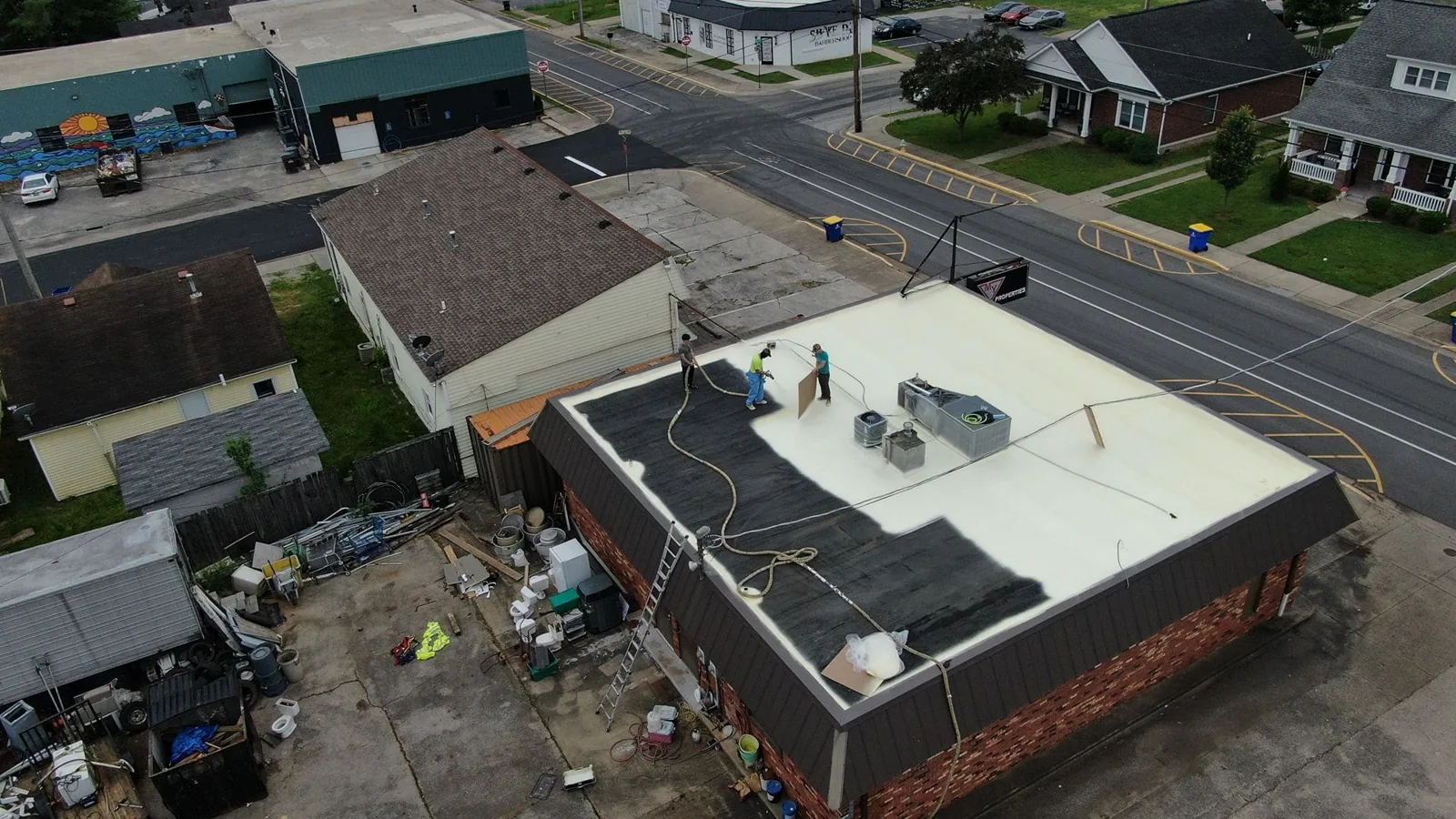
Greenwood has a small downtown southwest of the rail line. A compact commercial block like that leaves little room for staging, so we measure the available frontage and the alley before choosing between a hoist, a boom lift and a roof hatch for access. The container sits where the hauler can reach it without crossing a sidewalk that tenants use.
Foot traffic is the main constraint in a small downtown. Customers walk past the front and deliveries arrive at the back, so a barricaded strip under the work zone and a clear alley both go on the plan. The notice tells each tenant which side is affected on which day, and the foreman posts the same information at the door.
Parking is the next question. Crews bring trucks, lifts and personal vehicles, and none of them should take a customer's space during business hours. We name a parking area for the crew, send the plate list to the manager if asked, and keep the lot entrance clear of equipment. Small items like these decide whether a tenant calls the manager or not.
A low-slope storefront roof commonly has a parapet at the front and a drain or scupper at the rear, and we confirm which is true on site. The first walk looks at that drainage path before anything else. If water stands near the parapet, the flashing and coping are suspect. If it stands at the back, the drain or scupper needs clearing or correcting.
We press on seams and laps, check the flashing around vents and any rooftop unit curb, and photograph each finding on a drawing. Where a stain inside does not match an obvious defect, we trace the deck. A commercial roof leak repair starts from that trace, so the patch lands on the opening and not on the stain.
Next we look at rooftop equipment, if any. A small unit on a curb still needs sound flashing, a clear condensate path and a walk route that does not scuff the membrane. Vent boots, plumbing stacks and gooseneck vents are checked for cracked rubber and loose collars. These small penetrations are where many leaks on a small roof begin, and a boot replacement costs little compared with the ceiling it protects.
A small commercial roof can often be repaired in a day or two. The sequence is simple: notice, staging, repair, test and handoff. Larger scopes run longer, with the roof divided into sections and each closed before evening. The same notice format serves both, so a manager reads one page whether the job is a patch or a replacement.
When the roof has reached the end of its service, a full commercial roof replacement is planned in phases. Tear-off, insulation, membrane and flashing follow in order, with the dry-in point set after each. A recover over dry, attached insulation can shorten the job, and core cuts decide whether that option is open.
The foreman reports to the manager at the close of each day. The report is short: what was opened, what was sealed, what the weather did and what happens next. If anything unexpected turns up, such as wet insulation under a patch, the report says so with a photograph, and the manager decides whether to widen the scope before the next day starts.
Lee's Summit, nearby, logs about 38 inches of precipitation in an average year, and the National Weather Service warning there on April 27, 2024 listed penny-size hail and 60 mph gusts as threats to roofs.
From March into early summer the plan carries a hold rule: when a storm line is forecast, the foreman stops, seals the open edge and ties down material. After a storm, coping, edge metal and curb flashing are checked first. A hail damage finding is photographed before the next rain, so a bruise does not turn into a leak.
Temperature limits also shape small jobs. In Lee's Summit the January mean high sits near 39F, the July mean high near 88F and the record low at minus 25F. Adhesives and sealants have working ranges, so a repair planned for a cold morning waits until the roof warms. A patch set in the wrong temperature may hold for a week and fail in a month.
Where space is tight, dry-in matters even more. Materials are brought up in small loads, in the order they will be used, and stored on the roof only where the deck can carry them. Nothing sits loose overnight. A temporary seal, if needed, is tested with water before the crew leaves and noted in the log.
Debris moves by chute into a container, and a magnet sweep clears the alley and the sidewalk of fasteners. Rooftop units are treated as part of the section plan, and a unit that must be off for a tie-in is scheduled with the manager. Drains stay covered while the crew works and get a water test at the end of the shift.
At turnover the owner gets a list of the sections opened and closed, photographs of every layer and a punch list. It names the first things to check on the next walk, usually drains after the first heavy rain. At handoff, the roof condition report sets down the roof as it stands.
An owner with property in Grandview or Lone Jack can keep the same format for every roof. Repeated packages show which building ages fastest, and the manager can set the order of capital work from those records.
The package also lists warranty items, if any, and whom to call about them. A new flashing or membrane section may carry its own terms, and the manager should know what they cover and what voids them. We write those terms plainly and attach the product data, so the file is complete.
By a hoist, a lift or a roof hatch chosen on the first walk. The choice depends on frontage, the alley and what stays open to customers.
The address, tenant hours and the location of the stain. We confirm the route and notice and schedule the visit.
When wet insulation spreads across much of the roof or when repairs stack up in the same area.
Usually. Access moves to the alley or a side lane, and a barricaded strip protects the walk below the work zone.
Edge metal, coping and curbs, then drains and seams. Each item is photographed before the next rain.
Send the building address list, tenant hours and any open leak reports. We will walk the roof with the property manager and offer a written sequence plan before any scope is priced.
Request a Roof Assessment