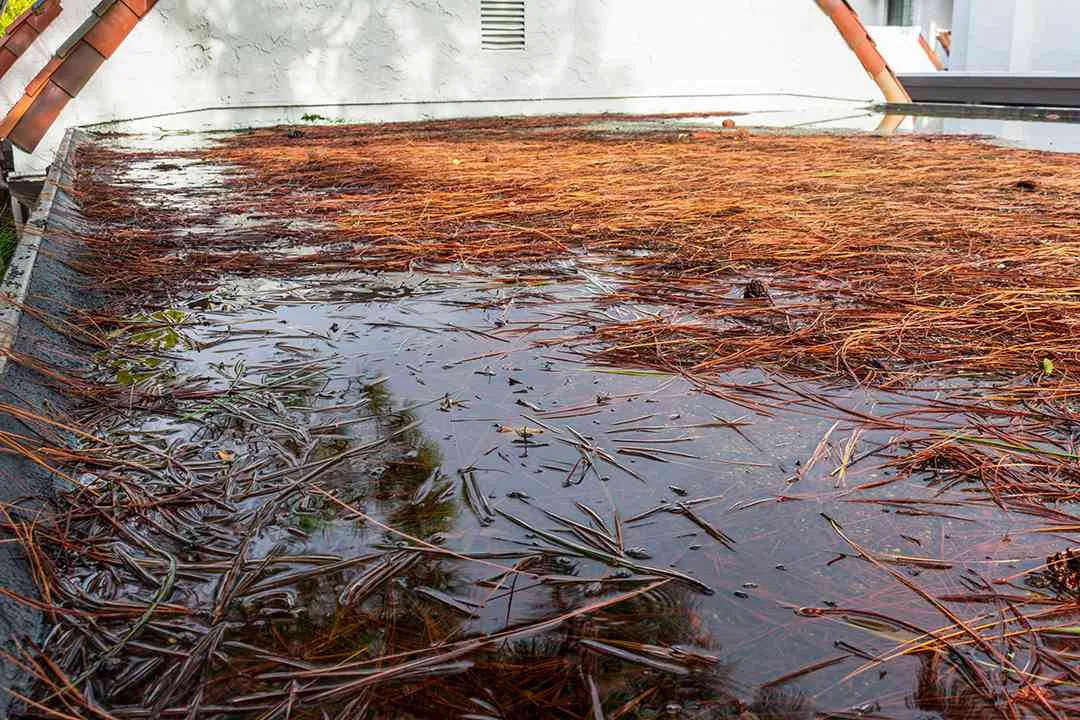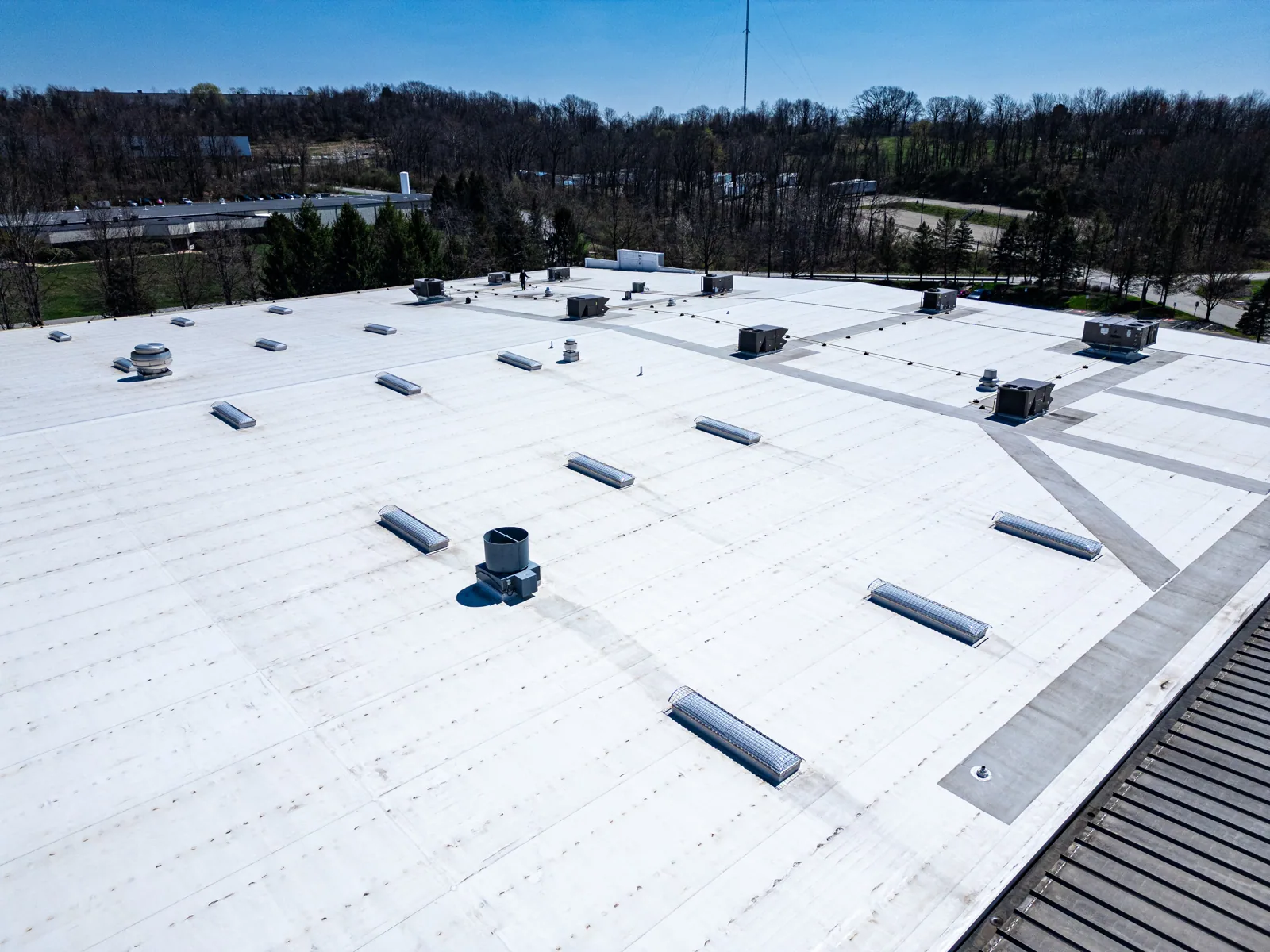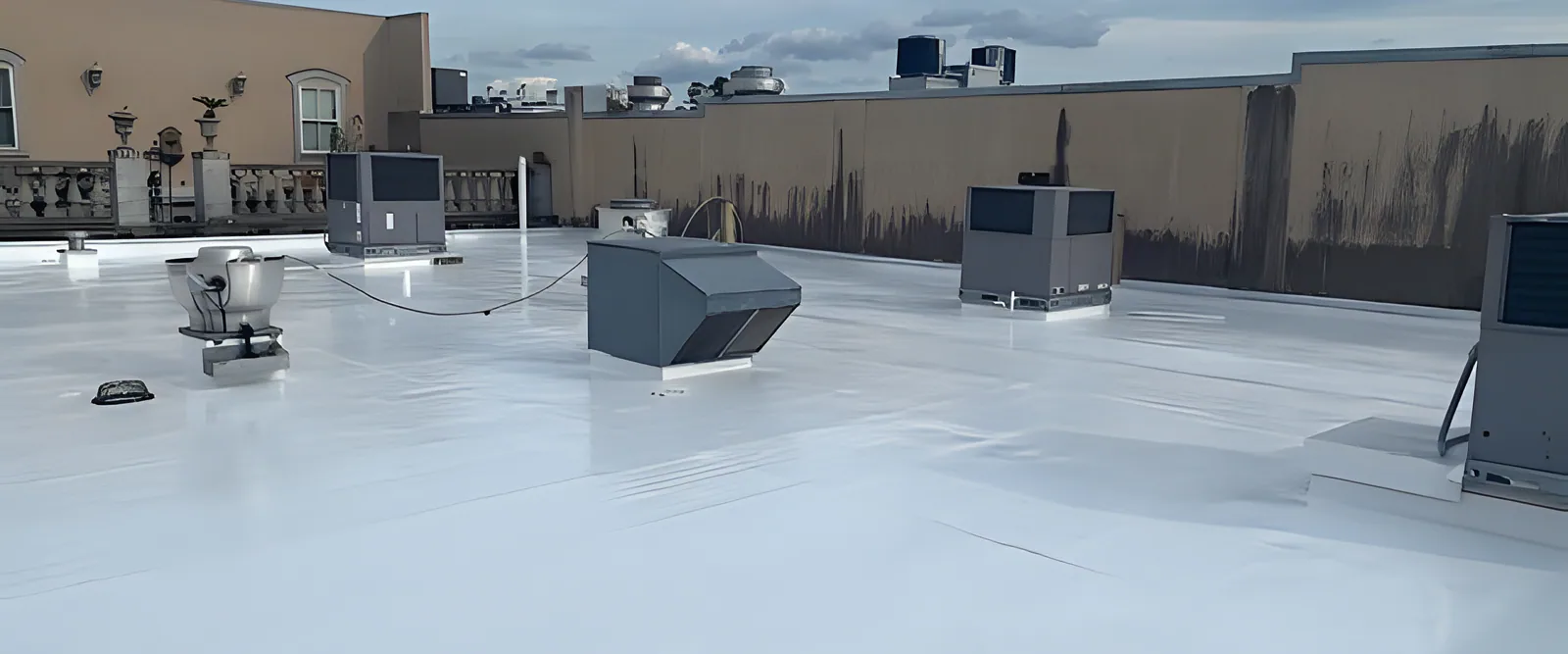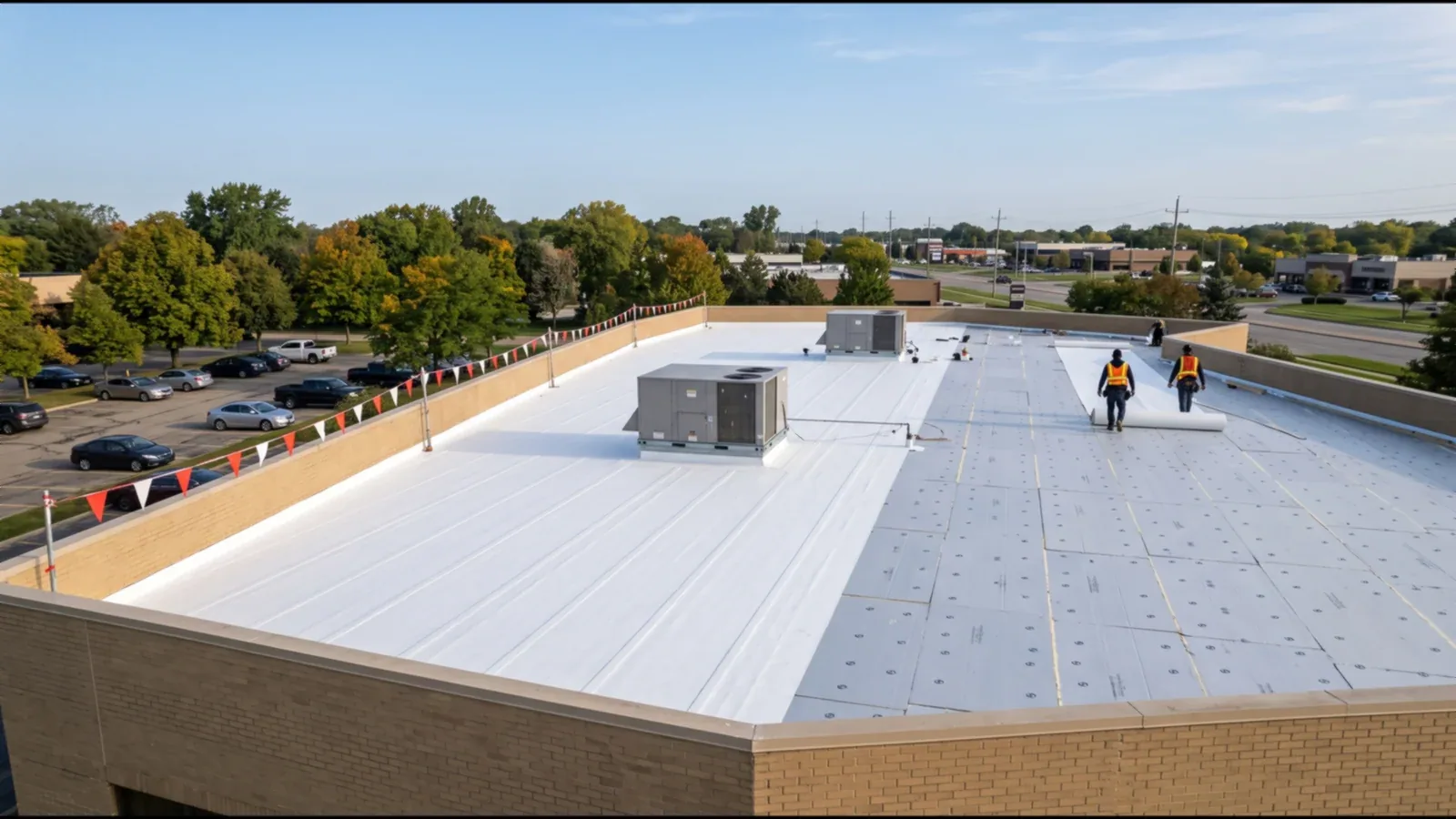

A pond that is still on the roof two days after the last rain can reach the property manager as a secondhand report: a maintenance technician on a service call, a tenant who saw a dark patch from an upper window, or an inspector's photograph. The first move depends on one roof condition, whether the water is standing on sound membrane or sitting over wet insulation. In Lee's Summit, MO, where annual precipitation runs a little over thirty-eight inches, a roof that holds water gives the weather a long time to find a weak seam. We plan the visit around tenant notice, access and the weather, then measure the ponds while they are still wet.
The best time to survey ponding is the morning after a rain, before the water has gone. We mark the outline of each pond with chalk or paint, record the depth at the deepest point and photograph it from a fixed position, so the next walk can compare like with like. A pond that is shallow and gone within a day is a nuisance, while one that persists for two days or more is a finding that belongs in the report.
Location matters as much as depth. A pond at a drain points to a blocked bowl or a drain that sits above the low point, a pond in the middle of a field points to deck deflection or compressed insulation, and a pond against a wall may mean a missing cricket behind a curb. Each cause leads to a different scope.
Heat and freezing add a second reason to measure early. Standing water that freezes in January lifts the membrane at laps, and water that heats in July softens some sheets. Both show as discoloration or a ring at the pond edge, and we photograph that ring because it records how often the pond has returned. Ponds near rooftop equipment are noted separately, since condensate lines that discharge onto the sheet can look like ponding and need a different fix. Where flashing at a wall sits under a pond, the detail is probed as in flashing failure repair.
Before anyone prices slope correction, the drains are tested. We clear debris from each bowl and strainer, check that the clamping ring is tight, pour water at the drain and watch how fast it leaves. A drain that clears slowly is flushed, and one that cracks or leaks at the bowl is replaced. Our drain and scupper work covers cleaning, resealing and resetting outlets, and overflow scuppers are checked for height so they can act as a second exit when the main drain is blocked.
Many ponding complaints end here. A cleared drain and a reset strainer drop the water level within an hour, and the manager has a one-day fix and a photograph to show the owner.
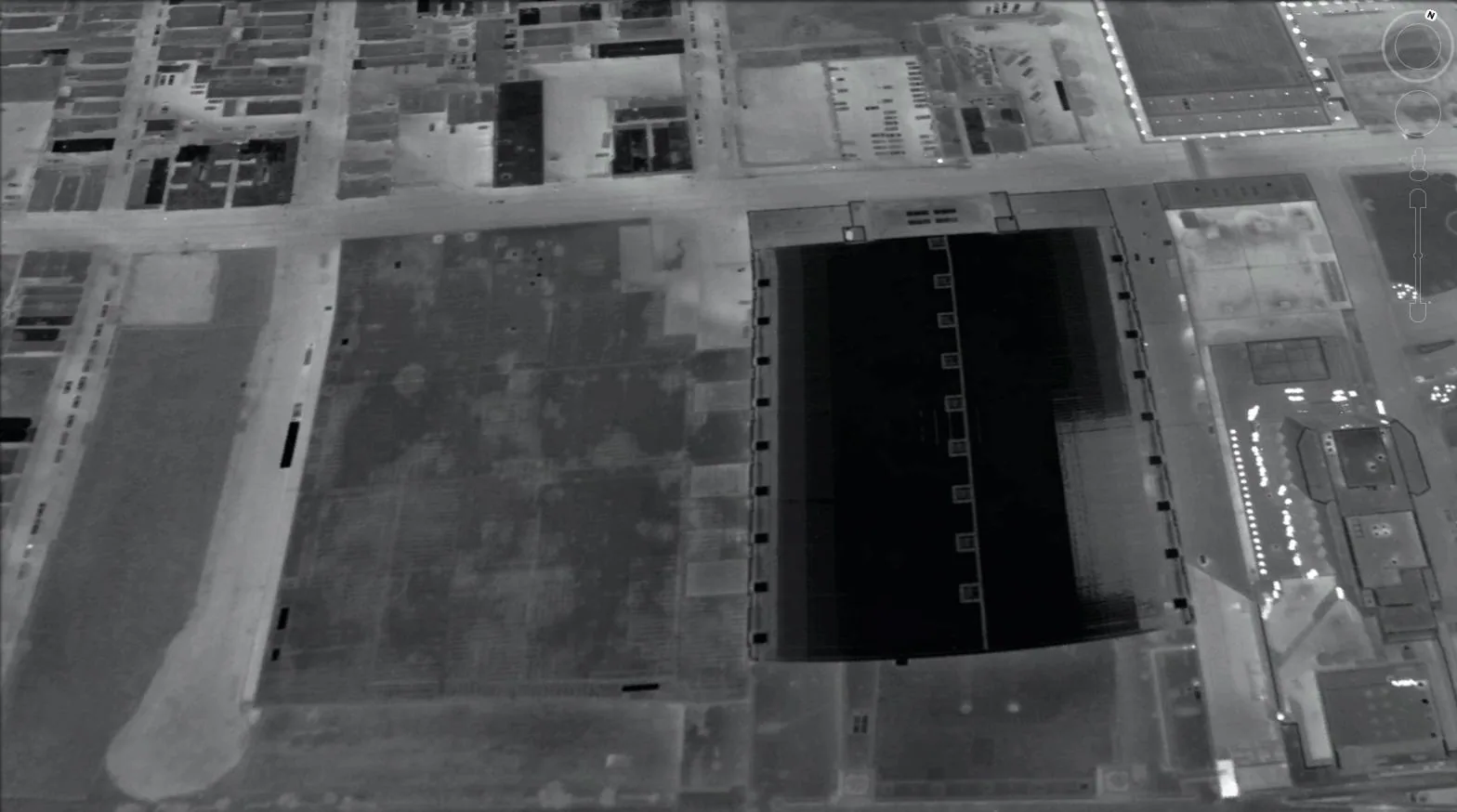
A pond that has sat for a season often has wet insulation beneath it, because every seam and small flaw under standing water leaks a little. An infrared moisture survey shows the wet area as a thermal pattern, and core cuts confirm it at selected points. The survey is scheduled for a dry afternoon after sun has warmed the roof, and the results go onto the same drawing as the pond outlines.
The wet boundary decides the repair. A local dip over dry board can be corrected in place, while a pond over saturated insulation needs that insulation removed before any slope is built. The report states which case applies to each pond so the manager can approve the work in stages.
Slope is added where the field holds water. Tapered insulation laid under a new membrane in the affected area creates a gradient toward the drain, a sump pan lowers a bowl that sits too high, and a cricket behind a curb or wall splits water around the obstruction. Insulation and cover board choices follow the existing assembly and the manufacturer's attachment rules.
If the deck itself has deflected, we ask the owner's engineer to review before new layers add weight. The sequence is written into the plan: remove wet board, correct the deck if needed, install tapered layers, install membrane, flash the sump, test with water. Each step has a dry-in point so a section opened in the morning is closed by evening.
Tenant notice for this work is specific. Occupants under the work area are told which days the tear-off will occur, which access route the crew will use and which hours are loud. The staging footprint is marked on the first walk, usually at a corner of the lot away from dock doors, and the hoist is placed so material never crosses a tenant entry.
Rain and melt total about thirty-eight inches a year in Lee's Summit, temperatures range from a 39 degree January high to an 88 degree July high, and the record extremes run from -25 to 108 degrees. That swing works on seams under standing water, and it also limits when slope work can be done. Adhesives and welds need temperatures the manufacturer allows, so permanent work is planned for the mild months and temporary drain clearing is done at any time.
The weather hold rule is simple. If rain is forecast within the cure window, the section is not opened, and the schedule moves to the next dry day. The manager is told by message the evening before.
The turnover package shows each former pond with a before photograph, the correction made and an after photograph taken after the next rain. Owners of large buildings, such as a warehouse along US 50 or I-470, also receive the drain flow log. A pond that returns after correction is investigated, since it usually means the deck moved or a drain sits too high. Related seam damage under former ponds is covered by seam failure repair, and owners in Downtown Lee's Summit receive the same package.
Managers also receive a short maintenance note: clear the drains twice a year and again after leaf fall, and photograph any pond that lasts more than two days.
Water still present forty-eight hours after rain is worth a closer look, and a pond that returns in the same place after each storm is a finding. The time standing and the depth together set the priority.
Many warranties limit coverage where water stands beyond a set period, so the paperwork should be read before repairs begin. We note the limit in the report and keep records that show the correction.
Often, if the membrane and insulation below are sound. Tapered insulation, a sump or an added drain corrects a local problem, and the moisture survey shows whether the surrounding roof can stay.
Then the low spot is real. The field has deflected or compressed, or the drain sits above the surface, and slope has to be added. A drain cleaning alone treats only part of the cause.
Because the outline and depth are visible only while the water is there. A dry roof hides the problem, and the survey photographs become the baseline for later walks.
Send the building address list, tenant hours and any photographs of standing water. We will walk the roof with the property manager and offer a written sequence plan before any scope is priced.
Request a Roof Assessment