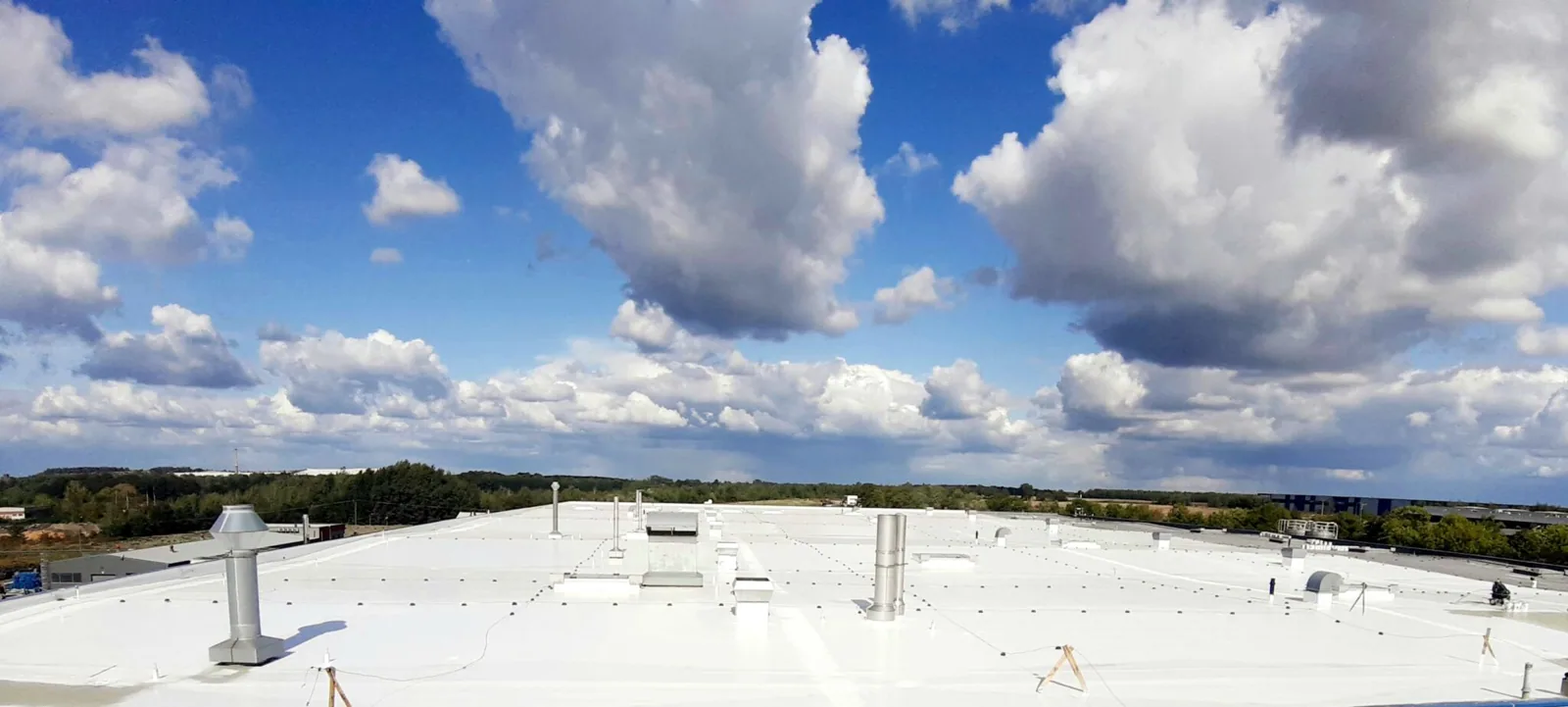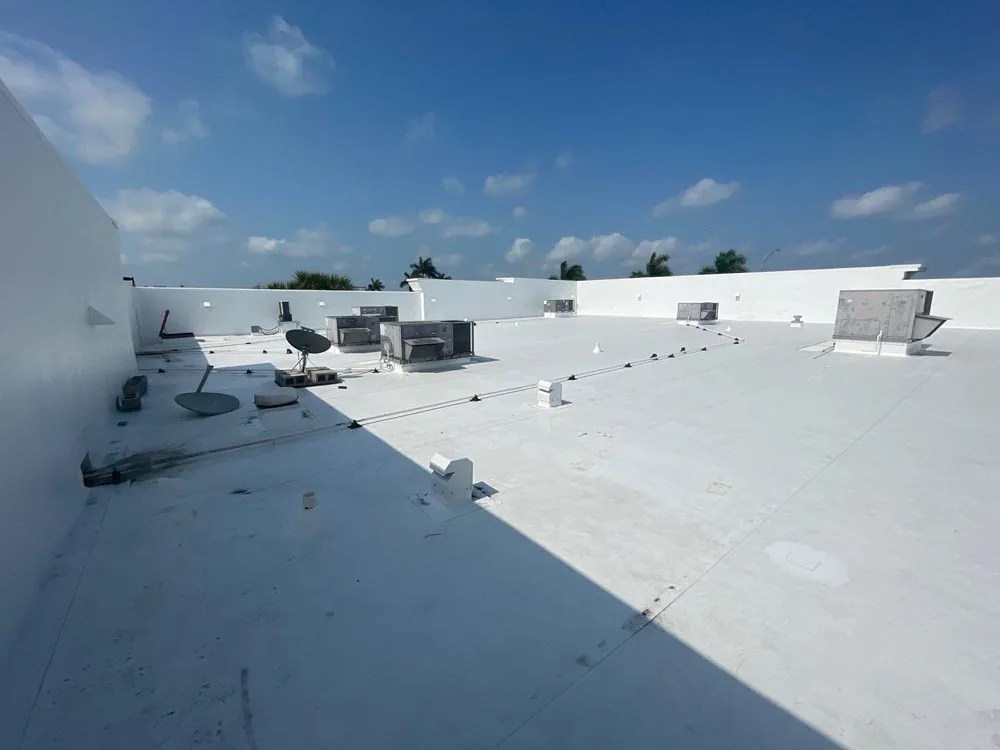

Reflective roofing is installed in an order that the tenants below never see: the walk, the moisture check, the surface prep, the new white surface, and the punch list. The color is the last thing anyone notices. In Lee's Summit, MO the case for a cool roof starts with a July mean high of 88.3F and a record high of 108F, which put a dark membrane on a hot deck for months at a time and shows up as heat and UV damage in the seams. A reflective surface sends much of that heat back, and the work can be staged over an occupied suite without taking a loading door out of service.
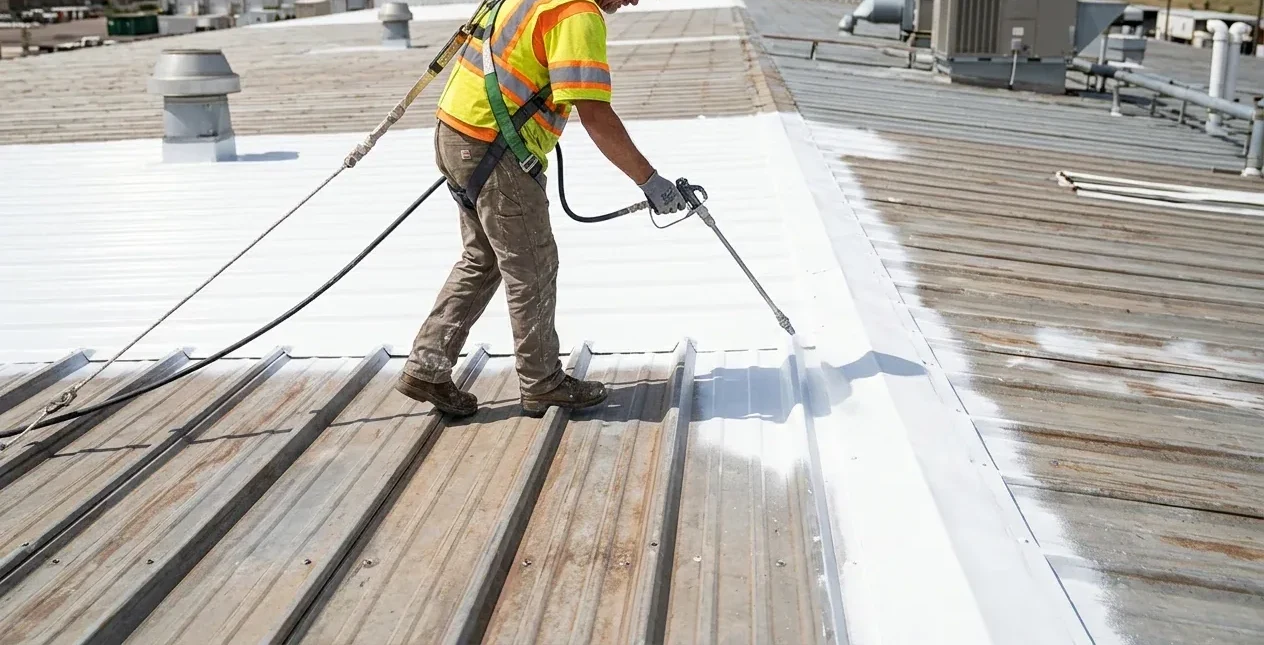
A building has three routes to a cool roof. The first is a new white single-ply membrane, which means a TPO roof or PVC laid in a reflective finish when the old roof is replaced. The second is a recover, where a white membrane goes over a dry, sound existing roof. The third is a reflective coating over a roof that is still in good condition, which is the quickest and least disruptive of the three.
Each route has its limits. A coating needs a roof that is dry and attached, since it adds a surface and not a structure. A recover needs a deck that can carry the extra layer. A replacement costs the most and gives the longest runway. The first site walk sorts a building into one of those three, and the moisture result is usually what moves it from coating to replacement.
A reflective roof helps most in the months when the rooftop units are working hardest, and Lee's Summit has plenty of them. But the same city has a 39F January mean high, 4.5 inches of snow a year and a record low of -25F, so the winter side deserves a question too. A reflective surface gives up some passive winter warmth. For buildings with heavy cooling loads, such as an office floor along I-470 or a retail space at Summit Woods Crossing, the summer gain is usually the larger concern. For a building that runs mostly in cold months, the comparison is closer.
We lay out that comparison in plain terms for the property manager, with the mechanical contractor's load information where it exists. We do not promise a savings figure, because the number depends on insulation, the unit schedule and occupancy.
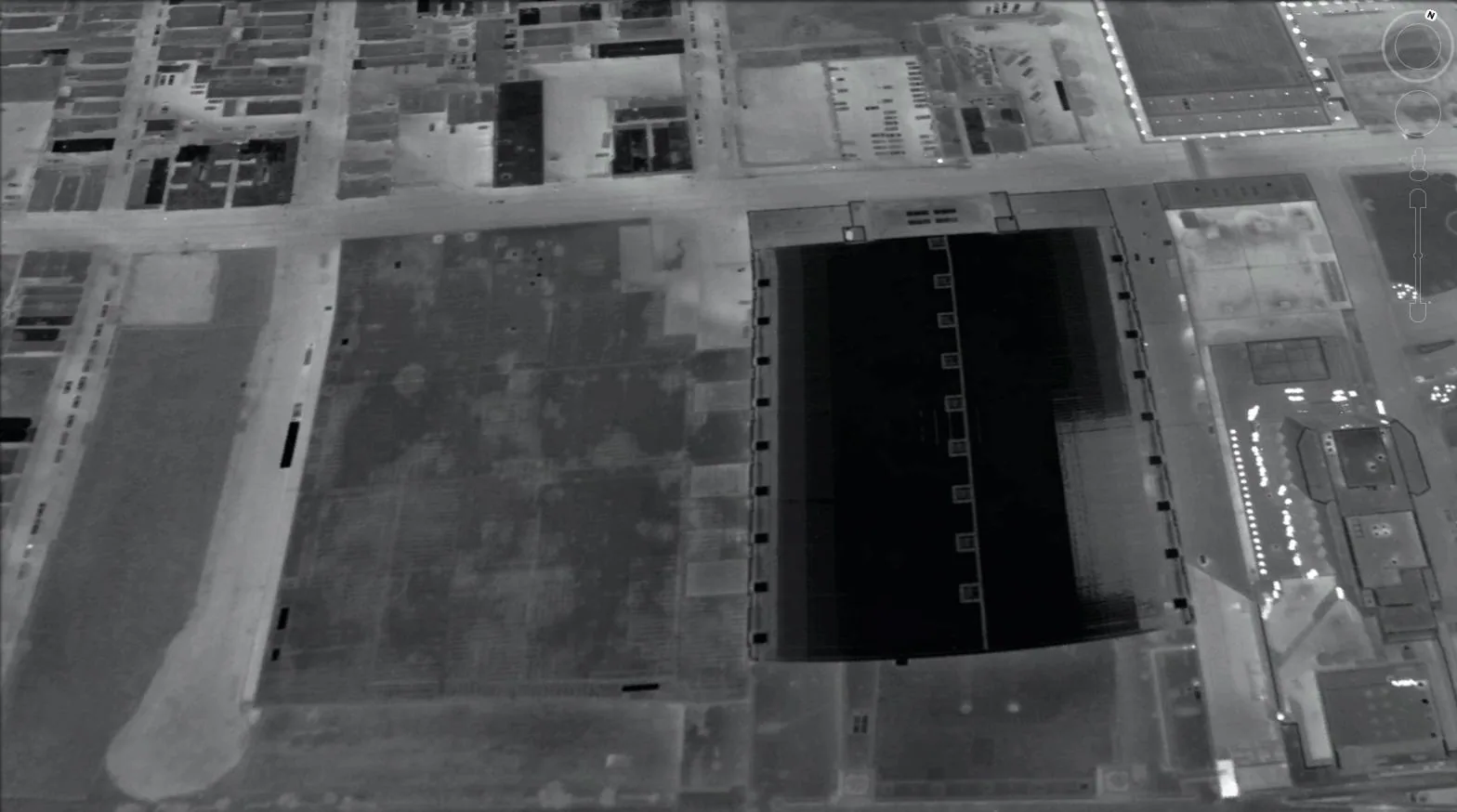
A cool roof is only as sound as the roof beneath it. Before any reflective layer goes down, the surface is cleaned, the seams are probed, and the moisture condition is checked, often with an infrared moisture survey on a calm evening after a sunny day. Wet insulation under a white surface is trapped moisture under a lid, and the coating or membrane will blister over it within a few seasons.
Where the survey finds wet areas, the wet material is cut out and replaced before the reflective layer arrives. Open seams are reworked, loose flashing is refastened, and ponding areas are marked so the coating thickness can be checked there at the end. The prep takes more days than the application, so the white surface does not go down in a morning.
Cool roof work moves in bands across the roof. Each band has a start point, an application, a cure or weld window and a walk-off sequence, so the crew leaves an area finished and dry before opening the next one. Hoists and staging sit at the edge nearest the loading side, kept clear of dock and entry hours, and tenant notice goes out with the date range and the closed routes.
Coatings need warm, dry hours and a clear forecast, which around US 50 and MO 291 means spring and fall carry most of the application days. Summer heat can flash a coating off before it cures, and winter cold keeps it from curing at all. The calendar often pushes coating work to April through June or September through October, which is also when storm lines cross the area. A weather hold rule goes into the plan before the first day, written down so a foreman can call it without waiting for approval.
A reflective surface does not stay as bright as it starts. Dirt, algae near trees, rooftop exhaust and foot traffic all dull it, and a roof that has lost its brightness gives back less heat. A wash at the right interval restores some of it. A coating can be recoated when it has worn, which is one reason a coating restoration is a recurring service on commercial roofs and not a one-time job.
The April 27, 2024 storm warning for Lee's Summit mentioned 60 mph gusts and penny-size hail. Hail marks a reflective surface the same way it marks any other, and a bruised membrane or a cracked coating sheds less heat and admits more water. After a storm like that the inspection looks at reflectivity as well as watertightness, and the findings go into the roof condition report.
The city's development services office adopted the 2024 I-Codes, with projects submitted on or after October 1, 2026 falling under the 2024 edition and earlier submittals under the 2018 I-Codes. That split matters for a cool roof because energy and insulation provisions differ between editions, and the submittal date picks the edition the design is checked against. We confirm the submittal date at the start so the insulation thickness and the reflective product are matched to the edition that applies.
A project along Lee's Summit's commercial corridors with a permit pending may be affected by that date, and a property manager planning work across several buildings may find the buildings fall under different editions. We list that for each address in the written sequence plan.
It can, particularly where the unit schedule is heavy and the insulation is thin. The size of the effect varies by building, so we compare the roof's insulation, the equipment and the occupancy before offering a view. A reflective roof also changes the winter picture, which is part of the same comparison.
Only over a roof that is dry, attached and clean. A moisture survey and a few core cuts answer the dry question. If the insulation is wet, the choice shifts to cutting out the wet sections or replacing the system, since a coating over trapped water blisters.
Spring and fall carry most of the application days, when temperatures are mild and the surface stays dry through the cure. Summer heat flashes coatings too quickly and winter cold prevents a full cure, so those months are held for repairs and prep.
Wash it on a schedule, trim back trees that drop debris and algae feed, and keep rooftop traffic on walk pads. At each inspection we photograph the surface so the dulling can be tracked, and a recoat is scheduled before the base membrane is exposed.
Coating and recover work are quieter than a tear-off and leave the existing roof in place overhead. Tenants receive notice of hours and closed routes, odor from some coatings is managed with air-intake planning, and each band is closed up before the crew leaves the area.
Send the building list, tenant hours and the latest roof report. We will walk each roof, check the moisture condition and return a written sequence for the reflective surface before any scope is priced.
Request a Roof Assessment