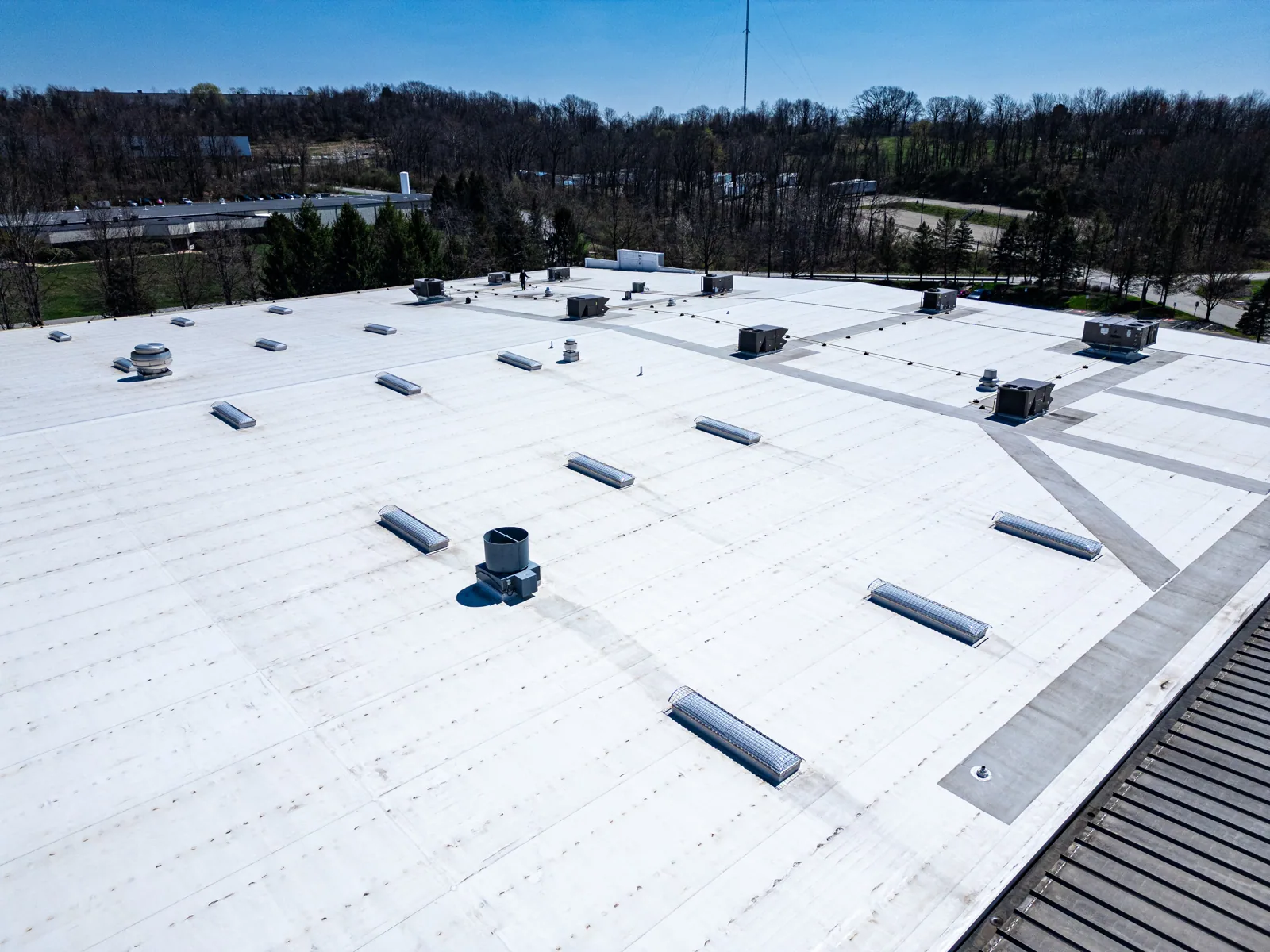

The call may name a wall: a stain along the top of an exterior wall in a suite, a drip beside a rooftop unit, or a damp patch under a pipe chase. Flashing is the material that turns the roof membrane up a wall, around a pipe or over a curb, and it fails more often than the open field because it moves more. In Lee's Summit, MO, a roof moves between a winter high near 39 degrees and a summer high near 88, and its flashings absorb that range every year. We start the job with tenant notice and the access route, then walk every vertical detail on the roof in order.
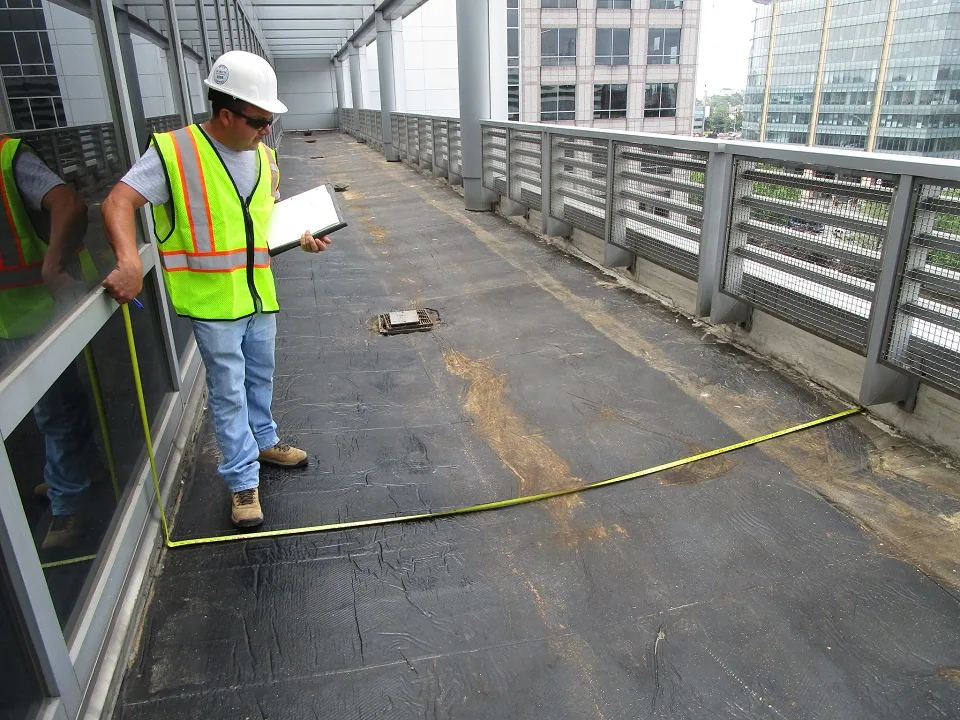
The first walk covers wall bases, parapet caps, curbs, pipe boots, skylight frames and edge terminations, in that order, each with a number on the roof drawing. We press on termination bars, test the sealant with a probe instead of just looking at it, and photograph each detail from a fixed distance so the report reads the same way every time.
The walk also records what is above the detail. A flashing that leaks over a conference room is handled before one that leaks over a storage closet, and the manager can see that priority on the drawing. If the building has several roof levels, each level is a separate page of the report.
A full commercial roof inspection follows the same order when the owner wants a rating for the entire roof, and the flashing findings become one section of that report.
Flashing fails because the building moves and the materials do not move together. A parapet wall expands and contracts with temperature, the membrane shrinks as it ages, and rooftop equipment vibrates on its curb. Sealant that was flexible when installed hardens under summer sun and splits on a cold morning, and water in the split freezes, widens the gap and lets in more water the next day.
Lee's Summit's record range, from a high of 108 degrees to a low of -25 degrees, is an extreme, but the ordinary annual swing is enough to break a rigid joint. Termination bars loosen, counterflashing laps open and pipe boots crack where sun hits them for most of the day. The sun-facing slope is probed first for that reason.
Water that enters at a flashing rarely shows below the opening. It runs along the top of the wall, down a stud bay or across the deck before it appears, so the stain a tenant sees can sit well away from the entry. Where that path crosses several suites, a seam failure on the nearby field can be mistaken for a flashing leak, and the walk separates the two by testing each.
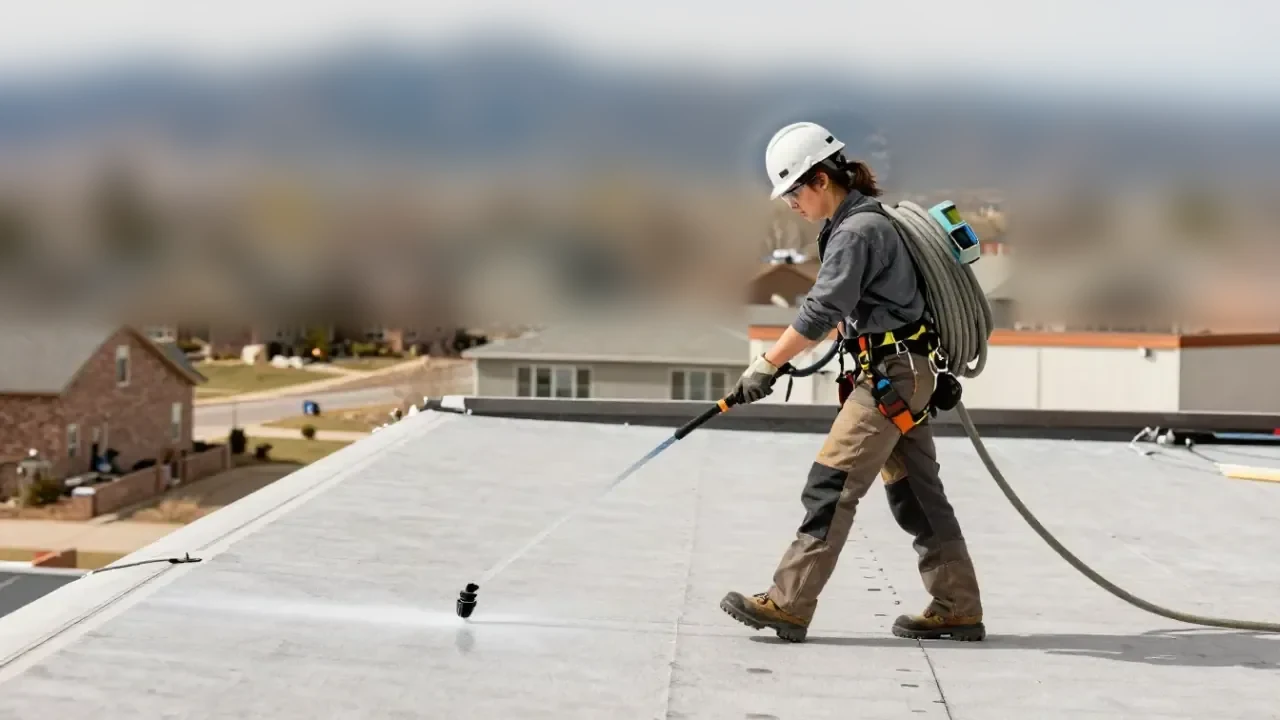
If water is entering now, the dry-in point comes first. A temporary seal of cold-applied mastic with reinforcing fabric, a clamped counterflashing or a sheet cover over a curb can stop a leak in an hour, and each temporary item is listed with a date for removal. Our commercial roof leak repair practice follows the water from the interior stain up the slope, so the temporary stop is placed at the real entry and not over the stain.
Weather holds apply. Mastic and adhesives need dry surfaces, and the crew does not open a wall detail when rain is forecast inside the cure window. The manager receives the hold decision by message the evening before.
Tenant notice for temporary work is brief: the date, the access route and a name to call. The lift and materials stay in the staging area chosen on the first walk, clear of dock doors and entries.
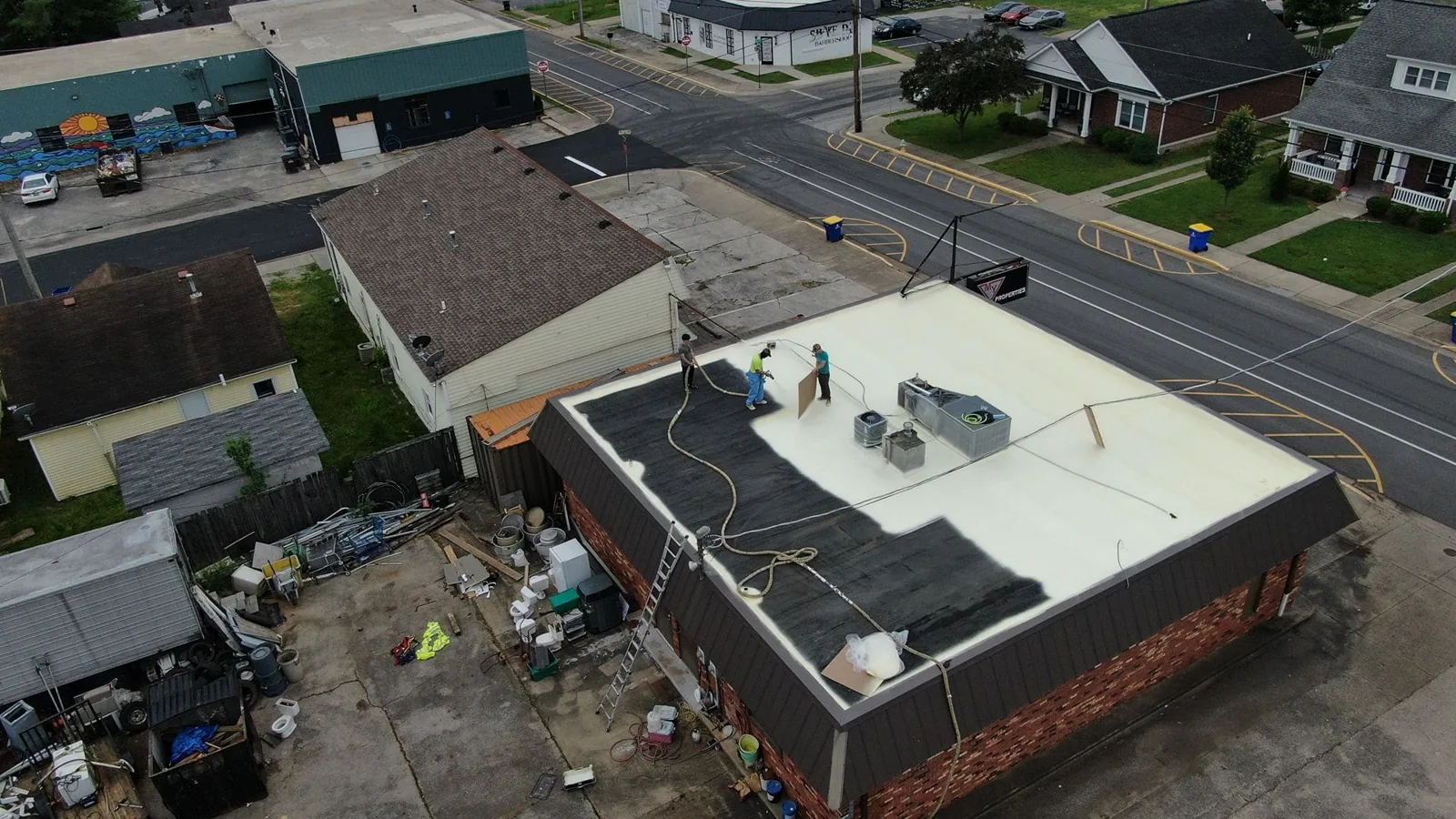
The permanent repair depends on how much of the flashing is sound. Resealing a termination with new sealant and a refastened bar suits a flexible membrane on a dry substrate, while rebuilding a pipe boot or curb corner with new flashing material, reinforced with fabric, restores the seal at that point. Where the membrane has pulled away from a wall, we cut back to sound material and weld or adhere a new base flashing strip.
Where failures run along most of the walls, replacing the full set of flashings is the better value, often alongside a skylight and penetration flashing upgrade. Rooftop equipment curbs are rebuilt with the unit in service when possible, and equipment curb and support work is coordinated with the mechanical contractor so units are not shut down during a hot week.
Cost depends on the number of details, the flashing material, access and the hours tenants allow. A pipe boot is a modest item, while a full run of base flashing along a long wall is a project, and the proposal itemizes each so the manager can approve the urgent details first and schedule the rest.
The Lee's Summit Downtown Historic District holds Italianate and Moderne commercial buildings dating from 1850 to 1974. The walk reads each roof as found, since shared walls and tall parapets are possible on blocks of that kind, and a core cut and a close look at the wall-to-roof joint come before any scope.
Access downtown can be tighter than along the highways. A hoist may need a sidewalk or an alley, and notice to adjoining businesses belongs in the sequence. Property managers of Downtown Lee's Summit buildings and of strip buildings along I-470 receive the same numbered report format.
The turnover package lists every detail repaired, with before and after photographs, the sealant or flashing material used and a short punch list for anything held for weather. We recommend a recheck before the spring storm window, because winter freeze exposes any detail that was sealed in a hurry. A wall detail damaged by storms is handled with wind damage roof repair, and repeated flashing failures along one wall are often a sign of ponding that a drain survey will confirm.
Tenants are told in writing when the work is finished, and the manager receives a note on any suite that was affected. The package also records the hours the crew worked and the route they used, which helps the next contractor plan around the same dock and entry hours.
The stain sits near a wall, curb or pipe, and the roof walk finds a split sealant or lifted termination there. A water test run in sections from low to high confirms the entry when the cause is not obvious.
Often. Terminations are resealed and boots or corners rebuilt locally when the surrounding membrane and substrate are sound. Wet substrate behind the flashing changes that, and the moisture reading shows it.
That varies with the product, the exposure and the movement of the wall. Sun-facing slopes weather first, which is why they are probed first on every walk.
Usually the joint kept moving or the substrate behind it was wet. A lasting repair accounts for movement and dries the wall first, so the sequence matters as much as the material.
No. If the field is dry and sound, rebuilding the details extends the life of the roof and costs far less than a new system.
Send the building address list, tenant hours and any open leak reports. We will walk the roof with the property manager and provide a written sequence plan before any scope is priced.
Request a Roof Assessment