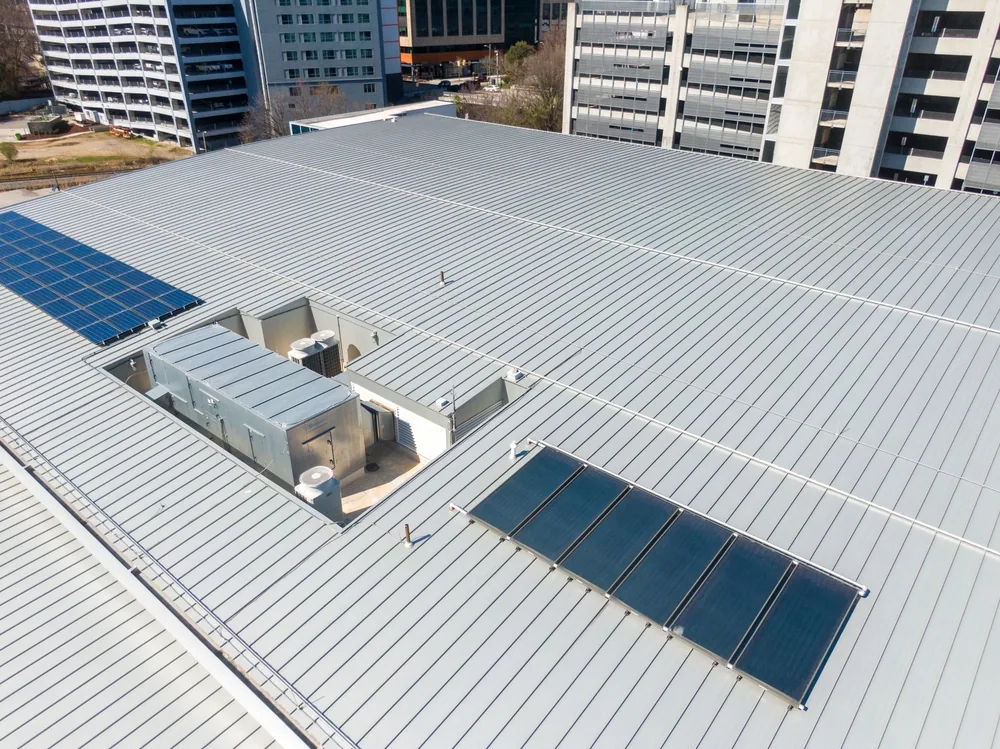

After a storm line crosses the metro, damage arrives in two waves: the buildings with visible damage, and a week later the buildings where a stain has just appeared. A property manager in Lee's Summit, MO who has a storm sequence written down handles both the same way: confirm safe access, walk the roof on day one, stop the water, document what happened, and schedule the permanent repair around tenants rather than around the crew.
We run that sequence in order. The aim is a roof that is dry within hours, a record that holds up with an adjuster, and a repair that does not surprise anyone at the loading door.
Before the crew arrives, we ask the property manager for four things: which tenant suites sit under the damaged area, how the roof is reached, whether any power or data equipment is exposed, and who can approve emergency work after hours. The answers set the first hour. A crew that has them in hand can tarp, cover and seal in the order that protects the most valuable space first.
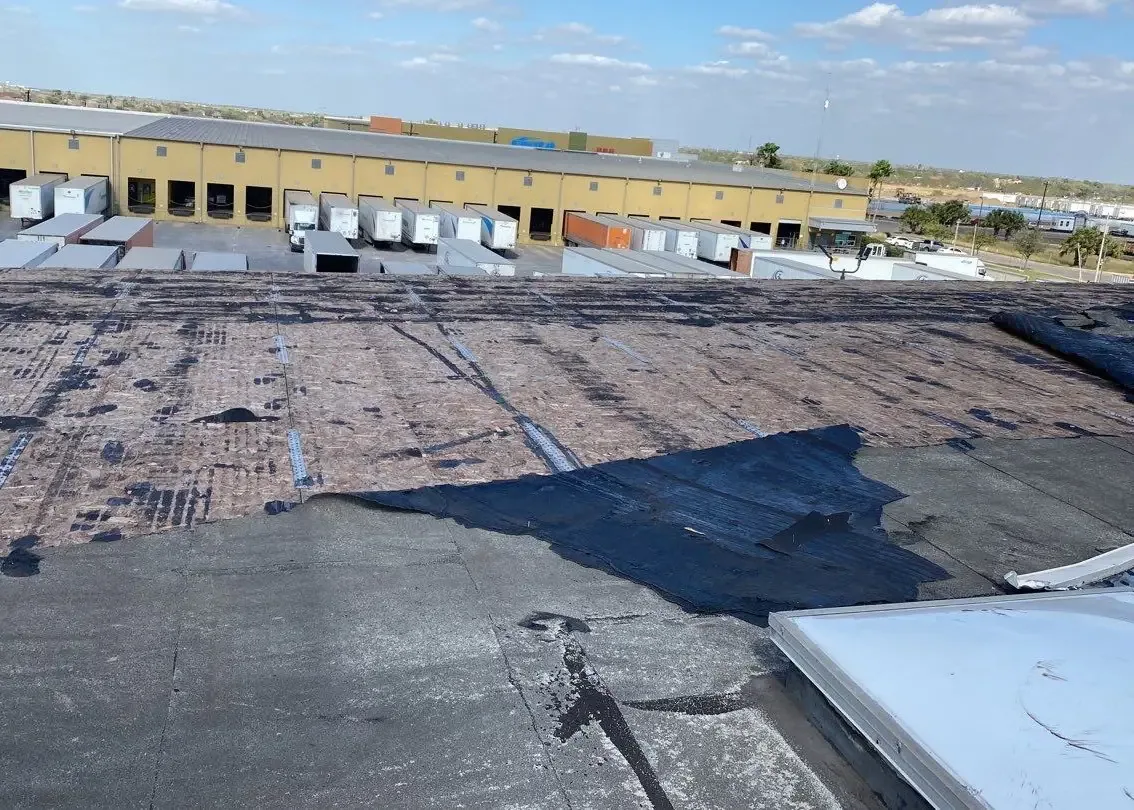
The walk starts at the roof edge and works inward. Wind damage shows first at corners and perimeters: lifted edge metal, peeled membrane, displaced coping. Hail damage shows as bruises, granule loss, dents in metal and cracked rooftop equipment covers. Debris damage leaves punctures along a line that points back to the source. Rooftop equipment gets its own check: panels torn off, fan blades bent, condensate lines pulled loose, curbs shifted on their bases. A displaced unit is a leak path and a safety problem at once, so it is secured before the membrane is touched.
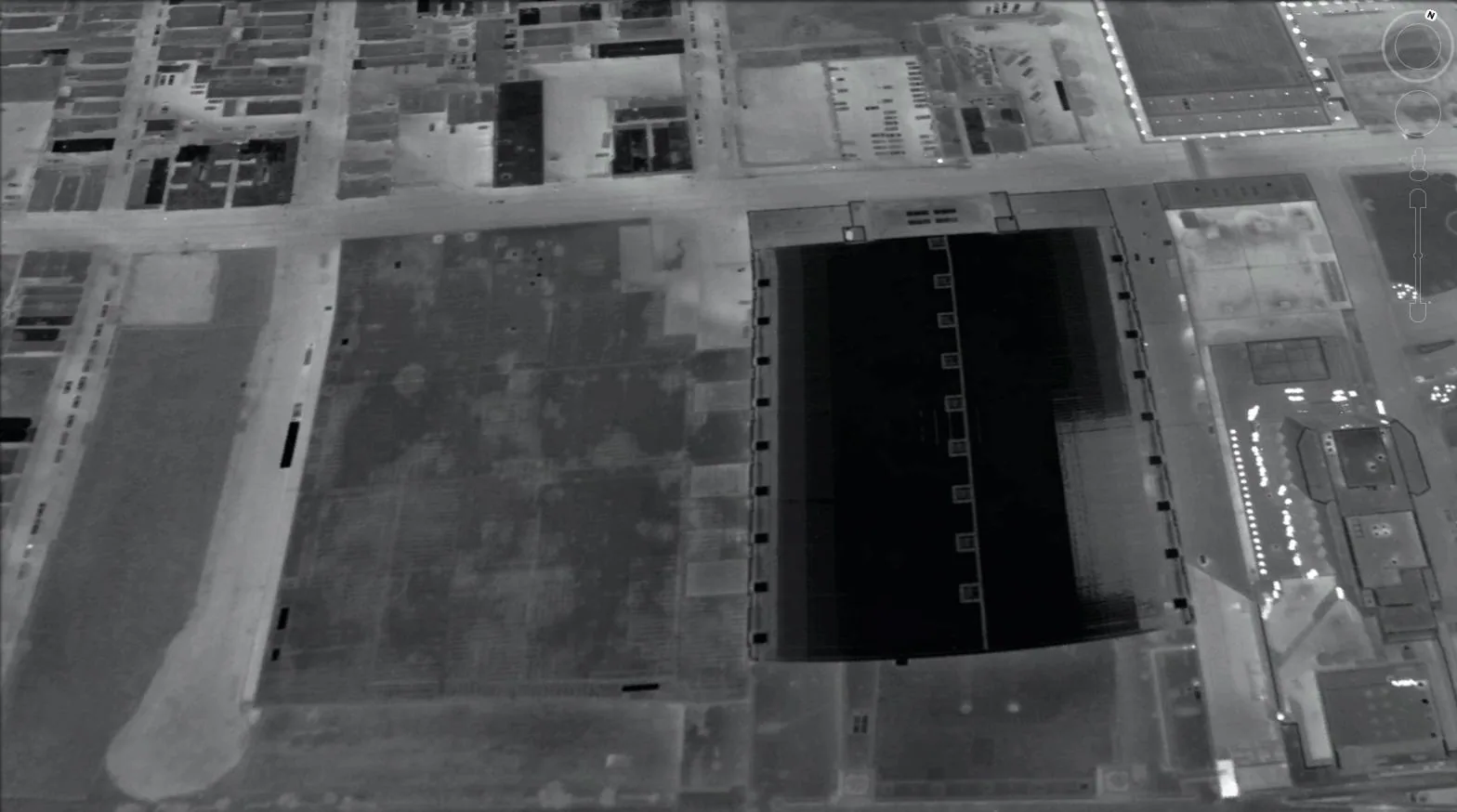
Each finding is photographed with a location mark on the roof drawing. Soft areas underfoot are painted and photographed from two sides. If the walk cannot settle whether water has entered the insulation, an infrared moisture survey follows once the roof is dry enough to read.
The April 27, 2024 warning from the Pleasant Hill office for Lee's Summit spoke of gusts to 60 mph and penny-size hail, and it told people to expect damage to roofs, siding and trees. Gusts at that speed lift unsecured edges. Penny-size hail bruises thin membranes and dents light-gauge metal, though the damage is often cosmetic until it is tested.
That is why the day-one walk sorts findings into three groups: functional damage that lets water in, damage that will become functional if left, and cosmetic marks. Only the first two drive the repair scope, and the record shows the sorting so an adjuster can follow it.
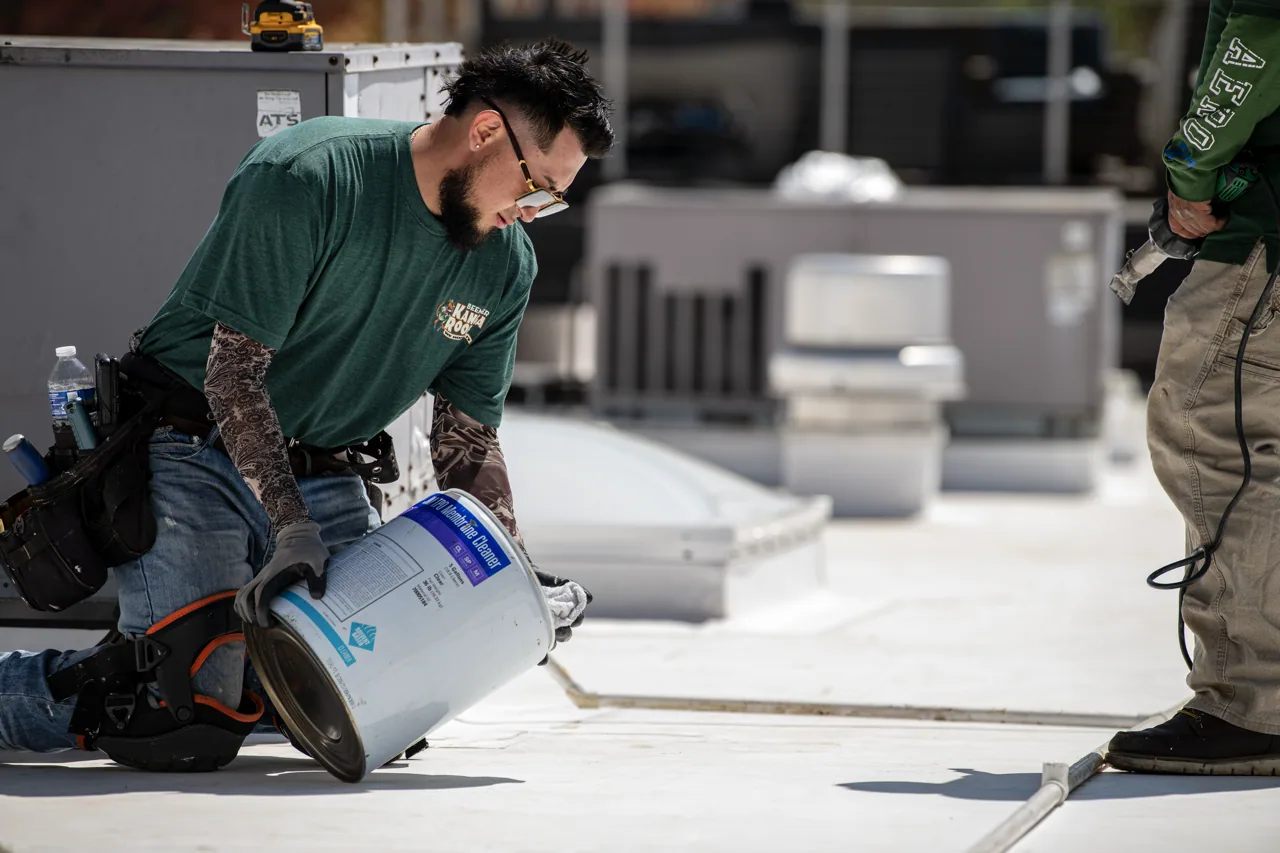
The dry-in point is the stage at which the roof stops letting water into the building, even if the permanent repair is weeks away. It usually means tarping an exposed deck, sealing a torn section with temporary patches, re-fastening loose edge metal and covering open penetrations. We set the point on the first day and log each temporary measure with a photograph.
Inside, protection follows the tenant picture. Covers go over equipment and inventory, wet ceiling tile is removed where it is a hazard, and a temporary drip route directs water away from the sensitive areas. Tenants hear what is happening from the property manager's notice, not from a ceiling. The notice states the area affected, the hours of the work, the odor or noise to expect and a phone number answered at any hour. When a section must stay open overnight for a reason outside the crew's control, the notice says why and what protects it.
Ruskin Heights in 1957 produced an F5 tornado that killed 44 people on a track through the southern Kansas City suburbs. In Oak Grove, an EF3 tornado on March 6, 2017 damaged 483 houses and 12 businesses. Ice in 2002 knocked out power for hundreds of thousands of Kansas City residents for days or weeks. Together they are the regional backdrop for keeping a storm file on every building.
A storm file holds the roof drawings, past repair records, the insurer contact and the contractor's emergency number. Anyone who has to act at two in the morning finds everything in one place. The file should also hold the tenant contact list, the building's shutoff locations and the name of the person who can authorize a spend. Updating it takes an hour a year, and it shortens the first call by most of the questions the crew would otherwise have to ask.
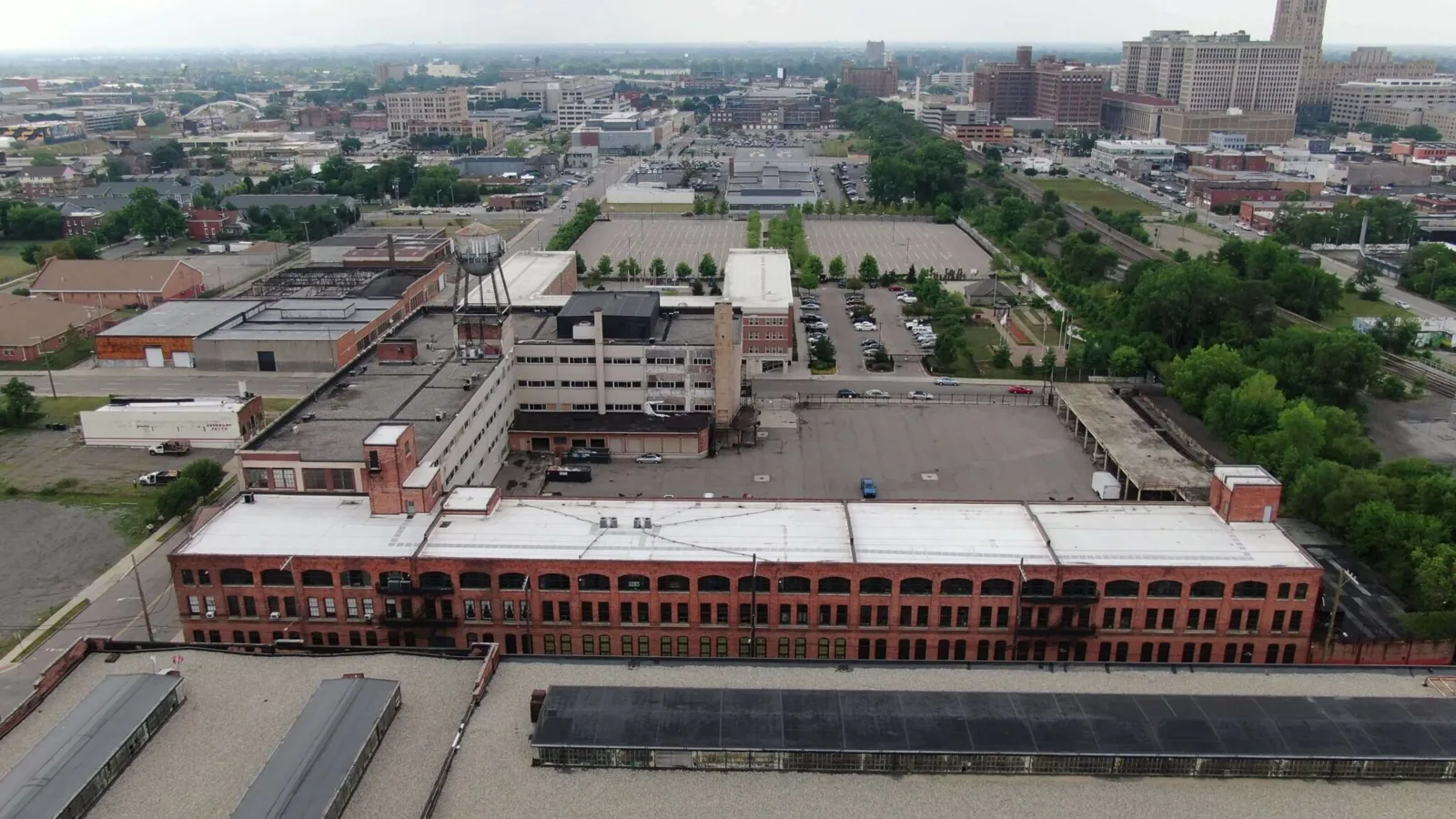
Once the roof is dry and the findings are on file, the permanent repair is phased. Edges and perimeter go first, because wind damage spreads from there. Then flashing and penetrations, then membrane repairs, then drains and gutters. Each phase has a boundary on the roof drawing and a date, a walk-off sequence for the crew and a punch list at the end, so the property manager can tell tenants which suite is affected on which day.
Where damage is localized and the insulation is dry, a commercial roof repair restores the roof to its earlier condition. Where it is spread across a section or the insulation is wet, section replacement or a full replacement may be the better use of money. Our hail damage repair work follows the same sorting.
A claim goes better with dated photographs by roof section, the moisture map where one was needed, a list of temporary measures with their costs, and a repair scope with quantities. We supply those as a package that the property manager can forward. Our insurance claim work carries the paperwork after that, from the damage summary to the repair estimate, and the carrier alone decides coverage.
The 2024 I-Codes, adopted by the city and applicable to submittals on or after October 1, 2026, may change the scope if a repair is large enough to trigger current requirements. We confirm the edition before pricing.
Storm response reaches the commercial and industrial strips on I-470, US 50 and MO 291, downtown storefronts, and buildings in Lee's Summit, Raymore, Belton and Blue Springs. Emergency calls are answered around the clock, holidays included, and the first crew stops the water before anything else. Weather holds follow a written rule: when a warning is in effect for the area, no new section is opened, covered sections are checked and the property manager is told by phone. After the storm passes, the crew returns for the walk-off, a final look at every temporary measure before the permanent schedule is confirmed.
Keep people clear of wet ceilings and electrical equipment, photograph visible damage from the ground and note the time water first appeared. Do not go onto a wet roof.
Yes. A bruised membrane or a cracked cover board can look intact until water finds it. The day-one walk and a moisture survey find what the eye cannot.
The insurer does. Our record documents what was found, where and when, which gives the adjuster a clear map.
Once the roof is dry enough to read and the damage is documented. The sequence depends on weather holds, materials and the adjuster's visit.
No. They are expected, and each one is logged with a before and after photograph and its cost.
Send the building address list, tenant hours and any open leak reports. We will start with a day-one walk and give you a written sequence plan before any permanent scope is priced.
Request a Roof Assessment