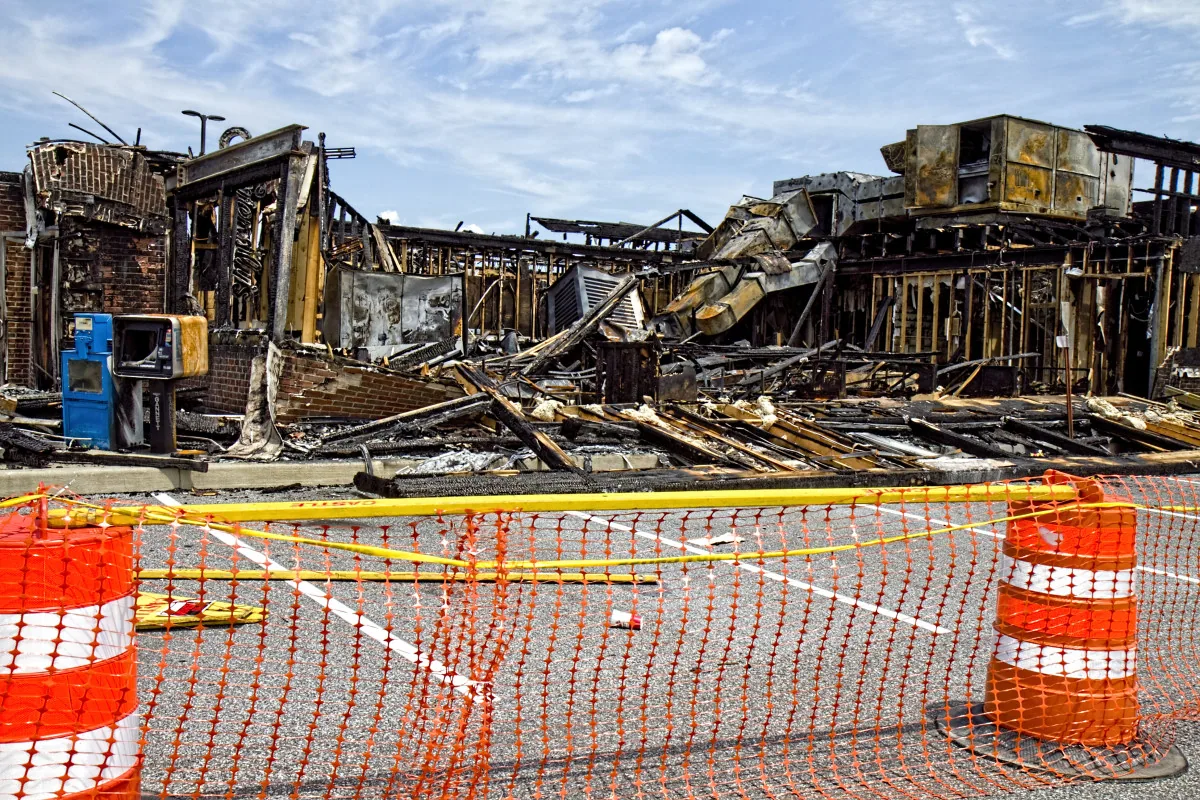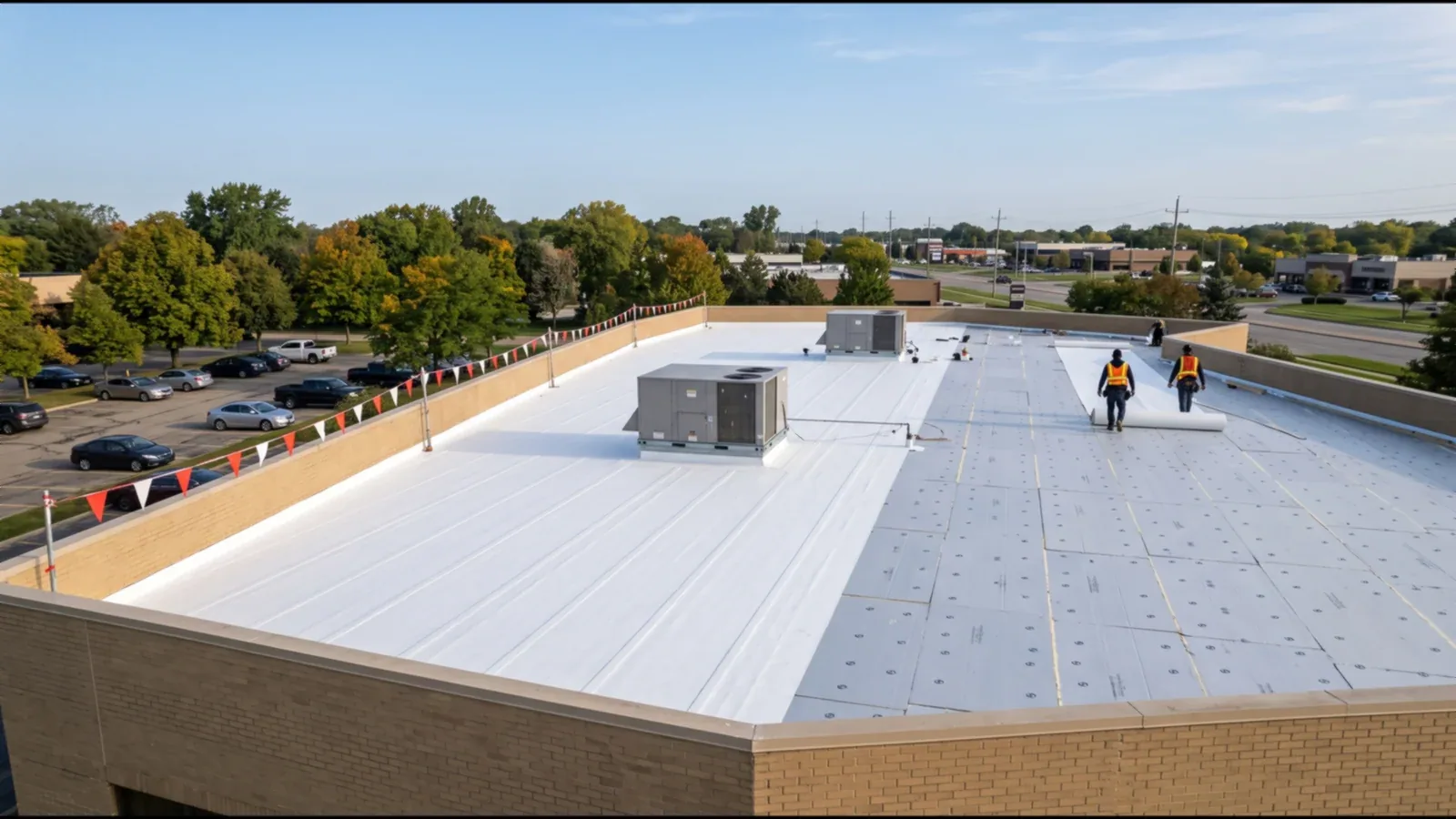

After a fire, the property manager is working three sequences at once: the fire marshal's release of the building, the restoration crew's drying plan and the roof, which is open to the next rain. The roof comes first in the order of work because every day it stays open adds to the interior loss. In Lee's Summit, MO, a fire in a commercial building leaves the roof with hose water in the insulation, heat damage that reaches well past the burned area and vent cuts made by firefighters. The roof condition that decides the first move is the deck, since no one should walk on it until it has been cleared.
We ask three questions before sending a crew: has the fire marshal released the building, has anyone looked at the deck from below, and which access route is safe. Heat weakens steel, chars wood and softens the bond between the deck and the insulation, and firefighters' ventilation cuts leave open holes in the membrane. A roof crew cannot work on a deck that is unstable, and we do not ask a restoration crew to work beneath one.
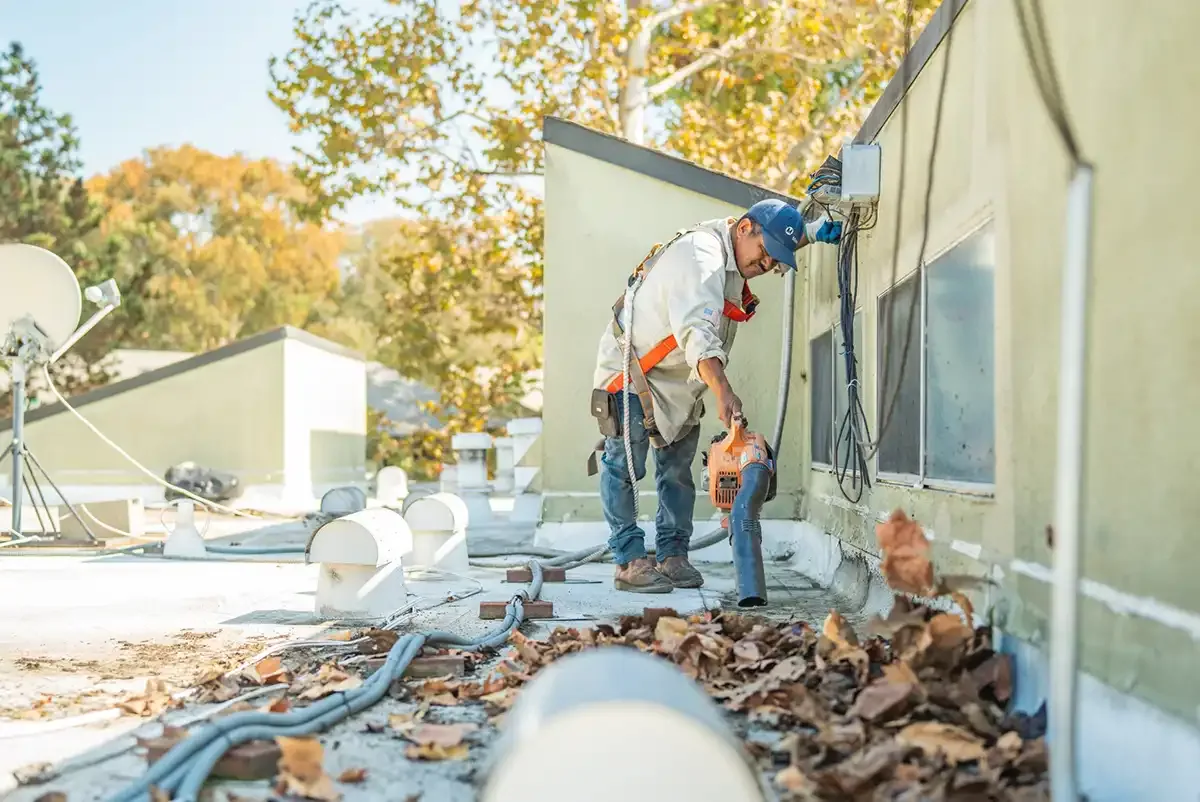
The access route is written down with the manager: where the lift stands, which doors stay clear for the fire investigators, and which tenants are affected. Utilities on the roof are confirmed isolated before work starts, including gas lines, electrical feeds and fire protection piping.
Tenant notice at this stage is plain. Occupants are told which parts of the building remain closed, which entry the roof crew will use and when the first update will come. Staging is placed away from the fire investigators' work area and from any door the restoration crew needs for equipment, and the hoist is set where debris can be lowered without crossing an open walkway.
Once the roof is cleared, the dry-in begins. We cover open holes with sheet material fixed to sound deck, tarp larger areas and secure the edges against wind, and we photograph the roof before and after. Our emergency roof repair response is available around the clock, so a fire at night does not wait for morning to be covered.
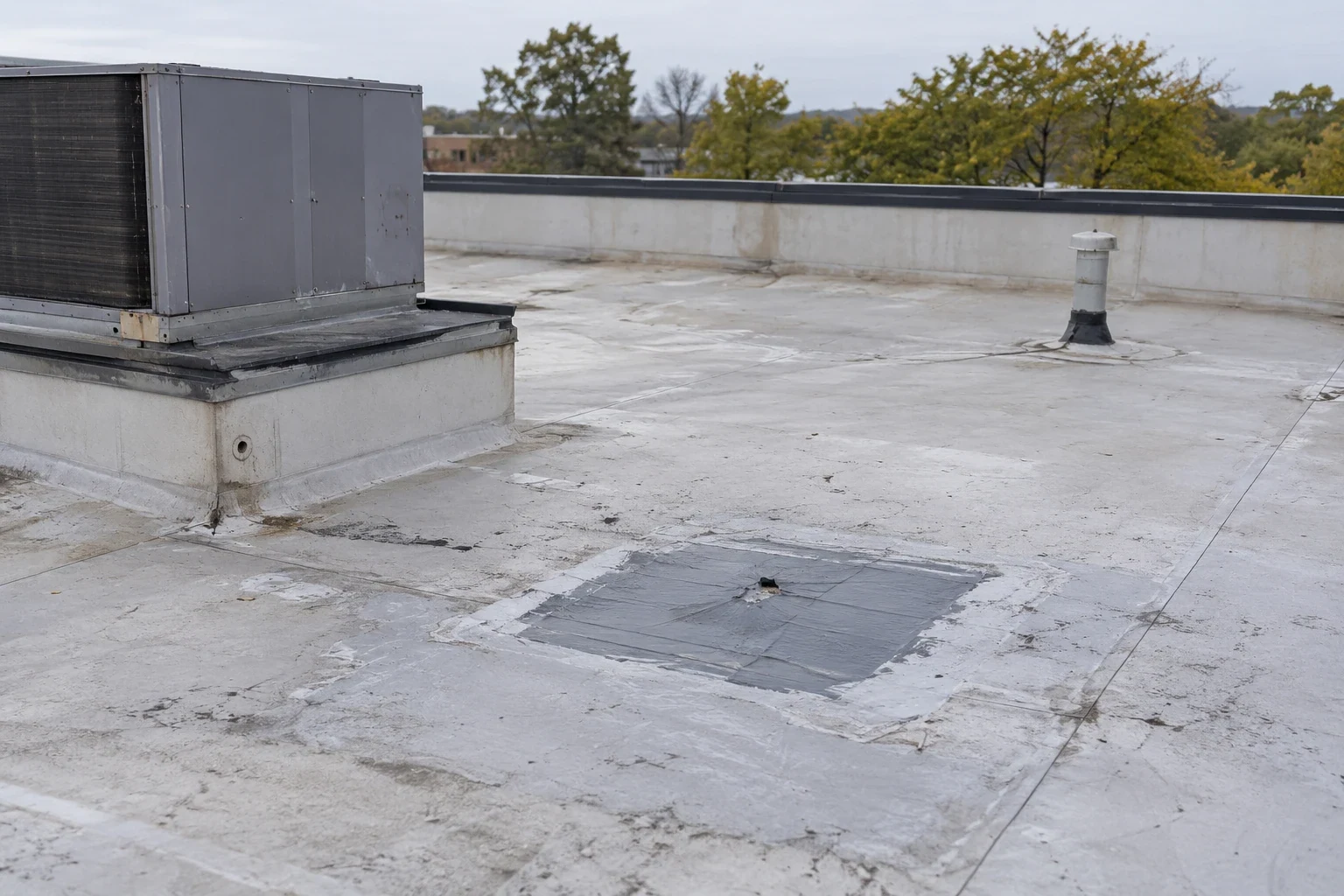
Temporary materials are chosen to come off cleanly. A patch over a cut membrane is cut out with the failed sheet, a tarp is weighted or secured to solid substrate beyond the damage, and drains are kept clear. Each item is listed with a date for removal, and a weather hold rule keeps the crew from adding open area when rain is forecast.
Fire damage on a roof is seldom limited to the area that looks burned. Heat travels through the deck, softens adhesive and shrinks the membrane in a ring around the visible damage, and smoke deposits soot that can stain or stiffen the sheet. A sheet that looks intact may have lost its flexibility and will crack in the next cold season.
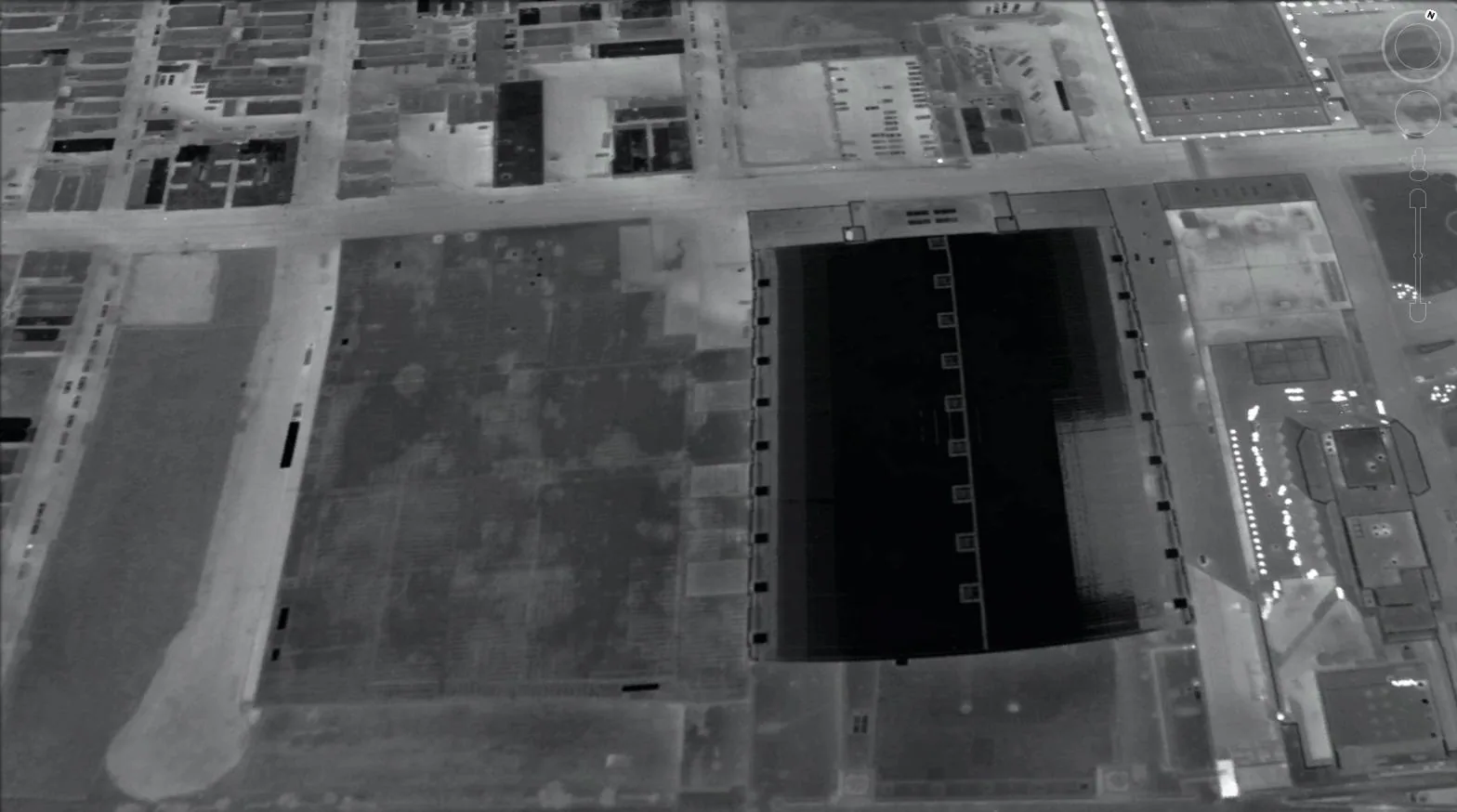
We probe the roof in a pattern that radiates from the burned area, testing flexibility, adhesion, insulation and deck surface. An infrared moisture survey adds a map of the water that entered during firefighting. The report marks the zone that must come off and the zone that can stay, with photographs for each.
Odor is part of the outcome. Soot absorbed into insulation and the underside of the deck can keep smelling after the interior has been cleaned, and removing the affected layers during the roof repair is often the only way to stop it. We state this in the scope so the restoration crew does not clean the same space twice. Cuts made for firefighting ventilation are treated as punctures, and the membrane puncture repair method applies to their edges.
When the deck is charred, warped or exposed to high heat, a structural engineer reviews it before new roofing goes on. Steel deck can lose strength after high heat even when it looks sound, and wood deck can char deeper than the surface shows. We document the deck with photographs and measurements and support the engineer with access and sample cuts.
Deck replacement, where needed, comes before insulation and membrane. We coordinate with the structural contractor so the deck and the roof are one sequence, and we do not cover an area whose deck has not been approved. This stage cannot be hurried, and the tenant notice reflects it.
Rooftop equipment on a burned area needs its own check. Units, curbs and supports near the fire may have warped frames, melted gaskets or damaged wiring, and the mechanical contractor decides whether they stay, move or are replaced. Curb flashing is planned after that decision, so the new roof is not opened again for a unit swap.
The repair removes everything the heat or water damaged and rebuilds from the deck up: insulation, cover board where the specification calls for it, new membrane and flashing that ties into the sound roof. The tie-in matters, since a new section beside a stiffened old sheet needs a transition that handles movement. Insulation and cover board follow the building's fire and energy requirements.
The permit date controls the code here: submittals from October 1, 2026 onward fall under the city's 2024 I-Codes, and earlier ones stay under the 2018 set. The scope names the edition that applies to the permit, so the adjuster sees code-related items at the start and not as a supplement.
Weather shapes the calendar. A fire in winter may be dried in for weeks before a permanent membrane can be welded or bonded, and a fire in summer may allow the full rebuild at once. During any gap, we check the temporary cover after each storm, clear drains and keep a log, so the building stays dry until the permanent work begins.
A fire claim involves many parties. We photograph the roof before temporary work, after it and at each stage of the permanent repair, and keep a log of materials, measurements and dates. Our insurance claim documentation separates fire damage, firefighting water and older wear, which helps the adjuster set the scope.
The turnover package gives the manager the photographs, readings, the plan with repaired areas marked and a punch list. Owners of older commercial blocks in Downtown Lee's Summit or of industrial buildings along I-470 receive the same package. Hose-water leaks that follow a fire are traced as in ponding water repair.
Not until the deck is cleared. Heat can weaken the structure, and firefighters' cuts leave openings. We confirm access with the owner and the fire officials before anyone climbs.
It can stain and stiffen some sheets. Heat is the larger concern, so we test flexibility and adhesion around the burned area and compare them with sound sections.
Heat and hose water spread through insulation and under the sheet. A moisture map and probing set the true boundary, and the report shows how it was found.
A structural engineer reviews the deck and signs off. Photographs and sample cuts go to the engineer, and the area stays uncovered until approval arrives.
After the deck is approved, the roof is dry and the adjuster agrees on scope. Temporary protection holds until then, with a recheck date on every item.
Send the building address, the date of the fire, tenant hours and the status of the fire marshal's release. We will walk the roof with the property manager and provide a written sequence plan before any scope is priced.
Request a Roof Assessment