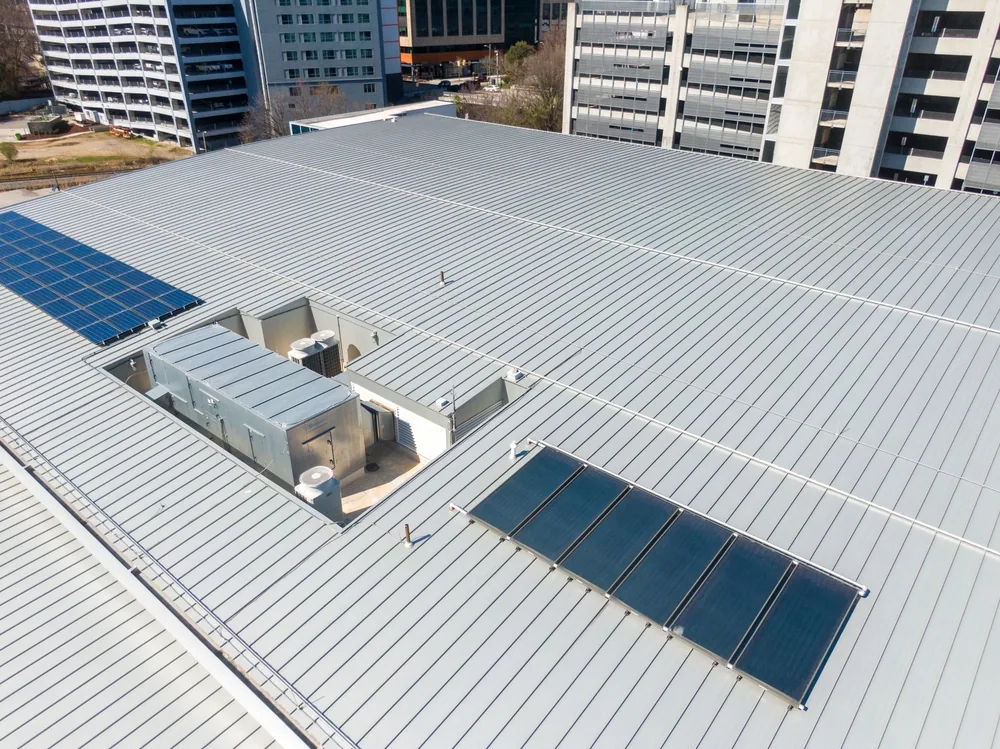

A warehouse roof job is decided at the dock door long before anyone climbs a ladder. Trucks need a lane, the loading crew needs its door hours, and the hoist needs a footprint that blocks neither. In Lee's Summit, MO, commercial, industrial and mixed-use buildings line I-470, US 50 and MO 291, and a warehouse roof among them carries the same scheduling pressure. The roof condition that settles the first move is usually found over the dock: ponded water at the loading edge, open laps beside a canopy, or drains that back up before the field does.
We write that sequence down before any scope is priced, so the property manager knows who is notified, where the trucks go and when each section closes.
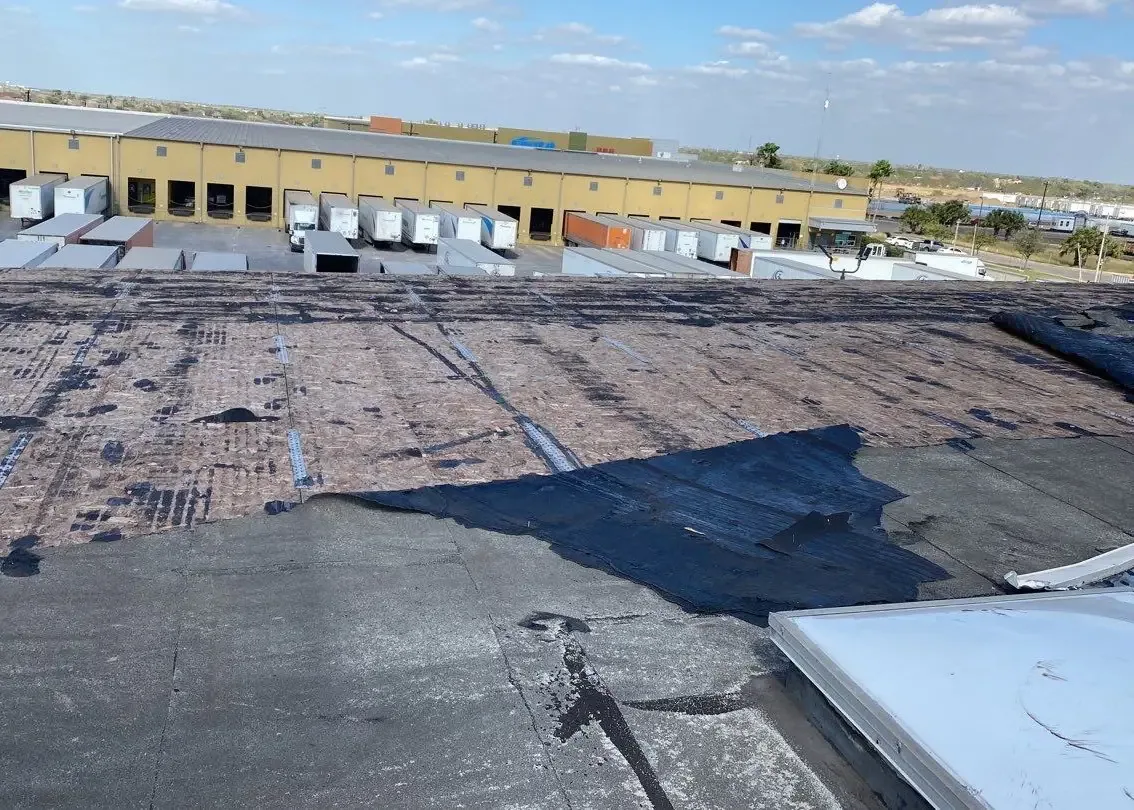
The first conversation covers dock and entry hours. A tenant that ships until four in the afternoon cannot share a lane with a material truck at three. We ask for the shipping calendar, the doors that must stay clear, and the yard space where a hoist can stand without crossing a trailer route.
Tenant notice goes out in writing before mobilization. It names the work dates, the noisy phases, the hatch or ladder used for roof access and a contact for the day. Where a warehouse has office space at the front, the notice also covers the stretch of work above that suite, since a tear-off sounds very different over a cubicle than over a rack aisle.
A storage building with a high dock count behaves differently from a flex industrial building that joins offices to bays. The flex roof has two work fronts and two sets of tenants to notify, while a pure storage roof usually has one. Where the building sits at the end of a distribution chain, the same plan applies as for a distribution center, with tighter lane rules.
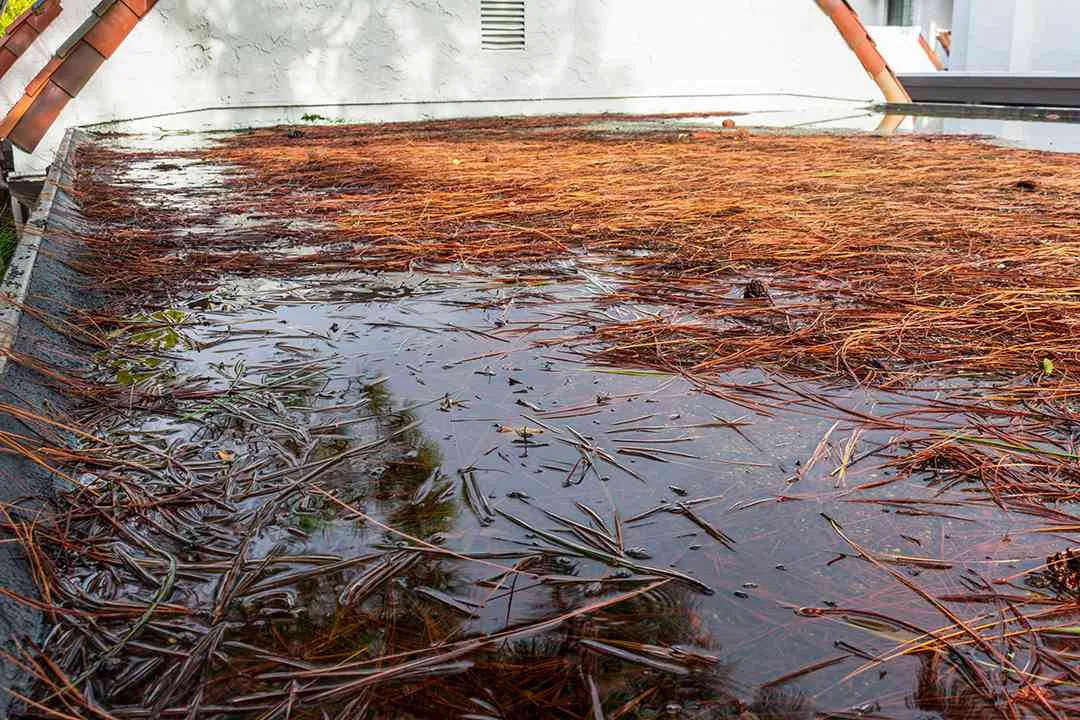
A warehouse roof is mostly open field, and a wide field records its own history. Standing water after rain marks a low spot in the deck. A line of failed seams marks movement along a joist or a purlin. Dirt trails mark the path water takes toward a drain that may be too few or too small.
We walk the field in a grid and photograph each defect against the roof drawing. When the pattern points to ponding water, the repair decision includes drain placement and tapered insulation, not just a patch. On single-ply fields such as TPO, we probe every seam, because a weld that looks closed can still be open underneath.
Temperature adds to the load. Lee's Summit has a July mean high of 88.3F, a record high of 108F and a record low of minus 25F, so a membrane that moves with the season puts steady stress on laps, fasteners and wall flashings.
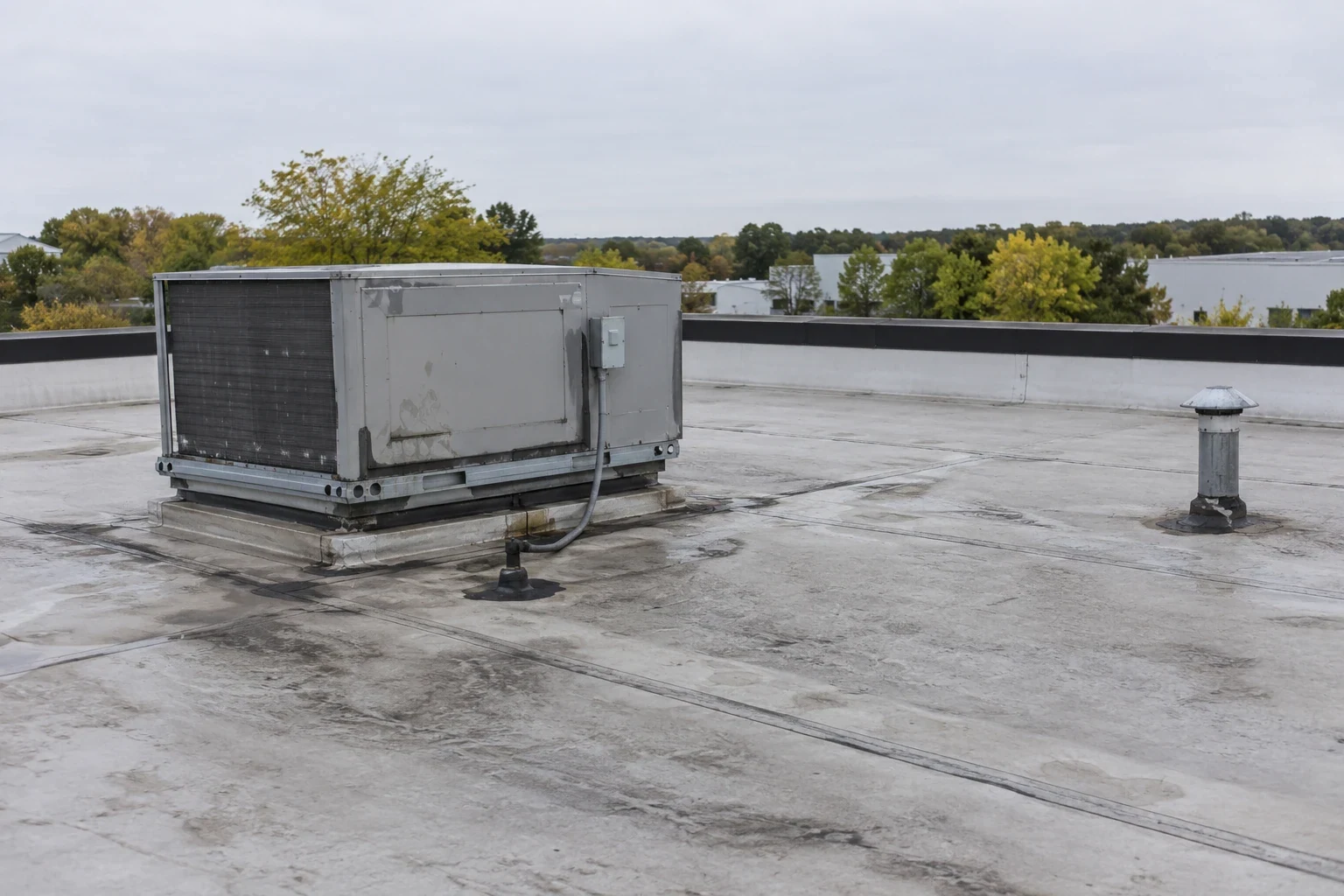
The field gets the attention, but the edge usually fails first. Perimeter metal, dock canopies, exhaust fans and skylights are the places where a warehouse roof meets something else, and every meeting is a seam. We check the edge metal and coping for loose joints and open sealant, and we test the fastening along the perimeter.
Penetrations get a count and a condition note. A rooftop unit curb with a split flashing leaks into the same bay every time it rains, and the stain on the ceiling tile sits a few feet from the real opening. Marking each item on the roof drawing lets the manager see which repairs belong in a planned visit and which should wait for a replacement.
Spring work in this area runs inside the storm window. The Pleasant Hill National Weather Service office put Lee's Summit under a severe thunderstorm warning on April 27, 2024, citing 60 mph gusts, penny-size hail and likely roof damage. That date is why spring plans carry a written weather hold rule: a stated forecast threshold, a named person who calls the hold and a dry-in point to which any open section can be closed in under an hour.
After a storm line passes, a storm damage check starts at the edges and drains, then moves to the field. Hail marks show as bruised membrane or scuffed granules, and a roof that took hail may need a hail damage repair plan separate from age-related wear. Annual precipitation of about 38 inches gives every opened section a real chance of rain, so the hold rule is not decorative.
The decision rests on the insulation. An infrared moisture survey, confirmed with a few core cuts, shows how much of the insulation holds water. A roof with dry insulation and scattered seam failures is a repair candidate. A roof with a large wet area is a candidate for replacement, and a roof with dry insulation but a worn surface may suit a recover.
Cost follows the size of the open area, the number of penetrations, the condition of the deck and the disposal needs. A recover avoids tear-off debris and shortens the time tenants hear work overhead, but it requires dry insulation, a sound deck and enough height at the walls to flash the added layer.
One more factor is the interior. Racking close to the roof deck and sprinkler piping hung from the structure limit how much cutting and fastening can safely happen, so a plan for a stored-goods building names the protected zones before the first fastener is driven.
The last day is a walk-off sequence. We close every section, clear the lanes, remove staging and walk the roof with the manager against the punch list. The turnover package lists what was opened and closed, the photos of each completed detail and the items the next walk should check.
For owners with several buildings, those records feed a roof condition report that the next budget cycle can use. An owner with one warehouse along the I-470 and US 50 corridors and another across the metro can compare them line by line, and the roofs in Lee's Summit stop being a surprise on the capital plan.
The staging footprint decides it. If the hoist and material stack sit clear of trailer routes and doors, shipping continues. If they cannot, the work moves to hours when the doors are idle, usually early morning or a weekend. We settle that on the day-one site walk and put it in the tenant notice.
Water follows the deck and the insulation seams before it drips. A split at a curb can travel along a steel rib for thirty feet. Tracing starts at the stain, then follows the wet boundary uphill to the entry, which is why we scan before we cut.
As much as the crew can dry in before the day ends or the forecast turns. In spring we hold that area small and set the cut-off hour early. In stable summer weather a larger section is reasonable, provided the lane plan still holds.
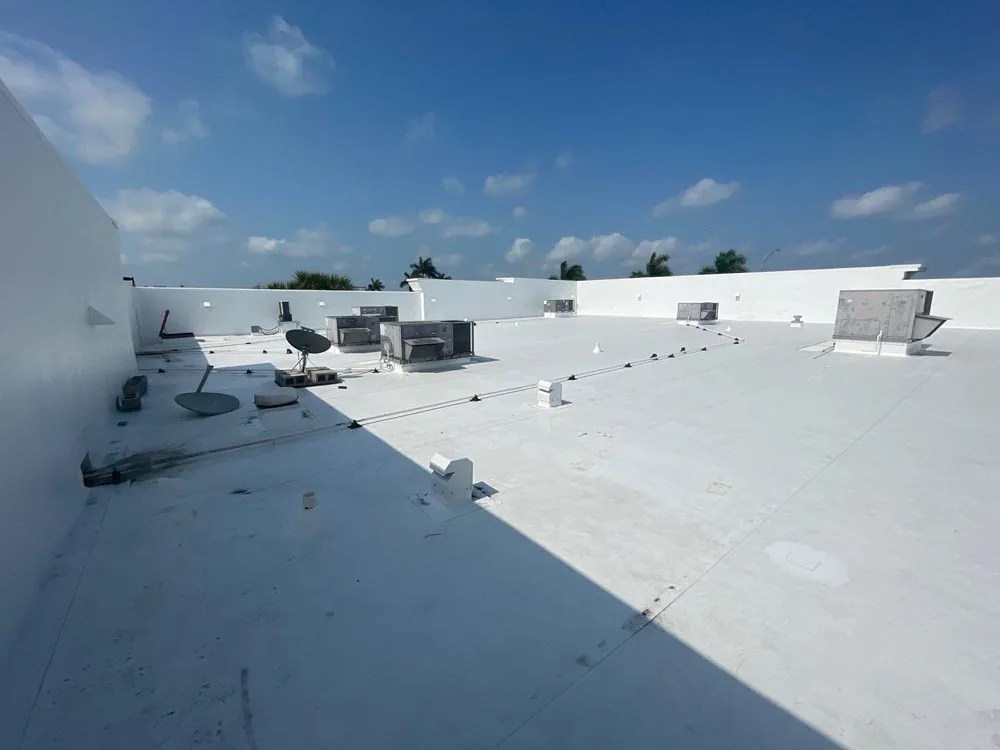
The membrane choice follows the deck and the drainage first. Temperature range matters most at seams, wall flashings and fastener lines, where movement concentrates. A light-colored single-ply with welded seams is common, but the existing assembly and wall heights decide whether it fits.
The shipping calendar, the building address list and any open leak reports, with the roof drawing if one exists. From those, the first walk decides where the hoist stands and where a section can be closed in for the night.
Send the dock calendar and the address list with any open leak reports. A walk of the roof comes first, and a written sequence follows before anyone prices the scope.
Request a Roof Assessment