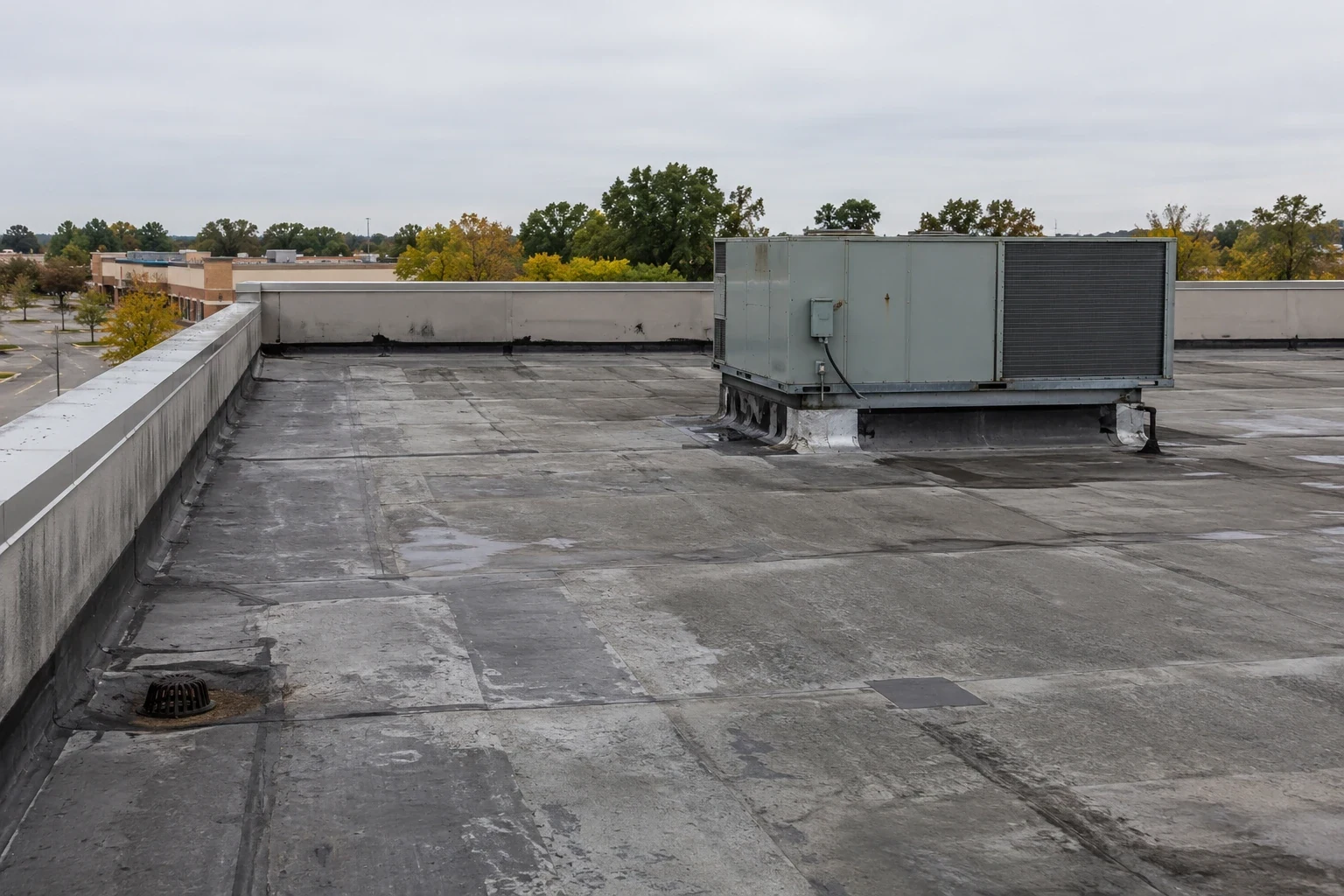
A property manager with twenty open work orders needs a roofer who can sort them into a sequence. Tenant calls, a lease clause, an owner's budget deadline and a spring storm forecast all compete for the same week. We start with the building address list, tenant hours and any open leak reports, then walk each roof in a defined order. In Lee's Summit, MO, property along I-470, US 50 and MO 291 runs from commercial to industrial to mixed-use, so one portfolio can span office fronts, retail strips and warehouse bays on different roofs. The walk ranks them, and that ranking points to a commercial roof leak repair first or a planned replacement.
The first pass covers every roof on the list in one sweep. Each building gets the same checklist: drains, seams, flashings, curbs, edges, penetrations and signs of moisture. Photographs are taken at fixed points so that changes between visits can be compared.
At the end, the manager receives a ranked list. Roofs with active leaks or structural concern come first. Roofs with failing details but dry insulation come second. Roofs in fair shape with a few years left go to the watch list. The ranking keeps the work order queue from turning into a string of emergency calls, and it gives the owner a defensible basis for the budget request.
An owner with out-of-town investors may need the same report in two forms: a short summary for the asset manager and the full file for the property team. We prepare both from the same photographs and notes, so the numbers match. A manager who works for a fund can also pass the file to a real estate investor without rebuilding it.
Photographs stay tied to a roof location, not just a building name, so a stain on the north bay in spring can be compared with the same bay in autumn.
From inside the suite, a roof job is judged by noise, dust and whether anyone was warned. A notice goes out with dates, work hours, the noisy steps and a phone number. Dock and entry hours are written down, the parking footprint for lifts and trucks is marked and the roof hatch location is confirmed with the suite contact.
For retail centers such as Summit Woods Crossing and Summit Fair, the issue is customers and trucks sharing a lot, as on any shopping center roof. For an office building roof, it is noise above conference rooms. For industrial buildings, it is truck traffic at the docks. We adjust the sequence for each, and the property manager approves the notice before it is sent.
Access control is handled the same way every time. We ask who holds the roof hatch key, whether alarms are tied to the roof door and whether a suite needs an escort. Those answers are written on the notice, and the crew sign-in sheet at the property office shows who is on the roof at any moment.
A manager's year is set by the spring storm window. A warning like the one issued for Lee's Summit on April 27, 2024, which named 60 mph gusts, penny-size hail and expected roof damage, can bring tenant calls within hours.
We prepare for it in advance. A pre-season walk clears drains, tightens loose edge metal and marks weak details. After a storm, a post-event walk covers the listed roofs in the same order, records any damage with photographs and moisture readings, and hands the manager a dated file. That file is what the insurer, the owner and the tenant each ask for first, and it ties damage to an event instead of leaving it open to argument.
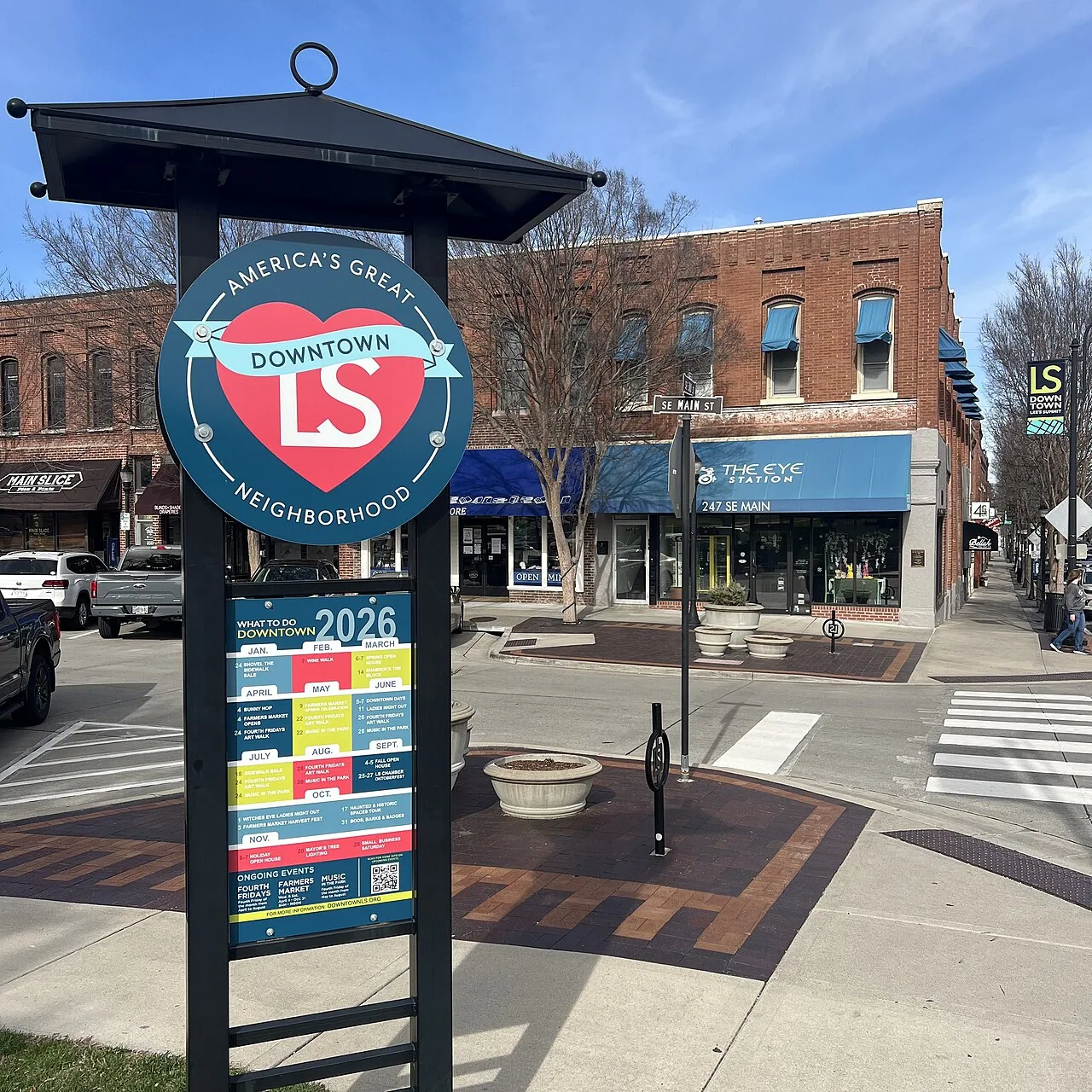
For older buildings in the downtown area, which has Italianate and Moderne commercial buildings dating from 1850 to 1974, the pre-season walk carries extra weight. Parapets, cornices and mixed roof materials can hide weak details, and a failure during a storm line costs more than the walk would have.
An owner reviewing the budget needs to see what the roofs will cost over the next several years. The roof capital planning schedule answers that by building. It lists each roof's condition, the likely repair work in the next year, the likely replacement window and the main reasons the estimate could change, such as wet insulation or code-driven added insulation.
A replacement filed from October 1, 2026 onward is reviewed under the 2024 I-Codes, while earlier filings keep the 2018 set. That date goes into the schedule for any replacement near the boundary, since the edition affects insulation and wind design and therefore cost.
Contractor coordination belongs in the schedule too. If a general contractor is renovating tenant space, the roof work has to line up with its sequence, and the general contractor needs the dry-in date. We put that date on the schedule so interior trades know when the building is closed against weather.
When a job is complete, the manager receives a turnover package for the file: photographs by phase, the roof drawing, the closed punch list and any warranty documents. Each package is stored in the same structure, so a new manager or an acquiring owner can find what they need.
Warranty management matters across a portfolio. Notice periods, maintenance conditions and transfer rules differ by manufacturer and by roof. We list them for each building and set the preventive roof maintenance visits that keep those conditions met. The result is a portfolio file that survives staff changes, from the older commercial buildings of downtown Lee's Summit to newer centers.
Vendor consolidation is a reasonable goal when it is based on evidence. A single roofing record across many buildings lets the manager compare cost per roof area, repair frequency and leak history, and decide which roofs justify replacement before the next storm season.
The one with active water entering a tenant space or a critical room, followed by roofs with wet insulation. Moisture evidence and interior damage rank the list, not the age of the roof.
By using one inspection format for all of them. Single-ply, built-up, modified bitumen and metal roofs fail in different places, so the checklist covers each, and the report compares them on condition.
The manager approves every notice, and our site lead is the day-to-day contact. Tenants get a phone number, a schedule and a plain description of the noisy steps.
Planned maintenance visits, repairs from the last walk, a reserve for storm response and the first phase of any replacement due within the period. The capital schedule shows each item by building.
Yes. Emergency crews respond all day and night, including holidays, and their findings go into the same building file, so the next planned visit starts with the emergency history.
The address list with tenant contacts, past roof reports and warranties, roof access instructions, and a list of open leak complaints with dates. A note on which tenants run sensitive operations lets us plan protection before the first roof opens.
Share the building list, tenant hours and any open reports. We will walk the roofs with you and write a ranked sequence plan before any scope is priced.
Request a Roof Assessment