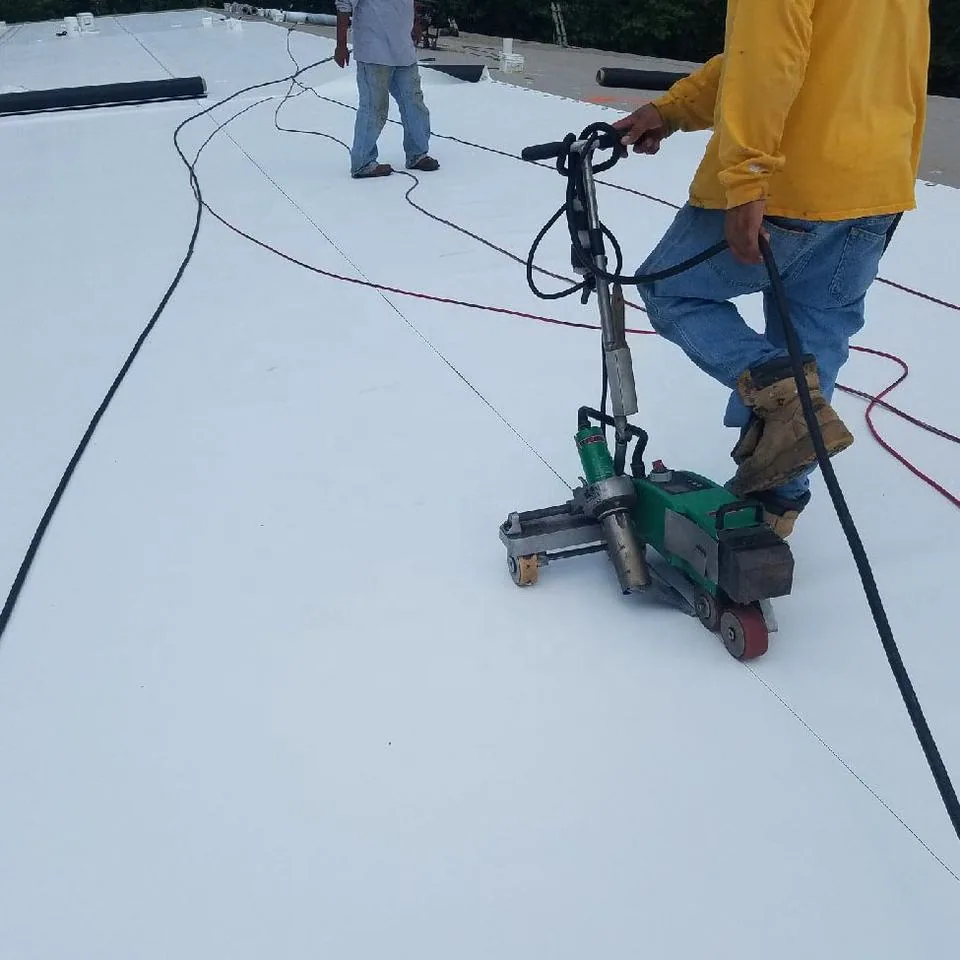
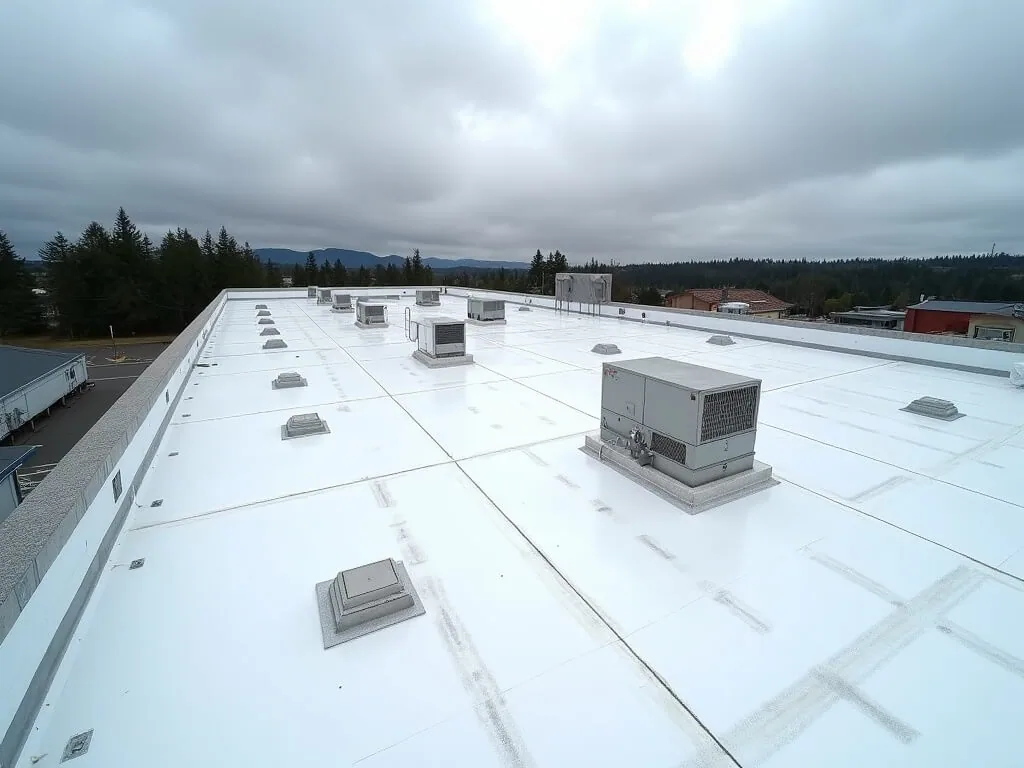
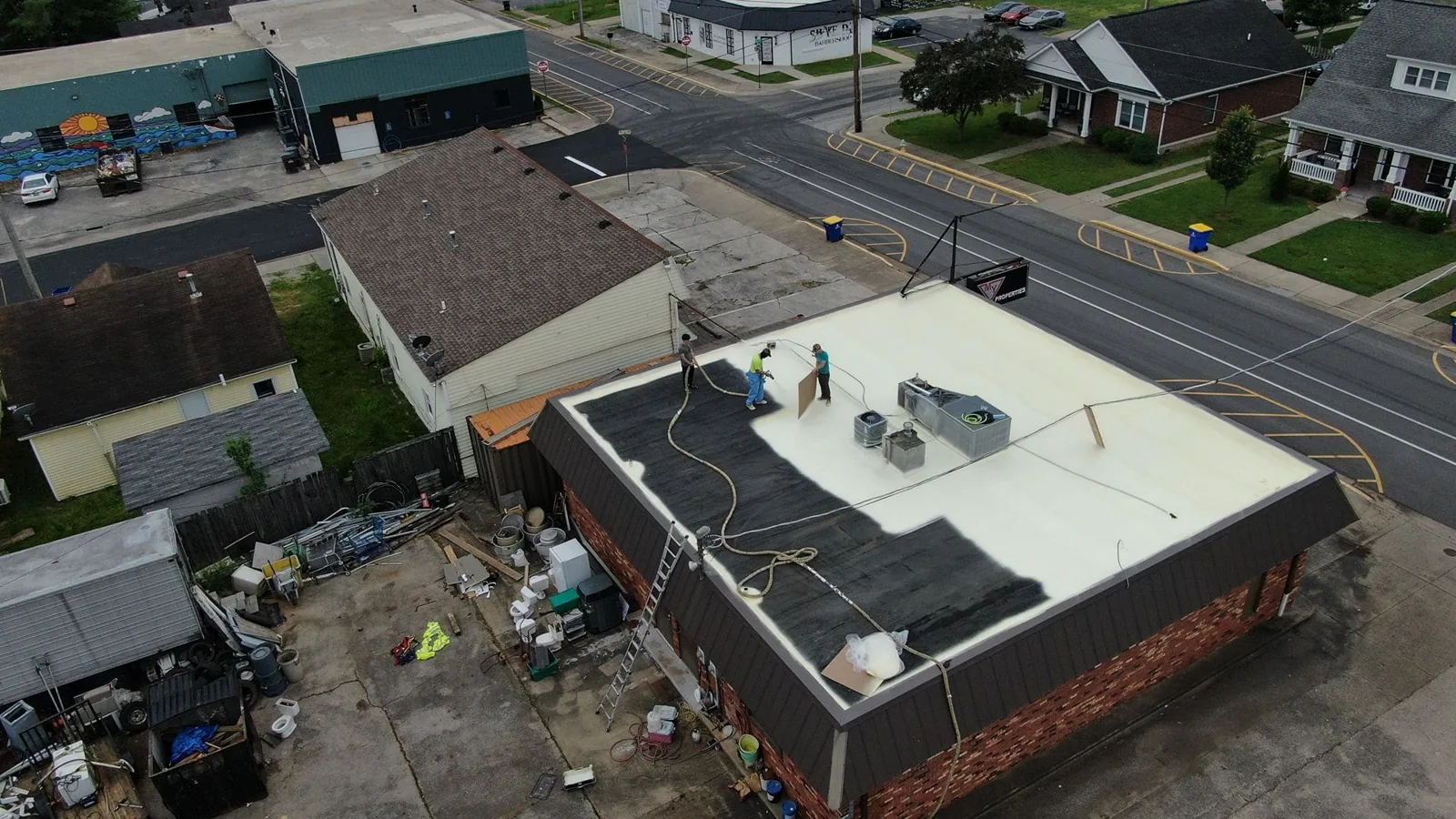
Hot-air welding is the step that decides whether a Sika Sarnafil roof lasts, and it is also the step that puts heat, hoses and welding equipment on a roof above working tenants. Sika Sarnafil is a maker of thermoplastic roofing, with PVC membranes at the center of its commercial line and liquid-applied flashing and waterproofing products alongside. In Lee's Summit, MO those membranes go onto occupied offices, medical buildings and retail space, and the work is sequenced around tenant hours, the roof hatch and the dock before the first weld is made.
We install, repair and maintain these systems with the same order of work on every roof: notice, access, staging, dry-in, then turnover.
A PVC membrane is joined by heating the overlapping surfaces until they fuse, which turns two sheets into one. When the weld is made on clean, dry material at the right temperature and speed, the seam is stronger than the sheet around it. When the surfaces are dusty, wet or cold, the weld looks fine and fails later.
Most commercial thermoplastic sheets are reinforced with a polyester or glass scrim, which gives them tear strength and dimensional stability. We probe every seam after welding, with a tool run along the edge, and record the results against the roof drawing. A seam that probes open is re-welded the same day, so no section is closed with a defect in it. That discipline is the reason a PVC roofing job benefits from a slow, deliberate pace.
Cold weather adds a second constraint. With a January mean high near 39F and a record low of -25F, thermoplastic sheet stiffens on winter mornings, and welding settings that work in July can scorch or under-fuse in January. Permanent seam work is therefore planned for mild days, and a winter leak gets a temporary seal that holds until the weld can be made correctly.
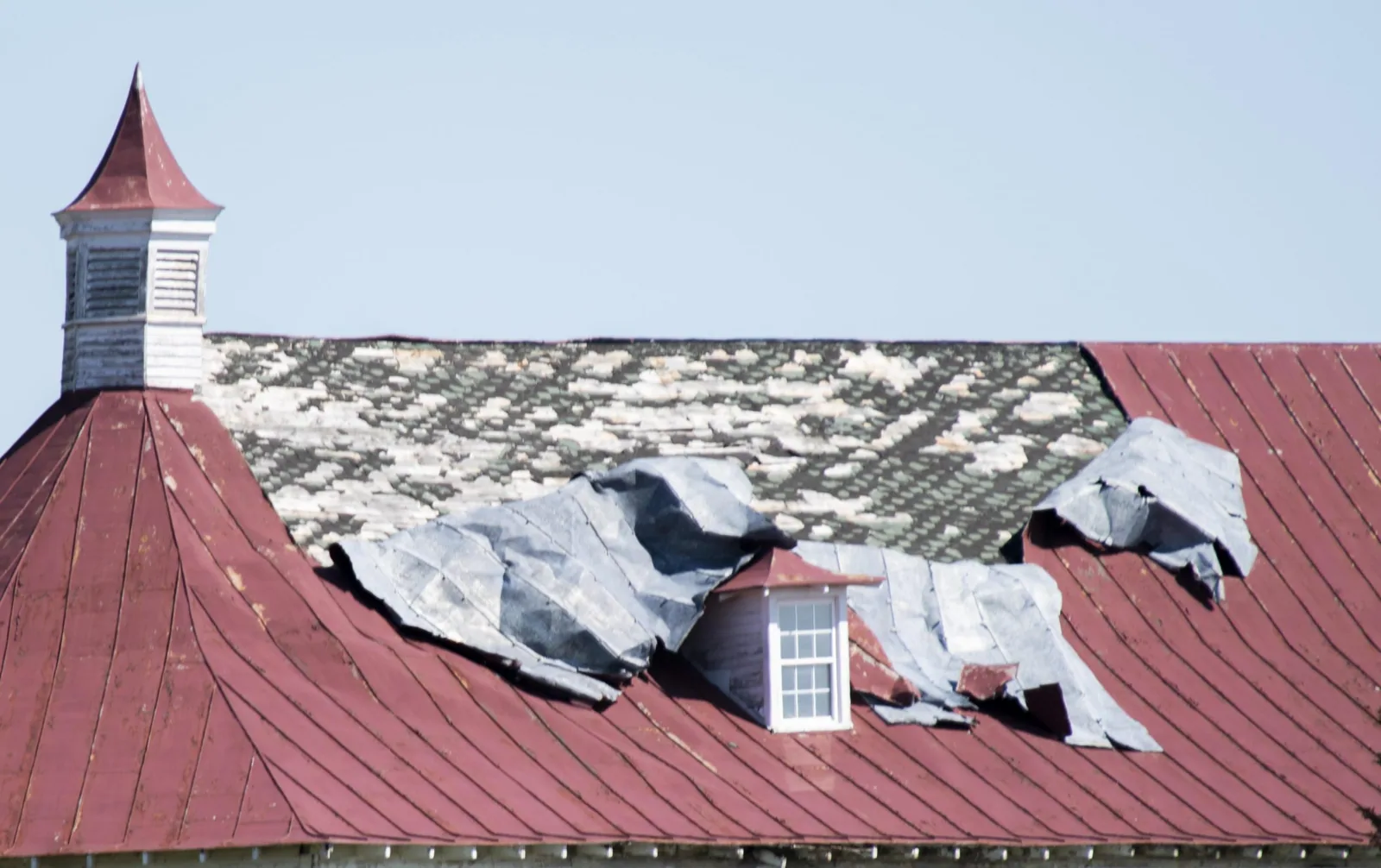
The Kansas City area has a long record of severe wind. A tornado damaged roofs in Unity Village on July 1, 2015, and on March 6, 2017 an EF3 tornado near Oak Grove damaged 483 houses and 12 businesses. The 1957 Ruskin Heights tornado, rated F5, killed 44 people on a path through the southern Kansas City suburbs that ended east of Raytown.
No membrane is built to survive a tornado, but most wind damage to roofs begins at the perimeter, where uplift is highest. A Sika Sarnafil assembly can be attached with higher fastener density at corners and edges, with edge metal secured against peel. A wind-damaged roof gets a perimeter-first walk for the same reason: lifted edge metal and torn laps are the first things to check.
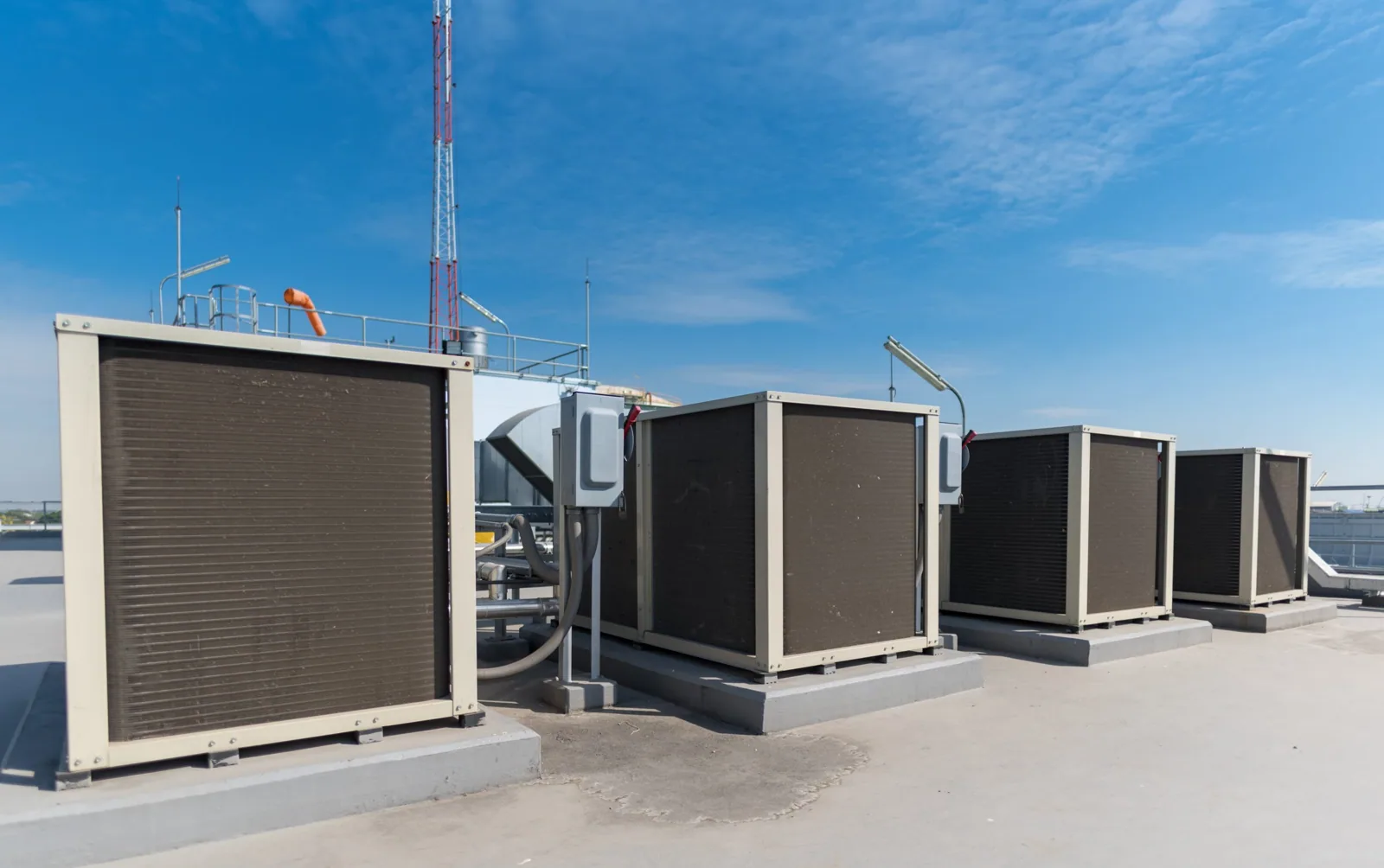
PVC resists grease, oils and many chemicals better than other single-ply membranes, which is why it is often chosen for roofs with kitchen exhaust or process vents. Lee's Summit's top industries include health care, retail, professional and technical services, education and manufacturing, and each can put equipment on a roof that discharges something onto the membrane.
The walk looks for staining, softening and puddles near fans, drains and vents. Walkway pads are added where technicians travel, and cleaning schedules for exhaust-affected areas are written into the maintenance plan. Where a fan discharges onto the membrane, we raise the question of a splash pad or a deflector with the mechanical contractor, since a small fix at the source protects a large area of sheet. Equipment moves are coordinated with the mechanical trade so a rooftop equipment curb is flashed once, correctly, and not disturbed again by the next service call.
Penetrations, corners and odd shapes are hard to flash with a flat sheet. Pre-molded corners and pipe boots handle the common cases, and a liquid-applied flashing resin handles the rest, curing into a membrane around a pipe cluster, a bracket or a curved wall. The resin must be compatible with the substrate and applied to the manufacturer's thickness.
Before any resin goes on, the surface is cleaned and primed, and the temperature and humidity are checked against the product's limits. Lee's Summit sees about 38 inches of precipitation a year, so surfaces are often damp when a crew arrives. We set a weather hold rule: if the surface is damp or rain is coming within the cure time, the flashing waits.
An older PVC membrane can lose plasticizer over time and stiffen, which makes it harder to weld cleanly. Repairs start with a test weld on a small area and a check of how the old sheet responds. If the old membrane welds well, patches and flashing replacements go ahead in the usual way. If it does not, a mechanically fastened cover strip or a liquid-applied detail may be used.
When damage is widespread, a leak repair visit may only buy time. A roof that needs a repair at every wall and every curb is telling the owner something about the whole assembly. The decision to replace rests on the condition report, with moisture findings, seam probe results and a clear estimate of the work the roof will need over the next few seasons.
The turnover package lists what was opened, what was closed and what the next walk should check. Product data, drawings of each penetration, photographs of welded seams and a dated maintenance schedule are part of it.
An owner may hold roofs from several makers, such as Versico or Carlisle SynTec, and the records for each follow the same format. That makes a multi-building review quicker, since a reviewer reading the file for one Lee's Summit building can open the next and find the same headings, the same photograph order and the same list of open items, and it makes the Lee's Summit portfolio easier to budget year by year.
Yes. Moisture on the surfaces prevents a clean fusion, and a damp weld can pass a visual check but fail later. The crew wipes and dries the lap before each weld, and a forecast with rain inside the working window pushes the seam work to another day.
The heat and fumes from hot-air welding stay outdoors, but the equipment is loud. We schedule the work against the tenant notice, move loud phases away from sensitive hours and keep air intakes clear. The plan names the days each area will be affected.
It is possible, with a transition detail that keeps the two membranes from touching. A split often follows the building's use, such as PVC near kitchen exhaust and a different sheet elsewhere. The cost and the added seam both go into the comparison.
A test weld on a small patch answers that. The sheet is cleaned, a small piece is welded on, and the seam is probed and peeled. A good weld fuses into the old membrane, and a poor one lifts cleanly, which points to a different repair.
They inform it. Severe thunderstorms and past tornadoes remind us that perimeters and corners take the highest uplift, so fastener spacing tightens there and edge metal is fastened to the deck. The building's height and exposure set the numbers on the drawing.
Send the building address list, tenant hours and a list of rooftop equipment. We will walk the roof with the property manager and return a written sequence plan before any scope is priced.
Request a Roof Assessment