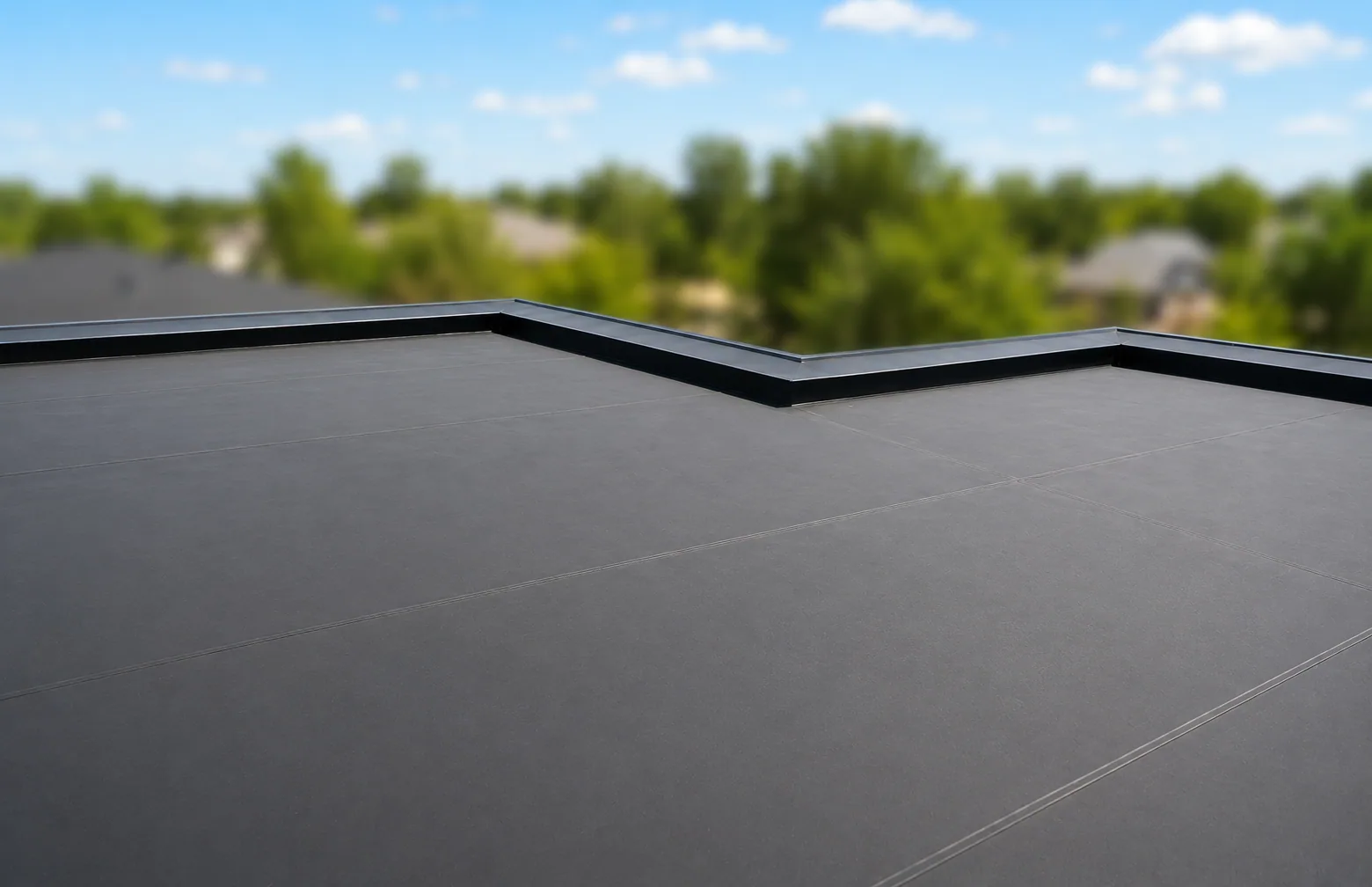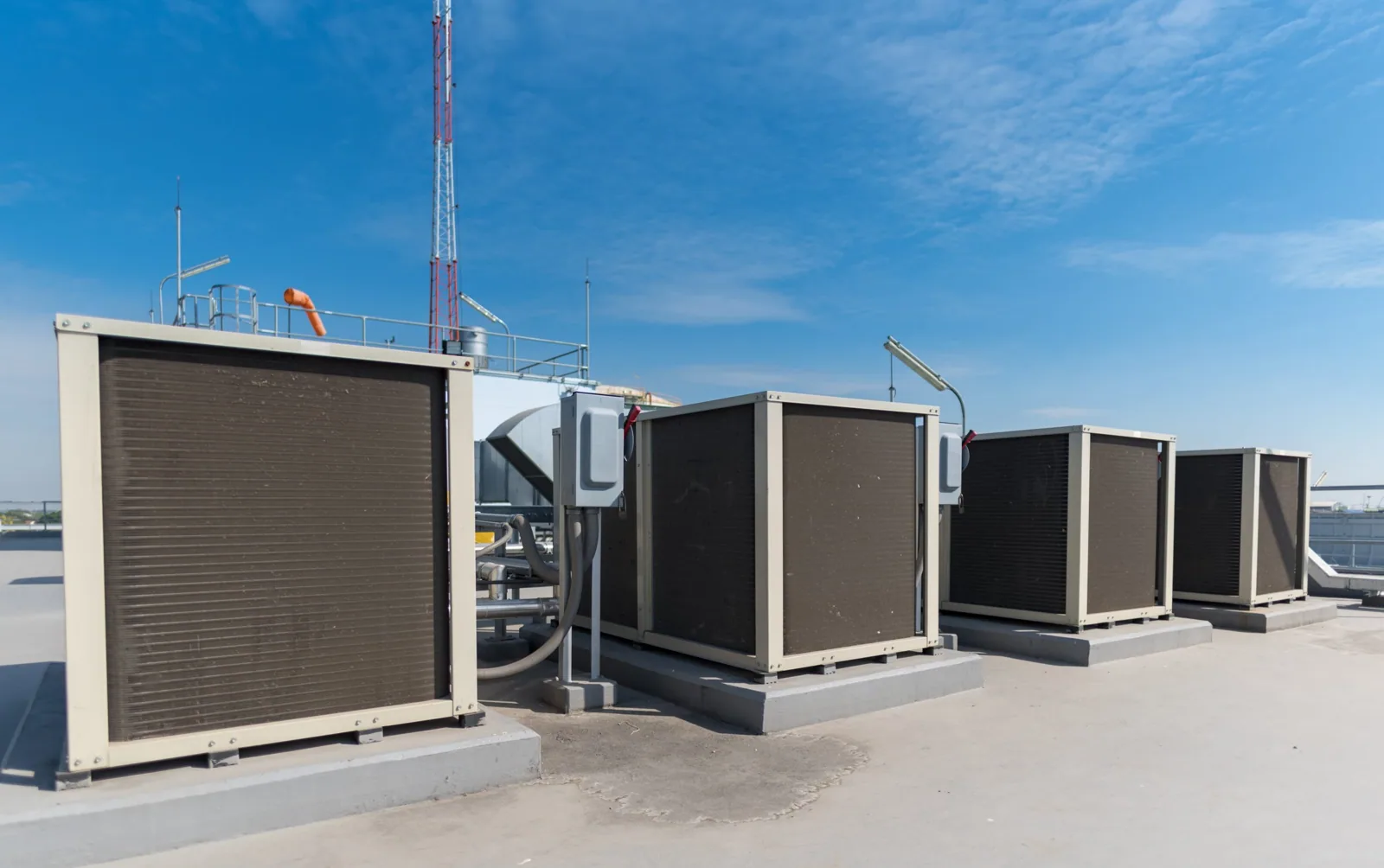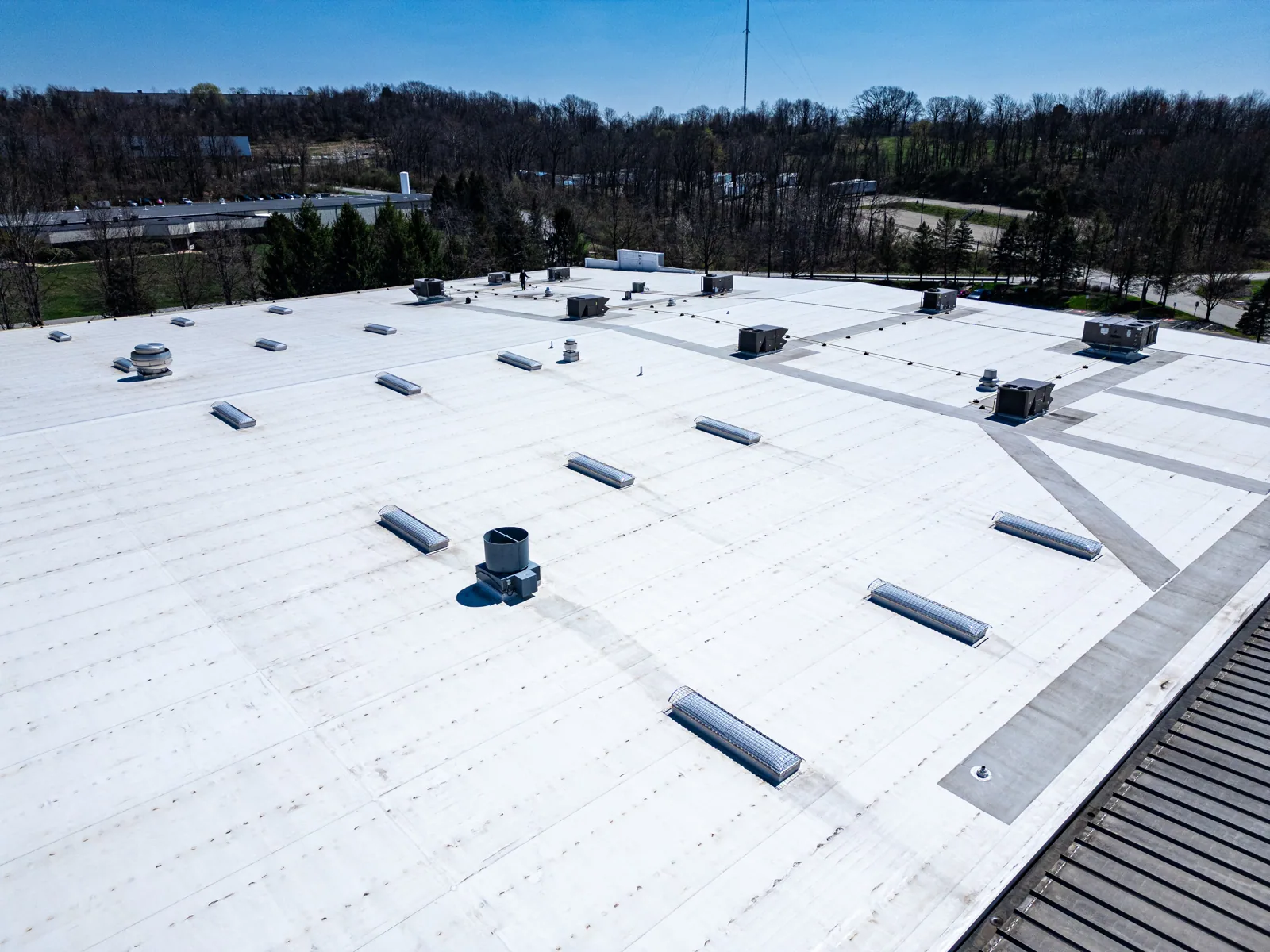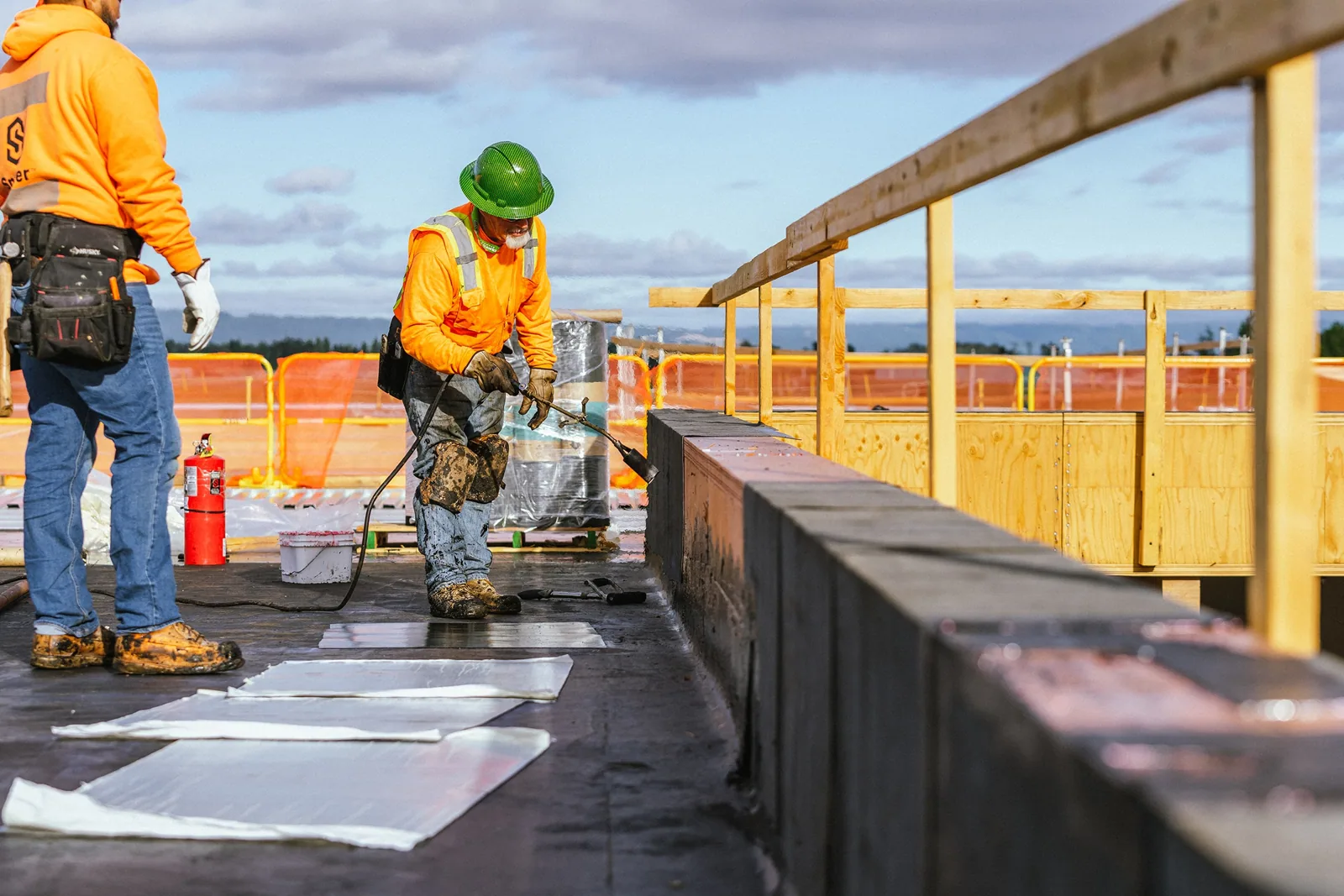

Rooftop units set the pace of an office roof job, because every curb is a flashing, every flashing is a leak point and every unit has a technician who needs access next week. Versico makes single-ply roofing in TPO, EPDM and PVC, along with insulation and the flashing accessories that finish the details. On commercial office buildings in Lee's Summit, MO the roof is crowded with units, vents and conduit, and the job is less about covering open field than about working around equipment that cannot be shut down at will.
We install and repair Versico systems with an equipment survey on day one, a staging plan drawn from it, and a dry-in point set for each phase.
The first walk counts every unit, curb, vent, conduit run and hatch on the roof and marks it on a drawing. Condition comes next: which curbs are rusted, which flashings have pulled away, which lines rub on the membrane and which units sit in a ponding area. That survey drives the schedule since each item decides whether the unit can stay in place or has to be lifted. A unit on a sound curb with intact flashing can be flashed around and left running, while a unit on a rotted curb has to come off, and that difference can move a job by days. Conduit and refrigerant lines are raised on supports at the same time, so the new membrane does not carry their weight.
Lifting a unit for a new curb needs the mechanical contractor, a crane or hoist window and an outage agreed with the tenant. We coordinate those three before the roof contract is signed, so the membrane schedule is not held up by a trade that was not told. The framing and flashing of equipment curbs and supports are priced as their own line, since a curb that is rusted through cannot simply be flashed over.
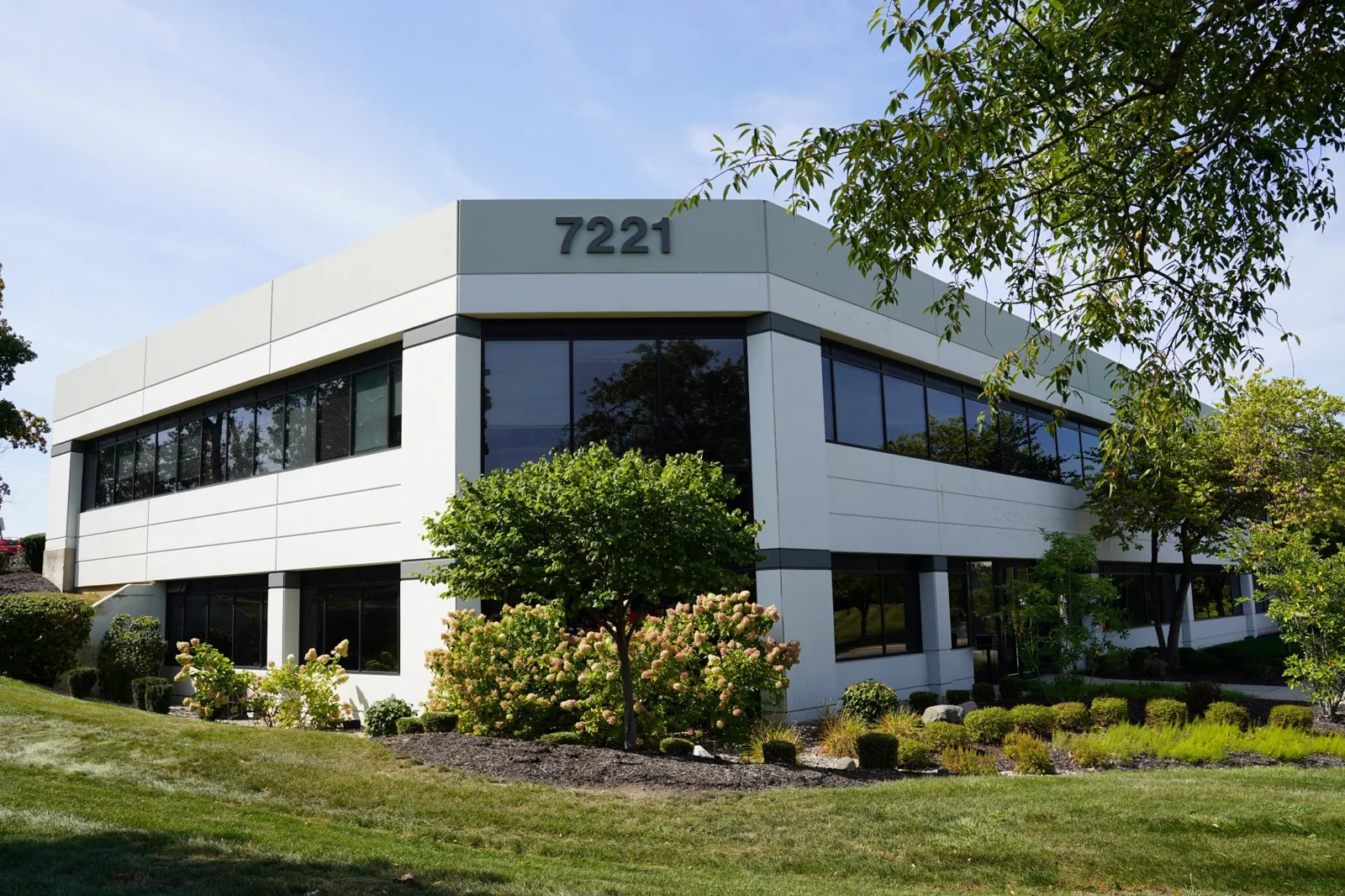
Lee's Summit's largest employers include the USCIS National Benefits Center and GEHA, and its top industries include professional and technical services, health care and education. I-470, US 50 and MO 291 run past commercial, industrial and mixed-use areas, and an office roof there is worked around business hours and any security procedures the tenant sets.
For an office roof, tenant notice describes which floors are affected by noise, which ceilings could be disturbed by deck work and what the plan is if rain closes the roof early. Where a building's roof access is through a tenant suite, the escort and key arrangements are written into the plan. A job on a commercial office roof succeeds when the tenants hear about every phase before it starts.
Single-ply membranes are attached in three main ways. Mechanically attached sheets use fasteners and plates along the laps. Fully adhered sheets are bonded to the substrate across their full area. Ballasted systems hold the membrane in place with stone or pavers. Each has its own wind-uplift performance, and the one chosen has to meet the design for the building's height and exposure.
Under the city's adoption, a submittal from October 1, 2026 on is reviewed under the 2024 I-Codes, and earlier ones under the 2018 edition. We read the submittal date first, then compare the code's uplift and insulation requirements with the attachment pattern, so the drawings that reach the city show a roof that can be built and inspected.
A Versico TPO or PVC seam is welded with hot air, and an EPDM seam is joined with tape or adhesive. Both are probed after installation, and both are inspected again on the first spring walk. The probe shows an open edge that the eye cannot, and a wet cloth or a smoke test sometimes helps trace a leak to a lap.
At walls and curbs the flashing is lapped onto the field sheet with a primer and a bonded edge, and a termination bar holds the top. A flashing that has pulled away from a wall is cleaned, reset and sealed, and the failure is marked on the drawing so the next walk checks it first. Our flashing failure repair method treats the edge metal, the termination and the base flashing as one repair.
A National Weather Service warning cited damage to roofs from penny-size hail and 60 mph gusts in Lee's Summit on April 27, 2024. A preventive visit in March can look at loose flashing, open laps and clogged drains before storm lines arrive. Those items are cheap to fix on a calm day and expensive to fix on a night when water is entering a suite.
Our preventive roof maintenance visits follow the roof drawing, record the condition of each item and list what the next visit should check. Debris is cleared from drains and scuppers, loose items are secured, and photos are dated so the file shows the condition before any storm. After a line of storms passes, the same list is walked again, which separates fresh damage from older wear and gives an adjuster a clear before-and-after comparison.
The turnover package carries product data, the final roof drawing, a list of every flashing and curb detail, and photographs of the completed work. Manufacturer warranty terms apply to the roof as the maker states them, and the package gives the property manager the installation record those terms usually rely on.
Property managers who also hold roofs from Carlisle SynTec or Soprema receive the same format for each, and a roof schedule built from those packages shows which buildings need attention first. Across Lee's Summit, that order is what turns a pile of leak calls into a plan.
The mechanical contractor disconnects and lifts them, and we replace the curb, flashing and membrane. We arrange the crane window, the outage and the reconnection with the tenant and the mechanical trade before the roof work starts, so the unit is down for the shortest time possible.
We start at the interior stain and work uphill along the water's path, checking every flashing, seam and penetration on the way. Infrared scans and a water test on one curb at a time help isolate the entry point, which is often several feet from the stain.
Fully adhered or mechanically attached systems are common, since ballast adds load and gets in the way of equipment access. The building's height and exposure set the uplift numbers, and the deck type limits the options. We compare them on the drawing before a method is priced.
Drains and scuppers, open laps, loose flashing, damaged walkway pads and any sealant that has dried out. Findings are photographed and ranked. Quick items are fixed on the spot, and larger ones go on a repair list with a target date ahead of storm season.
Submittal date controls which edition the city applies. A project submitted before October 1, 2026 falls under the 2018 I-Codes, and one submitted on or after that date falls under the 2024 edition. We confirm the date at the first walk and write the scope to match.
Share the building address list, tenant hours, security requirements and any leak reports. We will walk the roof, survey the equipment and return a written sequence plan before any scope is priced.
Request a Roof Assessment