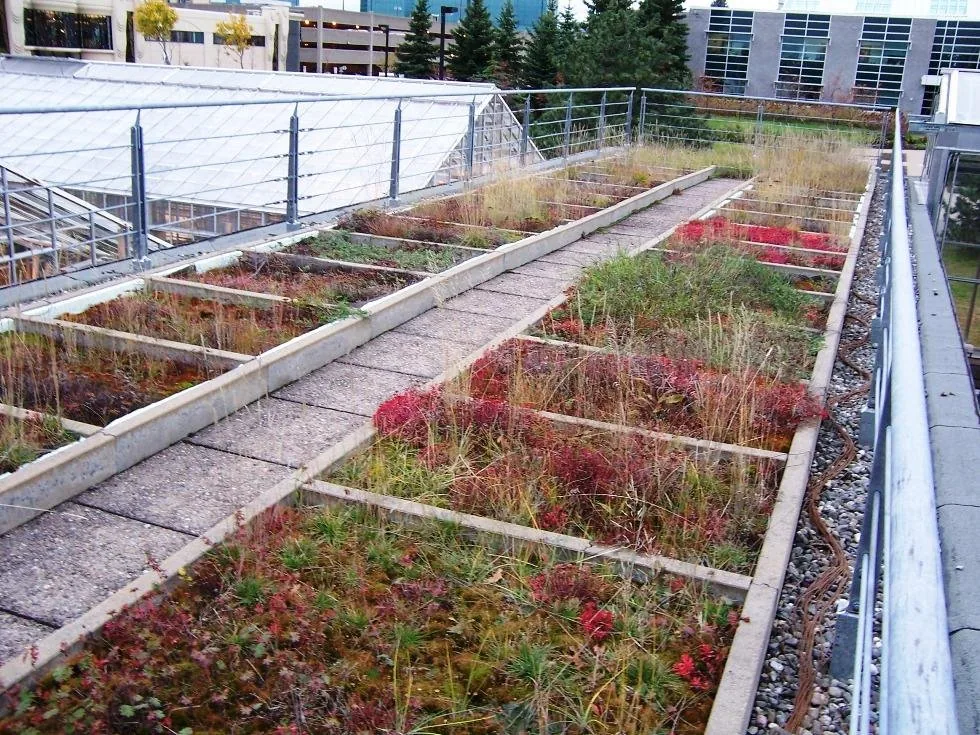
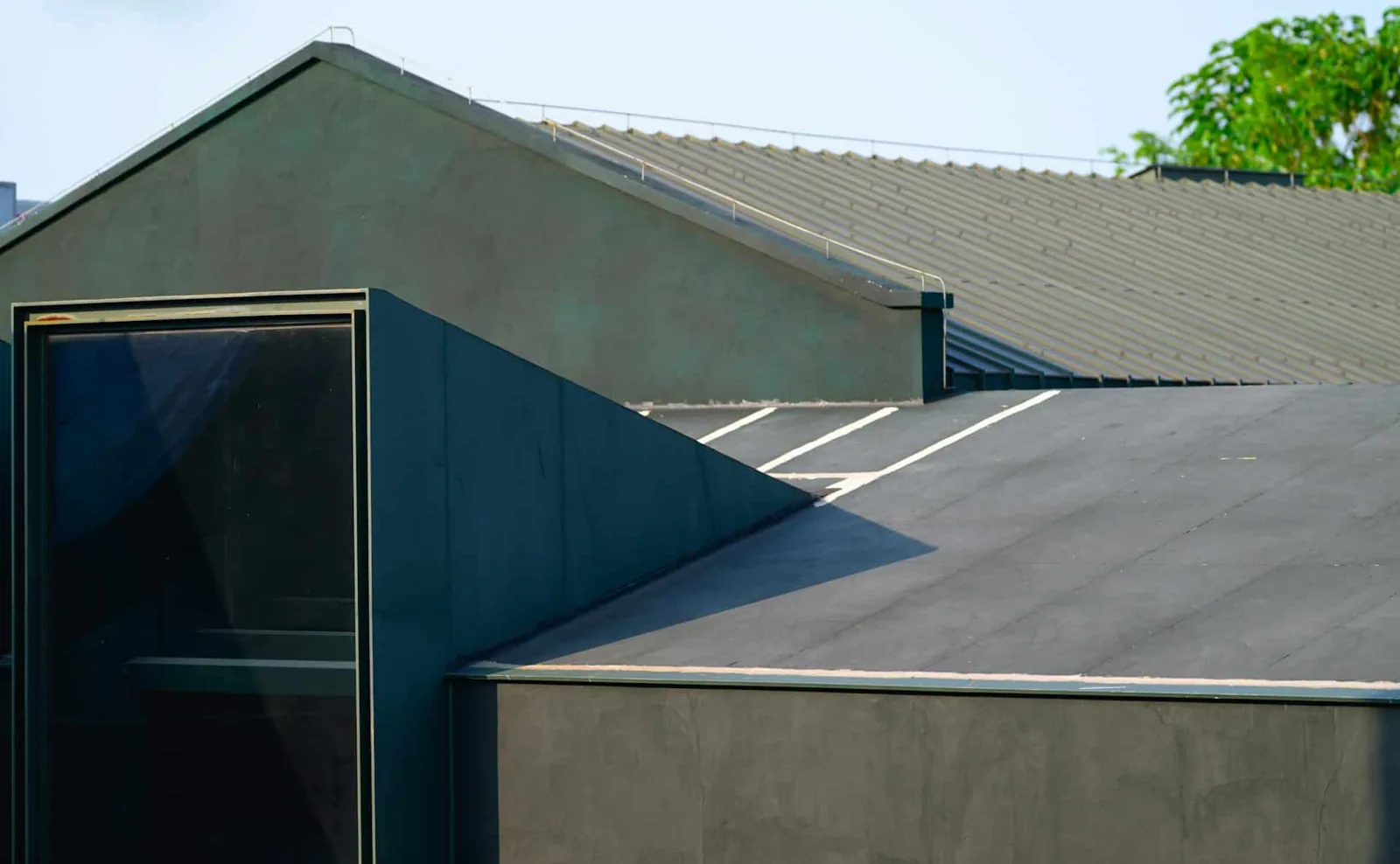
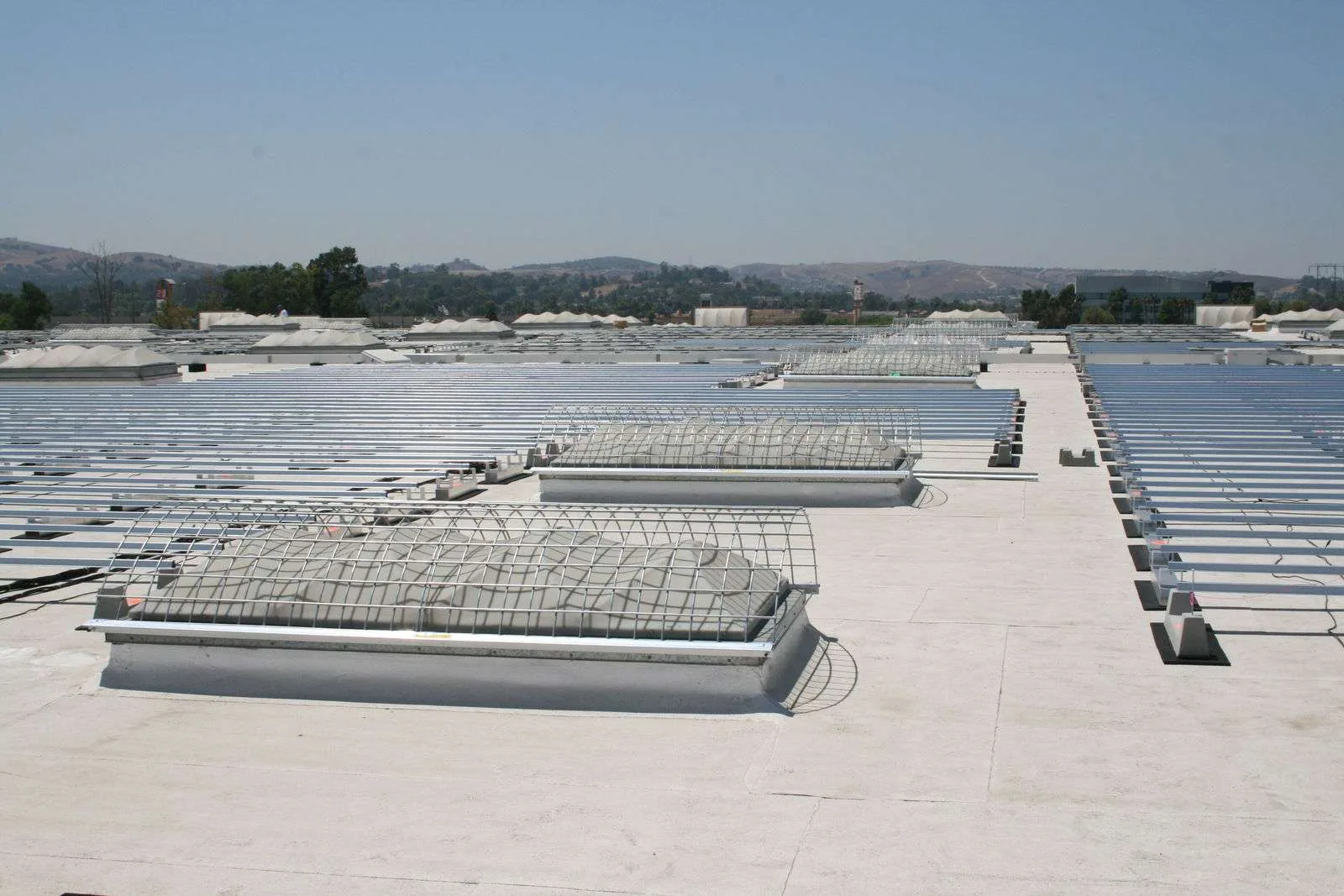
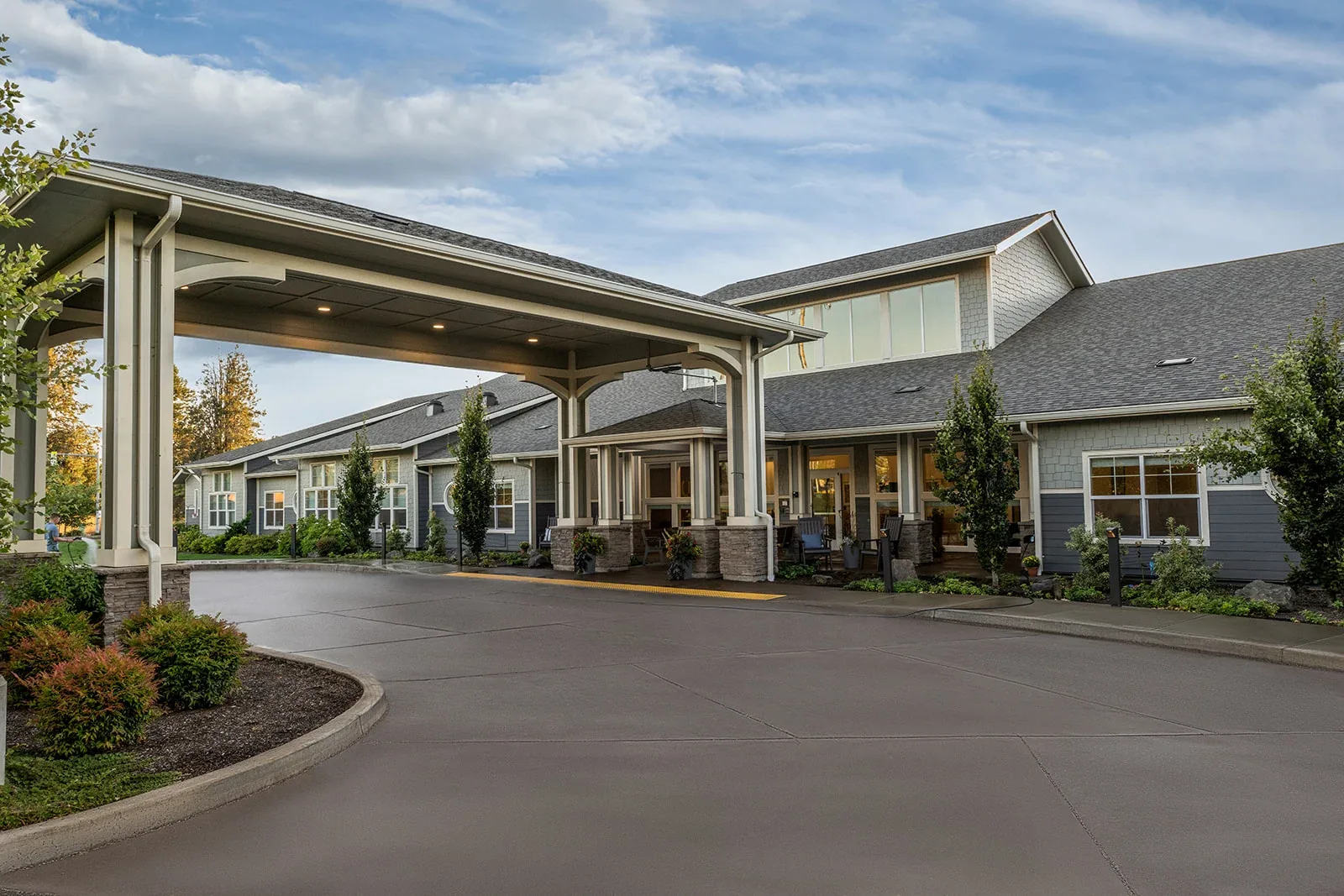
A roof with six pipe clusters, a stepped parapet and a skylight curb does not welcome a flat sheet, and that is where Soprema's range earns its place. Soprema makes modified bitumen membranes, liquid-applied waterproofing and flashing resins, insulation boards and vegetated roof components, with Alsan as its liquid-applied resin line. For Lee's Summit, MO buildings with complicated rooflines or cold-weather schedules, those products give a crew options when a standard single-ply detail does not fit.
Whether a building sits near downtown or along I-470, US 50 or MO 291, we plan each job from the roof outward: access route, tenant notice, staging footprint, then the detail that is hardest to flash.
A modified bitumen sheet is asphalt blended with a polymer, reinforced with a mat and surfaced with granules or a smooth film. It is installed in one or more plies, joined at laps by heat, adhesive or self-adhering strips. The layered build gives a roof redundancy: if the top ply is damaged, the one beneath still sheds water. Base sheets and cap sheets are laid with staggered laps, so no seam sits directly over another, and the cap is chosen for its surface, whether granules for sun protection or a reflective coating over it.
On an existing modified bitumen roof, the walk looks at lap edges, granule loss, blisters and cracks at wall corners. Small areas of damage are repaired with a new cap sheet torched or adhered over primed surface. A torch-free method is chosen when the building's use, insulation or neighbors make open flame unwelcome, and the fire watch afterward is written into the plan.
Liquid-applied resin cures into a continuous membrane around any shape. It is brushed or rolled over a primed surface with a fleece reinforcement, and it bonds into the roof around pipes, brackets, drains and curved walls. Because it has no seams, there are no laps to open when the building moves.
The condition of the surface decides whether resin can go on. Old coatings, oil from rooftop equipment and chalking all keep resin from bonding, so the surface is cleaned, abraded where needed and primed as the product data requires. Fleece is cut and set in the wet resin without wrinkles, and a second coat covers it fully. It must be clean, dry and compatible with the existing roof, and the temperature and humidity must sit within the product's limits. We run an adhesion test on a small patch before committing to a detail. When the test passes, a skylight or penetration flashing done in resin lasts as long as the field membrane around it.
The Lee's Summit Downtown Historic District is roughly bounded by Second, Douglas, Fourth and Market Streets, and its National Register listing names Italianate and Moderne styles from 1850 through 1974. On a building from any of those periods, we look at how the roof edge, cornice and wall junction were made before choosing a flashing, since a modern detail may not fit an older one.
Walking those roofs, we check where the roof meets a wall first, because an old wall can move and a rigid flashing will crack at it. A liquid-applied resin or a bituminous flashing that flexes with the wall tends to suit the junction. The work in the downtown area is planned with the property manager so noise and access follow the hours of the shops and offices beneath.
Any building where people live, such as a senior living community, changes the way roof work is planned. Residents keep daily routines that do not tolerate sudden noise or dust. Noise windows, the route for materials and the position of the debris chute are all discussed with the facility manager before work starts.
The most useful tool in these jobs is the written notice that goes to the building, with dates, hours and a plain description of what will happen on the roof each day. A senior living roof is worked in small sections so that no area is open overnight, and a weather hold is called early when a storm line is forecast.
The record low in Lee's Summit is -25F and the record high 108F, and the annual snowfall is about 4.5 inches. Bituminous membranes stiffen in cold and soften in heat, so installation temperatures matter. A cold-applied adhesive may need warm weather to cure, and a torch-applied sheet needs dry surfaces. Both are scheduled for the shoulder months where possible.
Hail is a spring risk. The Pleasant Hill office of the National Weather Service issued a penny-size hail warning with the April 27, 2024 storm line, and granule-surfaced membranes can lose granules to impact, exposing the asphalt to sun. After a storm, we check for granule loss, bruising and split seams. Dated photographs of every bruise are placed on the roof drawing. Those records feed a hail damage roof repair list and an insurance file when the owner needs one.
When work ends, the manager receives product data, a roof drawing with the phases marked, photographs of every flashing and a list for the next walk to check. Warranty terms are the manufacturer's, and the package is built to match what they ask for.
A manager who also holds a Johns Manville or GAF bituminous roof can compare the files side by side and see which one is closest to the end of its service life. That comparison feeds the budget conversation long before a leak forces it, and it lets the owner schedule the weakest roof for a summer window instead of a winter emergency.
It can go over many existing surfaces, if they are clean, dry and compatible. An adhesion test on a small patch tells us whether it will bond. If the surface fails the test, the flashing is rebuilt with a different material or the substrate is prepared further.
Not always. Some owners, insurers and building uses prohibit open flame, and some decks or insulation cannot take it. When that applies, we use cold-applied adhesive or self-adhering sheets. The decision is made at the site walk, with the owner's insurance requirements in hand.
Noise windows are set with the facility manager and published in the notice. Loud tasks like tear-off and fastening are placed in the hours least likely to disturb, and the crew keeps to them. Debris chutes and hoists are positioned away from bedroom wings.
The leak is often at the wall, not the field. Mortar joints open, copings crack and flashing detaches as the wall moves with the seasons. Water runs down the inside of the wall and appears as a stain far from the entry point. We trace it from the top of the wall downward.
Not automatically. Light granule loss may be cosmetic, while exposed asphalt, bruising or split seams call for repair or coating. A documented walk with photographs and a moisture scan separates the roofs that need work from those that can wait.
Send the building address list, tenant or resident hours and the leak reports. We will walk the roof with the property manager and return a written sequence plan before any scope is priced.
Request a Roof Assessment