Tenant notice goes out well ahead on a school or clinic roof, and the staging footprint is drawn on a site plan before a single pallet of insulation is ordered. Johns Manville supplies a broad set of commercial roofing materials: single-ply membranes, built-up and modified bituminous components, and the polyiso insulation boards that sit beneath either. For a facility manager in Lee's Summit, MO, that range means one manufacturer's details can often cover the membrane, the insulation and the accessories, which simplifies the coordination between trades.
We install, repair and maintain those assemblies on occupied buildings, from Lee's Summit medical and education campuses to the commercial and industrial areas along MO 291.
The part of a Johns Manville assembly that owners see least is often the part that matters most. Polyisocyanurate boards carry the thermal resistance of the roof, and the cover board over them protects the foam from foot traffic, fasteners and hail. The boards are laid in staggered layers so joints do not line up, and they are fastened or adhered according to the wind-uplift design for the building.
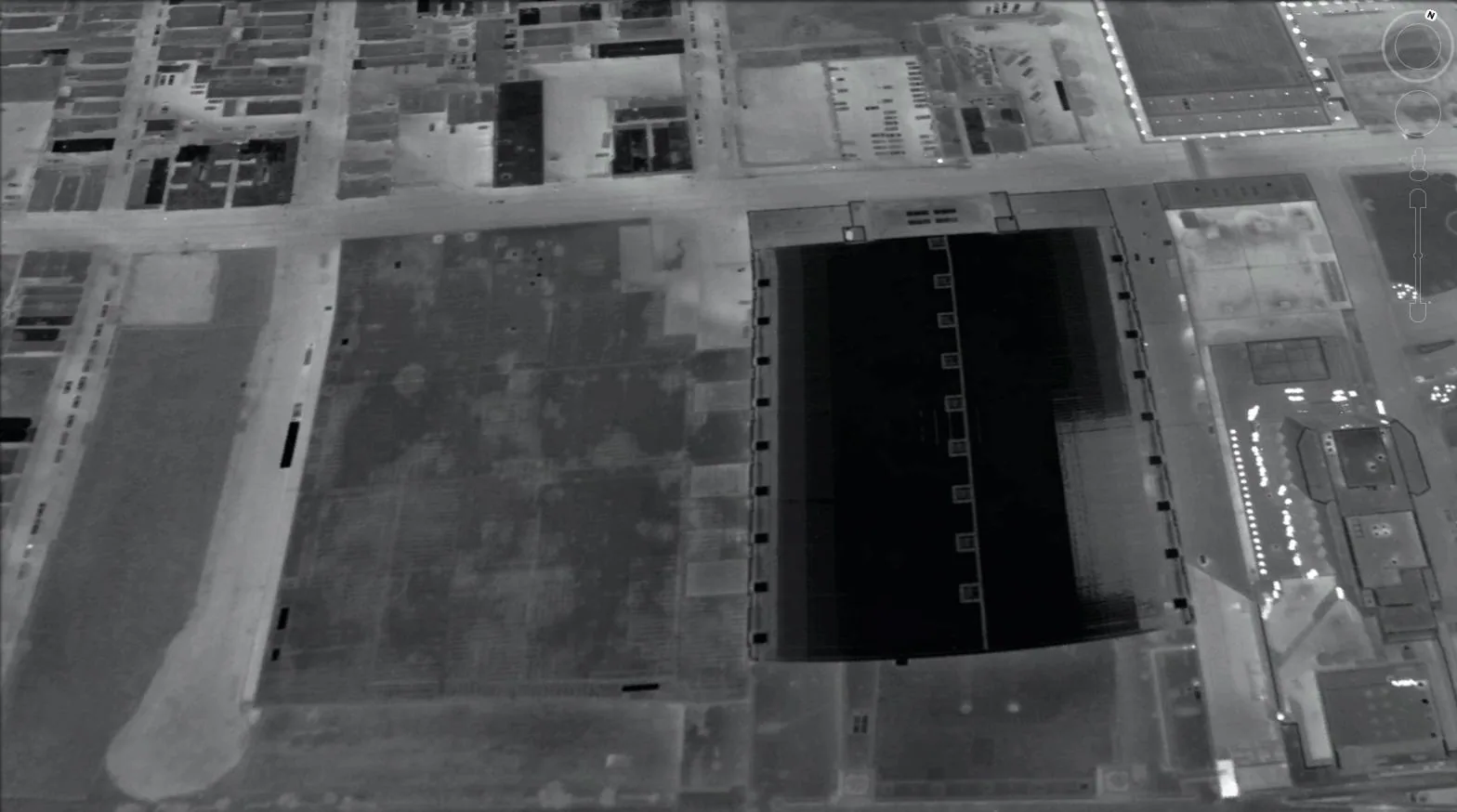
Wet insulation is the usual reason a roof stops performing. A board that has taken water loses R-value and swells, and the membrane above it may blister or buckle. Our infrared moisture survey maps the wet areas from the roof surface, and core cuts confirm the findings at the worst points, so the replacement scope covers only the boards that need to go.
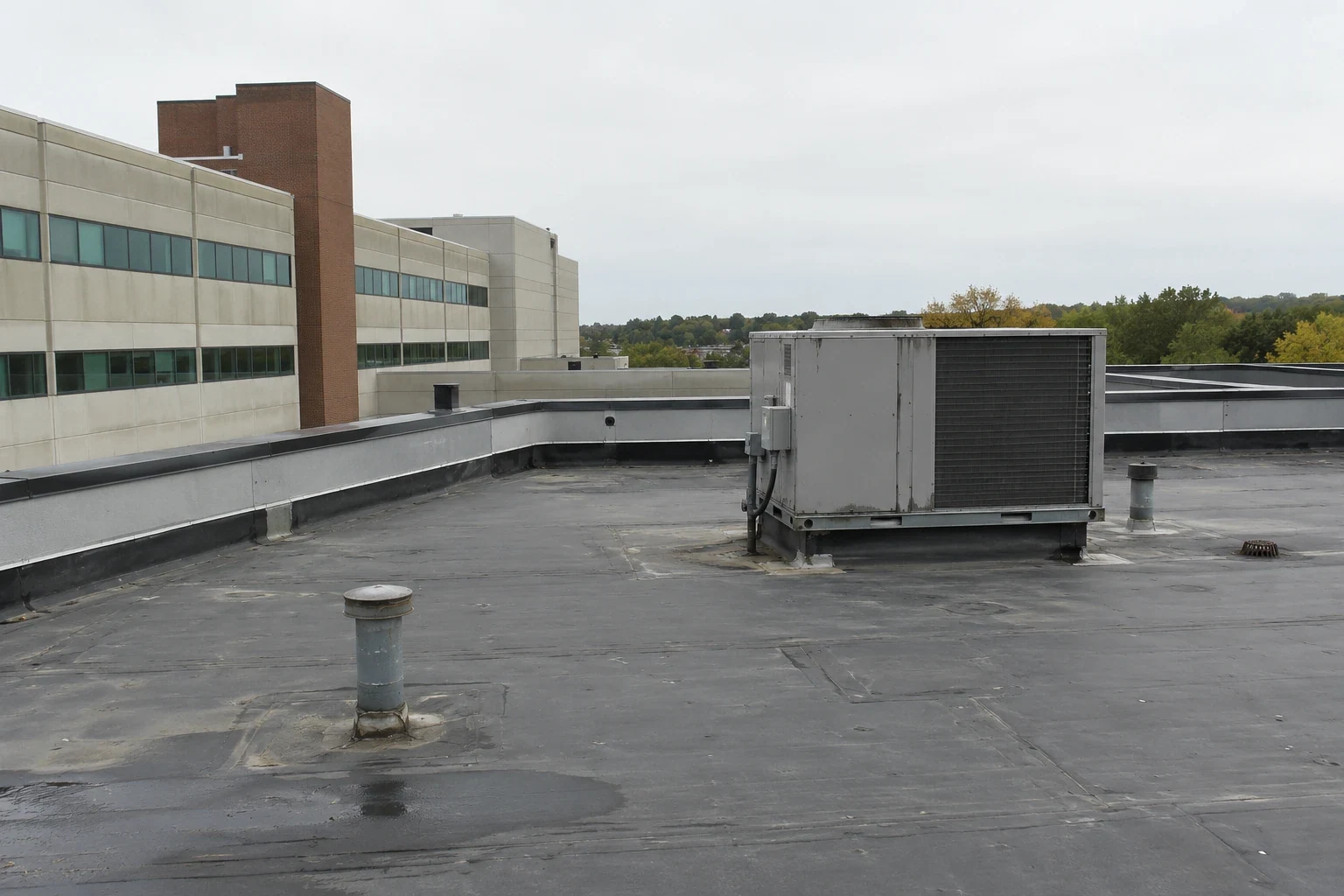
Lee's Summit has three hospitals, including University Health Lakewood Medical Center, and any healthcare roof brings special requirements. Fresh-air intakes sit on the roof, so dust, fumes and torch smoke have to be kept clear of them. Noise has to be scheduled around procedures. Access for crews and equipment is controlled, and the work area is usually fenced and badged.
For that reason, a cold-applied or mechanically attached system is often preferred on healthcare buildings, since it avoids open flame and strong odors. The infection-control plan for the building is read before the roof plan is written, and any area where a dust barrier or a negative-pressure room sits below the roof is marked so the crew keeps heavy foot traffic and debris chutes away from it. Hospital roofing follows the same order: intakes first, then access, then membrane.
The Lee's Summit R-VII School District ranks among the city's largest employers, and school roofs run on a calendar that few other building types share. Work that disturbs classrooms is held for summer, and the tear-off, deck repair and new membrane must be dry-in complete before students return. A late material delivery in July can move a whole project into the school year.
The plan therefore starts with the delivery schedule, including the truck route from I-470 and US 50 to the school's service entrance, because a loaded flatbed that cannot reach the hoist position costs a day. Insulation and membrane are staged early, and a weather hold rule defines what happens when a July storm closes a section. Built-up and modified bitumen assemblies are common on school buildings with parapets and many penetrations, and a built-up roof is installed in plies that are closed in layers each day.
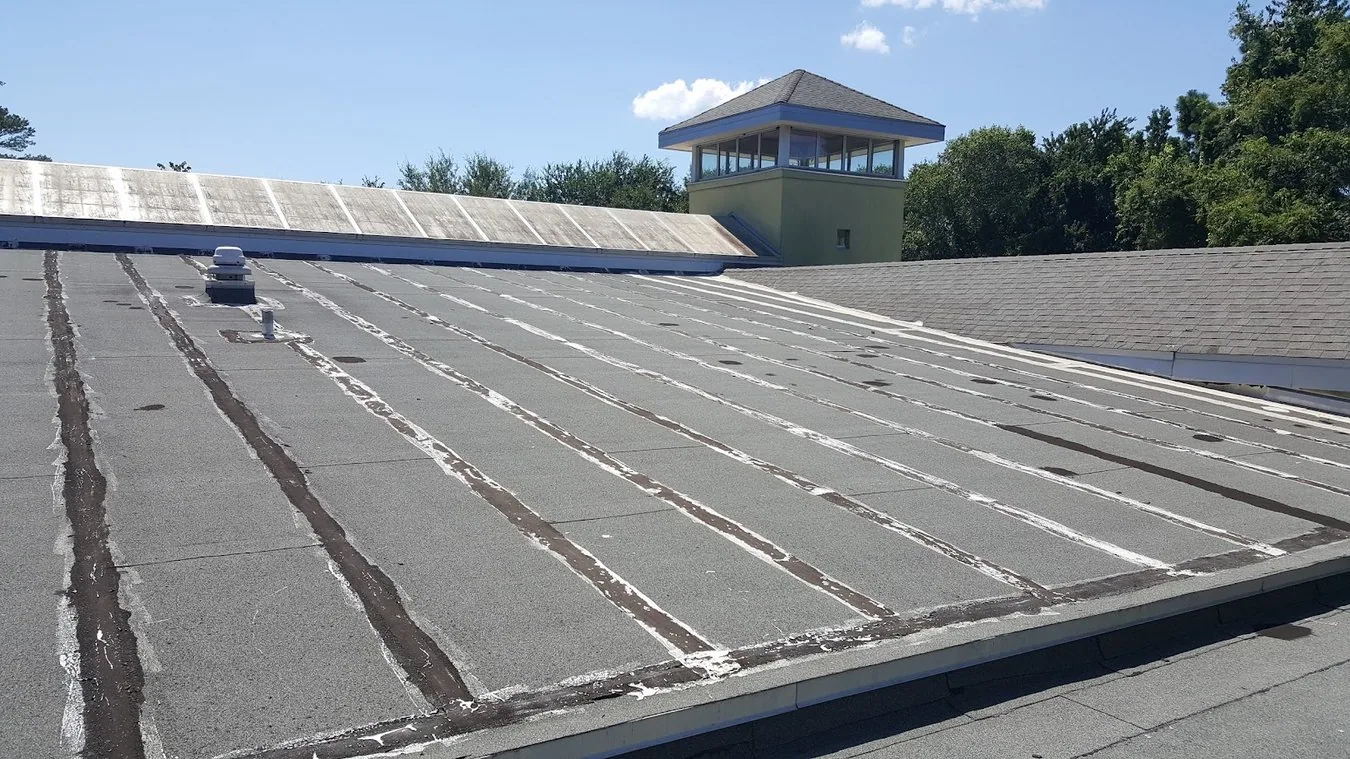
A roof with sound insulation and a tired surface often needs targeted work, not replacement. The July mean high of 88F softens bituminous surfaces and stresses thermoplastic welds, so a roof near the end of its surface life shows its weak points in summer first. A repair starts with identifying what is on the roof: a single-ply sheet, a layered built-up roof, or a cap sheet. Each material needs its own patch, its own adhesive or heat method and its own cleaning step.
Where flashing at a wall or curb has failed, the repair involves replacing the base flashing and tying it to the field membrane according to the manufacturer's detail. A planned roof repair list records every one of these locations, the method chosen and the photographs, so a property manager can approve the list in one pass and see each item checked off on the way out.
On April 27, 2024, the National Weather Service office in Pleasant Hill warned that a storm line carrying 60 mph gusts and penny-size hail could damage roofs in Lee's Summit. Hail damage to a roof assembly depends on the cover board, the membrane thickness and the age of the roof. A new roof with a dense cover board resists impact much better than an old one with soft insulation beneath a brittle surface.
After a storm, we walk the roof for bruised membrane, split seams and displaced stone, and mark the findings on the roof drawing so a repair list and an insurance conversation use the same facts. The claim documentation includes dated photographs and a written scope that separates storm damage from long-term wear.
The close of a Johns Manville project is a package: product data for each layer, a roof drawing marking where each phase opened and closed, penetrations photographed with their flashing details, and a schedule for the next inspection. Warranty terms belong to the manufacturer and typically ask for installation to the published details, which is why the package matters.
A facility manager with several buildings can fold that package into a roof program, with one reviewer reading every file and one schedule showing which roof is due for its next walk, and the same format carries across sites. A neighboring Soprema or Holcim Elevate roof gets the same record, so a portfolio reads as one set of files rather than a pile of unrelated reports.
By choosing the installation method before the schedule. Cold-applied adhesives or mechanically attached sheets avoid open flame, and intake locations are marked on the roof drawing. When an intake sits near the work area, it is shut or covered at the times the building's engineer allows.
That depends on the roof area, the deck condition and the delivery date for materials. A short tear-off with sound deck can run a few weeks, while deck repair stretches it. We build a day-by-day sequence from the site walk and flag any material with a long lead time.
No. Only the wet and damaged boards need to come out, and a moisture survey with core cuts shows which. Dry boards are kept when they pass the test, which holds down cost, waste and disruption above working rooms.
Frequently yes, if both are compatible with the attachment method and the warranty terms allow it. The manufacturer's details govern, so we read both sets before specifying. Where the terms conflict, we recommend a single-source assembly.
Cost follows area, access and material, not the family name. A built-up repair often needs hot or cold-applied plies and a new cap sheet, while a single-ply patch is a clean-and-weld job. We price both by item on the repair list so the manager can compare directly.
Send the building list, the occupancy schedule and any open leak reports. We will walk the roof with the facility manager and return a written sequence plan before any scope is priced.
Request a Roof Assessment