
Vapor, more than rain, sets the first decision on a cold storage roof. The air inside a freezer holds almost no moisture, the air outside a Lee's Summit, MO building in July is hot and humid, and the roof assembly sits between them. Water vapor pushes toward the cold side and condenses wherever it meets a cold layer. The result is insulation that gets wet from the inside while the membrane above it looks fine.
The property manager's sequence therefore starts with a moisture scan and a refrigeration schedule, and only then with a tenant notice, an access route and a staging footprint.
A cold storage roof is a layer stack built to stop vapor: a vapor retarder at the warm side of the assembly, thick insulation, and a membrane on top. If any layer is cut, torn or poorly lapped, vapor finds the opening and condenses in the insulation. Over months the insulation loses its resistance to heat flow, and the refrigeration load climbs.
Lee's Summit has a humid continental climate with about 38 inches of precipitation a year, and summer afternoons that average 88.3F and have reached 108F. That outdoor humidity and heat push hard against a refrigerated interior. When we open the roof for any reason, we record the vapor retarder, the insulation thickness and the condition of each layer, since the next repair depends on the same stack.
Penetrations are the usual path for vapor. A refrigeration line, a conduit or a drain that passes through the roof needs its own seal at the vapor retarder, separate from the flashing at the membrane. We trace each one from the underside when access allows, because a flashing that looks perfect from above can sit on a retarder that was cut and never closed.
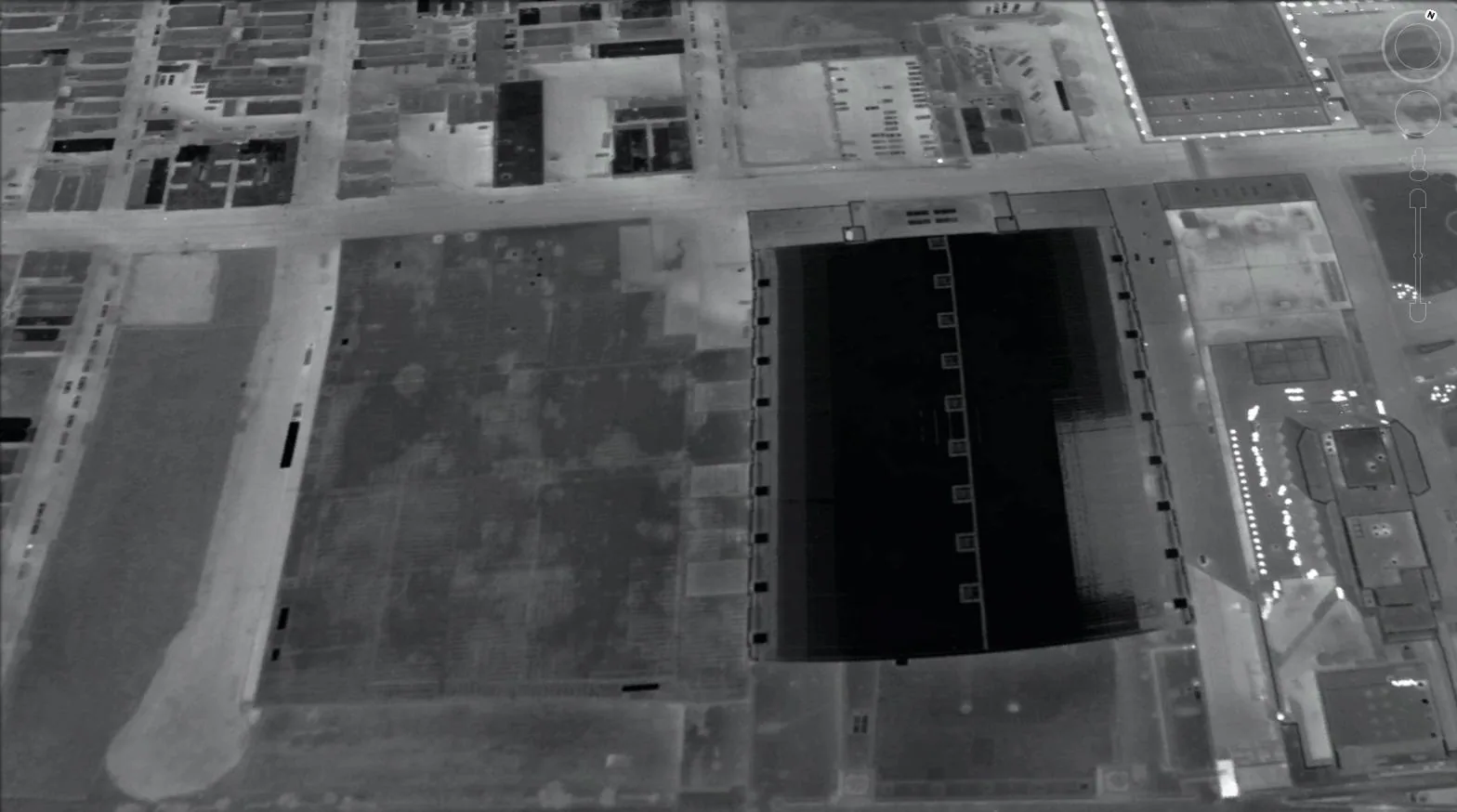
An infrared moisture survey maps thermal differences across the surface, and wet insulation shows as a pattern. On a cold storage building, the scan is read with care, because temperature differences also come from the refrigeration itself. We confirm the map with core cuts and a moisture meter, and we reseal each core immediately.
A mapped wet area decides the scope. A small area may be cut out and replaced with new insulation and a new patch of vapor retarder. A large area, or wet insulation that follows the whole roof, points toward replacement of the layers above the deck. A cover board and insulation choice then follows from the freezer temperature below.
Opening a cold storage roof is different from opening a dry-goods roof. An open section lets warm, humid air reach the top of the insulation, and in a freezer building the cold air below may be only a few inches away. We keep each phase boundary small and close it the same day, with the vapor retarder sealed before the new insulation goes down.
The facility manager gives us the temperature zones and the defrost cycles. Defrost cycles release heat and moisture into the space, and work above a freezer in defrost is scheduled differently from work above a chilled dock. The tenant notice names the zones under each phase and the person who can call a stop if the refrigeration load changes.
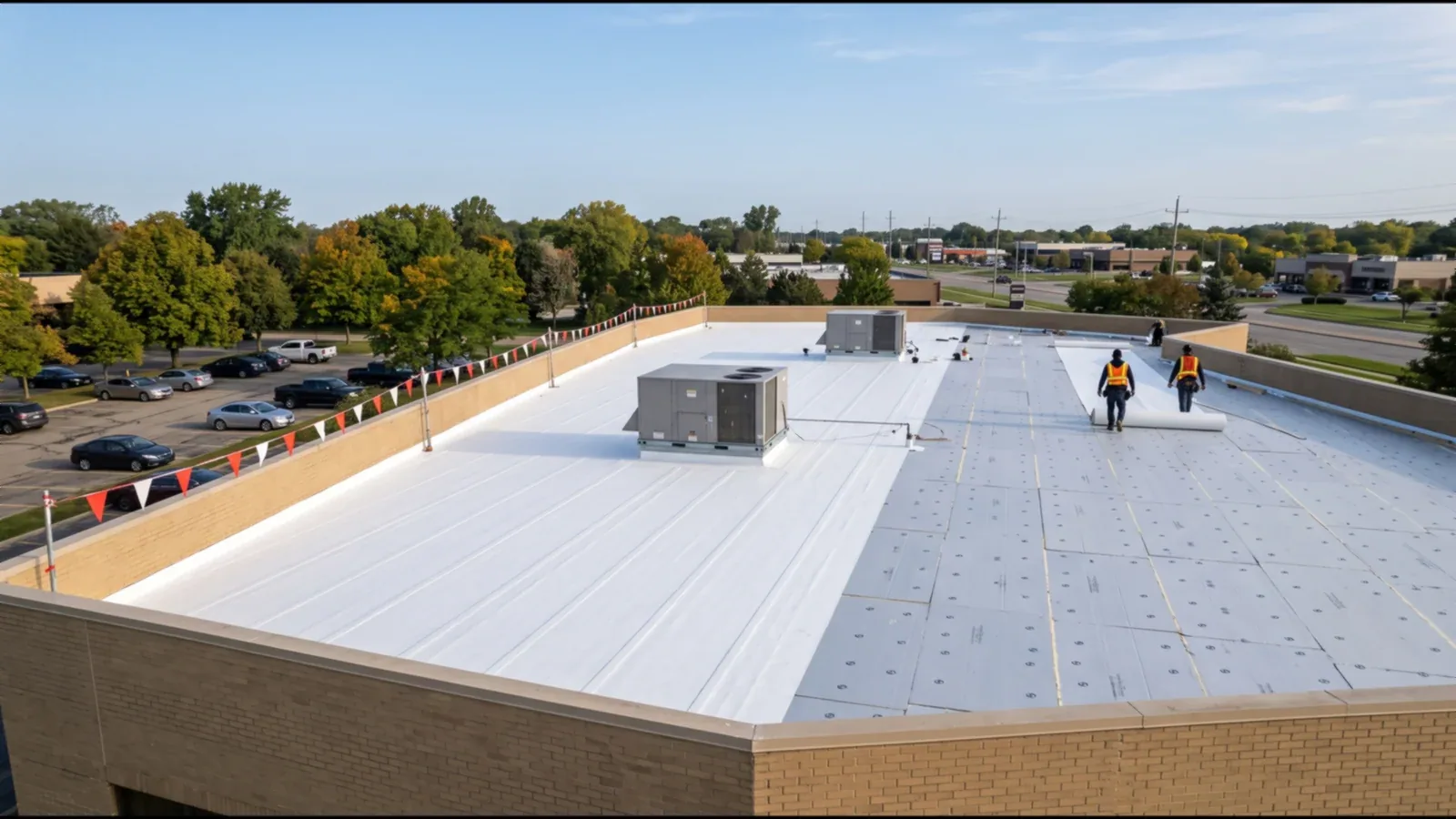
A white single-ply such as TPO reflects sun and keeps the roof surface cooler, which helps a refrigeration plant. Sprayed foam has also been used on cold buildings because it forms a continuous, bonded layer without laps. Each system needs a dry substrate and a compatible vapor retarder, and the existing layers decide which route is open.
The choice often comes down to attachment. Mechanical fasteners that pass through a freezer roof can conduct cold to the deck, so adhered systems and ballasted details get a close look. Whatever the membrane, a seam that is probed and a flashing that is welded to the same sheet are the details that decide how the roof ages.
Insulation boards are also part of the decision. Some foam boards lose value when wet and cannot be dried, while others tolerate moisture better, and the owner's refrigeration engineer usually sets the minimum thickness. Our role is to install that stack without breaking its vapor seal and to leave a record of how each seam, lap and penetration was closed, so the next repair does not have to guess.
Lee's Summit averages 4.5 inches of snow a year, has a January mean high of 39F and has seen a record low of minus 25F. Snow melts unevenly over a roof, and the meltwater runs to the drains. Where a drain is blocked, ice can build at the outlet and force water back under flashing.
After a hard freeze or an ice event, a check starts with the drains and the roof edge. The 2002 ice storm that left hundreds of thousands of Kansas City residents without power for days or weeks is a reminder that a refrigerated building may lose power as well as roof protection. Our snow and ice damage repair work looks for broken drain collars, lifted flashing and cracked membrane at the cold edges.
The turnover package for a cold storage roof includes the moisture map, the core locations, the layer stack as found and as installed, and the photos of each phase before it was covered. A manager comparing a dry warehouse to a freezer building will see that the freezer file is longer. The same package supports the next owner or lender, and it helps a distribution center with a chilled wing keep one record for the whole roof.
For Lee's Summit buildings along I-470 and US 50, we then schedule a walk each spring, after the storm window opens, and another before winter. Where a defrost cycle or a refrigeration outage interrupted the work, the package notes the date and the section that was open, so the facility manager can match energy readings to the roof work later.
The wet area decides it. A confined wet area can be cut out and rebuilt. Insulation that is wet across much of the roof, or a vapor retarder that has failed everywhere, points to replacement of the layers above the deck.
Wet insulation conducts heat far better than dry insulation. The compressors work harder to hold the same temperature, and the first sign is often the utility bill, not a ceiling stain.
Yes, under the right conditions. A scan needs a clear evening after a sunny day, so the wet insulation holds heat longer than dry areas. Cold weather and frost reduce the contrast, and we schedule the survey for a better window.
Not overnight. Each section is opened, insulated, covered with vapor retarder and closed in the same working period. If weather turns, the temporary seal goes on first.
Send the building address list, the temperature zones, the defrost schedule and any open leak reports. Those four items let the first walk fix the staging footprint and the dry-in point on the same visit.
Send refrigeration zones, the defrost schedule and any open leak reports. The facility manager and a roof lead walk the building together, and a written sequence comes before any price.
Request a Roof Assessment