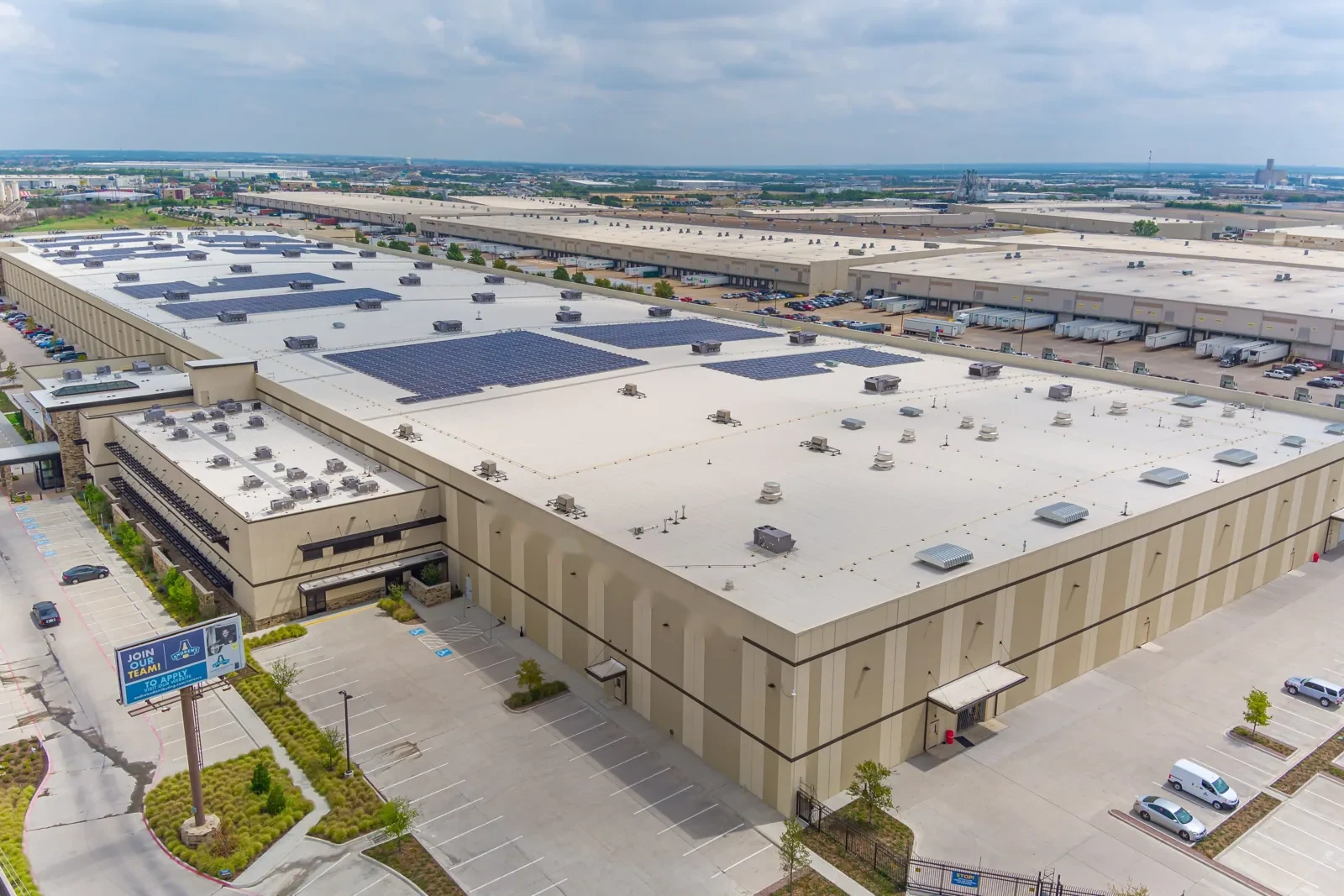

Around-the-clock shipping turns the first question on a distribution roof from what is wrong into when the building can spare it. Lee's Summit, MO sits along I-470, with US 50 and MO 291 branching off it, and the commercial and industrial areas on those routes are where freight buildings sit. A roof crew there starts with the shift schedule, the truck court layout and the doors that cannot close, and only then with the membrane.
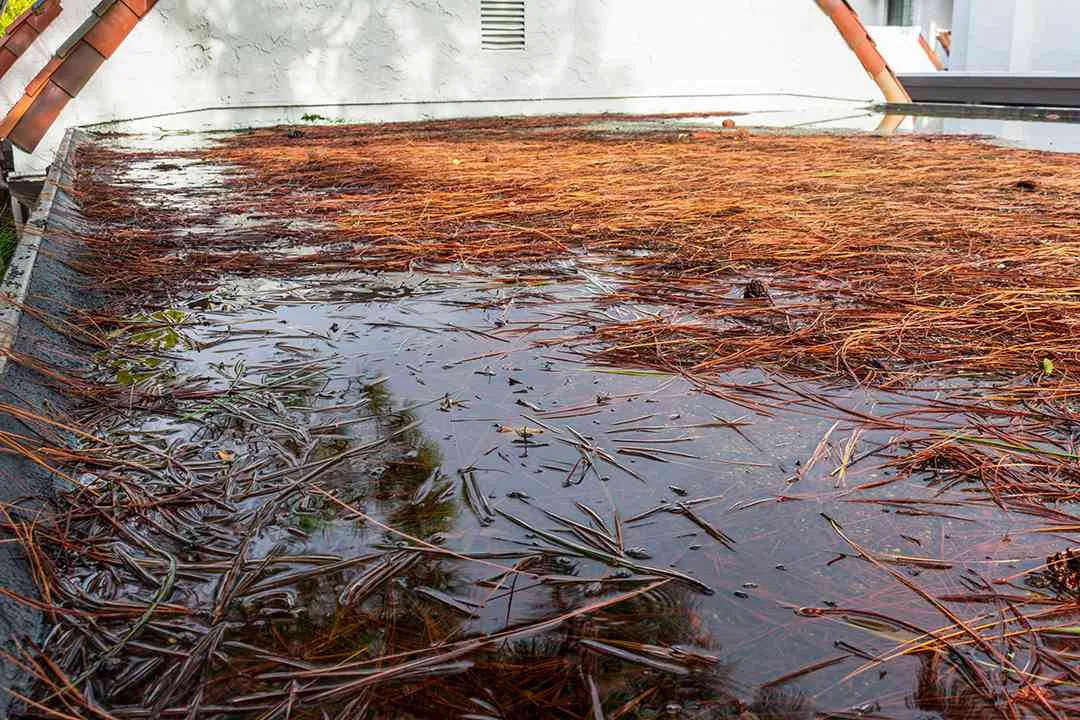
The roof condition that decides the first move is typically drainage. A distribution building has a wide roof and a limited number of drain outlets, so one blocked outlet can load a large area with water within a single storm.
On a building that runs more than one shift, shift change is the natural close-in point. Workers are arriving and leaving, forklifts are idle in the aisles for a few minutes and the yard is busy in a predictable way. We schedule the hoist lifts and the heavy material drops for the quiet side of that cycle and keep crews away from the entry doors during the rush.
The tenant notice goes to the operations lead and to the safety coordinator. It states the work dates, the roof access route, the noisy phases and the parts of the yard where overhead work is happening. A building with its own safety rules for contractors gets those rules read before the day-one site walk, not after. Forklift traffic near the loading docks, extended shift overlaps and visitor sign-in all go into the safety briefing for the crew, so that roof workers know which doors are live and where to stand when a truck backs in.
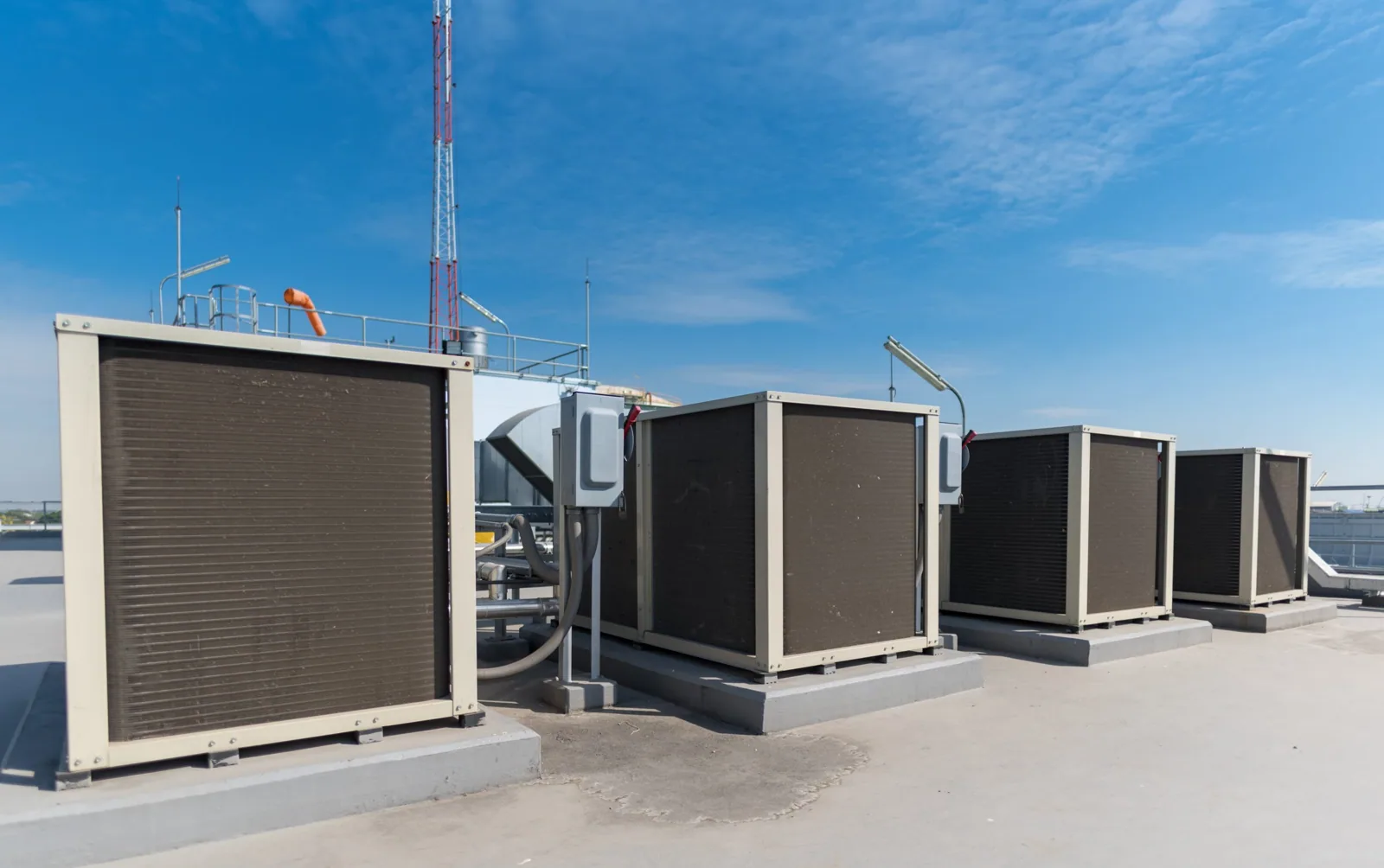
A fulfillment building often hangs conveyors, sprinkler mains and lighting from the structure and sets rooftop units and exhaust fans on the deck above them. That changes what a crew can do. We mark the curbs and supports that carry equipment, and we confirm with the owner's engineer where heavy materials may be stacked. Tear-off debris and new insulation stored in one spot can overload a deck that was never designed for a pile.
Rooftop unit curbs are the usual weak points. A curb that was flashed once and then raised or reframed for a replacement unit often has a seam at the corner that no longer matches the membrane. Our work on rooftop equipment curbs and supports deals with that detail before it becomes a leak above racking.
Large roofs rely on a small number of drains, scuppers and overflow outlets, and each one handles a share of the roof that only grows in a heavy rain. A strainer clogged with leaves and debris will hold water that then settles into the lowest part of the field. Over time that water finds seams and flashing laps.
We walk each drain, pull the strainer, check the bowl and test the flow. Where the roof has ponding water that stays longer than a day, the fix may include tapered insulation or an added drain, not just a patch. A clogged outlet can load one corner of the roof for days, and a regular drain and scupper service keeps them clear between storms.
Winter adds its own check. A January mean high of 39F and about 4.5 inches of snow in a typical year mean freezing water in a clogged outlet, which can split a drain bowl or lift a flashing collar. We look at drains and collars before the first hard freeze.
Freight real estate in the wider Kansas City area is changing. The former Richards-Gebaur air base site near Grandview, about 20 miles south of Kansas City, now serves as the CPKC Rail International Freight Gateway, and the CenterPoint-Kansas City Southern Intermodal Center there is planned across 1,340 acres. The Port KC and Richards-Gebaur area is the clearest regional example, and it shows how large a logistics roof portfolio can become.
Closer to Lee's Summit, Belton lists QuikTrip Distribution as its largest employer in the city's 2016 financial report, and Liberty is home to a Hallmark distribution warehouse. Whatever the employer, each building gets its own walk, so the roof is read from what is on it and its record is written fresh.
A reroof over a working distribution center is divided into phase boundaries. Each phase is a strip of roof small enough to open, replace and close in one working period. The roof drawing shows the phases in order, with the dry-in point for each and a weather hold rule that applies in spring. The warning issued for Lee's Summit on April 27, 2024, with gusts to 60 mph and penny-size hail, is why that rule goes into every spring plan.
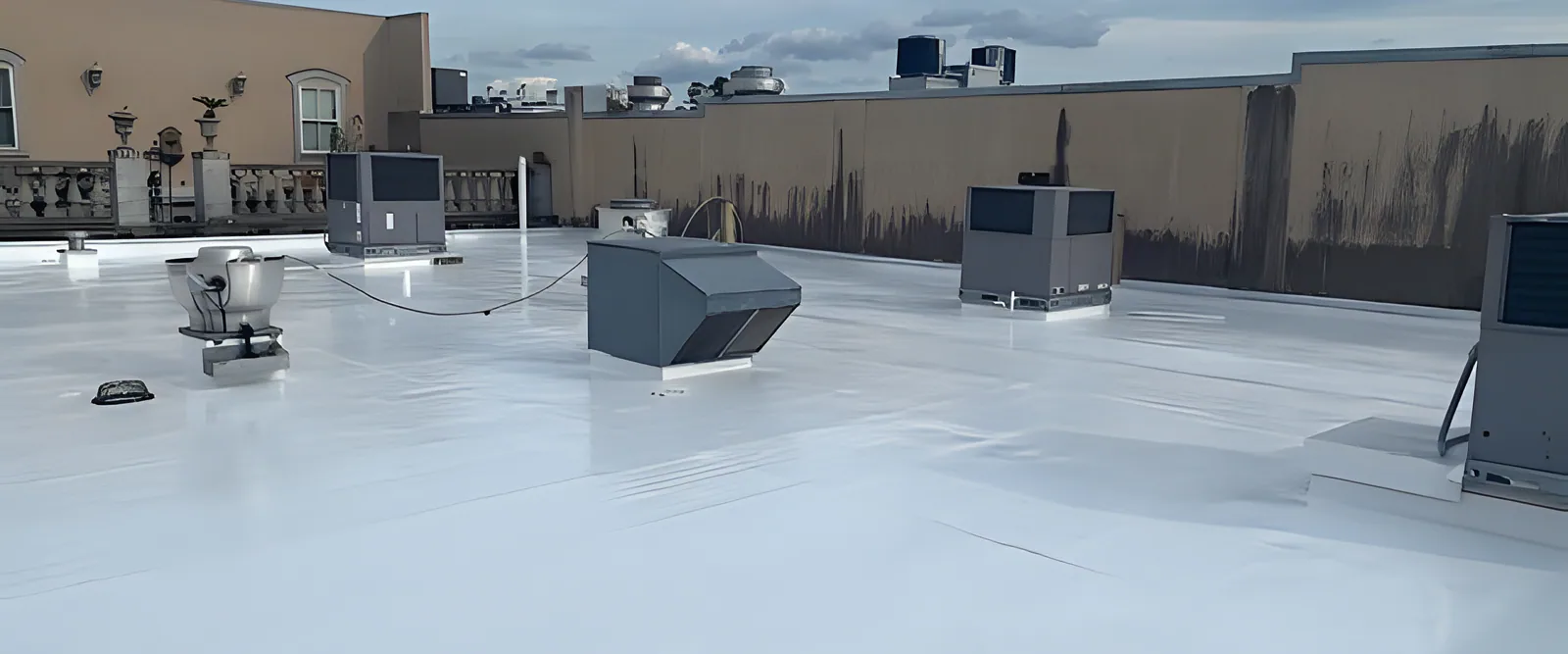
An occupied building reroofing plan also covers fire protection and hot work. Torch and welder permits, fire watch and extinguisher placement are set before work begins, since insulation and membrane are combustible. On many large roofs a single-ply system such as TPO is chosen partly because it installs without open flame.
At handback we walk the roof with the operations lead against the punch list, remove staging and confirm that every lane is open. The turnover package records the sections replaced, the details completed and the places the next walk should check, starting with drains and edges.
For an owner who also holds a warehouse or a cold storage building beside the distribution center, and for any owner with several logistics buildings, a multi-site roof program turns those packages into a calendar. A building with a newer roof is visited after spring storms. An older one is visited more often, and the plan notes which one is nearing a replacement decision. At handback the operations lead also receives a short list of the doors and lanes that were touched, so the yard team can confirm nothing was left narrower than before.
The weather window and the dry-in time decide it. A crew should not open more than it can close before the forecast turns. In spring that means smaller sections and an earlier cut-off hour, and in settled summer weather the sections can be larger.
It can be, if debris or water reaches it. We protect equipment with temporary covers where cutting happens over it, and we agree beforehand on the zones that stay untouched. Leak protection matters most near electrical gear.
A roof near the end of its life becomes a future capital cost that the owner can plan for or ignore. A recent condition report shows the roof is known, documented and scheduled, which is the question a buyer or lender asks first.
We mark the lanes where lifts and material trucks run and ask the yard team to keep those lanes clear. Trailers outside those lanes can stay. Any trailer that must move is listed in the tenant notice.
The roof drawing, earlier repair records, equipment locations and open leak reports. If no drawing exists, the first walk produces a marked sketch that becomes the working record.
Send the shift hours, truck court layout and building addresses, plus any open leak reports. Your operations lead and a roof lead can walk together, and a written sequence arrives before a scope is priced.
Request a Roof Assessment