
Acrylic coating is a calendar-driven job. The product is water-based, so the crew needs a dry surface, an air temperature that stays above the minimum on the data sheet, and a clear stretch of hours after the last coat before dew or rain. A property manager in Lee's Summit, MO, planning an acrylic restoration is therefore choosing a window as much as a product: late spring or early fall, a roof that drains well, and tenants who have had their notice. When those conditions line up, acrylic is a lower-cost way to add a reflective, watertight layer over a sound roof.
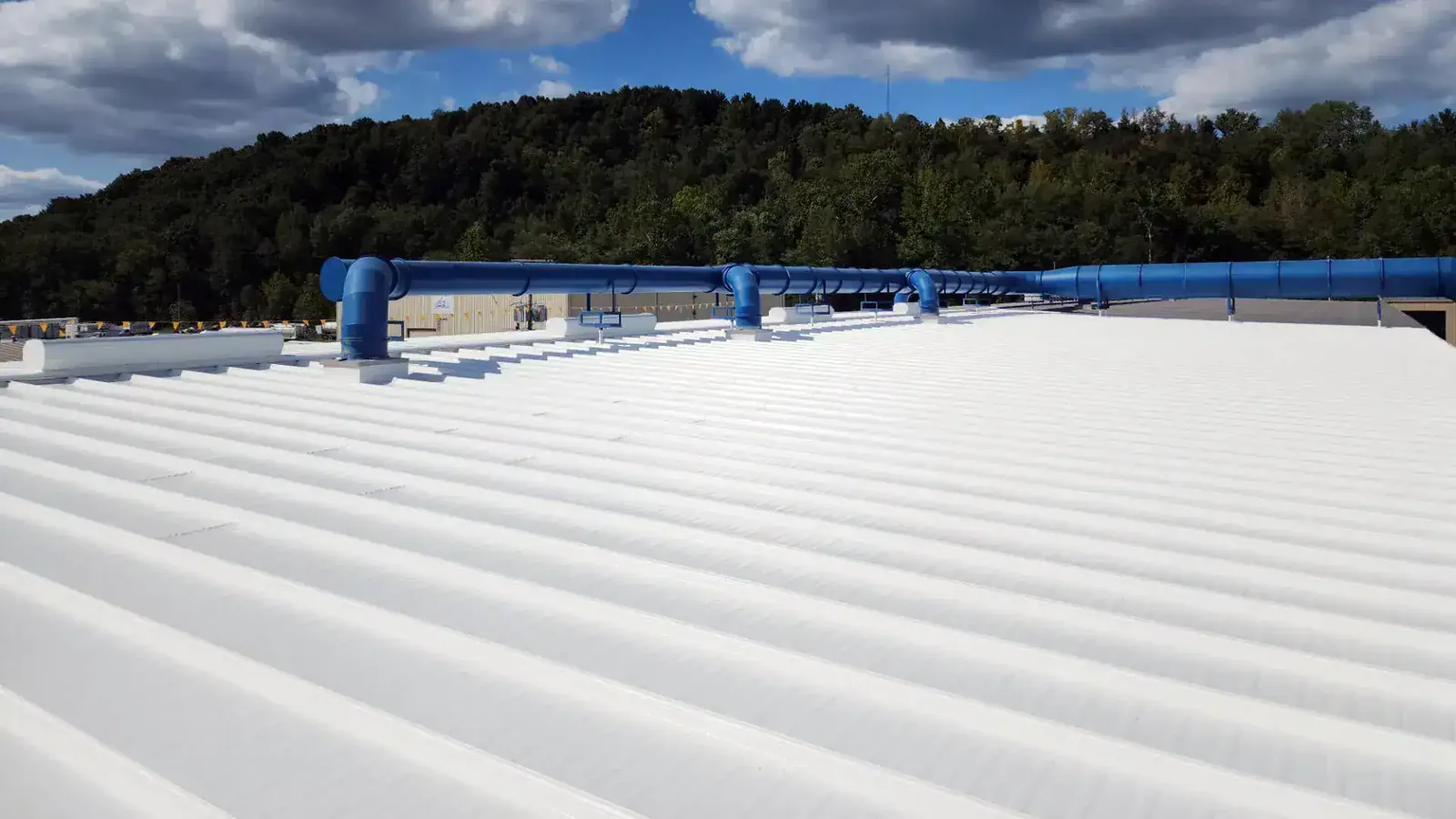
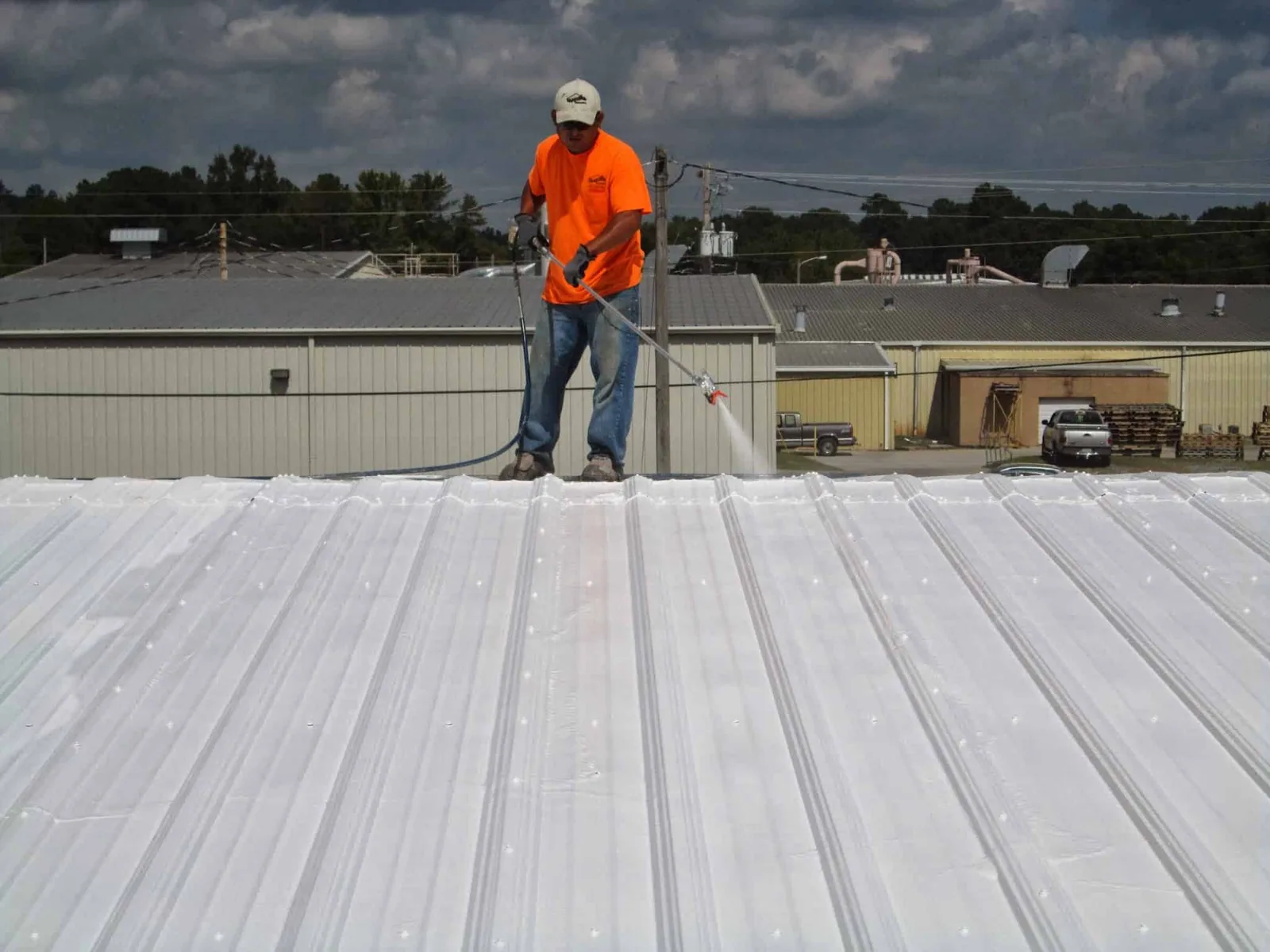
Acrylic roof coatings are water-based emulsions that cure by evaporation into a flexible, bright white film. The film is applied in two or more coats, often with reinforcing fabric over seams, and its thickness is controlled by the quantity of material per area. Cleanup is simple, odor is mild, and the product can be used near occupied space with fewer air-intake concerns than solvent-based materials.
The reflective surface reduces heat gain on the roof, and Lee's Summit records a 108F high and an 88.3F July mean daily high, so the benefit is real in summer. The film also protects the membrane below from ultraviolet exposure, which is the slow wear that chalks and cracks an uncoated surface over the summers. Because the coating is applied wet and builds in coats, it conforms to fasteners, laps and small repairs without cutting new seams, and each coat is inspected for pinholes before the next goes on. Its weakness is standing water: acrylic is not meant to sit under standing water for long, since the film can soften and lose adhesion. That limit is the main reason we choose between acrylic and silicone for each roof.
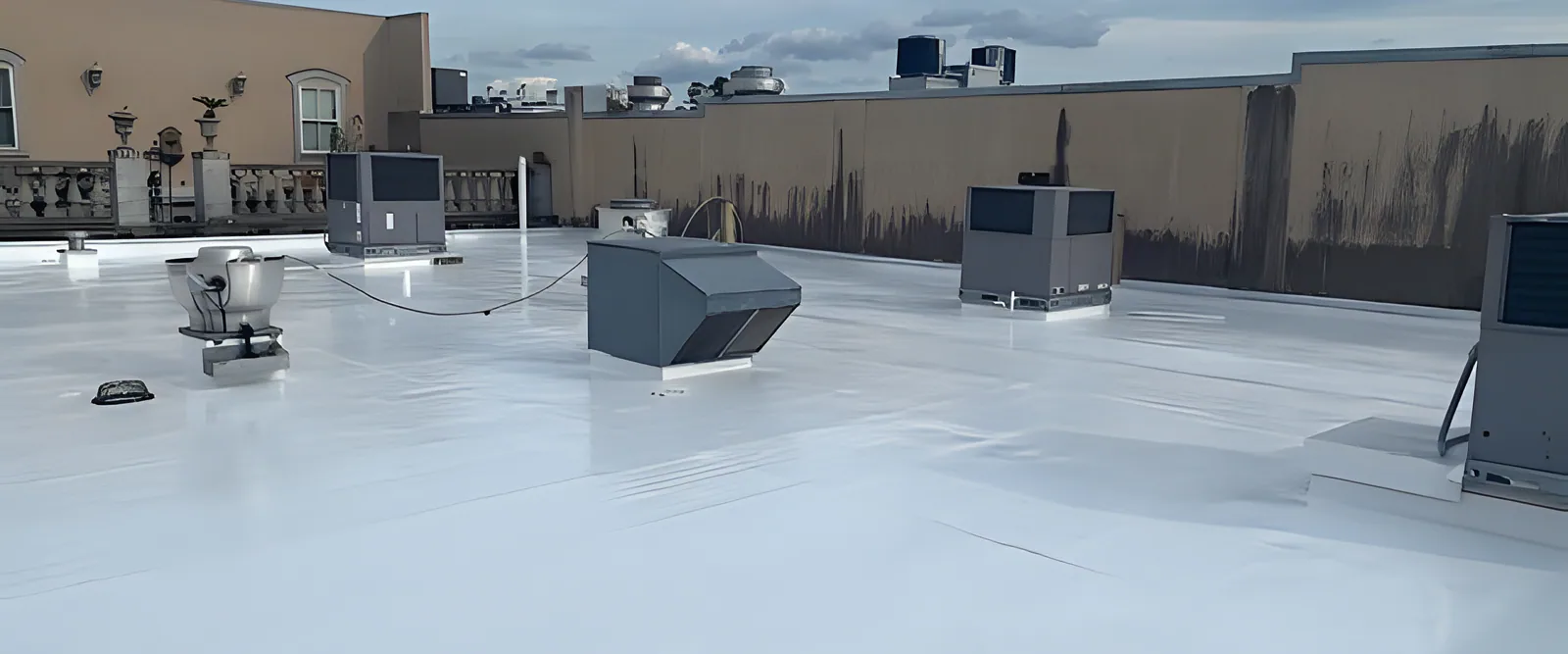
Before an acrylic bid is written, we check how the roof drains. After a rain, we look for ponds that last more than a day or two, sagging deck lines and blocked drains. A roof that sheds water within a short period is a good candidate. A roof with persistent low spots is better matched to silicone or to a corrective detail such as a new sump or a tapered insulation patch.
Where drain work is needed, it goes first. Cleaning roof drains and scuppers, replacing clamping rings and setting new drain bowls are all quick tasks compared to the cost of coating a roof that will hold water. The record shows the condition of every drain, with a photograph, before and after.
Slope and deflection are measured as well. A level and a string line across a bay show where the deck sags, and a few hours of observation after a storm show which ponds drain and which do not. Those readings go on the roof drawing, so the property manager can see where the coating will perform as designed and where a corrective detail is the better first spend.
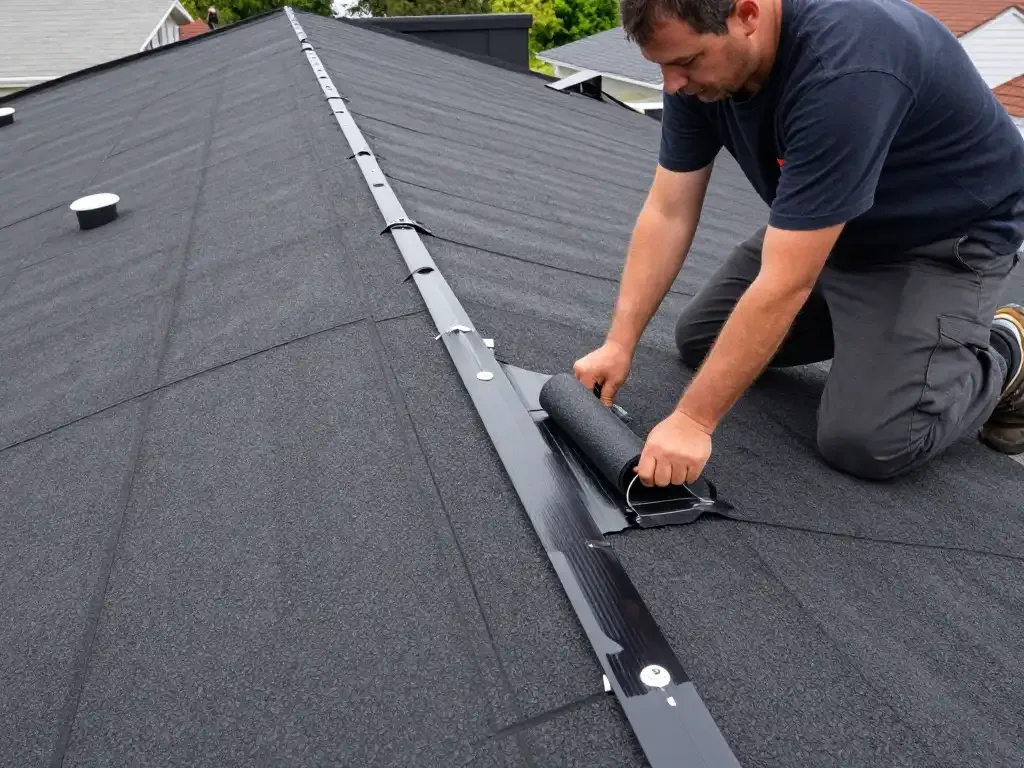
Acrylic goes onto a clean, sound roof. The crew pressure washes, scrapes blisters and loose seams, replaces wet insulation, and reinforces the seams and flashings with fabric and mastic. On a metal roof the rust is treated and a primer is rolled onto the panels. On a modified bitumen or built-up surface, a primer or a base coat prepares the asphalt for bonding.
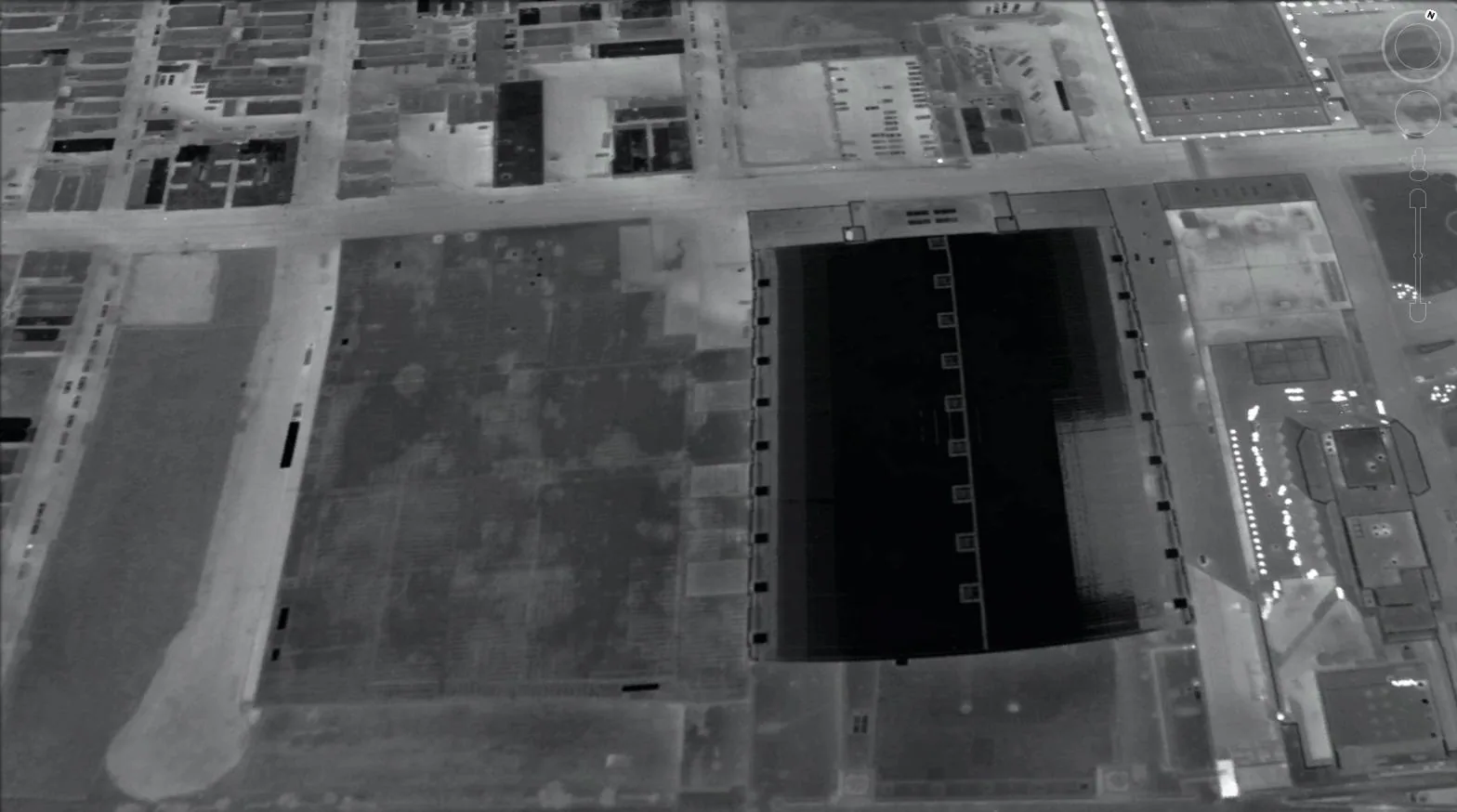
The test patch confirms adhesion before the full roof is coated. An infrared moisture survey comes first on roofs of any age, because a wet roof cannot be coated and the survey saves time and money by locating the wet areas. If the old roof is a rubber membrane, adhesion to the surface requires an appropriate primer, which the data sheet identifies.
Acrylic should not be applied when temperatures are falling toward freezing or when rain is expected before the film sets. A January mean high of 39F and 4.5 inches of snowfall in a normal Lee's Summit year keep cold-season coating limited, so most acrylic work runs from spring to fall. The yearly precipitation of 38.34 inches means that even the work season has wet days, and the weather hold rule covers them.
Spring storms are the main scheduling problem. A National Weather Service severe thunderstorm warning on April 27, 2024 called for 60 mph gusts and penny-size hail, and it listed roof damage among the expected results. An uncured coat in front of that kind of storm can wash off or blister. Each section is closed off before the crew leaves, someone watches the radar through the afternoon, and applications are held whenever the forecast is uncertain.
The coating itself is quiet, which suits a building with tenants in the suites below. The sequence is still a real one. Notice goes out first, with the work zones named by day. The crew then gets roof access through a hatch or a ladder, staging sits in a corner of the parking area, and water for washing comes from a hose bib or a tank. Dock and entry hours determine when materials arrive.
On I-470, US 50 and MO 291 properties we ask the property manager for occupancy hours and set crew arrival and loud tasks around them. Rooftop units stay running unless the coating touches an intake, in which case the tenant is told the exact shutdown window. At the end of each day the crew walks the drains, curbs and roof hatch, so everything is left tidy and closed, and the property manager receives a short note on what was coated, what remains and where the next day begins.
A coating extends the life of a roof that is still dry and basically intact. It does not repair a deteriorated deck or a saturated insulation layer. The report separates those conditions: areas fit for restoration, areas for repair, and areas where commercial roof replacement is the better spend. A roof coating restoration plan can then be staged across a budget cycle.
The code adds a timing note. The city's code edition depends on the submittal date, so we confirm the permit status before any work begins. An owner in Lee's Summit with several roofs can set the coating schedule against that date.
The film needs time to set before it is exposed to rain, and the data sheet gives the window. We apply when the forecast shows a dry stretch longer than that window and we stop when a storm cell approaches.
Ponds that last more than a day or two can soften the film, so a ponding roof is better matched to silicone or to a drainage correction. The survey records depth and duration.
A cooler roof surface reduces heat transfer into the space below, which can ease the load on the units. The size of the change depends on the building and on the insulation.
Two coats are typical, with fabric reinforcement at seams. The total film thickness is set by the data sheet and checked as the crew works.
Often yes, after a wash and an adhesion test. Chalking or flaking coatings are removed or primed first.
Send the building address list, tenant hours and any open leak reports. We will walk the roof with the property manager and return a written sequence plan for the acrylic scope before any price is set.
Request a Roof Assessment