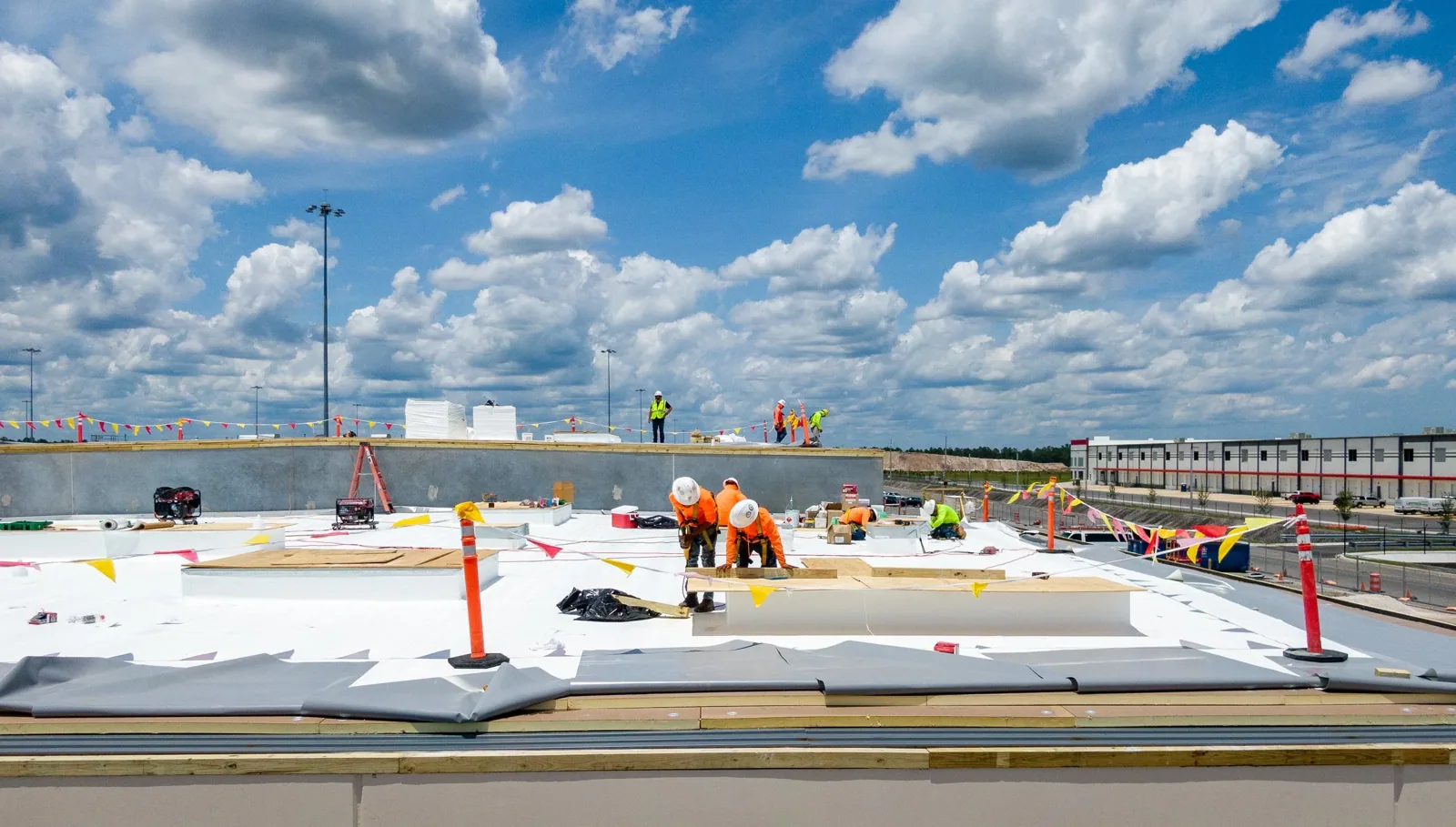

An EPDM roof arrives as a few very large sheets, and that fact shapes everything about the job. Fewer seams means fewer places for water to enter, and it also means the crew needs room to unroll and position the rubber, which makes the staging footprint and the access route the first things we measure. In Lee's Summit, MO, where winters reach a record low of -25F and spring brings hail, EPDM has a long place in commercial roofing because the rubber stays supple in cold that stiffens other membranes.
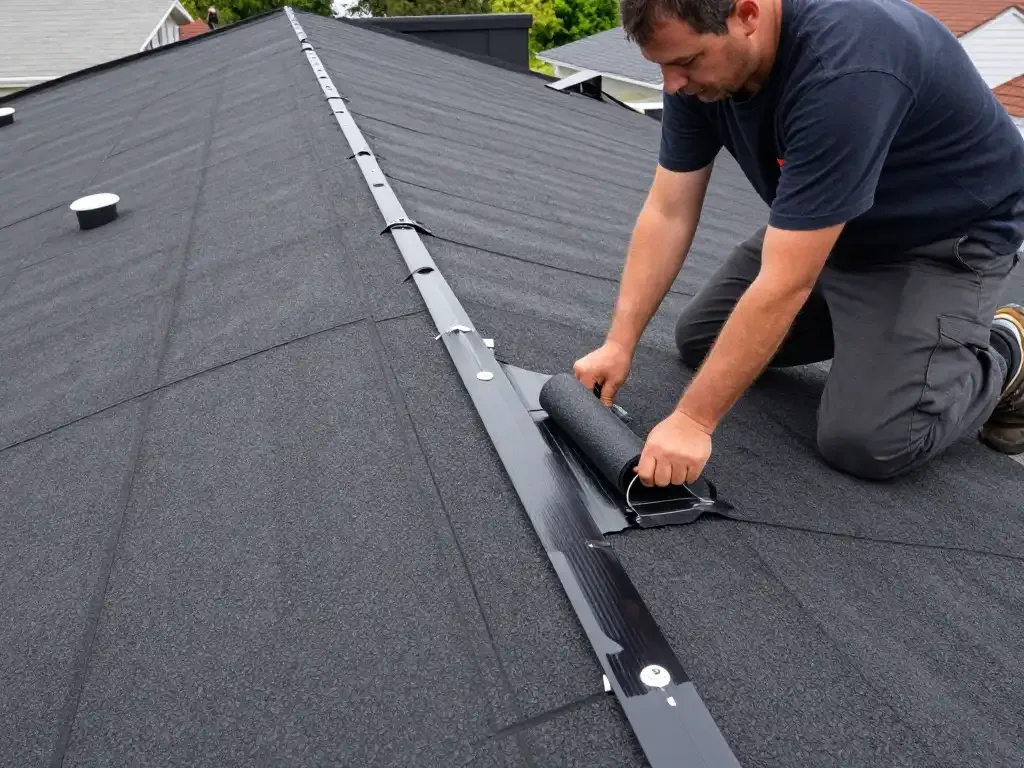
EPDM is ethylene propylene diene monomer, a synthetic rubber. It is made in wide sheets, often much wider than single-ply plastics, and cut to the roof. The sheet does not weld. Seams are joined with a splice adhesive or with factory seam tape that is pressed down with a roller, and the splice area is cleaned with a primer first. The quality of a seam depends on a clean, dry surface and firm pressure along its length.
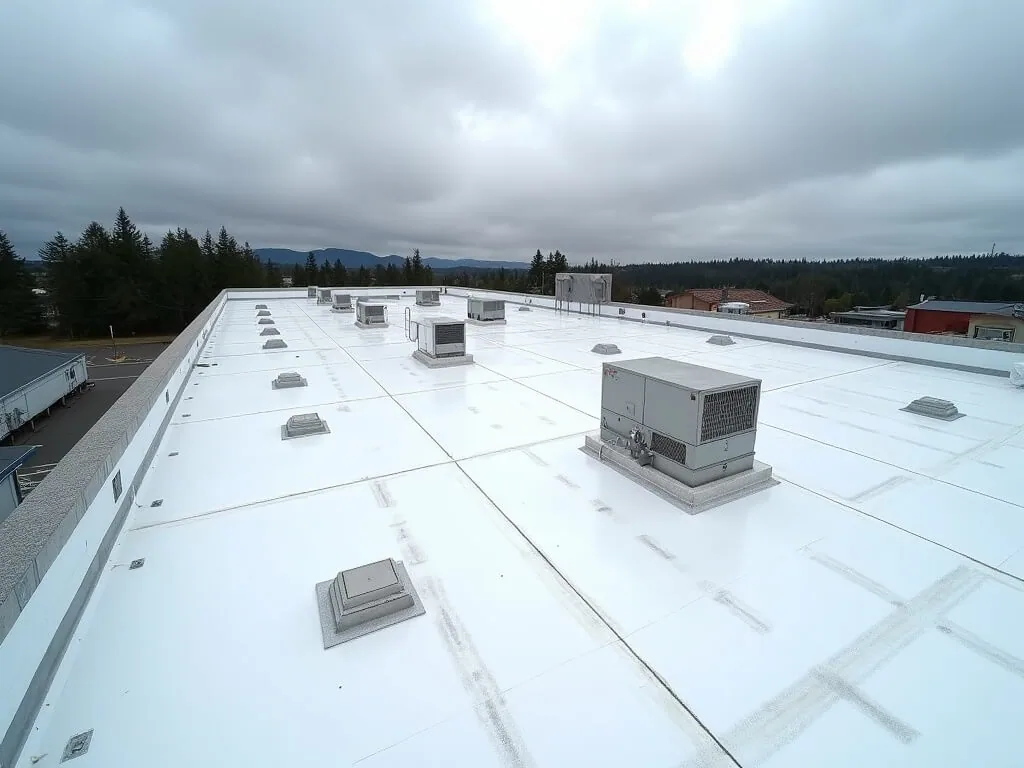
Because EPDM is a cured rubber, it resists ultraviolet light and ozone well, and it keeps its flexibility through repeated hot and cold cycles. It comes in black and in white, with the white version reflecting heat. A thicker sheet resists punctures and gives more margin for foot traffic around rooftop units. Compared with a welded TPO membrane or a PVC membrane, EPDM gives up the welded seam but gains a long record in cold and a sheet wide enough to cover a small roof with a single splice. It does not resist grease the way PVC does, so a roof with kitchen exhaust is read differently. Price follows sheet thickness, the attachment method, the insulation under it and the count of curbs and penetrations to be flashed by hand.
Lee's Summit averages 4.5 inches of snow a year and a January mean high of 39F, and the Kansas City metro has taken a 2002 ice storm that left hundreds of thousands of residents without power for days or weeks. A roof in that climate is loaded with ice, frozen drains and thaw cycles that push water into any gap. EPDM handles the cold well, since the rubber does not turn brittle at low temperatures the way some other membranes can.
Winter is still a hazard for the installation. Adhesives need warm surfaces, and rubber is hard to work when it is frozen. We keep rolls warm until they are placed and limit cold-weather work to repairs. For damage from ice and drift loads, we follow the pattern of snow and ice roof damage repair, which begins with drains and edges.
EPDM goes down three ways. A fully adhered system bonds the rubber to the insulation with bonding adhesive and gives a clean, smooth surface. A mechanically attached system uses plates and fasteners at the seams. A ballasted system lays the sheet loose and holds it down with rounded stone, which is the least costly to install but adds a heavy load and hides the membrane from inspection.
The roof structure and the wind exposure choose among them. A deck that cannot carry ballast rules that route out. A building with an open exposure along I-470 or MO 291 can do better with a fully adhered or mechanically attached sheet, since both resist uplift. The National Weather Service warned of 60 mph gusts in Lee's Summit on April 27, 2024, and the attachment pattern has to be designed for that kind of gust at the edges.
Rubber absorbs impact better than a hard plastic surface, and EPDM is known for coming through hail with fewer cracks than a stiff membrane. That does not make it immune: penny-size hail was in the April 2024 warning, and larger stones can bruise the sheet or break the insulation under it. We inspect after any storm, press on suspect spots and check the cover board for dents. A soft area under the rubber means the insulation has been crushed, and that area will fail to drain properly later.
A firm cover board improves hail resistance more than a thicker sheet does. Where the roof is a candidate for a recover, the cover board is chosen with impact in mind.
The field of the sheet rarely fails. The trouble starts at splices that were laid on dust, at flashings that pulled from walls, and at old rubber that shrank over the years and tugged at its edges. Shrinkage lifts the membrane at the perimeter and at curbs, which opens the flashing. We measure the pull at each edge on the first walk and add fasteners or cut relief where the sheet is under tension.
Ponding is another weak point. Rubber tolerates standing water better than some membranes, but water that stays on a seam for weeks exposes any weakness there. A ponding water repair may add a drain, taper the insulation, or reset a sump. Black EPDM also absorbs heat, so a dark roof in a 108F record-high summer needs flashings that expand without tearing.
The Lee's Summit R-VII School District works to a school calendar, and summer is the natural window for any roof it manages, since the building is empty and the staging area has no students in it. Offices and clinics need a different plan, with phases sized to the building's quiet hours and a dry-in point set before the sheet is unrolled. The same sequence applies to school roofing, an office suite or a retail strip in Lee's Summit. Each phase is closed against weather by evening, and the hold rule for spring storms is written down on the first day. For a school the access route also separates trucks from the pickup line, and the hoist is set where no walkway passes beneath it.
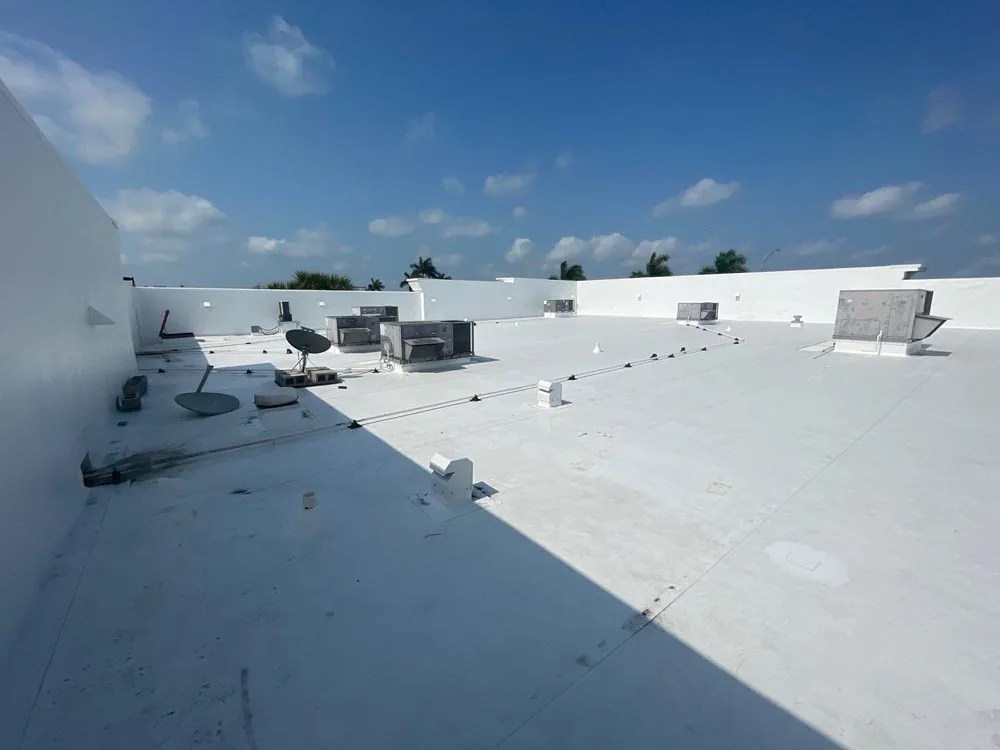
Black absorbs heat that helps in a cold winter and hurts in a hot summer. White reflects heat and lowers the cooling load. We compare insulation levels and the unit schedule, then suggest the color that suits the building's heating and cooling pattern.
The seams, flashings and edge attachment usually limit service life before the rubber itself does. A roof inspected each year and repaired promptly can serve a long time, while one left alone may fail at the splices much earlier.
Rubber shrinks slightly as it ages, and the shrinkage pulls on whatever holds the edge. The pull shows up at parapets, curbs and perimeter fasteners. A shrinkage check on the first walk catches it before the flashing opens.
Yes, if a moisture survey shows the old roof is dry and a separation layer or cover board is installed. Contact with some asphalt products can harm the rubber, so the layers between old and new are chosen carefully.
A patch of cured or uncured rubber is applied with primer and pressure, or a new seam strip is placed over a failed splice. The surface must be clean and dry, so repairs are scheduled for dry mornings and held when rain is forecast.
Send the roof plan, any leak reports from last winter and your tenant hours. We will walk the roof, measure the edge tension and return a written sequence for the EPDM scope before any price is set.
Request a Roof Assessment