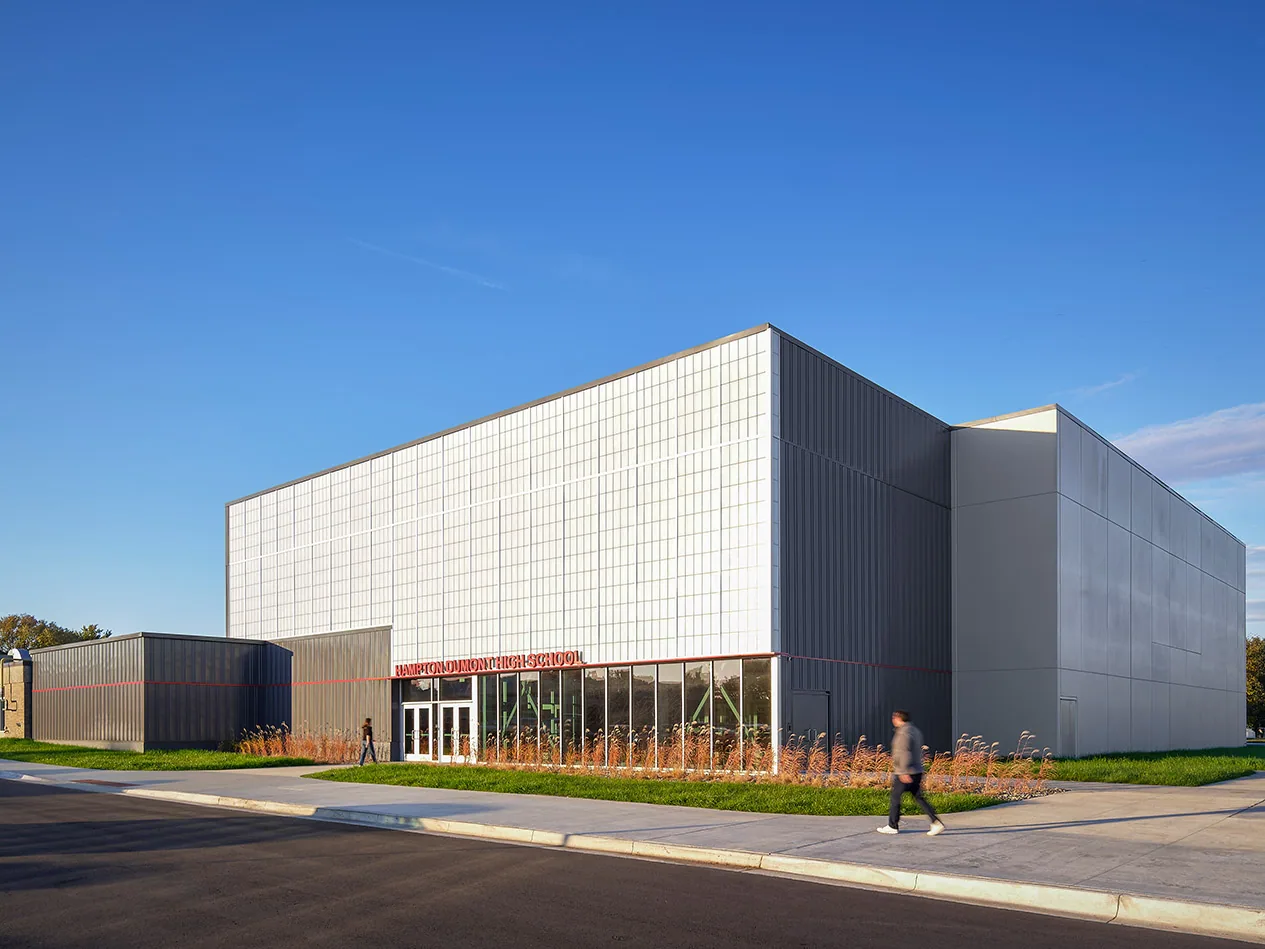

A school roof job in Lee's Summit, MO, is planned from the calendar backward. The principal needs notice, the bus lane needs to stay open, and the gym roof hatch opens above a space students use every day. The roof condition that decides the first move is usually a leak report from a wing that cannot be closed, so we start with who is in the building, when, and where the trucks will stand.
The Lee's Summit R-VII School District is among the city's largest employers, so the school calendar is a standing scheduling question, and each building is walked before a sequence is written.
The first document is a one-page notice for the front office. It names the roof area, the start date, the daily hours and the person to call. Deliveries are timed before arrival or after dismissal, and hoisting stays away from bus lanes and parent pickup.
Roof access in a school often runs through a custodial closet or a gym hatch. We write down who opens it, which route avoids classrooms in session, and where the crew signs in. A property manager or facilities director then approves the route before the first truck arrives.
Truck routes and arrival times are cleared with the district and, where needed, the city. The route is written on the sequence plan: which gate, which lane, where the first truck waits.
On the first walk we photograph each wing from a fixed point and label it. Classroom blocks, gyms, cafeterias, library additions and covered walks can carry different roofs, because they may have been built in different years. We check wall flashing where a low roof meets a high wall, drains, curbs and every penetration.
Portable classrooms and breezeways are easy to miss. We walk them too, since their small drains clog first. The record states what we confirmed and what we did not open, so no one reads an untested area as a sound one.
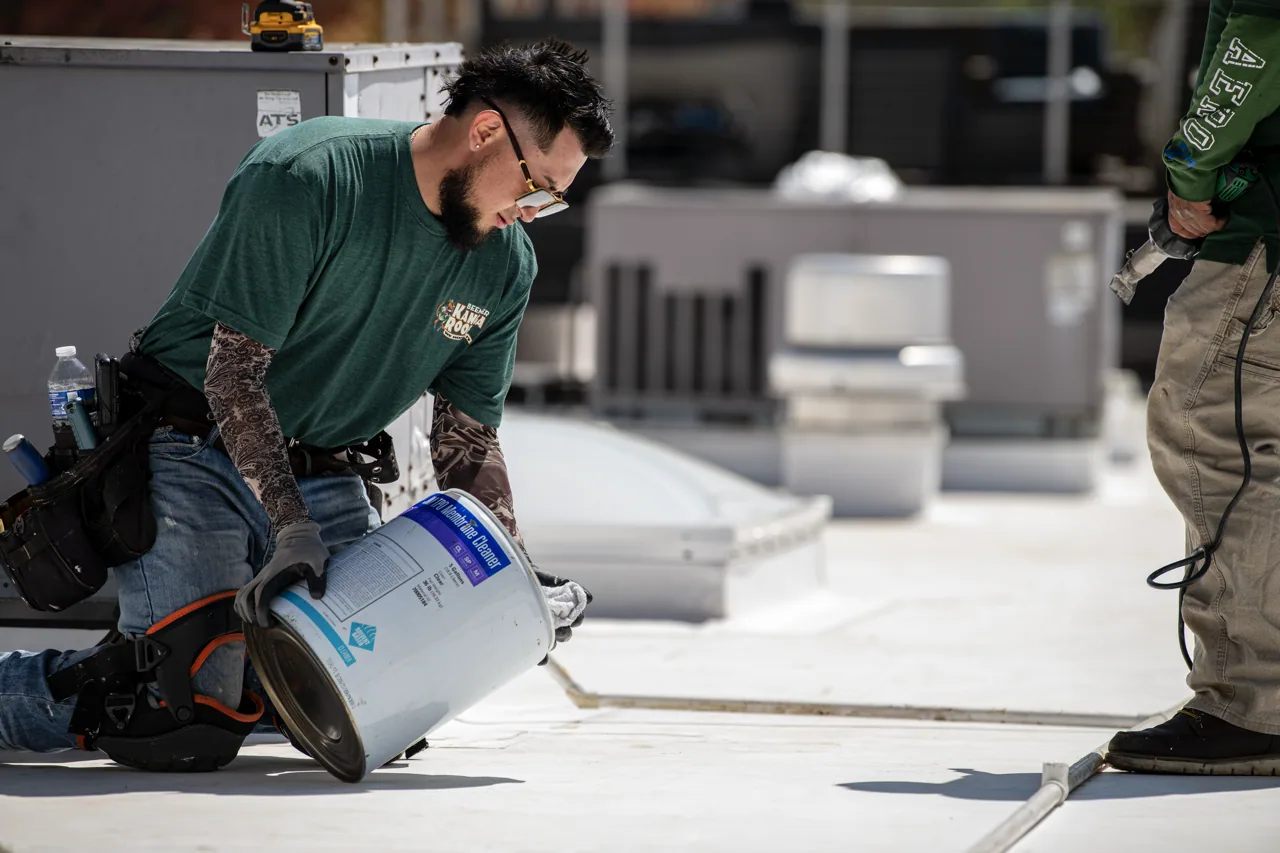
Kitchens and mechanical rooms carry the heaviest equipment. Exhaust fans, makeup air units and boiler flues each cut through the membrane, and each curb has its own flashing story. We press on the base, check the fasteners and note any cracked sealant. A cafeteria exhaust that discharges onto the roof also leaves a film that keeps patches from bonding, so we clean it first.
Gym skylights and clerestory windows deserve their own check. Glazing seals age in the sun, and a curb that moves with the heat opens the flashing around the frame. We press on each seal, probe the curb and trace the drain path beneath, then note whether the skylight is the leak or simply the nearest object to it.
Spring is when the sky sets the school's schedule. On April 27, 2024, the Pleasant Hill forecast office warned that gusts near 60 mph and penny-size hail could damage roofs in Lee's Summit, and a facilities office that waits for summer to inspect may learn about the damage in August. Winters bring a January mean high near 39 degrees and summers a July mean near 88, so seams and flashing work all year.
The plan therefore includes a hold rule. When a storm line is forecast, no section is opened, and any open section is dried in before the crew goes home. Large scopes run in the summer break, with material ordered in spring, and early starts keep heat-sensitive tie-ins out of the afternoon sun.
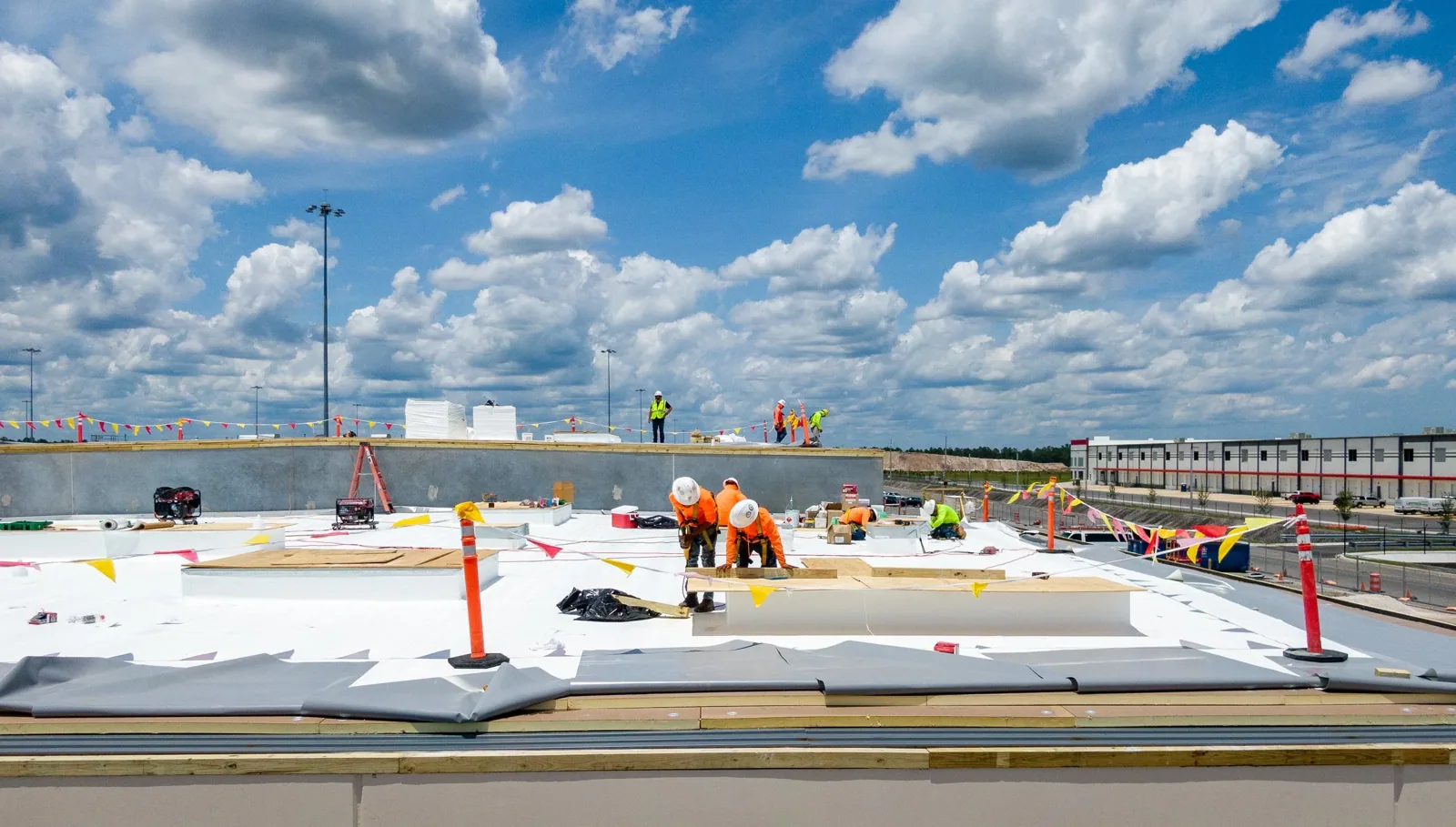
A school roof is divided into phases small enough to close in a day or a week, depending on the work. Each phase boundary is marked on the roof drawing. Each dry-in point is the moment the section is watertight again, with temporary seals sized to the forecast.
Tie-ins between old and new membrane are the weak point of a partly finished roof, so we mark them and photograph them before they are covered. A reroof of an occupied building follows the same boundaries, with noise and fumes kept away from intakes and operable windows.
Weather holds are written down. A forecast of rain by afternoon means a section is not opened that morning. Wind above the limit the material allows stops hoisting. The daily log records the call, so the facilities office sees why a day was lost and when the work restarts.
A repair suits a sound roof with a defined failure. A recover suits dry insulation under a worn membrane. A replacement suits wet insulation spread across a wing. A moisture survey maps the wet boundary so the choice rests on evidence.
Price moves with the roof area, how deep the insulation runs, how many curbs and penetrations there are, how the crew reaches the roof and how the work is phased around students. A district business office can carry the findings into a capital plan, as a school district program does for several buildings at once.
The deciding evidence is moisture. A roof that tests dry under a worn membrane can take a recover and avoid the disruption of tear-off. A roof with wet insulation in several areas cannot, and the report says so with a map. Timing follows the same facts: material orders in spring, installation in summer, punch list before the first day of school.
Permit timing depends on the date a project is submitted. The city draws the line at October 1, 2026: a submittal on or after that day is reviewed under the 2024 I-Codes, and anything earlier stays under the 2018 set. A school reroof on either side of that line gets different insulation and uplift answers, so the date goes on the sequence plan beside the specification.
For a school near Downtown Lee's Summit, the city's permit office confirms the edition before anything is ordered.
Handover is a folder. It holds a photograph set for each phase, the roof drawing with phase boundaries, test results, product information and a dated punch list that the facilities office signs. A college building roof report and a church roof report use the same layout. Anything left unopened is named as such, with the reason, and deferred items carry a place on the roof and a date to return.
Before the first day of school, the facilities office walks the finished roof with us and signs off the list. Items that need a second visit are scheduled, not left to memory.
The end of the term and the lead time on material. Large scopes wait for summer, while smaller repairs can run in fenced areas during the year.
A line of storms can close a roof section for days. The plan carries a weather hold rule so an open section is dried in before the forecast turns.
The submittal date sets it: October 1, 2026 is the line, with the 2024 I-Codes after it and the 2018 set before.
With fenced staging, a separate crew gate, hoists away from bus lanes and written notice to staff naming the roof area and the noise window.
A turnover package with photos by phase, a marked roof drawing, test results, product data and a dated punch list.
Send the building address list, bell schedule and any open leak reports. We will walk the roof with you and write a sequence plan before any scope is priced.
Request a Roof Assessment