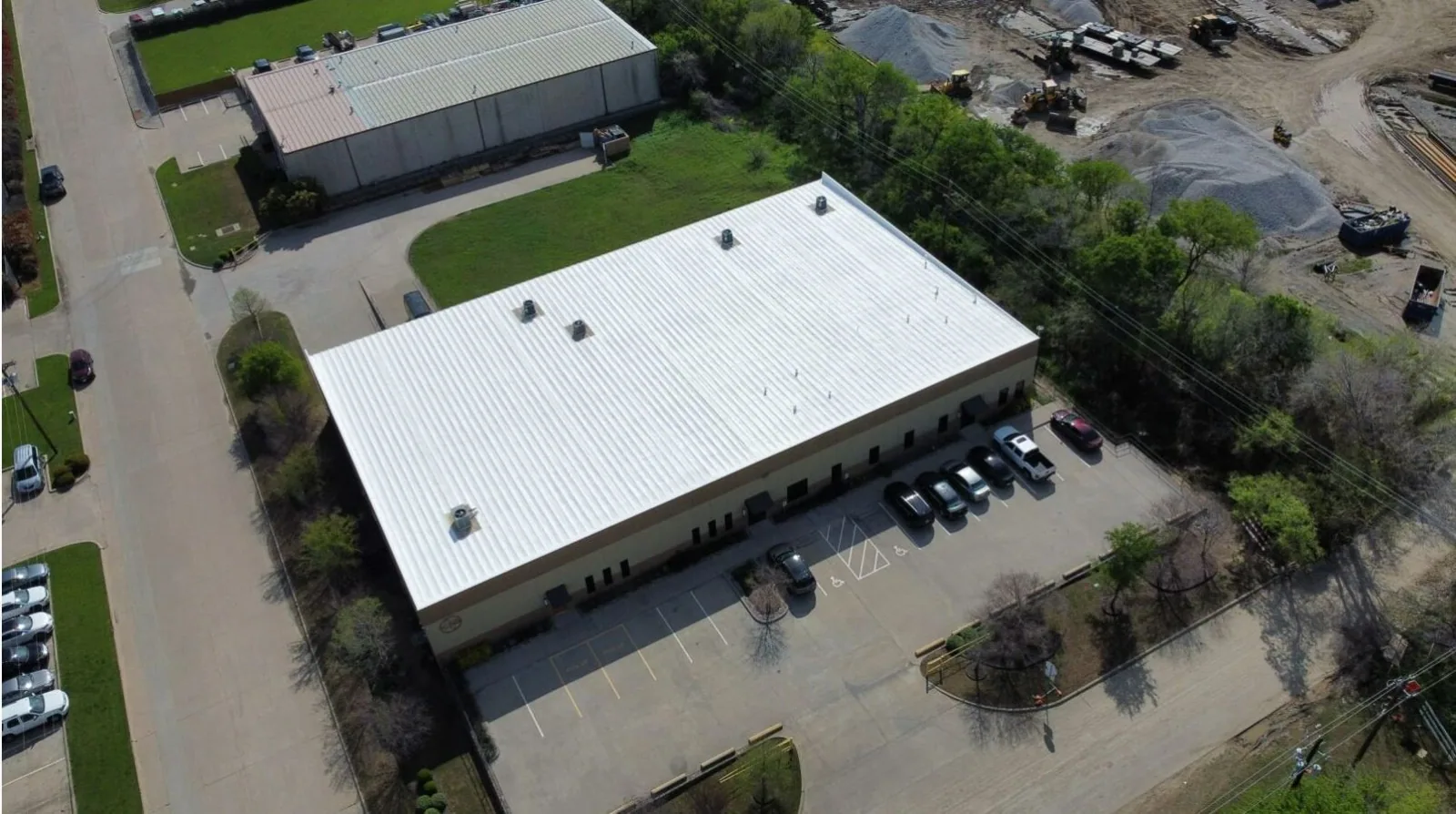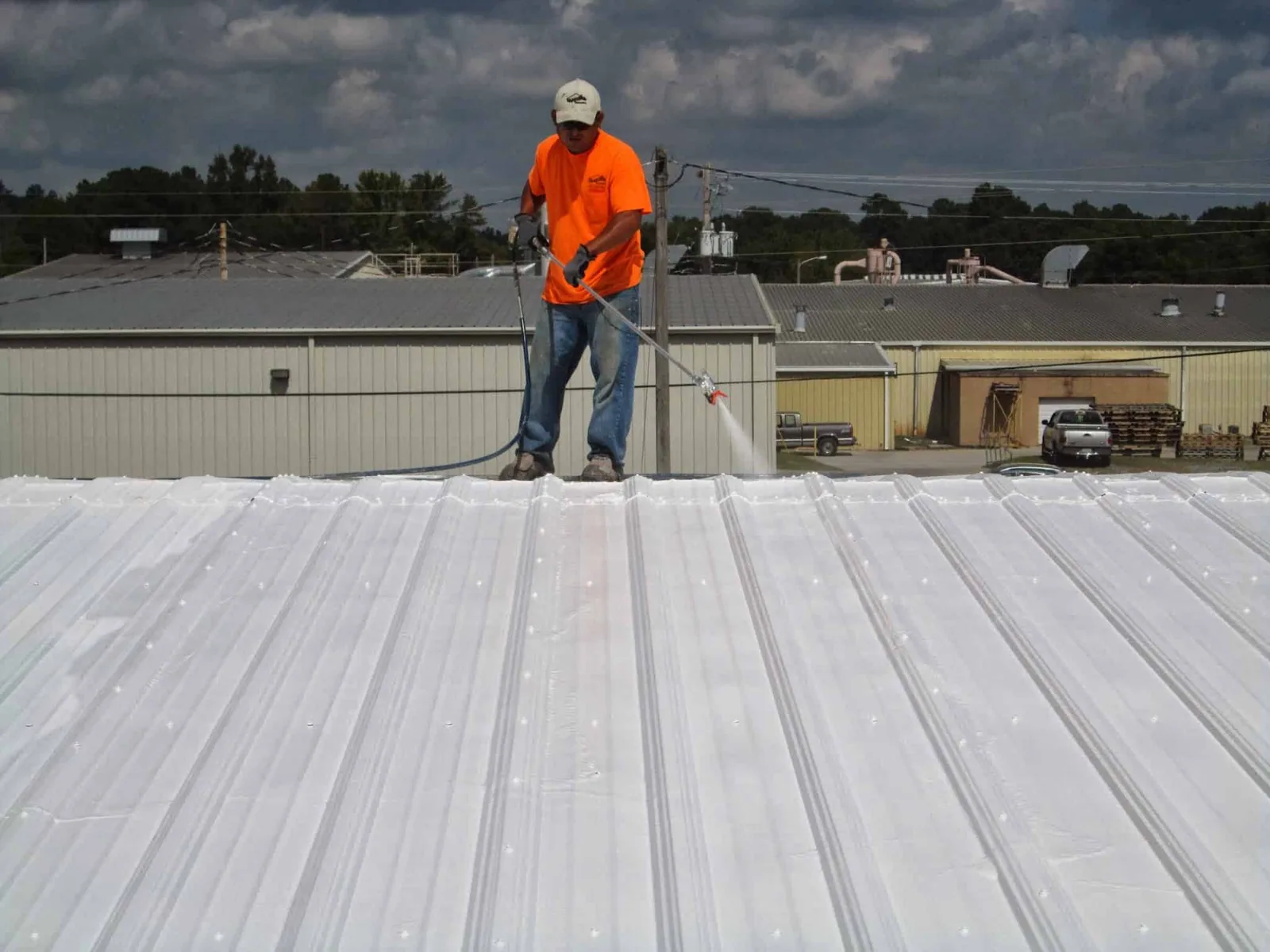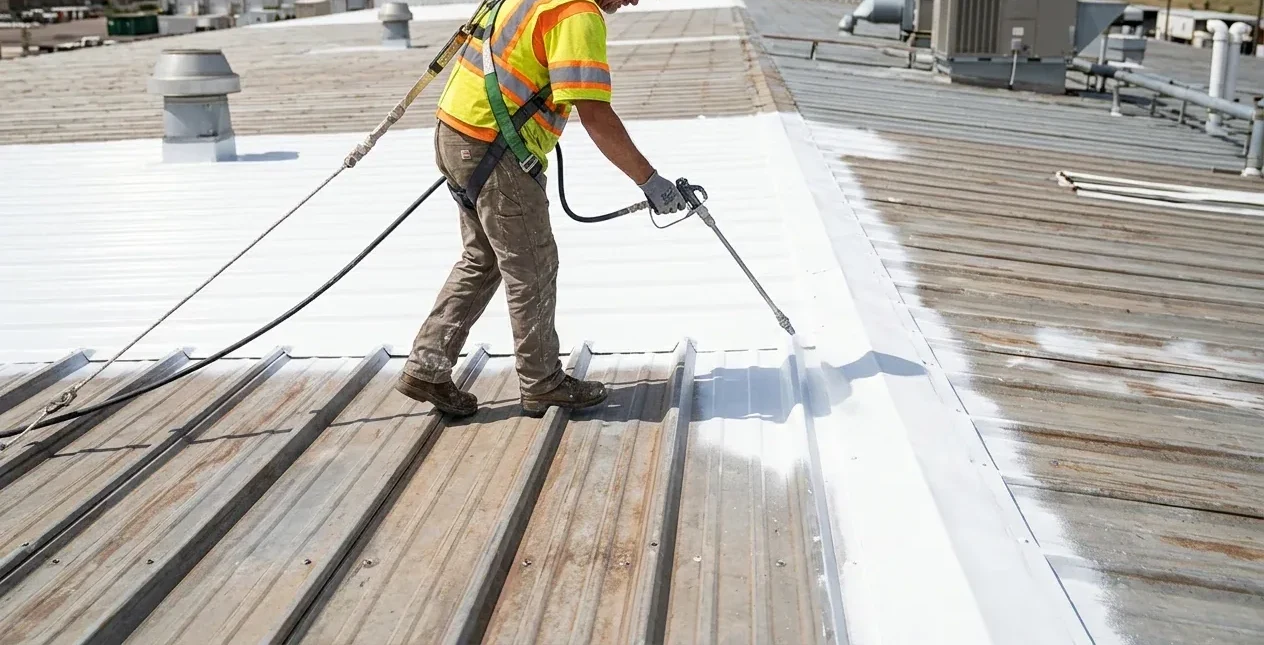

Spray foam has one scheduling rule that overrides the others: the wind. The two liquid components are mixed at the gun and expand into foam within seconds, and a gust can carry a mist of overspray across a parking lot. Before the rig is parked, the property manager gets a notice, cars are moved out of the downwind zone and a day is picked with a calm forecast. The result is a jointless, insulating layer on the roof, topped with a protective coating. For flat roofs on commercial buildings in Lee's Summit, MO, the system adds insulation value and a monolithic surface in a single pass.
An SPF roof has two layers that do two different jobs. The foam, a rigid closed-cell polyurethane, is sprayed in passes to a set thickness. It supplies insulation and fills small irregularities in the substrate, so there are no seams and few places for water to travel. The coating that follows, usually silicone or acrylic, shields the foam from ultraviolet light, which will break it down if left bare.
The foam is sprayed over a clean, dry substrate, which might be an old metal roof, a smooth-surfaced built-up membrane or a concrete deck. Coating thickness and the granule or texture on top are selected with traffic and hail in mind. Because the surface is continuous, details such as pipe penetrations and curb bases are sprayed in as part of the same layer instead of being flashed afterward. A silicone coating suits the top layer where water may pond.
Foam bonds only to a dry, clean surface. Dew on the deck, a damp insulation board or a film of oil will ruin the adhesion, and the installer checks moisture content, surface temperature and humidity before each pass. Spring in Lee's Summit can bring cool mornings and sudden storms, and the area averages 38.34 inches of precipitation a year, so a hold on application is common and the schedule carries that margin.
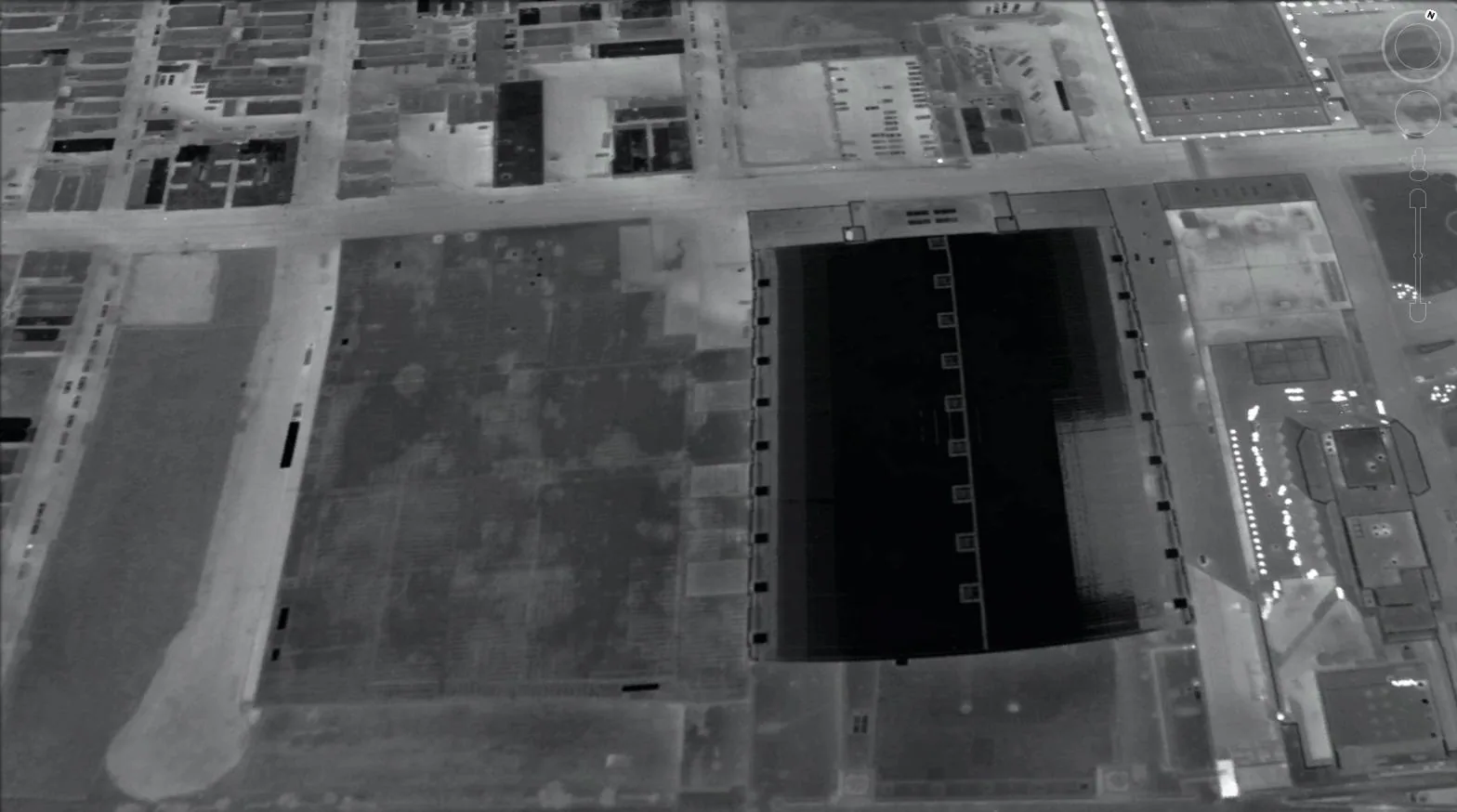
Existing wet insulation cannot stay underneath. An infrared moisture survey and core samples decide whether the old roof is a suitable base. If it is not, the wet sections are cut out and replaced first. The decision to spray over a roof or to strip it follows the findings, and the infrared moisture survey goes in the file before the first estimate of the scope is written.
Overspray is the hazard that sets spray foam apart. Foam mist that lands on a car, a window or a neighboring building cannot always be cleaned off. We tent or mask vulnerable surfaces, set wind limits on the day, and station a spotter on the ground. A building along I-470 or US 50 with an open parking field on one side and a tenant door on the other needs a different spray direction than a building with a screened yard.
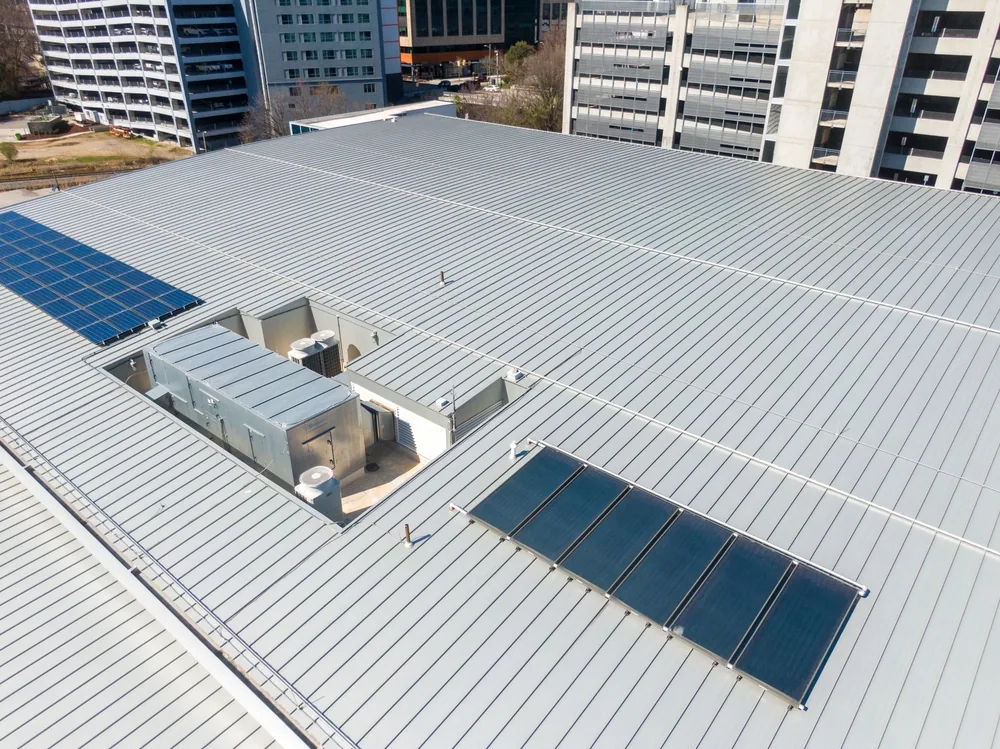
Air intakes matter just as much. Fresh-air intakes, exhaust fans and rooftop units are shut down or sealed while spraying, and re-entry timing for the space below follows the manufacturer's cure guidance. The tenant notice names the hours of the work, the zone below the rig and the day the building can return to normal ventilation. For a clinic or office suite near University Health Lakewood Medical Center, that notice is written in plain terms so front-desk staff can answer questions.
Foam is firm, and a good coating can take a good deal of hail, but dense hail can still bruise the surface. The warning issued for Lee's Summit on April 27, 2024 cited penny-size hail, 60 mph gusts and expected roof damage. After a storm like that, we look for bruised or punctured spots where the coating has cracked and the foam is exposed. Exposed foam is repaired quickly, because sun and water attack it where the coating is missing.
Maintenance is simple and regular. Recoat intervals depend on the coating type and on the wear, and a roof that is cleaned and inspected on a schedule stays in a repairable condition. A hail damage repair on foam is usually a patch of foam and a localized recoat instead of a field replacement.
Foam suits roofs with many penetrations, odd shapes, mixed substrates or low spots that collect water. It can follow curved or irregular surfaces without cutting seams, and it adds insulation value at the same time, which matters in a climate with a 39F January mean high and an 88.3F July mean high. It adds less where heavy foot traffic is constant, unless the coating is built for it.
It is less suited to roofs with large wet areas, to roofs that cannot be shielded from overspray, or to sites where the wind cannot be managed. A commercial building near MO 291 with a crowded roof of pipes, curbs and supports is a fair candidate, because every penetration is sealed by the same layer. Where an roof coating restoration is enough, the owner can skip the foam and save budget, so we compare both in writing.
Foam is combustible before it is coated, and the building code and the owner's insurer both care about the thermal barrier and the roof covering. The city applies the 2024 I-Codes to submittals from October 1, 2026 onward and the 2018 edition before that. We confirm which applies before the foam thickness is fixed. Hot work near the foam is restricted on the roof until the coating is cured, so other trades on the schedule, such as the HVAC contractor servicing rooftop units, are told which days the roof is closed to them and which days they can return. That coordination is written into the sequence plan rather than left to the day.
Turnover includes foam thickness readings, coating records, photographs of each detail, a punch list and a maintenance plan. The next walk is set for the end of the first year, when seams in the coating and the corners at curbs are checked. Owners in Lee's Summit who also have a modified bitumen or built-up roof elsewhere can compare maintenance routines side by side in the same condition report.
Uncured foam and fresh coating are both vulnerable to rain, which is why every application day is set against a forecast. If a storm cell approaches, the crew closes the section with a temporary seal and sprays again on the next dry window.
There can be odor, which is why air intakes are sealed and the space below is cleared for the cure period set by the manufacturer. The notice gives the exact hours.
Thickness follows the insulation target and the code requirements on the submittal date. The edition in force depends on the submittal date, so the permit office confirms thickness and thermal barrier requirements.
It can when the old roof is dry, well attached and compatible. Core samples and an infrared scan decide, and wet sections are removed first.
Keep the coating intact. Foot traffic paths get walk pads, ponding spots get inspected and cracks in the coating are patched before the foam beneath is exposed.
Send the building address list, tenant hours and any open leak reports. We will walk the roof with the property manager and return a written sequence plan for the spray foam scope before any price is set.
Request a Roof Assessment