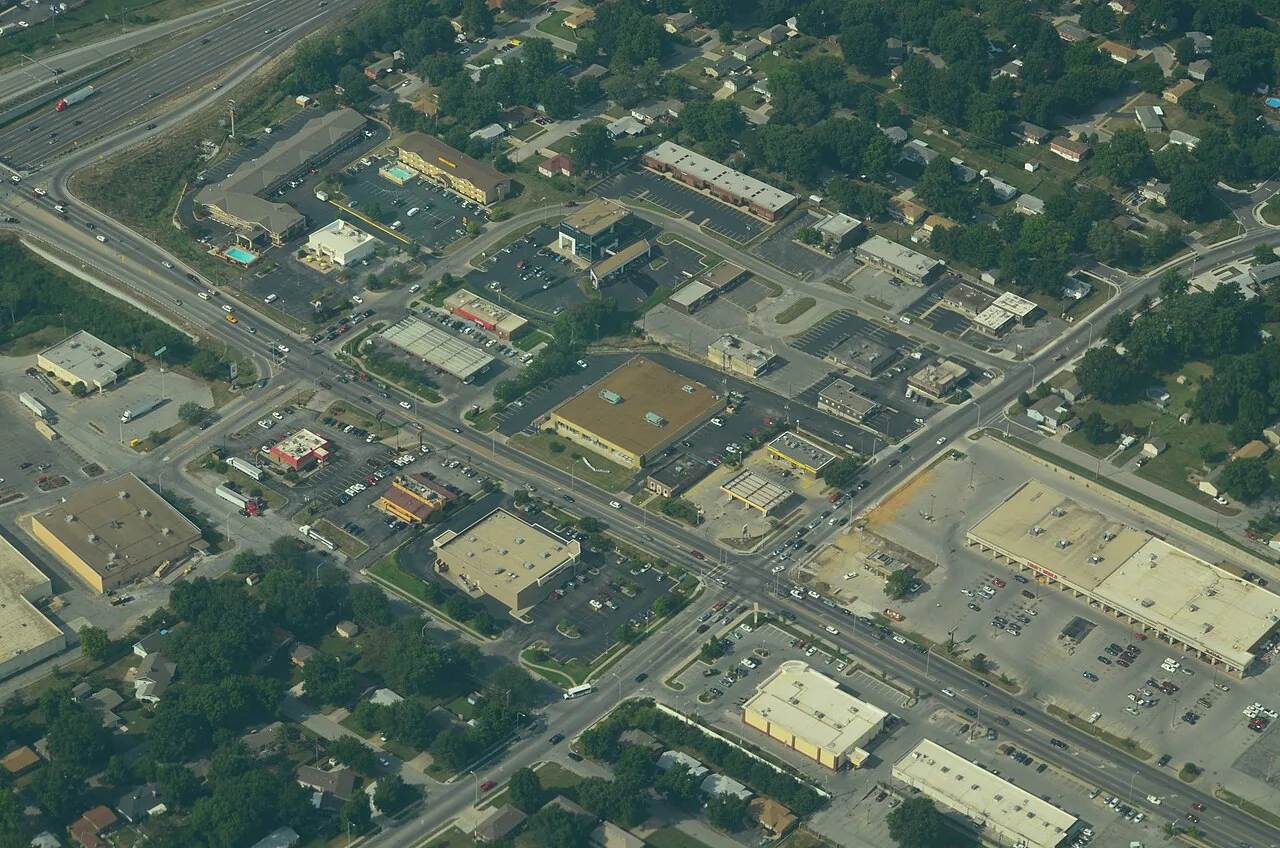

Shopping centers in Hickman Mills, a southern Kansas City, MO neighborhood served by I-435, I-470 and US 71, have a particular roofing question: what to do with a roof over space that may be empty. The former Bannister Mall was torn down in 2009, and other centers nearby have declined, with many buildings vacant. A vacant building still has drains that clog, seams that open and a roof that ages. The owner needs to know what that roof will cost to hold, to re-let or to sell.
We start with a day-one site walk and record the roof condition on a drawing. The written sequence plan sets out the choices before any scope is priced, so the owner decides with the evidence in hand.
A center with a few open tenants and several empty bays has an unusual access picture. The occupied units need their entrances, dock hours and parking protected, while the empty ones can be worked sooner and with less noise restriction. The plan sorts the roof into zones by occupancy, and the open tenants get written notice of every phase that touches the roof above them.
For a shopping center roof, the shared drains and walls matter as much as the membrane. Water that fails to drain from an empty bay can end up inside an open one.
Parking-lot work and roof work often overlap on an aging center. Lots may be closed in sections for paving, and the roof crew has to share the truck route and the staging area with the paving crew. We coordinate the two on a single calendar so the hoist is never set where a lane is closed, and fire access stays open throughout.
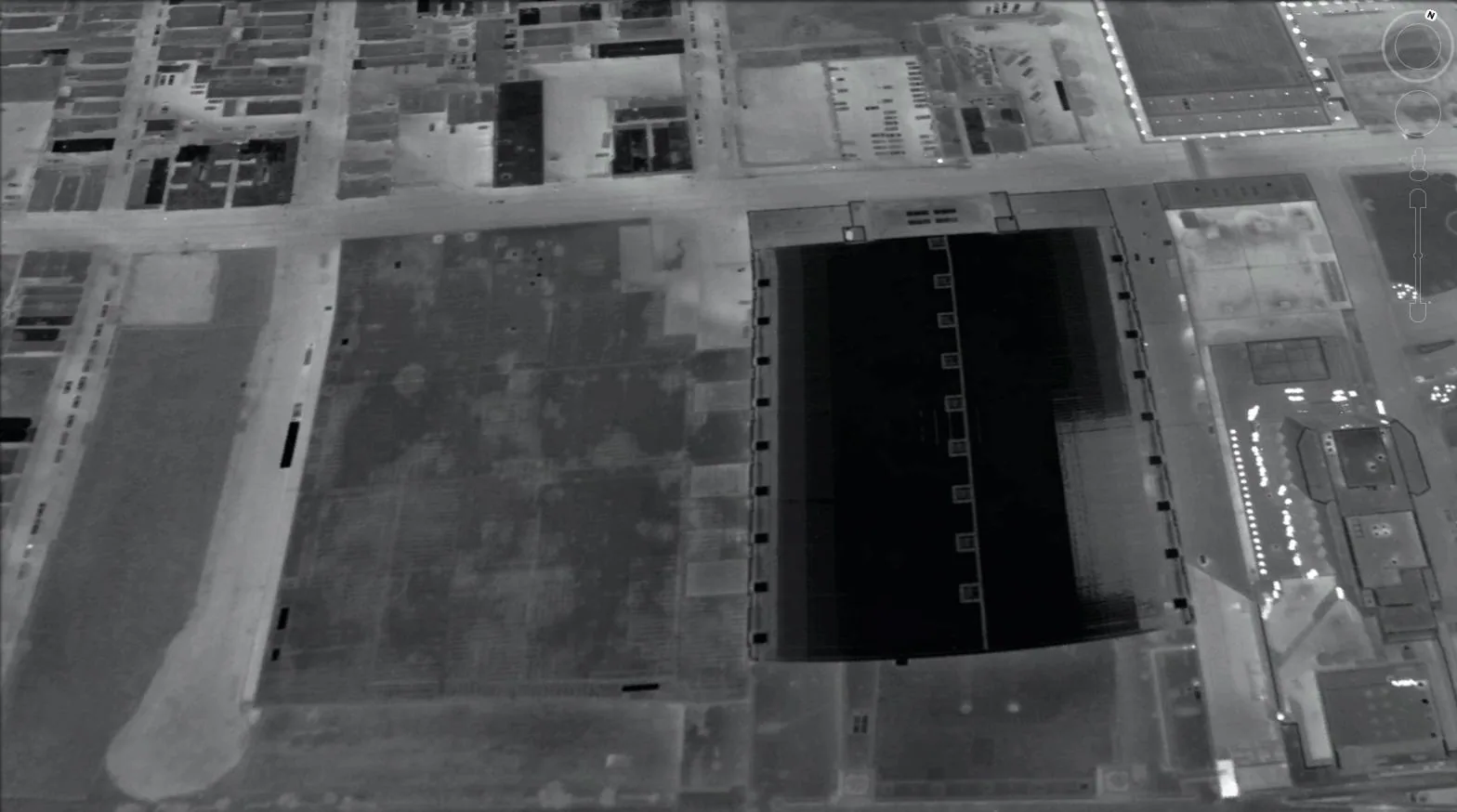
Where few people are inside, a small leak can run for weeks before anyone sees it. We check ceilings in empty bays, look at drains and scuppers for debris and probe seams for openings. An infrared moisture survey maps wet insulation from above, so the owner learns how far water has traveled without opening ceilings below.
A vacant building is not the same as a neglected roof, and a quiet building may have a sound one. The walk finds out which it is, and the record states the condition with photographs.
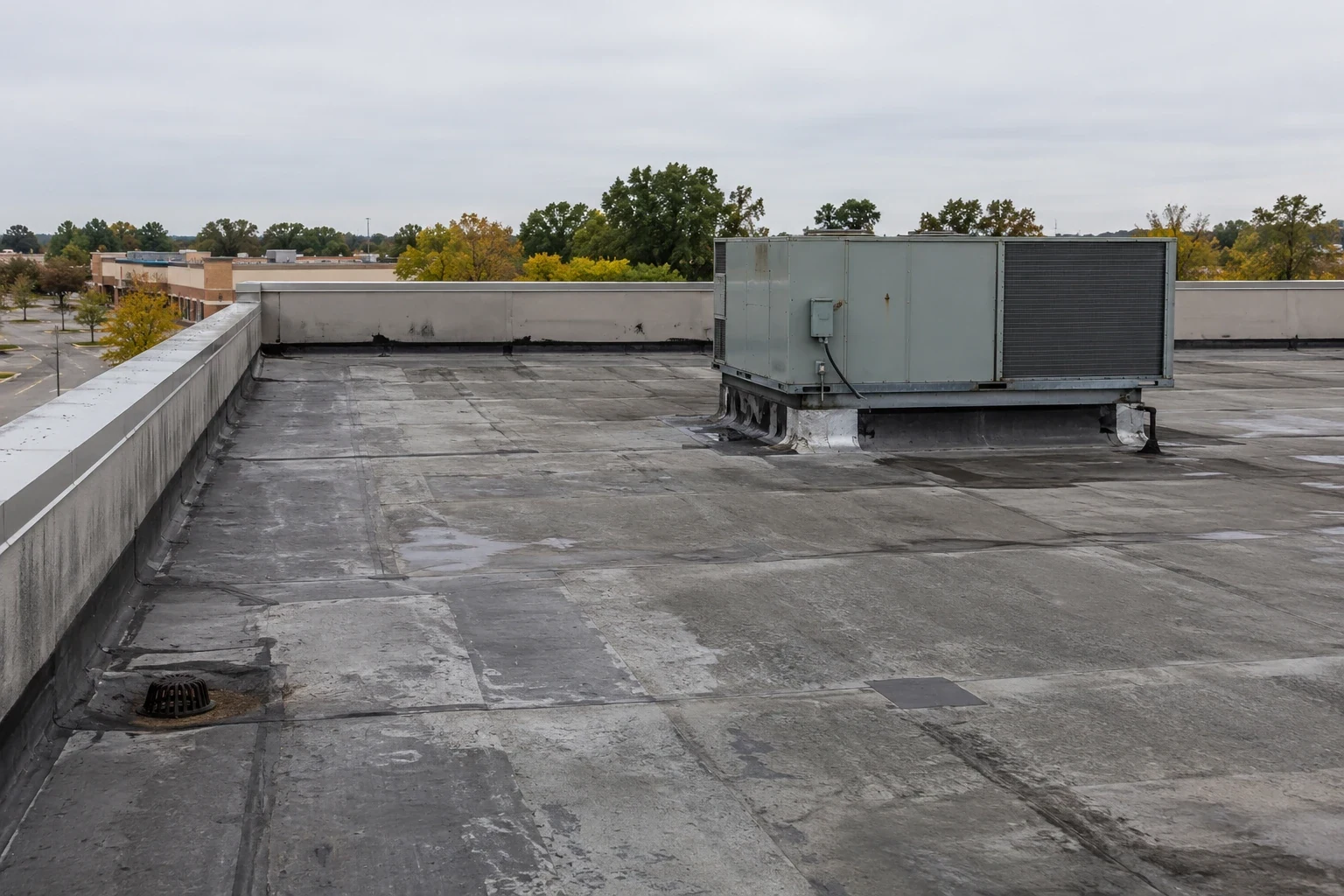
Drains deserve extra time. On a low-slope roof, one blocked drain can load a section of membrane with standing water, and in cold weather the ice that forms can lift a flashing. We clear what can be cleared, measure ponding and note whether the cause is debris, a settled deck or a drain that sits too high. The cause decides whether the fix is cleaning or construction.
Penetrations get a close look as well. Abandoned vents, capped pipes and removed signs leave holes and stubs that fail quietly, and the sealant around them dries and cracks. Removing what is no longer used and sealing the opening is often a small, low-cost item with a large effect.
Four owner paths lead to four roof plans. A hold calls for temporary repairs and drain care that keep the roof dry cheaply. A re-let needs a roof that will satisfy a tenant's inspection and lender. A sale needs a condition record a buyer's engineer can read. Redevelopment may mean the roof comes off entirely, and then the work is only protection until demolition.
For each path we price the scope in order and mark the repair boundary, so money spent on a patch is not wasted if the building changes. A due diligence roof survey supports the buy or sell path.
Temporary protection has a place in this sequence. If a bay is empty and a replacement is not yet funded, a section can be dried in with a patch, a sealed curb or a temporary membrane that holds until the budget is set. Each temporary measure is recorded with a photograph and a note on how long it is meant to last, so it is not mistaken for a permanent repair.
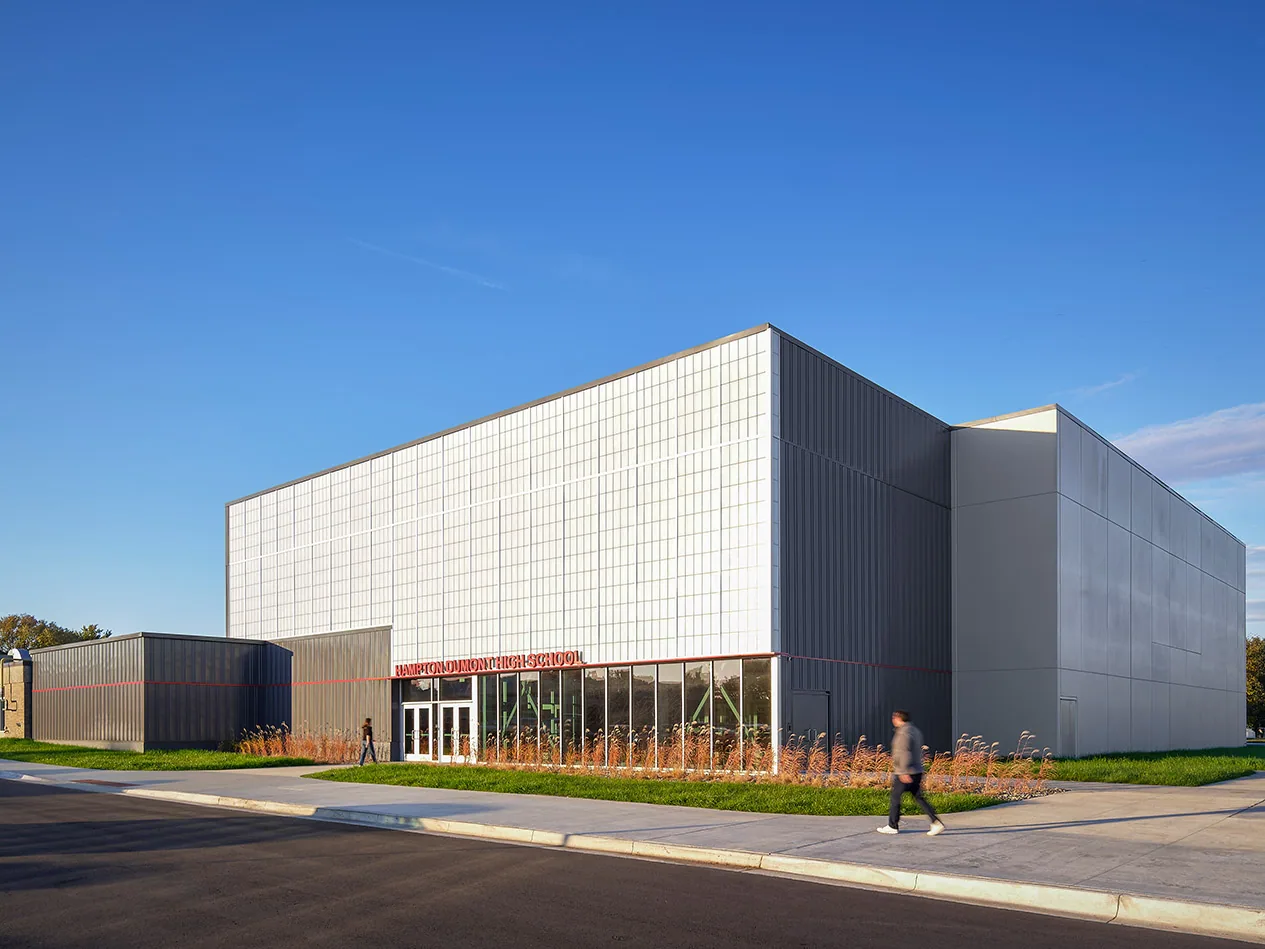
Hickman Mills is covered by the Hickman Mills C-1 School District and includes Longview Community College and Longview Lake. School and college buildings follow a calendar, and roof work belongs in the summer break, with hoist and staging set away from bus lanes and pickup areas. A school roof plan includes the dry-in point for each section and a weather hold if storms are forecast.
Roof hatches and ladders inside classroom buildings are logged, and noise is held back from testing periods where the district asks. The owner receives a written schedule well ahead.
For a college building, the semester calendar shapes the work. Service vehicles use the routes marked on the plan, and deliveries are timed to avoid class changes and exam weeks.
Forecasters flagged a thunderstorm over Lee's Summit on April 27, 2024, with 60 mph gusts and penny-size hail, and told people to expect roof damage. Spring storms like that are a regional pattern. After hail, we count marks on test squares and photograph soft metal, vents and coverings, because hail damage shows first on those. Hail damage findings go onto the drawing with dates.
Open sections are closed every evening during the spring storm window, whether or not rain is forecast, because storm lines can build fast in the afternoon. The hold rule names who watches the forecast and who gives the order to close.
After any hail event, the first call is to the property manager with a short written status: what the crew saw, what was closed and what needs a second look.
The package at turnover shows which sections were opened and closed and which items the next walk should recheck. For an owner who may sell or re-let, it is the document that answers a buyer's first question about the roof. Owners with buildings in Kansas City, MO or Martin City can use the same format across them.
Where a roof was repaired in stages, the package also lists which stage has been completed and which remains, with the next planned date. That list keeps a staged program from stalling when a manager or an owner changes.
Often, if the owner plans to hold, re-let or sell. A dry roof protects the structure, keeps insurance simple and gives a buyer or tenant a clean record. If redevelopment is planned, temporary protection may be enough.
An infrared survey from the roof maps cool, damp areas, and core samples confirm them. The result shows where the insulation is wet, and the interior stays closed.
The plan separates zones by occupancy. Occupied bays get the strictest notice, access and noise limits, and empty bays can be worked first. The shared drains and walls are checked for both.
In the summer break, with a weather hold rule for storms. Short repairs can be done after dismissal, with the work area fenced and entrances rerouted.
Dated photographs, a roof drawing with findings, moisture readings and a ranked repair list. A survey that provides these lets the buyer price repairs without a second visit.
Send the building address list, tenant hours and any open leak reports. We will walk the roof with the property manager and offer a written sequence plan before any scope is priced.
Request a Roof Assessment