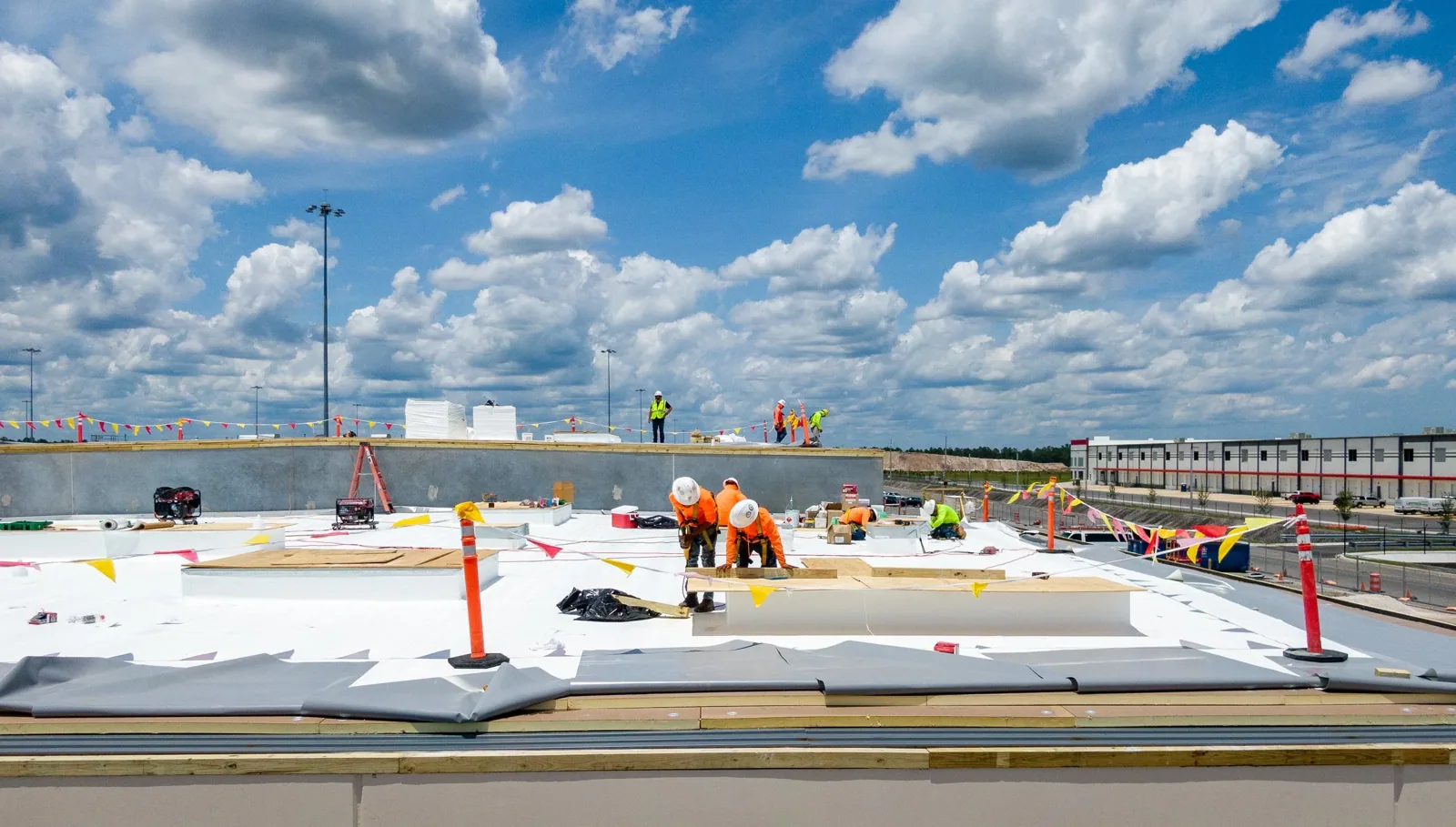

Lake Winnebago, MO covers about 2.73 square miles in Cass County and had 1,433 residents in the 2020 census, so in a city this size the list of people touched by a roof job is short. That changes the plan. A building here may have one manager, one entrance and one set of hours rather than a dozen tenants sharing a lane with the hoist and the container. The sequence still starts with the notice and the access route, but the weight of the plan moves to the roof condition and the decision it forces: repair, restore or replace.
On a small site we name one point of contact on each side. The manager tells us the hours, the entrance that stays open and where the crew may park. We tell the manager who the foreman is and how to reach him or her during the day. A single written notice covers everyone affected, including any neighbor whose drive or lot the crew will touch.
The staging footprint is small and marked. The container, if one fits, goes where the hauler can reach it. If it does not fit, debris moves by chute into a bin that is emptied each afternoon. Trucks arrive in the order the plan lists, and the foreman confirms each delivery before it leaves the yard.
Parking and neighbors get a line of their own. We ask where crew vehicles can park without using customer spaces and whether the drive is shared with a neighbor. If the drive is shared, the manager is given a notice for the neighbor, and deliveries are timed to avoid the neighbor's busy hours. Small courtesies like these are what keep a short job from becoming a long conversation.
Four findings carry the decision. Is the insulation dry? Are the seams and flashings still attached and flexible? Does water leave the roof within a day or two of rain? Is the membrane thick enough to take another repair? A core cut, a moisture reading and a close walk answer all four.
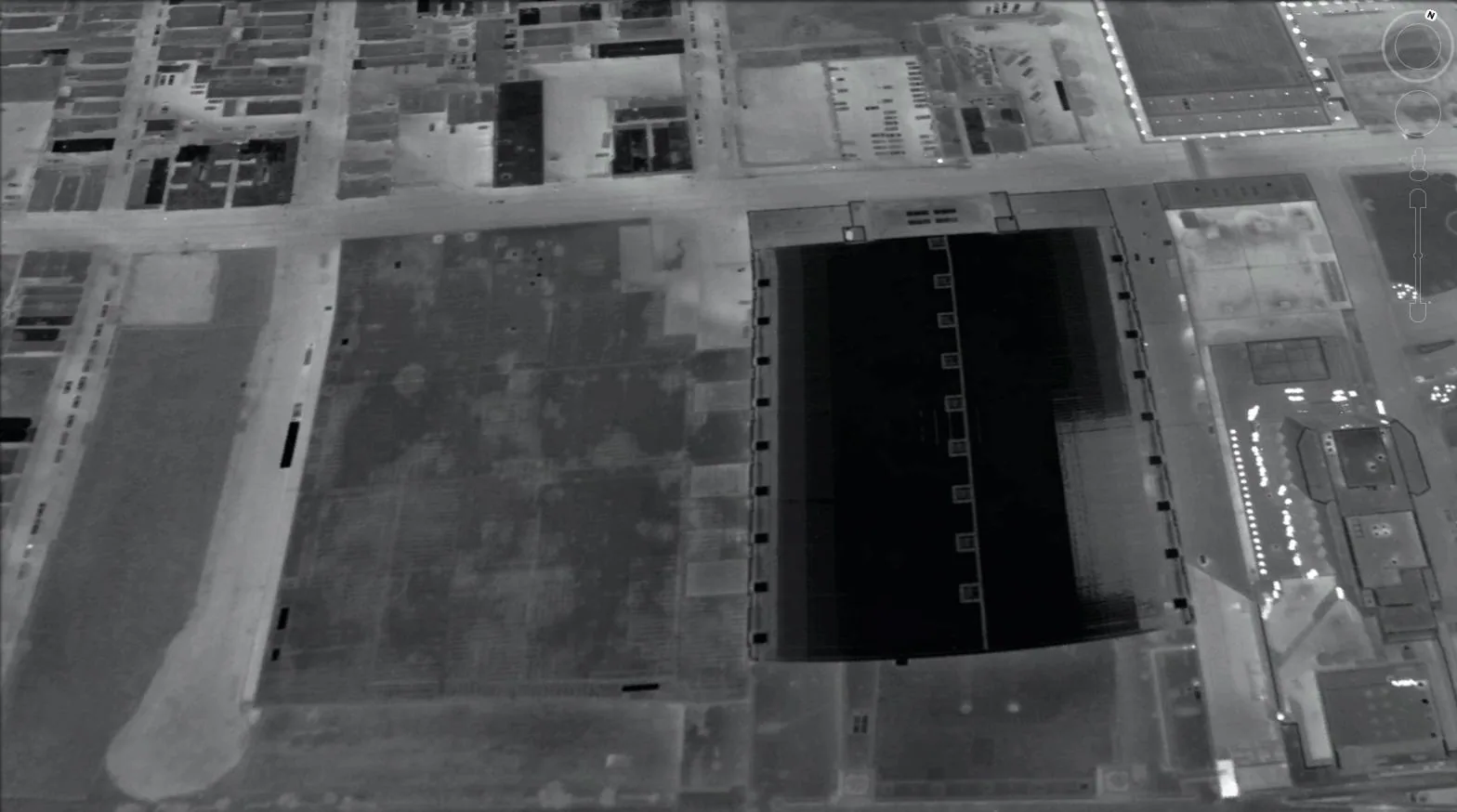
If insulation is dry and the failures are local, a repair holds. If seams are splitting across the field or insulation is wet over a wide area, repair only moves the leak. An infrared moisture survey maps wet board without opening the roof, which is especially useful when the manager must weigh a replacement against a tight budget. The report states the facts and leaves the decision with the owner.
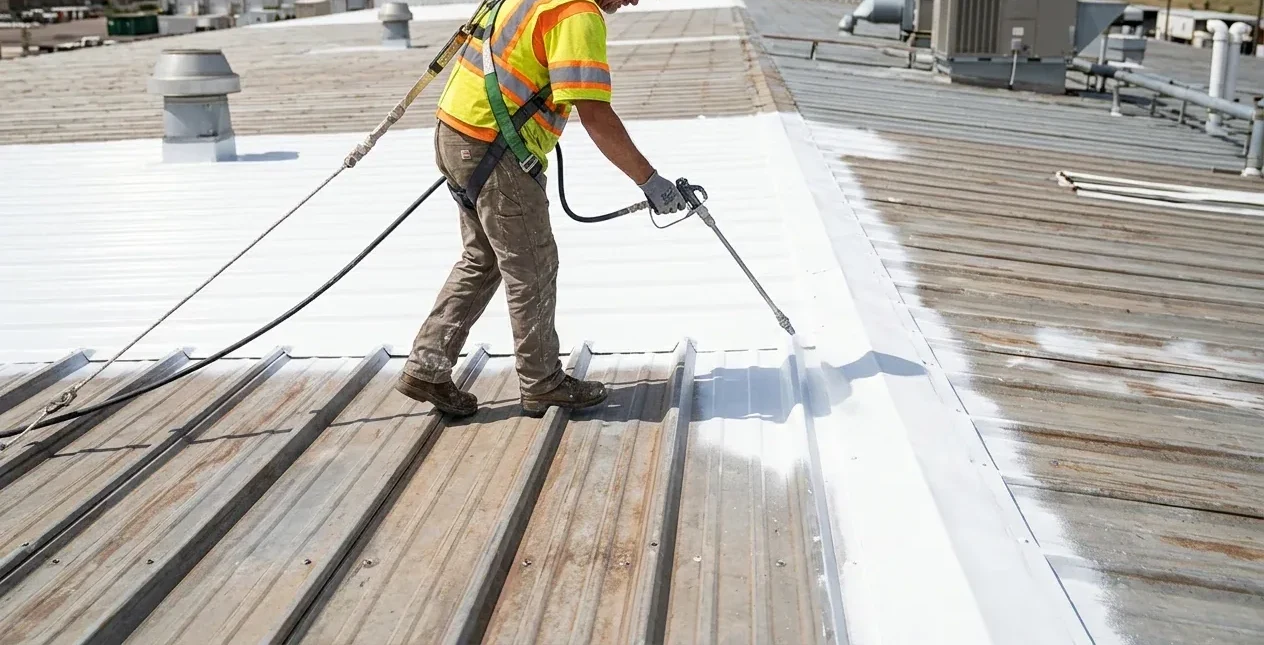
If the answer points to restoration, the next questions are narrower. Can the surface take a coating after cleaning and a test patch? Are the seams sound enough to be sealed instead of replaced? A roof coating and restoration scope works only on a dry, attached roof, and the test patch proves it before the full price is set. If the test fails, the scope returns to replacement with no money lost on a coat that would peel.
A small commercial roof can often be completed in a few working days. The first day goes to the walk, the notice and the staging layout. Day two opens the roof in one or two sections and seals each before evening. If the weather cooperates, day three completes the flashing, the edge metal and the cleanup. A spare day sits in the plan for a storm hold.
A full commercial roof replacement and a roof recover follow the same sequence, with the cores deciding which one the roof can take. Repairs move faster, and the same notice and handoff note apply. The manager reads one format whatever the size of the job.
The foreman's day-end note is the manager's main tool. It lists what was sealed, what was found and what comes next, with a photograph of anything unexpected. If wet insulation turns up under a patch, the note says so and gives a price to remove it. The manager approves the added work in writing before more material goes down.
Lee's Summit, not far off, sees about 38 inches of precipitation a year, and an April 27, 2024 National Weather Service warning there expected roof damage from 60 mph gusts and penny-size hail.
On a small roof a hold costs little. The foreman stops, seals the open edge, ties down material and leaves. The manager gets a short note. After the storm, coping, edge metal and curbs are checked first, and a wind damage or hail finding is photographed before the next rain.
Heat and cold also shape the schedule. July highs in Lee's Summit average near 88F and January highs near 39F, and the extremes on record are minus 25F and 108F. Adhesives and sealants have working ranges, so cold mornings and hot afternoons move the hours at which each step is done.
Most of Lake Winnebago lies in the Raymore-Peculiar School District, with some parts in the Lee's Summit R-VII School District. For a roof near a school bus stop or a pickup route, the foreman learns the bus times and keeps trucks off those streets. Noisy steps are timed for hours the manager names.
Dry-in is set before cutting begins. Temporary seals are tested and noted. A magnet sweep clears the lot, and drains are covered during work and checked when the crew finishes. Rooftop units, if any, are scheduled with the manager so heat or cooling stays on during business hours.
The edge of a small roof is close to the ground and to people. Coping caps, drip edge and gutters get an early look, since a loose piece can fall as well as leak. Where metal must be replaced, the new piece is fastened to the spacing wind exposure calls for, and the seams are sealed.
On a small job the turnover package is short but complete. It lists what was opened, what was closed and what was found, with photographs of each layer and a punch list. It names the first items to check next, such as drains after the first heavy rain. The roof condition report keeps the record in one place.
An owner with a second building in Raymore or Peculiar can use the same format for it, and the two files can be compared side by side when the budget is set.
Dates matter on the handoff. The package gives the completion date, the product data for anything installed and the first inspection date. A manager who needs to answer an insurer or a buyer later has those facts in one place.
A short one. It lists the notice, the route, the staging spot, the dry-in point and the hold rule. A page is enough for most small roofs.
Look at insulation moisture, seam condition, drainage and membrane thickness. A core cut and a moisture reading answer all four.
The plan names where the small bin sits, and debris reaches it by chute and is hauled off each afternoon.
Yes. We learn the bus schedule and keep trucks off those streets, and noisy steps are timed for the hours you name.
Photos of every layer, a record of what went in, a punch list and the first checks for the next visit.
Send the building address list, occupant hours and any open leak reports. We will walk the roof with the property manager and offer a written sequence plan before any scope is priced.
Request a Roof Assessment