
Before a roofing crew reaches a building in Sugar Creek, MO, the manager needs a written answer to one question: which road do the trucks use. Missouri Route 291 enters the city across the Missouri River on the Liberty Bend Bridge, in the northeast corner, and a delivery plan that ignores that crossing will cost a morning. After the route comes the tenant notice, the dock hours and the closed entrance. Only then do we ask what the roof is doing, because its condition decides which section opens first. The order of those questions is the plan.
The tenant notice is a single page that goes out several days ahead. It names the first day on site, the door that will be closed, the lane where a roll-off container will sit and the hours when fastening or tear-off is loud. A manager can post it at the entry and send it by email the same afternoon.
Route planning is the second page. Sugar Creek lies in both Jackson and Clay counties, so an address list for a multi-property owner may cross a county line. We note which building takes a hoist, which takes a boom lift and which can be reached by a roof hatch alone. Each building gets a staging footprint marked away from fire lanes, customer stalls and any receiving door that cannot be blocked at midday.
Fall protection and ladder access get their own line. A roof reached through an interior hatch means crew traffic past a suite, so we agree the time and the path with the tenant. A roof reached by an exterior ladder needs a locked base at day's end. Either way, the manager knows who is on the roof and when, and the contact number for the foreman sits on the notice.
Our first walk starts at the low points. Drains, scuppers and any area where water has left a ring show where a flat roof sheds poorly. After those we press on seams, then look at the flashing around each rooftop unit curb, then at coping and edge metal. The membrane field is last because it is usually the healthiest part.
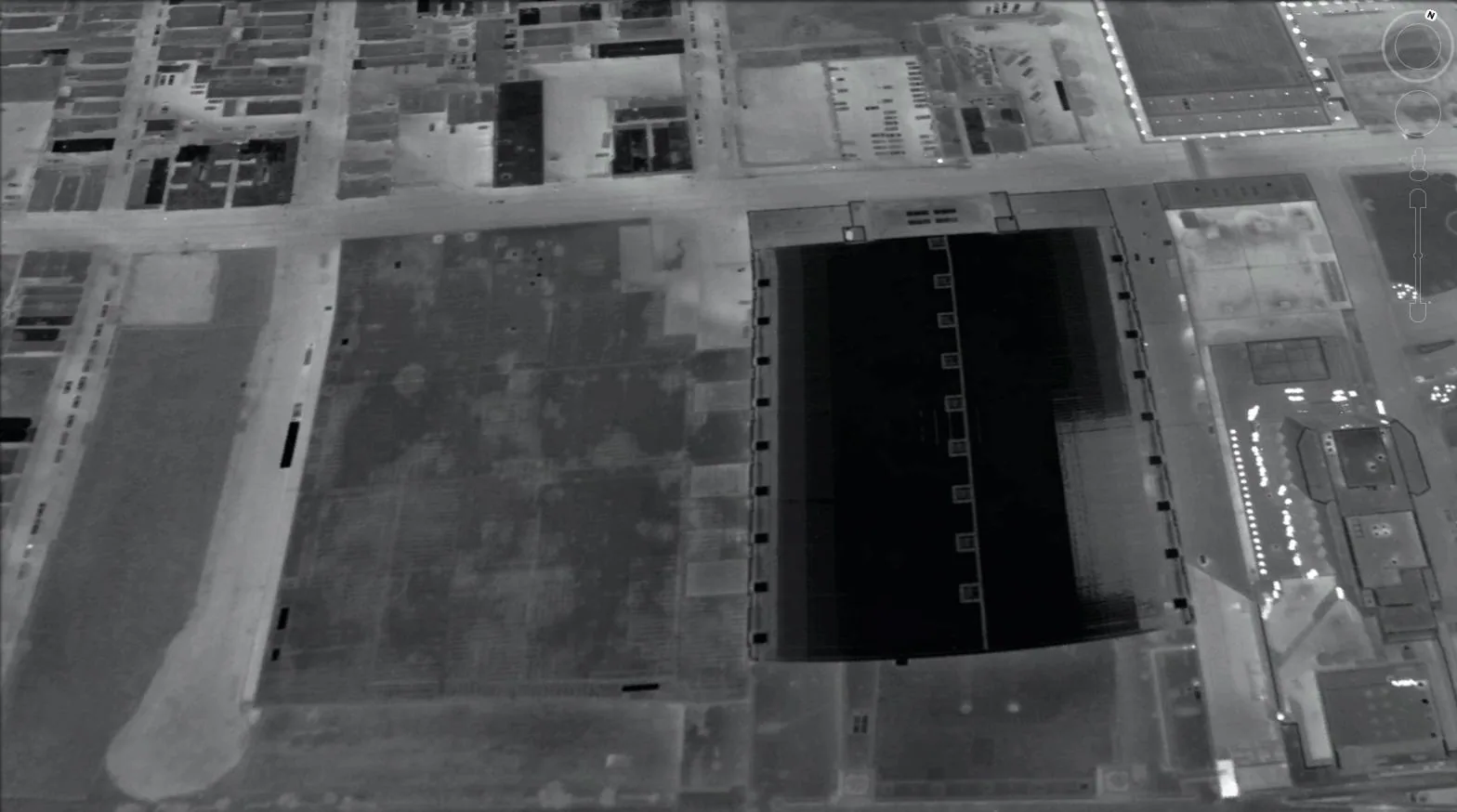
Photographs are tied to a location on the drawing. A stain below that has no matching defect above gets traced along the deck, and an infrared moisture survey can show whether insulation is wet beyond the visible mark. The result is a repair boundary drawn from evidence. One failed flashing stays a flashing job, while wet board across several bays points toward a commercial roof replacement.
Age and history matter less than what we find. A roof with several patched areas tells us the same spot has failed before, and we open the oldest patch to see why. Sometimes a layer of coating or mastic is hiding a split seam that never closed. Sometimes a drain has been lowered by a settled deck. The cause goes in the report, and the repair addresses it directly.
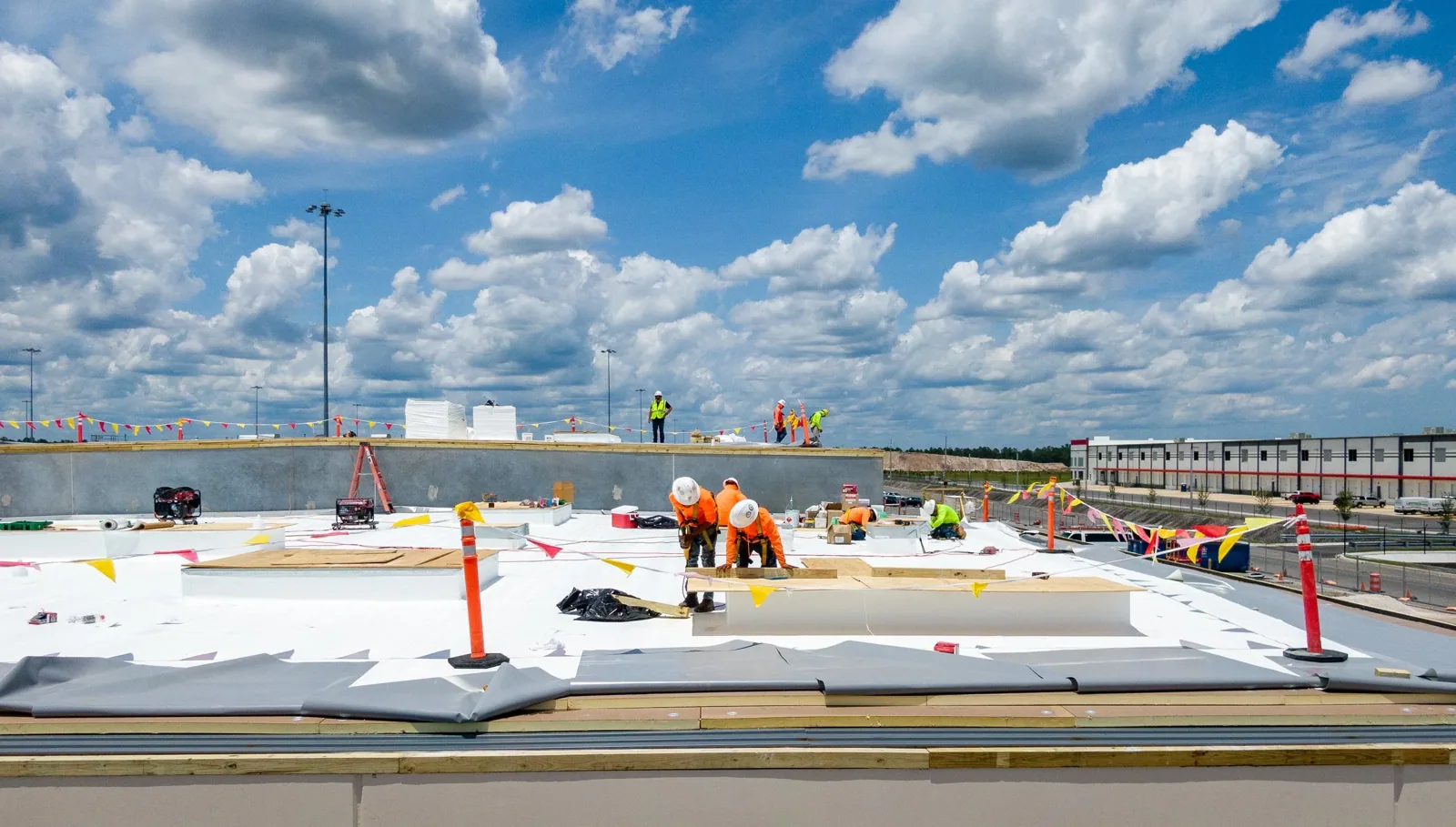
Day one belongs to the walk, the notice and staging setup. Day two opens the first section and closes it before evening. Each following day repeats that pattern, and a seam between sections is sealed before the crew leaves so that overnight rain cannot enter under old membrane.
The written sequence lists who is told what and when. The tenant in the end suite hears about noise first, since the first section is usually at that end. The manager gets a short update at the close of each day. When the last section is closed, the walk-off sequence tells the crew which gate to use and which areas to sweep. A recover over sound insulation shortens that sequence because no tear-off debris leaves the building.
Elsewhere in the metro, Lee's Summit takes in about 38 inches of precipitation yearly, and the National Weather Service's April 27, 2024 warning expected damage to roofs from penny-size hail and gusts of 60 mph. That storm calendar sets the spring schedule for Sugar Creek roofs, and each building is read on site.
From March into early summer the plan carries a weather hold; with a storm line forecast, the open section is closed, loose material is tied down and the crew leaves. After hail, the first job is a perimeter and curb walk. A hail damage check checks for bruised membrane and dented metal while a mark is still small enough to repair cheaply.
Ice and heat matter as well. Lee's Summit's readings run from January highs near 39F to July highs near 88F, with records of minus 25F and 108F, so a low-slope roof moves through a wide range each year. Seams and sealants take that movement, which is why a repair done in cold weather may be revisited after the first warm spell.
Dry-in is the point at which a section is sealed against weather, and we set it before cutting begins. If the forecast shifts, the open area is smaller than it would have been, and the dry-in comes sooner. Debris moves by chute or hoist into a container that stays clear of entries, with a barricaded strip below the work zone.
Rooftop units need their own line in the plan. A tie-in at a curb may require a unit to be off for a short period, so the manager, the mechanical contractor and our foreman agree the hour before the shutdown. A suite should never lose conditioned air for longer than the notice stated.
Materials arrive in the order they will be used. Insulation comes first, then membrane, then flashing stock and sealants. Nothing sits on the roof overnight unless it is tied down or weighted, and stored rolls are kept dry. Wind can lift a loose board off a roof faster than a crew can react, so the evening check is part of the plan.
The turnover package records what was opened, what was closed and what turned up underneath, with a photo of each phase. Anything left for a return visit goes on a punch list, such as sealant that needs a second look after a heat cycle. The package also states the first things the next walk should check, usually drains after a heavy rain.
For an owner with property across the river in Liberty or in Independence, the same package layout can be used for each address. A roof condition report then lets the manager compare buildings side by side without rewriting the questions.
A roof drawing if one exists, tenant hours, the address list and any open leak reports. With those in hand the walk produces a draft sequence the same day.
The manager and our foreman agree the truck path, the drop point and the hours in writing. Any change to the route is noted before the date is set.
The open section is sealed, material is tied down and the work zone is swept. The manager receives a short note on what was closed and what opens next.
No. A walk finds whether the membrane is bruised through or only marked. Many roofs need metal and flashing repair, not full replacement.
Yes. Each roof gets its own page in the same format, so the manager reads every address with the same headings.
Send the building address list, tenant hours and any open leak reports. We will walk the roof with the property manager and offer a written sequence plan before any scope is priced.
Request a Roof Assessment