
A program across many buildings succeeds or fails on its routines: how tenants are notified, how crews get onto each roof, how a repair is approved and how the results come back. A property manager with a dozen buildings does not want a dozen different procedures. In Lee's Summit, MO and the surrounding Kansas City area, a program may include a building on US 50, a warehouse near I-470, a strip center in Grandview and a medical office in Blue Springs, each with its own hours and its own roof. We begin by writing the routine once: the notice, the access route, the staging footprint and the dry-in rule, then applying it to every site.
The standard covers what is done on every roof, regardless of system or age. It specifies the photograph sequence, the condition scale, the moisture checks, the drainage tests, the report format and the rules for repairs, including the rule that no section is opened unless it can be closed the same day. Managers can hand the standard to tenants, lenders and other vendors, and everyone knows what a visit includes.
Exceptions are written down. A building with a manufacturer warranty follows that warranty's method, a building with a sensitive tenant adds interior protection and a historic block adds sidewalk and alley rules. The exceptions sit on page one of that building's record, so a crew reads them before the first visit.
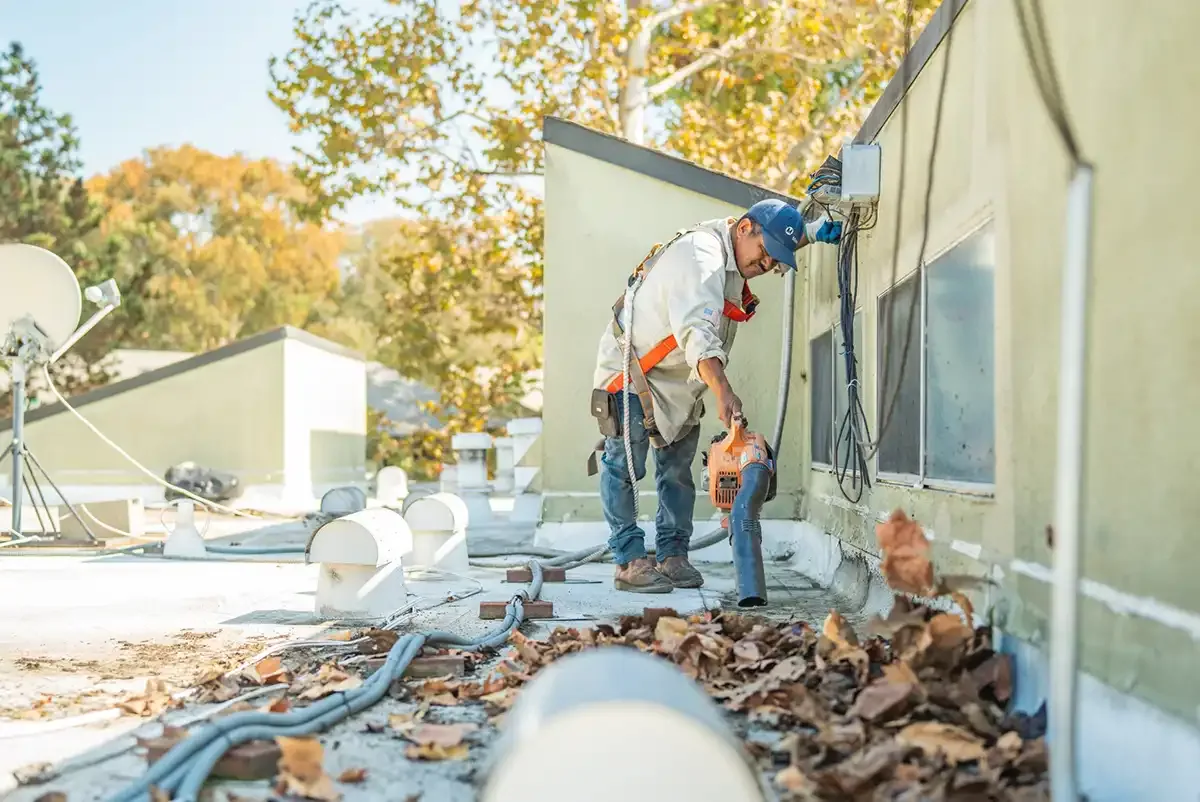
Vendor rules belong in the standard. Mechanical, telecom and signage contractors are told how to reach the roof, which paths to walk and whom to call after any damage, and the hatch log at each building records every visit. When a puncture or a bent edge turns up later, the log shows who was there, and the repair is billed to the right party.
Visits are scheduled by route as well as by building. A spring pass before the storm window and a fall pass before the first freeze are planned as loops through the portfolio, so crews spend time on roofs and not on highways. Weather moves the loop: a day of rain shifts the whole sequence, and the manager is told by message the evening before.
Tenant notice is built into the calendar. Each building has a notice list, and notices go out at a fixed interval before each visit. Dock and entry hours are respected on every site, and the staging footprint is chosen once per building and reused. A preventive maintenance visit rides on each pass.
Heat and cold shape the calendar. Lee's Summit has a mean July high near 88 degrees and a mean January high near 39, with about 38 inches of precipitation a year, so adhesive and weld work is placed in mild dry weeks and temporary measures cover the rest. A weather hold rule applies on every site: nothing is opened that cannot be closed by evening, and the loop moves to the next dry day.
Severe weather arrives across a metro area at once. A warning on April 27, 2024 put Lee's Summit under 60 mph gusts and penny-size hail, the kind of event that reaches many roofs in one afternoon. A program anticipates that day: a call list, a triage order and a standing plan for temporary protection.
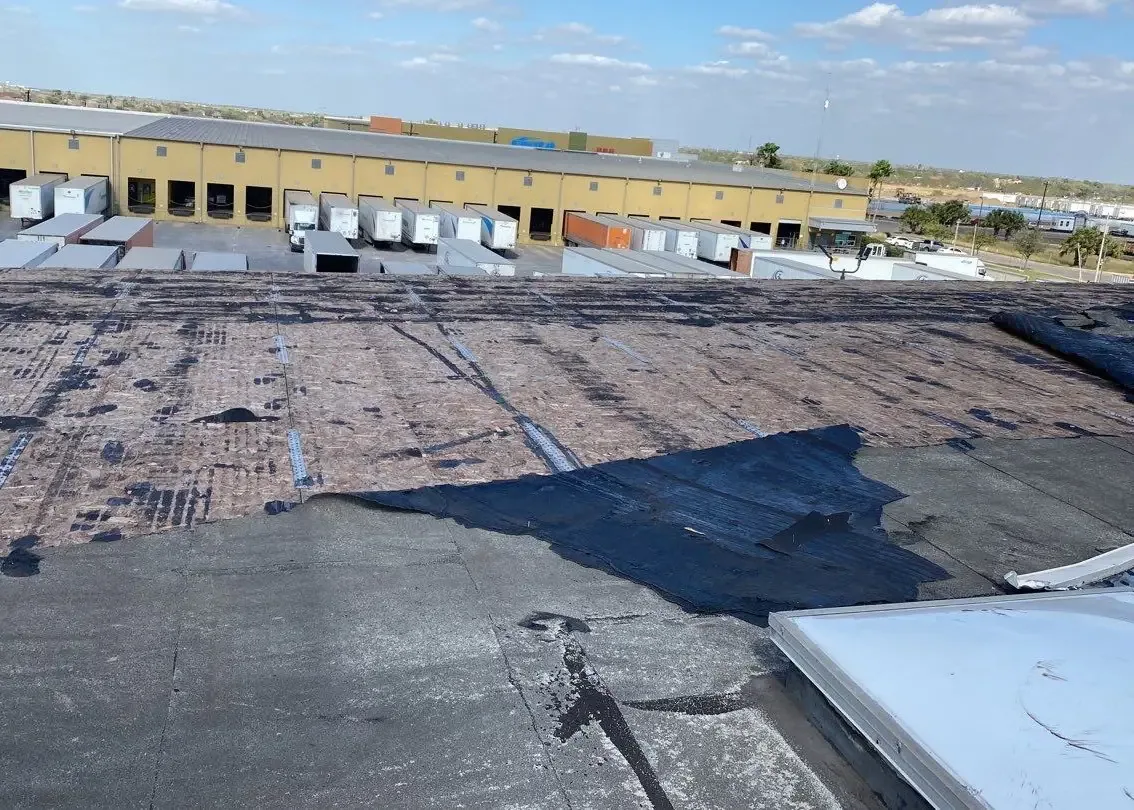
Triage ranks buildings by consequence: open roofs over working space first, exposed equipment second, cosmetic damage last. Our emergency roof repair response is staffed day and night, holidays too, and our storm damage roof repair scopes follow the triage. After the event, every roof gets the same dated walk, so damage is compared against the last record.
Records from past passes make triage faster. When a storm crosses the portfolio, the manager can open each building's last report and see its drains, its weak details and its access notes, which lets the first crew arrive with the right materials and the right hatch key.
Because every building uses the same format, the portfolio can be sorted by condition, age, system, city, tenant sensitivity or open items. The manager sees the whole list on one page and the detail behind each line. Open leaks, scheduled repairs and watched items carry statuses that persist from visit to visit.
The record feeds roof asset management and the capital plan. A roof capital plan places replacements across years so no single year carries too many, and warranty summaries from roof warranty management ride beside each building.
Reports are delivered in the format the manager prefers, whether a shared folder, a spreadsheet summary or a printed binder per building. The owner receives a short summary of the whole portfolio, and the lender receives whatever pages the loan documents require.
A portfolio here can reach past one city. Commercial, industrial and mixed-use areas line I-470, US 50 and MO 291 in Lee's Summit, while Independence is served by I-70, I-470 and US 24, and Overland Park sits across the state line in Johnson County, Kansas. A program planner groups these into routes and assigns time to each.
Owners with buildings in Lee's Summit, Independence and Overland Park receive the same report for each. A property management company that reports to several owners can send each the same format.
Travel time is a cost driver, and the program plan shows it. Buildings clustered along one corridor can be visited in a morning, while a building across the state line adds an afternoon. We group visits to keep the crew on roofs, not on the road, and we tell the manager when a distant building will be reached so tenants there get their notice on time.
The first month is the inventory: a walk of every roof with the same photograph set and the access details recorded. The second month ranks the portfolio and fixes the urgent items, with temporary protection where a permanent repair must wait. The third month sets the calendar, delivers the first capital plan and agrees the approval routine with the manager.
After that, the program runs on its rhythm: a spring pass, a fall pass, storm walks and quarterly updates of the ranked list. Each step lists what moves the price (area, access, penetration count, wet insulation, tenant hours), so budgets follow evidence, and the manager can adjust the scope when priorities change.
The approval routine is worth settling early. Some managers approve every item, others approve by dollar range, and others approve a quarterly plan. We write the rule into the program so urgent repairs are never held for a signature while water is coming in.
Two or three are enough to benefit from one standard, one calendar and one record. The value grows with the count, since routines and routing are written once.
Yes, within the metro area we serve, including across the state line. Each building follows the same format, and local permit rules are noted on its page.
Calls are triaged by consequence, with open roofs over working space first. Temporary protection goes on in that order, and every roof gets the same dated walk afterward.
Each building has a notice list and a template. Notices go out at a fixed interval before each visit, and dock and entry hours are written into the building record.
A dated report for each building, an updated ranked list for the portfolio and a punch list of items held for weather or approval.
Send the building address list across the portfolio, tenant hours and any open leak reports. We will walk the first roofs with the property manager and offer a written sequence plan for the program before any scope is priced.
Request a Roof Assessment