A warranty is a document with conditions, and a roof that carries one should be repaired in the order and by the method the document allows. A manager can learn this after the fact, when a leak turns up on a roof that was patched by the wrong crew and the manufacturer declines the claim. In Lee's Summit, MO, a roof that has a warranty also has tenants who expect it to be dry, a storm window that opens every spring and a repair history that can help or hurt. We read the warranty before touching the roof, and we plan the repair sequence around what it requires.
Warranties differ, and the differences matter. Some cover the membrane only, some include insulation and flashings, some are limited to defects in materials and others add workmanship. Terms about notice, maintenance, authorized repairs, exclusions for storms, ponding or foot traffic and transfer to a new owner decide what a claim is worth.
We ask the manager for the document, the contractor or manufacturer contact, the completion date and any inspection reports. From those we write a one-page summary in plain language: what is covered, what is excluded, what the owner must do, what the owner must not do and who to call. That summary goes on page one of the building record.
Local conditions are read against the terms too. A roof that moves between a 39 degree winter high and an 88 degree summer high, under about 38 inches of annual precipitation, works through enough cycles that ponding, seam stress and sealant aging can be argued either way in a claim. Warranties that exclude ponding water or limit coverage where water stands for a period make drainage records valuable, and we keep them.
Many warranties require that a leak or defect be reported within a set period and in a particular form. A manager who learns of a leak on Friday and calls the manufacturer on Wednesday may be outside the window. We track the deadlines and keep the contact details with the record, so a report can go out the same day the leak is found.
The report to the warranty holder includes a location on the roof drawing, photographs, the date and a short description. We do not guess at cause in that notice. The warranty holder decides coverage, and our role is to give a clear, dated record and to keep the roof safe while the claim is reviewed.
Tenant notice and access matter at this stage as well. A warranty inspector may need a roof visit on short notice, and the manager should have the hatch location, key holder and permitted hours ready. We keep those details on page one of the record, so an inspection can be arranged without delay and without a surprise for the tenants below.
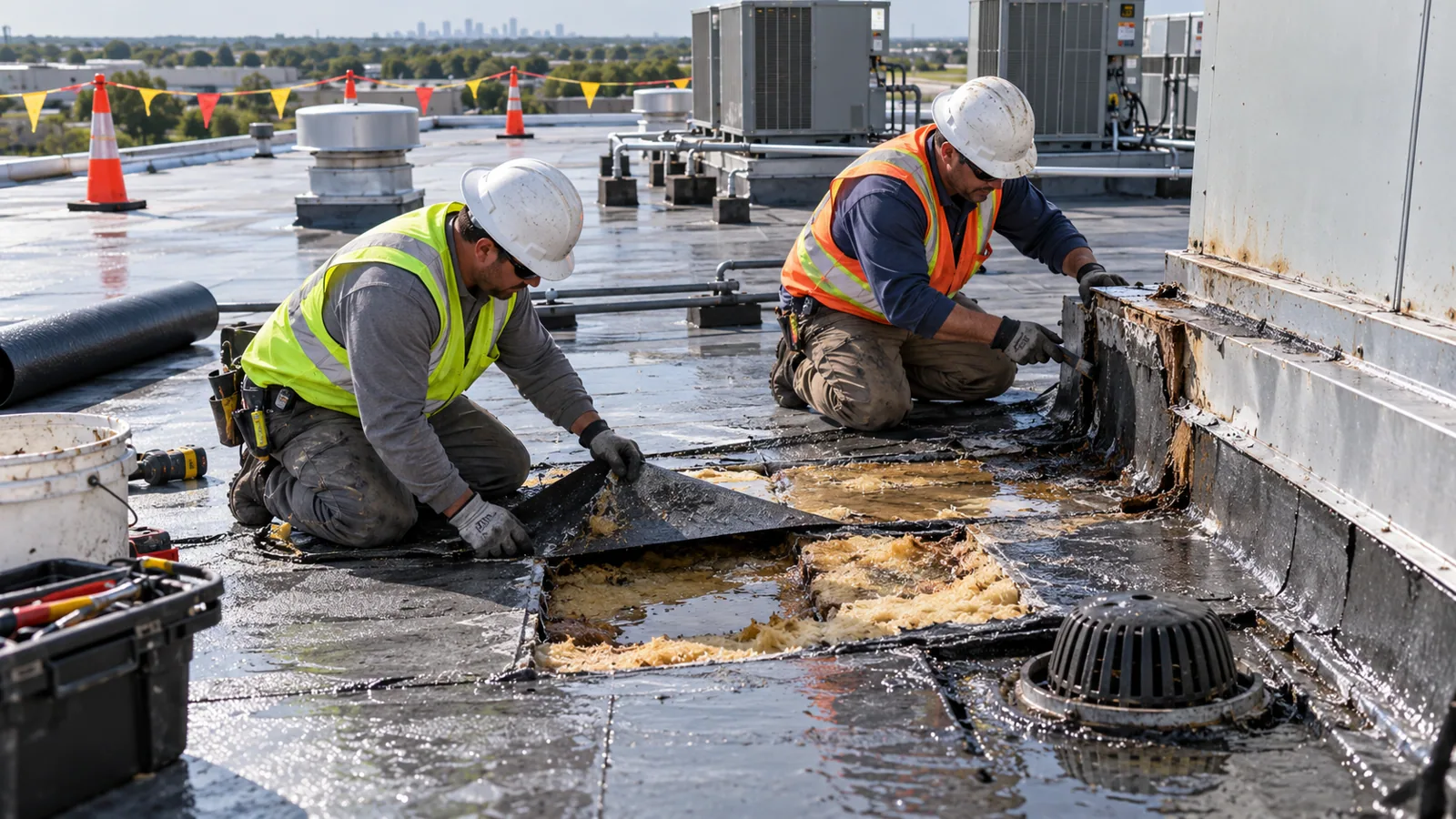
The sequence for a repair on a warrantied roof starts with a call to the warranty contact, when the document requires one, and a written plan that follows the stated method. Where a temporary stop is needed to protect the building, we place it with materials and details that can be removed without damaging the membrane, photograph it and list it, so the permanent repair can follow the manufacturer's process.
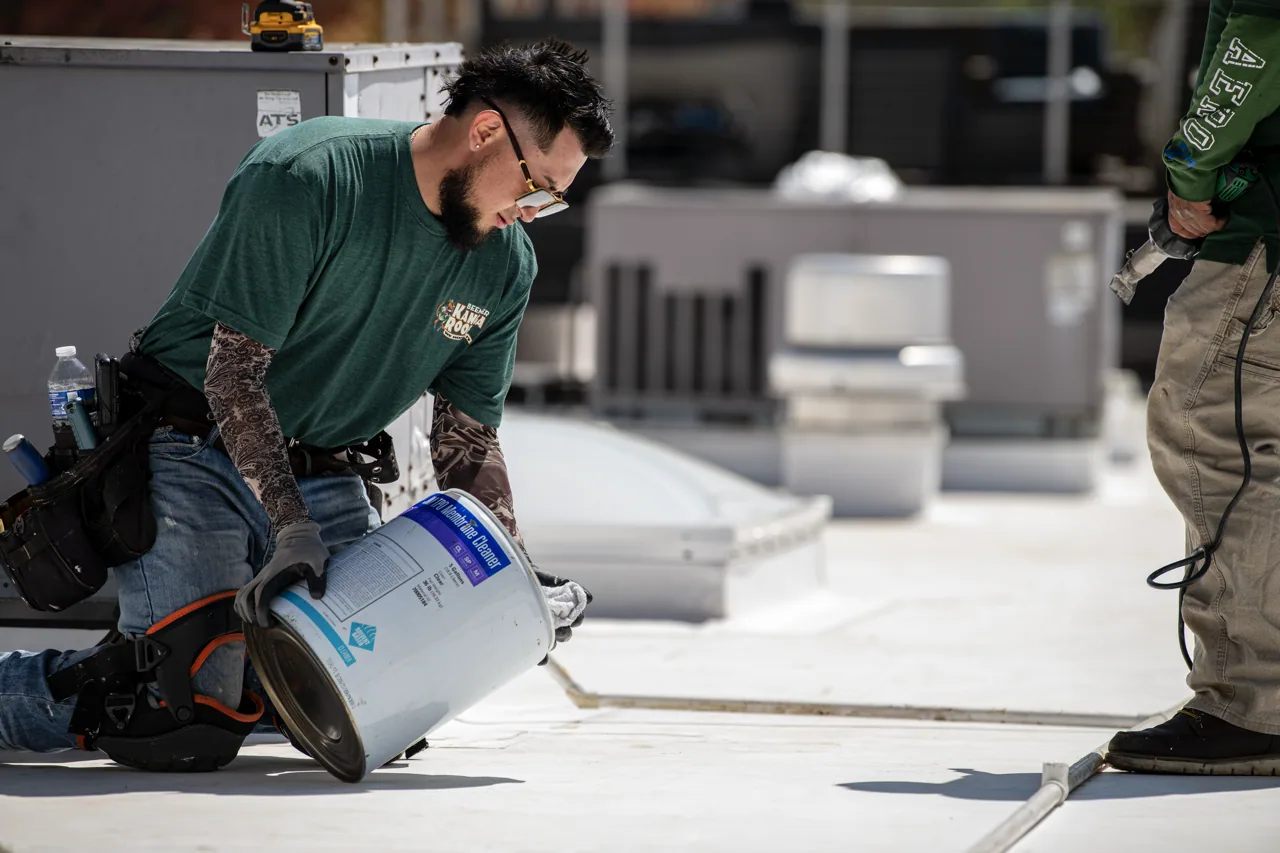
Routine work is easier to keep inside the terms. A preventive maintenance visit that clears drains, reseals small details and logs rooftop access is often a condition of coverage, and the log is useful evidence if a claim arises. A commercial roof repair on a young roof follows the same discipline.
Sequence and weather hold rules apply to warrantied roofs just as to any other. A section opened for repair is closed by evening, and temporary materials are chosen to come off cleanly. If the manufacturer requires its own representative to inspect a repair, the inspection is scheduled before the area is covered, and the punch list records the result.
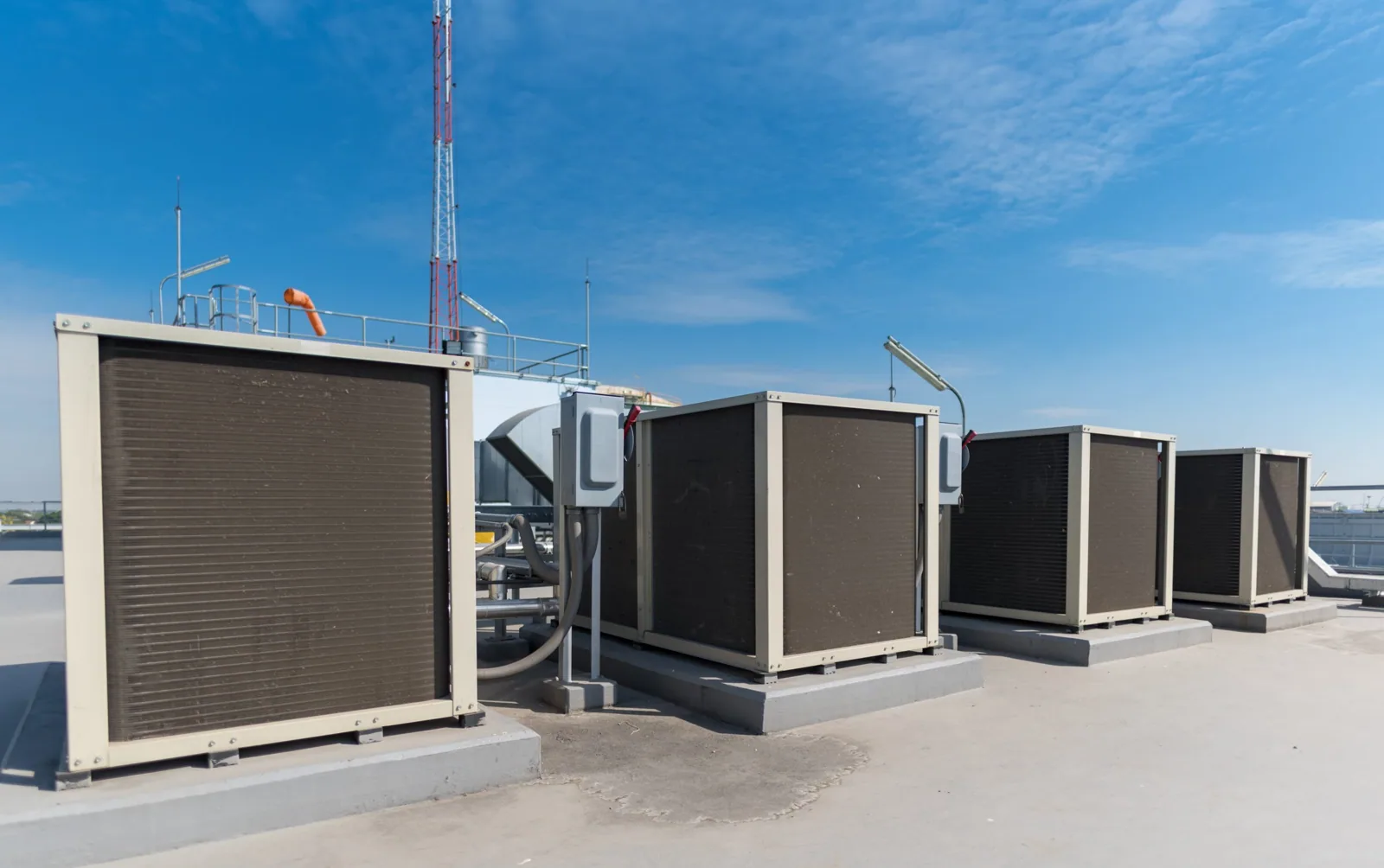
Many warranties exclude damage caused by other trades. A mechanical contractor who adds a unit, a telecom crew that installs an antenna or a technician who drops a tool can all void coverage for the area they touched. The record lists every penetration with its date and the trade responsible, and a log at the hatch records each visit.
When damage from another trade is found, the photograph and the log narrow the cause. The owner can pursue the responsible party, and the repair is made by a method that does not jeopardize the rest of the warranty. Equipment work around rooftop unit curbs is sequenced with the mechanical contractor for the same reason.
Most manufacturer warranties exclude storm damage and point the owner to insurance. After a warning like the one for Lee's Summit on April 27, 2024, even a warrantied roof needs a dated walk, because the line between a warranty defect and a storm loss is drawn on the roof by evidence. Our insurance claim documentation keeps the two apart.
A hail or wind event on a warrantied roof is documented fully and reported to both the insurer and, if the terms call for it, the warranty holder. Repairs follow the insurer's scope and the warranty's method, and where the two conflict, the owner decides with the facts in hand.
Portfolios with buildings near I-470 and US 50, or in Raymore, face the same spring windows, so the warranty calendar and the storm calendar are kept together.
A warranty has value to a buyer only if it transfers and the records back it up. The file holds the warranty document, the completion report, inspection reports, the repair log, the maintenance log and photographs. We review it against the transfer terms, note any notice or fee the transfer requires and flag gaps before the sale, when they can still be fixed.
The same file supports the roof condition report a buyer will want and feeds roof asset management for the next owner. Managers with buildings in Lee's Summit and Belton keep one warranty summary per building.
Records are easiest to build as the work happens. We photograph each repair, note the materials and method, file the manufacturer's response to any notice and log the date. A warranty file assembled that way can be handed to a lender or buyer in an afternoon, where one rebuilt from memory takes weeks and leaves gaps.
The warranty document, the completion date, the contractor and manufacturer contacts and any inspection or repair records. If the document is missing, we help identify who issued it.
It depends on the terms. Some warranties name approved repairers or methods, and a repair outside them can end coverage for that area. The document is read before any work.
Often it is a condition. Clearing drains, logging access and reporting defects promptly are common requirements, and the maintenance log doubles as evidence.
The damage is photographed, the log is checked and the repair follows the warranty's method. The owner can look to the responsible trade for the cost.
Only if its terms allow, and sometimes with a notice or fee. We review the transfer terms ahead of the sale and list the records a buyer will ask for.
Send the warranty document, the building address list, tenant hours and any repair history. We will read the terms, walk the roof with the property manager and provide a written sequence plan before any scope is priced.
Request a Roof Assessment