
Tornado damage reaches a property manager as a list of unknowns: which buildings are safe to enter, which tenants are displaced, which roofs are open and how long the crews will be available. The order of work matters more than speed, because a roof damaged by a tornado may have a compromised deck, debris pinned to it and utilities exposed. In Lee's Summit, MO, the regional record includes the 1957 Ruskin Heights tornado, rated F5, which killed 44 people along a path through the southern Kansas City suburbs. The roof condition that decides the first move is the structure beneath it.
Nobody goes onto a tornado-damaged roof until the structure has been judged safe. We ask whether an engineer or building official has cleared the building, whether any wall or bay is leaning, and whether gas, electric and fire protection systems are isolated. If the answer to any of these is unknown, the first task is a ground-level and interior look from a safe distance, and the roof waits.
Access is planned as carefully as the work. We agree with the manager on the route, mark exclusion zones under damaged edges and parapets, and set the staging footprint away from leaning walls and loose debris. Tenant notice is plain: which areas are closed, who to call and when the next update will come.
Corridors matter for the order of response. A storm that crosses the I-470, US 50 and MO 291 corridors can affect several properties in a manager's portfolio at once, since commercial, industrial and mixed-use areas line those routes. We triage by risk: buildings with open roofs over occupied space first, buildings with exposed utilities second, and the rest by access.
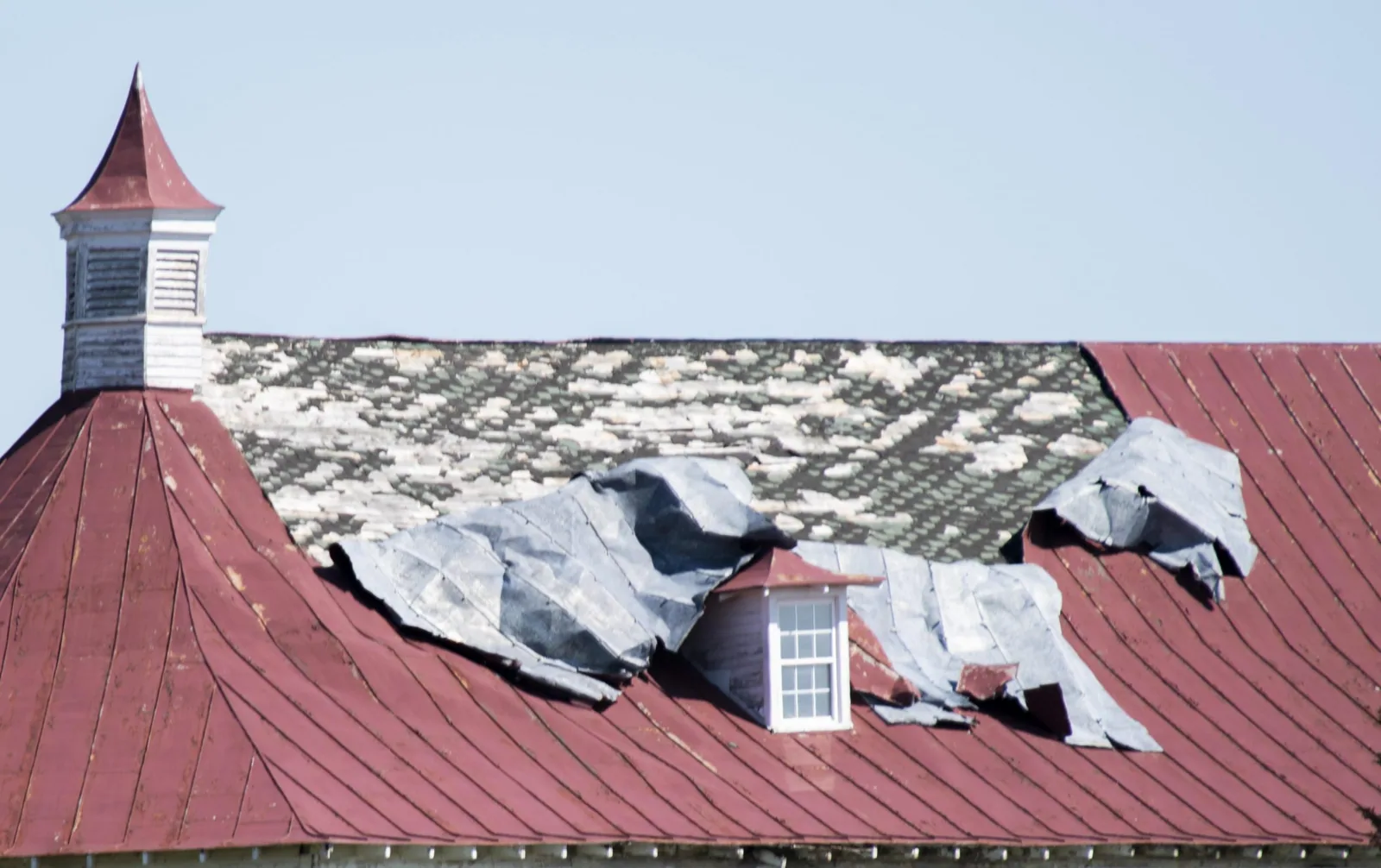
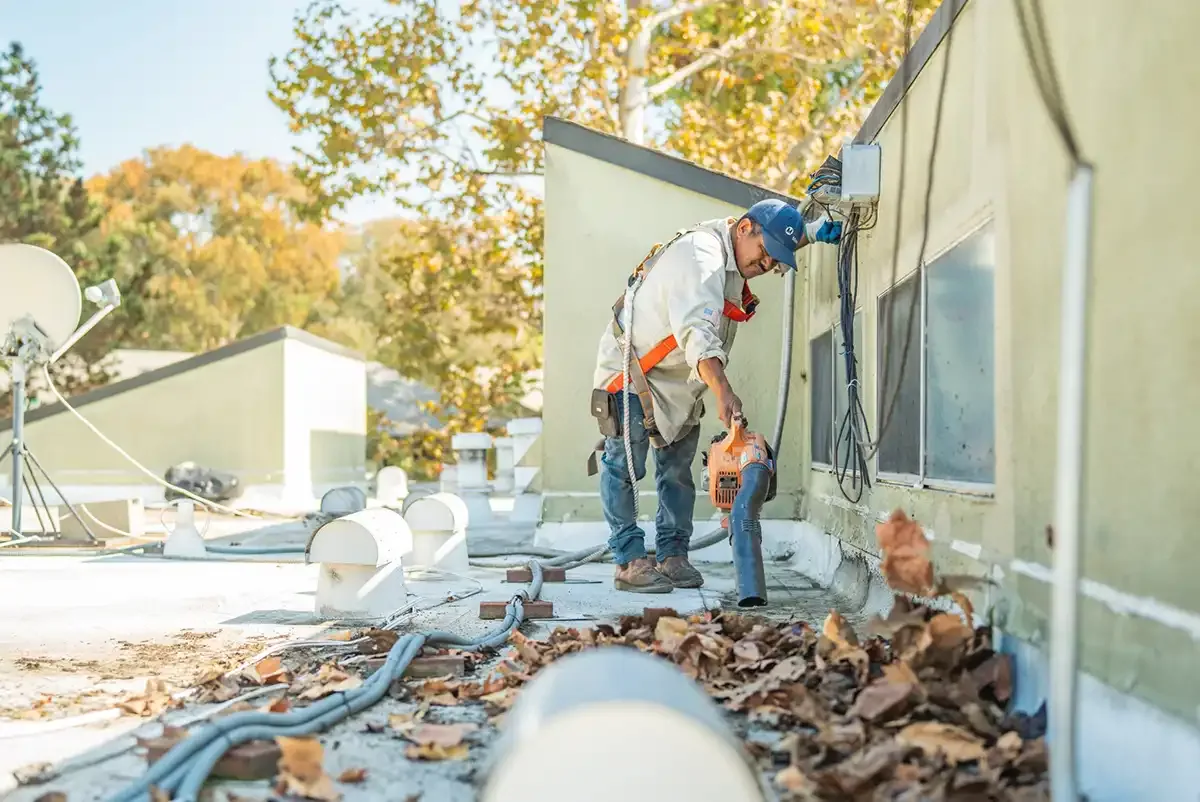
Tornado damage comes from wind and from what the wind carries. Impact points show as punctures, crushed insulation and bent deck, and debris that lies on the roof may be holding loose membrane in place. We photograph the roof before anything is moved, then remove debris in a planned order, starting with items that threaten the crew.
The deck is reviewed after debris is cleared. Corrugated steel that has been bent, fasteners that have pulled through and plywood that has split all show where the load path was disturbed. Any deck that looks affected goes to a structural engineer, with our photographs, measurements and sample cuts attached. Replacing deck comes before insulation and membrane.
Rooftop equipment is part of the debris picture. Units may be shifted, torn from curbs or struck by flying material, and their lines and conduit can be pulled through the roof. The mechanical contractor decides what is repairable, and we coordinate so that curbs are flashed once, after the equipment decision is made.
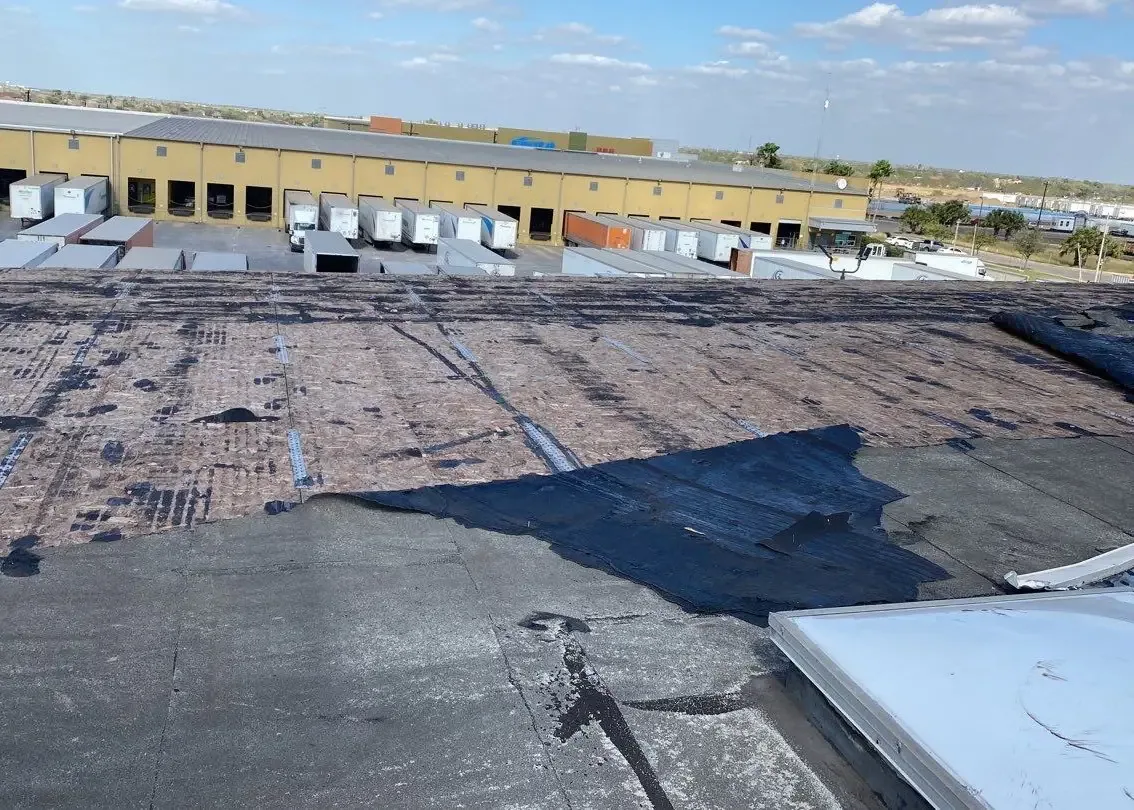
Once the roof is safe to work on, the dry-in begins. We cover open areas with sheet material fastened to sound deck, tarp large openings and secure edges against the next wind, and we keep drains clear. Our emergency roof repair response is dispatched at any hour, holidays too, and the first crew's job is to stop water from reaching the interior.
Every temporary item is listed with a date for removal. A weather hold rule keeps the crew from opening more roof than it can close, and a follow-up visit after the next rain checks that the cover held.
Staging in a damaged area is tighter than usual. Debris, closed lanes and emergency vehicles take space, so the footprint is agreed on the first walk and revisited each morning. Material arrives in small loads on a schedule, and the hoist is placed away from walkways and from any wall that has not been cleared.
On March 6, 2017 an EF3 tornado struck Oak Grove, damaging 483 houses and 12 businesses, and on July 1, 2015 another tornado damaged roofs in Unity Village. Those events are recorded in the area, and they show the range: some hit a few commercial buildings among many homes, and some leave a wide path.
The pattern in storm recovery is steady. Demand for roofing crews rises fast, temporary protection is placed first, and permanent repairs follow the engineer's findings. A manager who has a current roof baseline and a list of building contacts starts the recovery ahead of one who must build the list during the emergency.
Long outages belong in the same preparedness conversation. The 2002 Kansas City ice storm kept hundreds of thousands of residents dark for days or weeks, and a dark building loses heat, pumps and any heated drain line. A plan that works for a tornado also works for an outage.
Large losses involve several reviewers. Our insurance claim documentation separates tornado damage, older wear and temporary protection, with dated photographs and locations on the roof plan. A storm damage roof repair scope then lists the permanent work by area.
Under the city's code adoption, submittals on or after October 1, 2026 use the 2024 I-Codes, and earlier submittals use the 2018 I-Codes. The permanent scope names the edition that applies, since a rebuilt roof section may be held to different requirements than the roof it replaced.
Photographs are taken in a fixed sequence on every roof: the whole roof zone first, then each damaged area, then the debris, then the temporary protection. A reviewer who opens the file months later sees the same order for every building.
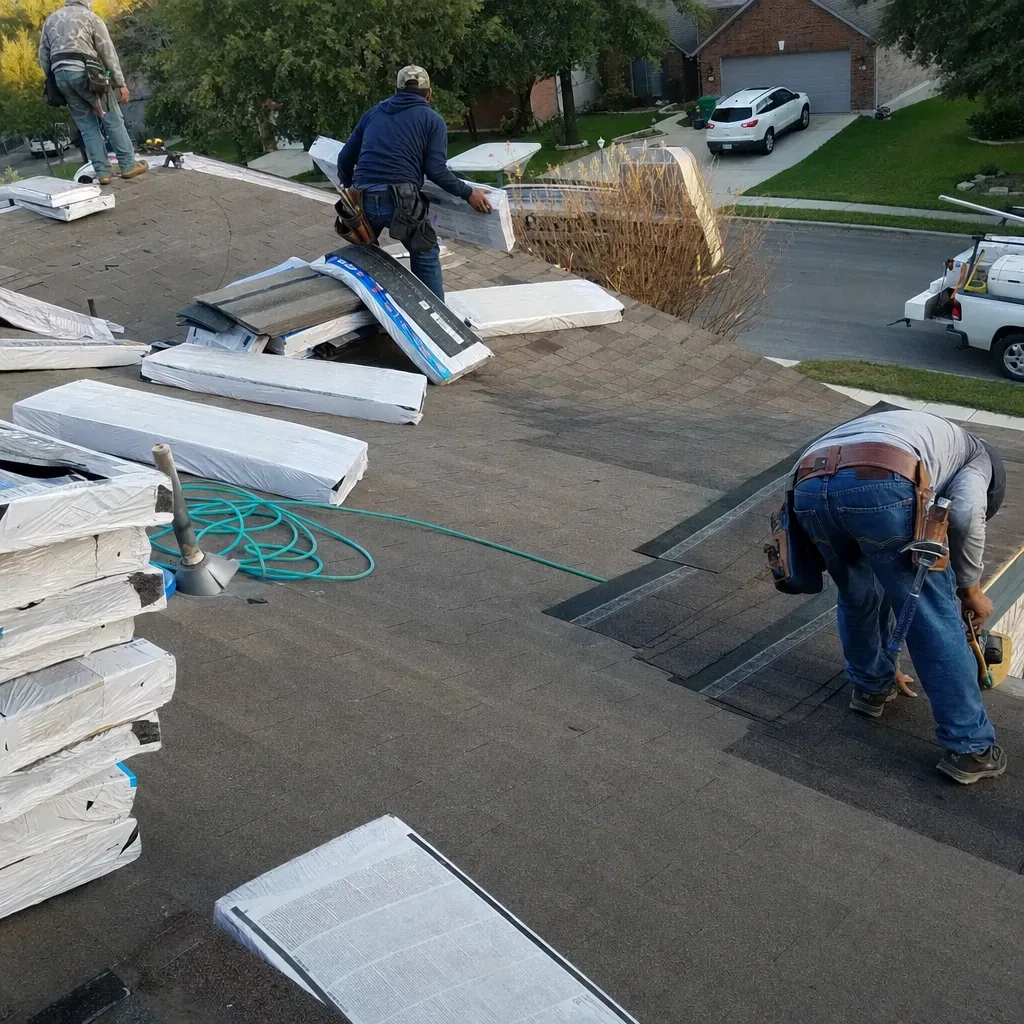
The permanent rebuild is phased by building and by roof zone. Zones over occupied or reopening space go first, zones that can wait go later, and each phase has a dry-in point and a punch list. The turnover package gives the manager the photographs, the deck findings, the permit notes and the maintenance schedule.
Owners with buildings in Lee's Summit, Oak Grove and Unity Village can use one package format. Hail and wind effects from the same storm are handled by hail damage roof repair and wind damage roof repair.
After a large event the price is driven by the area to be rebuilt, deck repair, wet insulation, equipment resets, lift access and the hours tenants allow, and the proposal states each. Because demand for roofing crews rises after a storm, the proposal also names a start window and the weather hold rules that apply to it.
After an engineer or building official has cleared the structure and utilities are isolated. Until then the roof is inspected from the ground and interior, and the crew stays off it.
A structural engineer. The engineer receives our photographs and sample cuts, and new insulation waits for written approval.
With a documented temporary cover, drains kept clear and a follow-up visit after each rain. Every temporary item has a replacement date in the report.
Where the evidence allows. The report lists impact points, lifted areas and older wear separately, with photographs, so the adjuster can see what belongs to the event.
A current roof baseline, a contact list for each building and a standing plan for temporary protection. Those items shorten the first week after a loss.
Send the building address list, tenant hours and any damage reports from the storm. We will walk the roof with the property manager once it is cleared and provide a written sequence plan before any scope is priced.
Request a Roof Assessment