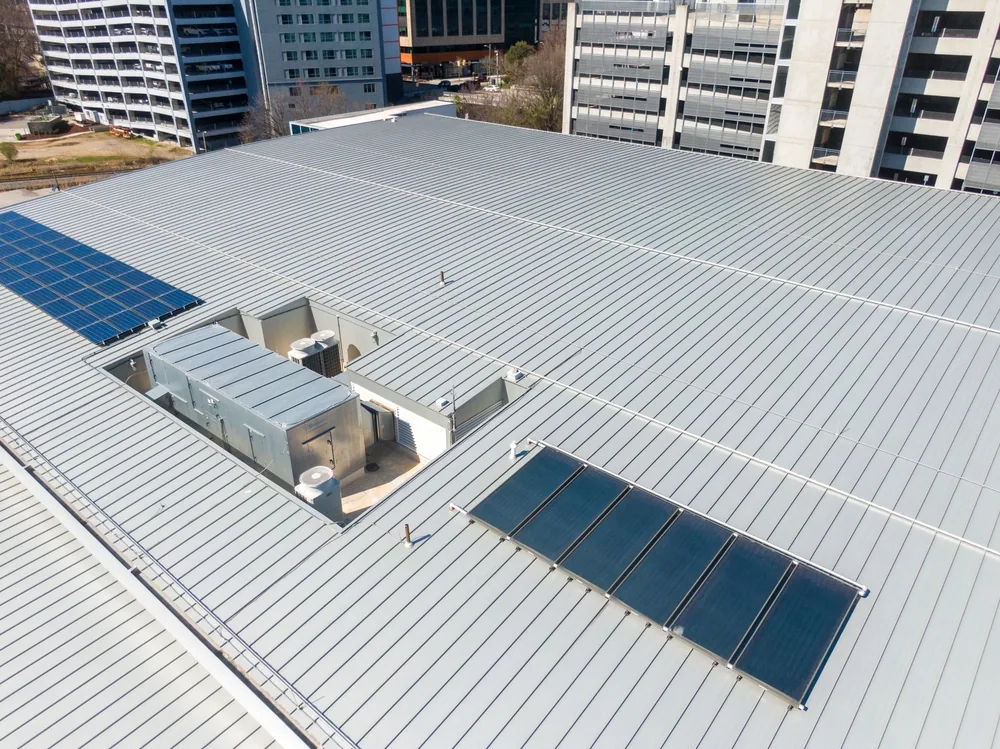
On March 6, 2017, an EF3 tornado touched down near the western edge of Oak Grove, MO and damaged 483 houses and 12 businesses. A roof plan for the city is written with that day in mind. The plan starts with who must be told, which entrance is closed and where the trucks stage, then moves to what the roof shows at its edges and flashings. A building that has come through a storm gets a different first walk than one that has not.
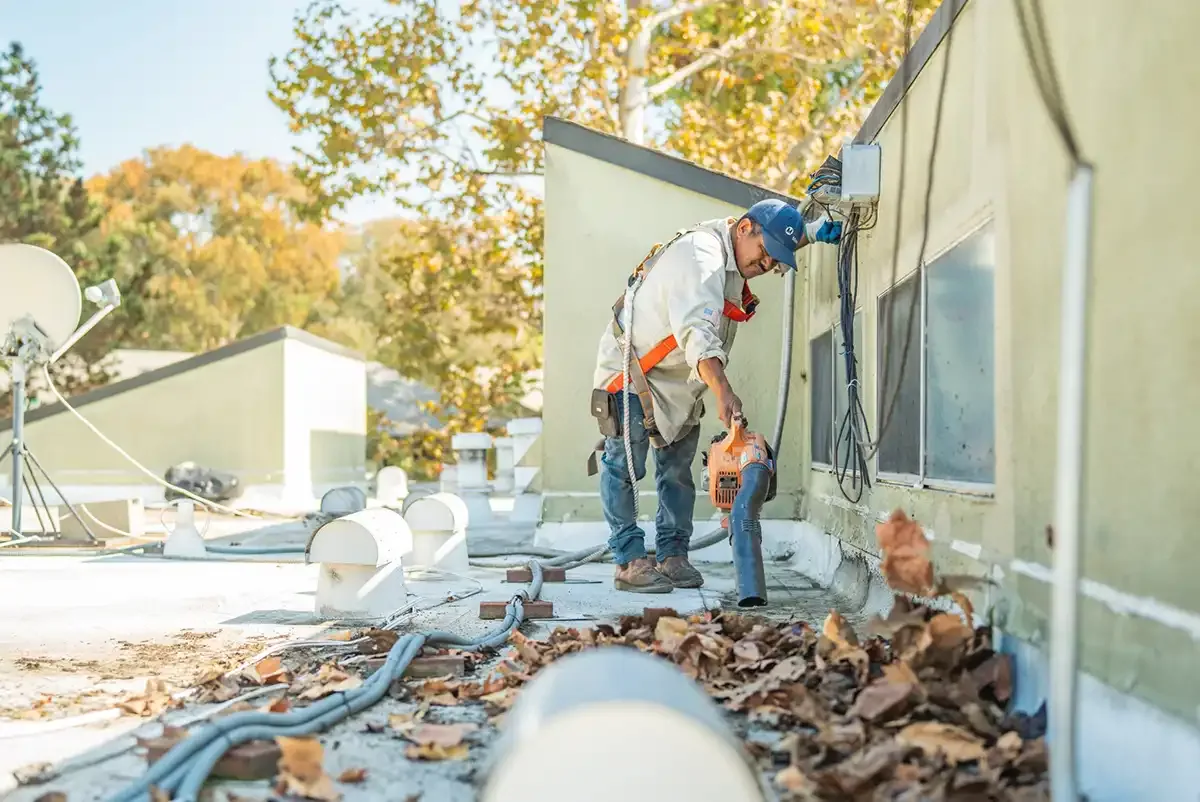
After a tornado or a hard wind event, we do not begin at the field of the membrane. We start at the perimeter, where uplift concentrates, and press on coping, drip edge and metal terminations. Next come rooftop unit curbs, vent boots and skylight frames, since debris strikes and shifting equipment show up there first.
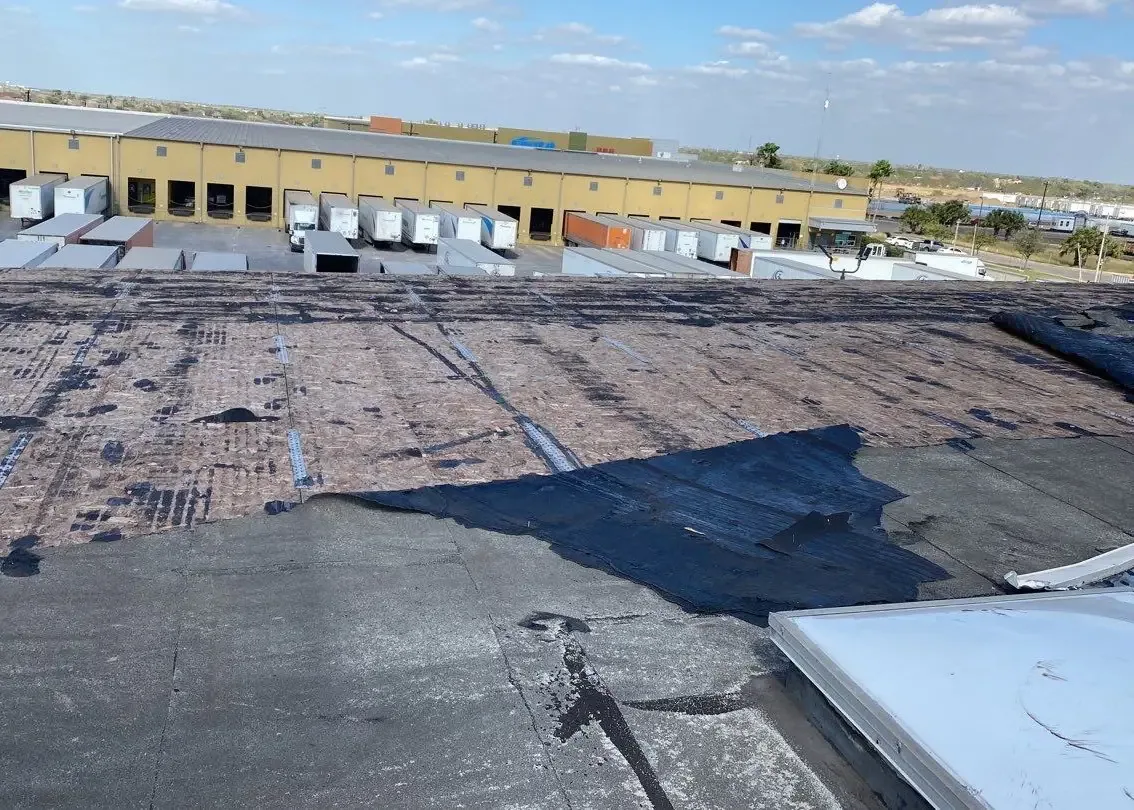
Only after those do we scan the field for punctures, torn laps and lifted sheet. Each item is photographed with a location mark. Damage from a single event looks different from long wear: edges are clean, metal is bright and debris lies where it landed. A tornado damage repair scope is built from that evidence and separated from older wear, so the owner sees both.
Interior signs are walked too. Ceiling tiles with fresh stains, a wet wall near the roofline or a puddle at a door threshold point to where water entered. We map each sign on the plan and trace it up to the roof. An opening found this way usually sits several feet from the stain, along the deck or an insulation joint. The map keeps the repair from stopping at the first defect it finds.
Oak Grove lies in Jackson and Lafayette counties, and the city had 8,157 residents in 2020. Commercial roofs there are reached the same way as elsewhere in the metro: through a lot, past a door that stays open, onto a roof by hatch or ladder. We identify the hatch or ladder location on day one and agree who holds the key.
The tenant notice gives the closed entrance, where the container sits and when the loud work happens. If a business operates on an appointment schedule, we move the noisy tear-off to the quiet hours the manager names. A short call the afternoon before each phase keeps the notice accurate when plans change.
Wind exposure and drainage are noted on the walk from what each building shows, in a city that sits at about 863 feet in the Kansas City metropolitan area.
Storm response has two stages. The first is an emergency dry-in: tarps, temporary seals or a quick membrane patch that stops water from entering. It is labeled temporary and photographed. The second is the permanent scope, which follows once the damage has been recorded and, if there is a claim, shown to the adjuster.
Between those stages, the roof gets a weekly check until the permanent work starts. A temporary seal can loosen in wind, and a tarp that flaps can tear more membrane. For an owner reviewing options, emergency roof repair and the follow-on planned work are two line items, each with its own photos and price.
Permanent repair follows the same phase pattern as any occupied job. Day one covers the walk and the notice. The next morning the first section opens and is closed by evening, with every seam between sections sealed before the crew goes. If the damage is large enough to change the roof system, the scope is priced as a section repair and again as a full commercial roof replacement, so the owner can see the gap in cost and in disruption.
Lee's Summit records about 38 inches of precipitation yearly, and the weather service's April 27, 2024 warning there expected roofs to be damaged by 60 mph gusts and penny-size hail. Each Oak Grove roof is read on site, and that storm calendar sets the rule for spring work.
A forecast storm line stops the job at the next safe point. The crew seals the open section, secures material and tells the manager. After hail, a hail damage inspection checks for bruised membrane, dented metal and cracked coatings before the next rain.
Lee's Summit's records, 108F at the high end and minus 25F at the low end, mark the range a repair has to survive. A low-slope roof moves with those swings, and a repair that is rigid will crack. We pick flexible materials and let sealants cure fully before testing. In cold weather the cure takes longer, which is another reason the schedule includes holds.
A claim needs a record the adjuster can follow. We photograph the roof wide and close, mark each image on a drawing and note the date and weather. We separate sudden damage from long-term wear and state the evidence for each. Measurements and quantities go into a scope the adjuster can price line by line.
We do not file the claim or speak for the carrier. The owner or the agent does that. What we provide is the roof record, and roof insurance claim assistance keeps it organized so a late claim or a second storm does not blur the file. A pre-storm photo set, if the owner has one, gives the adjuster a before picture.
When repairs close, the package lists what was removed, what was installed and what was found under it. It includes photographs of each layer and a punch list for any return visit. It also notes the next inspection date, which is usually soon after the first major storm of the following spring.
A manager with buildings in Grain Valley or Blue Springs can keep a single format for every roof, and a roof condition report then lets the owner compare which building took the most wear and which can wait another season.
Rated F5, the 1957 Ruskin Heights tornado killed 44 people on a path across the southern Kansas City suburbs. Kansas City also took the 2002 ice storm, when hundreds of thousands of residents lost power for days or weeks. Events like those are why a record kept ahead of time is worth the effort. A manager who has a current roof file can respond in an hour instead of a week.
Edge metal, coping and curb flashing, because uplift concentrates there. The field of the membrane is walked after those are recorded.
Only until the permanent work can start, and we check it weekly. Wind and heat loosen temporary materials, and a loose tarp can tear the membrane it covers.
Fresh tears, bright metal, debris in place and photographs dated close to the event. Old wear shows dirt, rust and staining, and we record that separately.
Not by itself. A walk finds whether the roof has any storm marks. Many roofs in an affected area need nothing more than a record.
The owner or the agent does. We supply photographs, the cause we observe and a priced scope.
Send the building address list, tenant hours and any open leak reports. We will walk the roof with the property manager and offer a written sequence plan before any scope is priced.
Request a Roof Assessment