
A storm claim begins with a record of the roof as it stood after the event. An adjuster needs dated photographs, a drawing that locates each defect, moisture readings and a scope that separates storm damage from wear. We start with the building address, the date of loss and the carrier's reference, then walk the roof in a fixed order to decide how trucks arrive, where material goes and where the roof is sealed each night for emergency work. In Lee's Summit, MO, a severe thunderstorm warning went out on April 27, 2024, naming gusts of 60 mph, penny-size hail and damage to roofs, and the area's storm record runs much longer. The roof condition then decides whether the scope is a storm damage roof repair or a larger restoration.
The Kansas City area has hail, wind, tornado and ice in its history. The 1957 Ruskin Heights tornado, rated F5, killed 44 people along a path through the southern suburbs. A 2002 ice storm left hundreds of thousands without power for days or weeks. A tornado damaged roofs in Unity Village on July 1, 2015, a tornado rated EF3 touched down near Oak Grove on March 6, 2017 and damaged 483 houses and 12 businesses, and the 2019 Lawrence-Linwood tornado is part of Kansas City's weather history.
Those events are why date matters. A roof can carry damage from more than one storm, and a claim for one event has to be separated from others and from age. We tie each observation on the roof to what it looks like, where it is and, when the evidence allows, what kind of event produces it.
The National Weather Service Kansas City/Pleasant Hill office, located in Pleasant Hill, serves 37 Missouri counties and seven Kansas counties, and its warnings give a dated starting point for a claim. We reference the warning date in the file when the roof walk finds damage consistent with the event.
Good documentation is boring and complete. We photograph the roof in a fixed pattern: overview, each slope or section, each defect with a scale, and each penetration. The photographs are tied to a roof drawing with locations marked. Moisture readings or an infrared moisture survey show where water has reached the insulation.
A drone roof inspection speeds large roofs and makes the overview easy to review. The report states what was seen and what was not, including areas not accessed, so the adjuster knows exactly what the record covers. Our job is to describe the roof, not to decide coverage.
Chain of custody matters for samples. If a core or a membrane sample is taken, it is labeled with the location, the date and the person who took it, and the photograph of the cut is tied to the drawing. Patches over test cuts are installed the same day.
Interior evidence completes the picture. Ceiling stains, wet tiles, dripping fixtures and damaged contents are photographed with the date and the room, and the roof location above each is noted. A stain below that does not match any roof defect above is flagged, since its source may be plumbing, condensation or a different roof area.
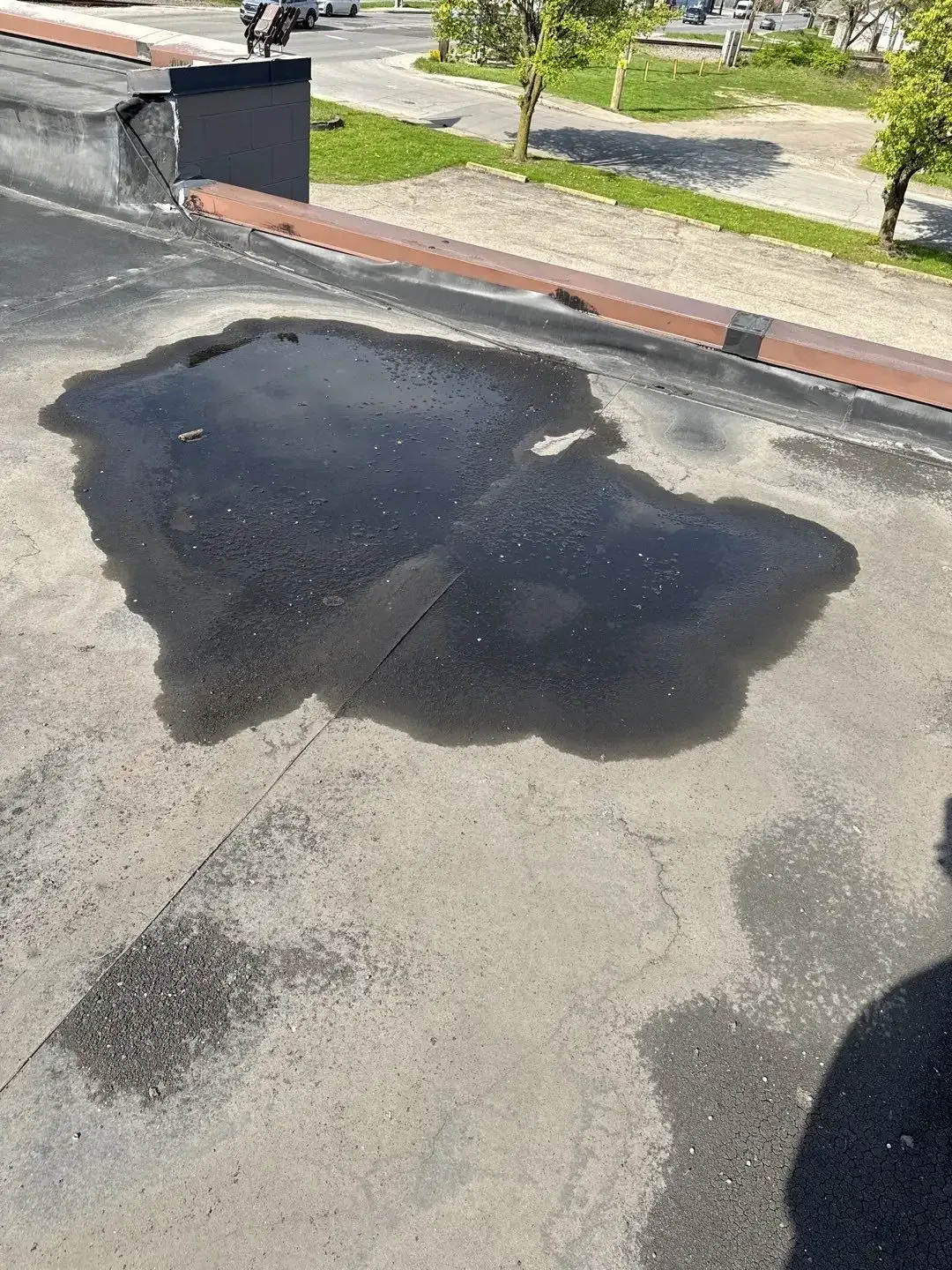
Hail bruises a membrane, dents metal, cracks coatings and knocks granules loose. Wind lifts edges, tears flashing and peels seams. Wear looks different: blistering from heat, shrinkage cracks, sealant failure from age, and ponding stains from long-term drainage problems.
The report separates the two where the evidence permits. A dent pattern across slopes, a lifted edge on the windward side and fresh debris scars point to a recent event. A uniform pattern of cracks and ponding marks points to age. Where the evidence cannot separate them, the report says so, with the observation that would help, such as earlier photographs or maintenance records.
Roof age enters the discussion without becoming the whole argument. A younger roof with storm damage is a simple case. An older roof with storm damage and prior wear needs a more careful description of what each cause did, and our report lays out each observation in order so the carrier can form its own view.
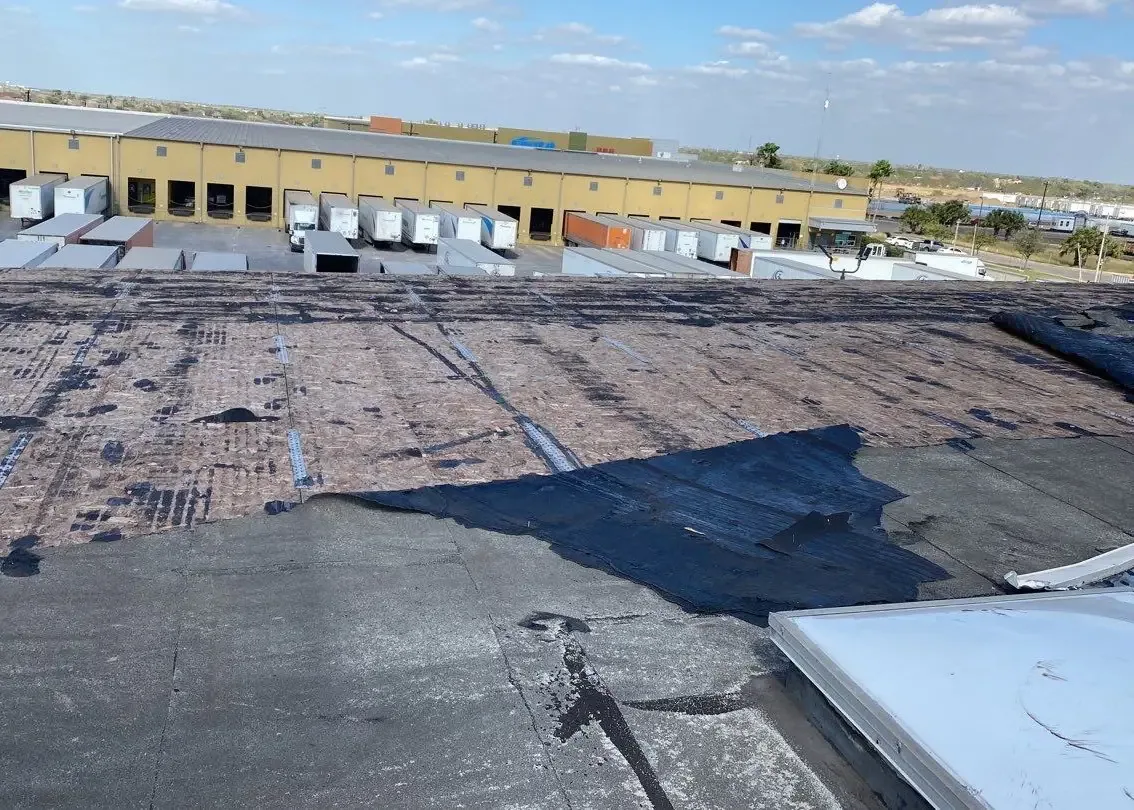
After a loss, the first job is to stop more damage. Emergency roof repair crews answer day and night, holidays included, and install temporary seals, tarps and membrane patches that hold until the permanent work can be scheduled. Each measure is photographed before and after.
Many policies ask the owner to take reasonable steps to limit further damage, so the record shows what was done, when and why. Costs of temporary work are itemized separately from the permanent scope. If the building is occupied, tenants are given notice, and interior protection goes up under any compromised area. The weather hold rule governs the work until the roof is closed.
Tarping a membrane roof takes care. A tarp that flaps in wind can tear the membrane further, so edges are tied to the structure where possible, ballast is placed to avoid punctures, and drains are kept open. The first priority is dry space for the occupants; the second is not making the roof worse.
When damage is confirmed, we write a repair scope with quantities, materials and methods, and with unit prices for wet insulation and deck repair where the amount found is unknown. If hidden damage appears during the work, a supplement is documented with photographs and measurements for the carrier's review.
The code edition matters to the scope. Repairs that need a permit follow the edition tied to the submittal date: the 2024 I-Codes from October 1, 2026 forward, and the 2018 set before that. Closeout delivers dated photographs by phase, the as-built drawing, the closed punch list and warranty documents. A restoration contractor, a property manager or a real estate investor receives the same file the carrier does.
Overhead and access costs are listed apart from material and labor. Lifts, scaffolds, fall protection, permits and disposal each carry a line, so a reviewer can compare the estimate to another without hunting for hidden items. Where a price depends on a measured quantity, the unit and the basis for measuring it are stated.
Dated photographs, a drawing with locations, moisture readings, a list of damage types and an itemized scope. Areas not accessed are listed, so the record has clear limits.
Yes. Temporary measures are recorded and the permanent scope follows once coverage is settled and the roof is dry enough to work on.
By marking bruises and punctures on a drawing, photographing each with a scale, and comparing the pattern across slopes. Test squares are used when the roof is large.
The crew stops in that area, photographs and measures it, and a supplement is prepared for review. Work resumes in other areas while the supplement is considered.
When the roof is part of a larger loss, yes. We coordinate with the restoration contractor's schedule and pass on the dry-in date so interior work can start once the roof is closed.
As soon as it is dry and safe. Hail marks and wind scars fade or collect dirt within weeks, and temporary repairs cover evidence, so a prompt walk gives the carrier the clearest record.
Share the building address, date of loss, carrier reference and any photographs. We will walk the roof, document its condition and write a scope before any repair is priced.
Request a Roof Assessment