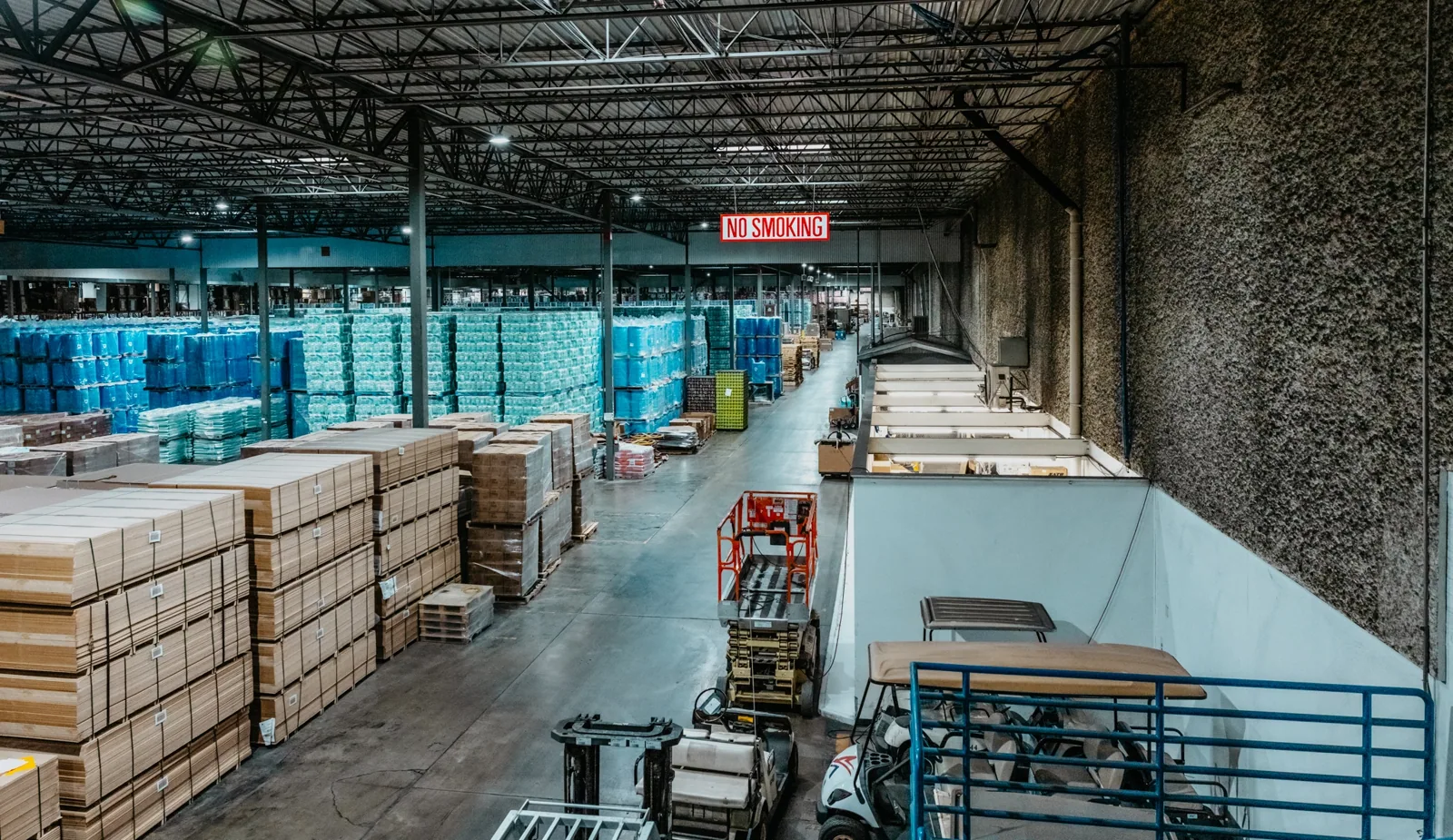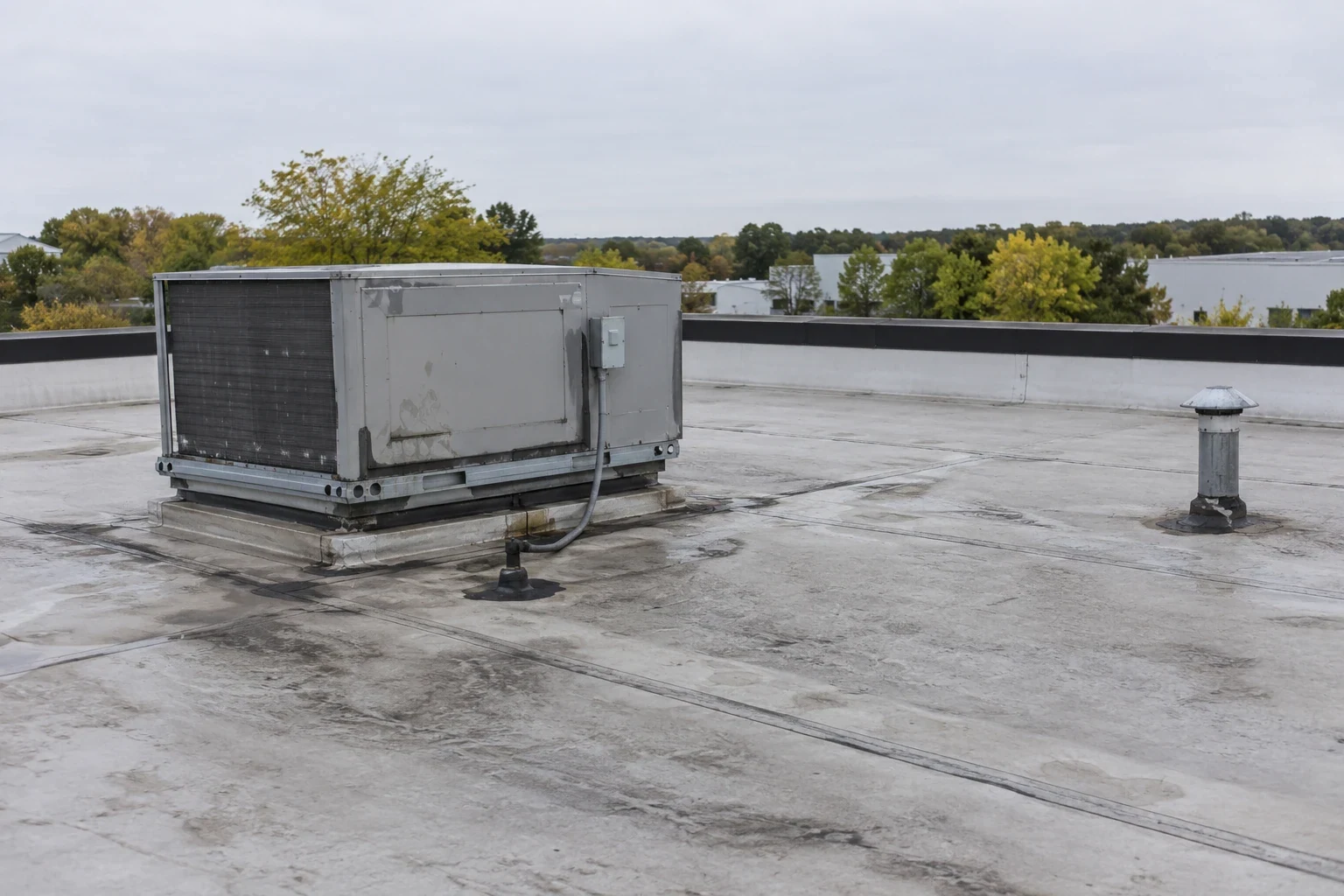

A distribution roof job is run on trailer turns. Inbound doors, outbound cut-offs, yard congestion and peak-season volume decide when a crew may enter the lot and where a lift may stand. The first day is a walk with the operations manager to settle truck routes, hoist position and the nightly sealing point, and to find out which dock doors and which racking aisles sit under which roof bays. Around Lee's Summit, MO, I-470, US 50 and MO 291 are the main routes, and the Grandview Triangle joins I-435, I-470 and US 71. What the roof shows then points to a commercial roof leak repair or a planned replacement.
The yard is the first constraint. Trailers queue at the gate, trucks back to doors, and drivers expect to move. A roofing lift, a dumpster or a staged pallet of insulation can block a door or a turning radius. We mark the staging footprint on the yard plan and agree on a position that leaves the doors, the fire lanes and the trailer parking untouched.
Deliveries are timed to the dock's slow hours, usually when outbound has cleared and inbound has not yet built. A spotter meets each truck. Crew parking is assigned off the driver routes. If the operation runs around the clock, we plan for the lowest-volume hours and tell the manager exactly which doors the work touches.
Safety on the yard is shared. Crew members wear high-visibility gear, stay inside marked walkways and keep clear of trailers being backed in. The site lead attends the yard safety briefing if the operator holds one, and the crew follows the facility's own rules for forklifts and pedestrians.
Most distribution calendars have blackout periods, when inventory is at its highest and any disruption is costly. We ask for them first and keep roof work away from them. Large replacements are scheduled in the quieter months, and during peak weeks only emergency response and urgent repairs are allowed.
That leaves spring and summer as the usual window for planned work, which overlaps the spring storm period. A warning for Lee's Summit dated April 27, 2024 mentioned 60 mph gusts, penny-size hail and damage to roofs. Every plan therefore carries a weather hold: a bay stays closed unless it can be sealed by evening, and temporary closure materials wait on the roof.
Emergency response does not stop for peak weeks. Crews respond at any hour, including holidays, and the temporary closure is designed to hold through high-traffic periods until the permanent repair can be scheduled in a quieter window.
A distribution roof protects a great deal of product, often stacked on racks beneath a sprinkler system. Water on a rack is worse than water on a floor, and a single leak can damage pallets in several bays. We ask for the rack layout and the inventory types under each roof bay, since some goods, such as paper, packaged food and electronics, cannot tolerate moisture.
Roof attachments near sprinkler piping, sensors or lighting are located on the drawing before fasteners are installed. In bays holding sensitive inventory, temporary overhead protection and a leak watch are in place during work. If a sprinkler head is hit or a pipe is disturbed, the crew stops and notifies the facility at once.
Dock levelers and door seals are a common source of water that is blamed on the roof. We check them during the walk, because a leak at the dock apron or the door header can run into the building along a slab and appear far from the cause. Tracing before cutting keeps the repair aimed at the real entry point.
Where several operators share one building, the property management company keeps the roof file, and each operator receives the portion that covers its own bays.
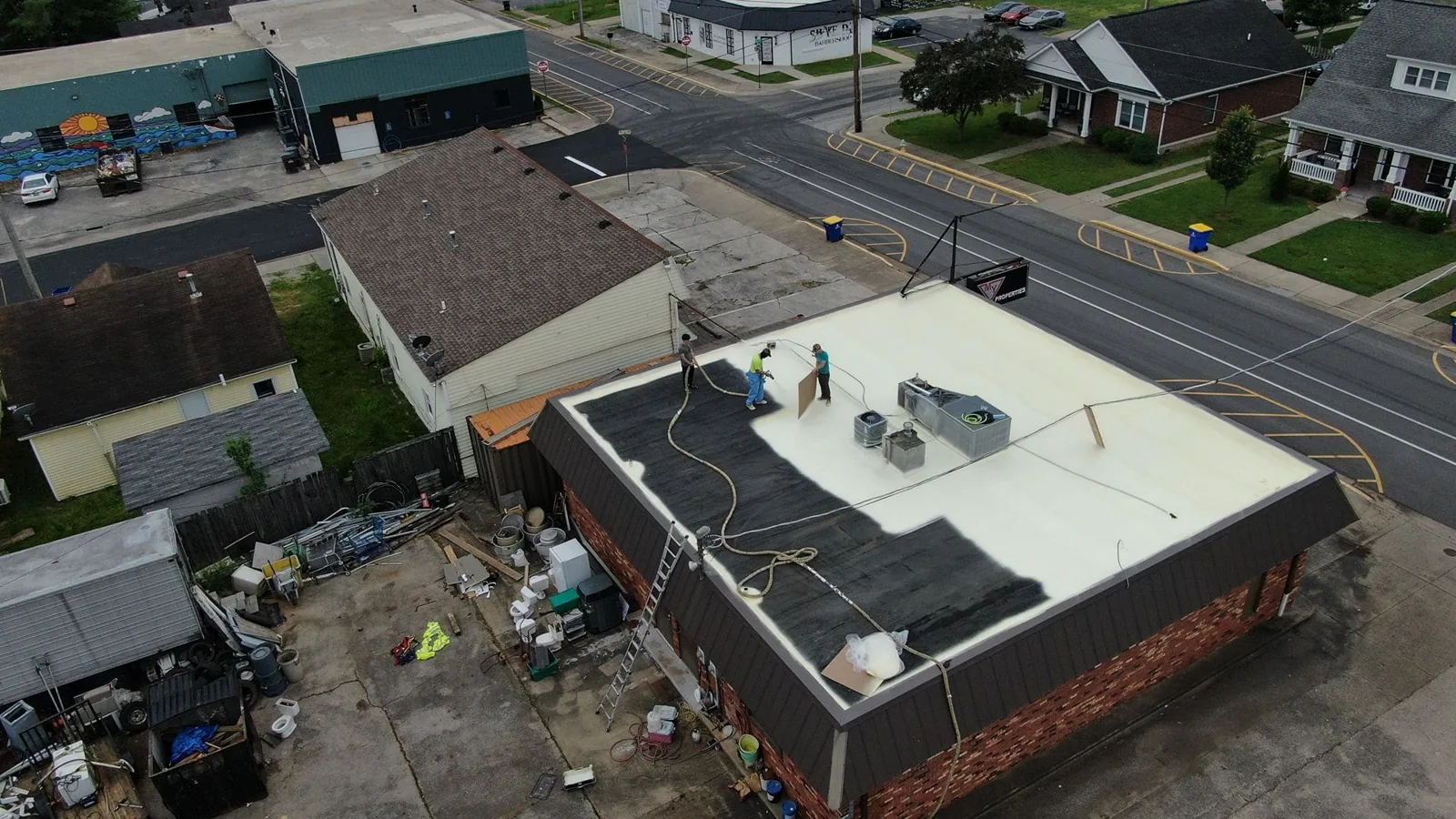
Distribution buildings, like any warehouse, have wide low-slope roofs with long drainage runs, many penetrations and dock canopies. Drains clog with debris carried by the wind, seams move across wide spans, and rooftop units add curbs. We follow the water: drains and scuppers first, then seams, then curbs, then edges.
The dock side has its own failures. Canopies over doors can leak at the wall connection, and gutters can sag under ice. The Kansas City area saw a 2002 ice storm that left hundreds of thousands without power, a reminder of what winter can do to edges and drains. A distribution center roof gets those details checked at every visit.
Skylights and smoke vents are another source on older buildings. Gaskets dry and crack, lenses craze, and curbs settle. Where they exist, each is inspected, photographed and rated, and the options range from resealing to replacement with a flashed curb or a roof panel.
Roof access in a distribution building is usually by fixed ladder or roof hatch, sometimes from a dock-height ramp. We confirm that the access is safe before the first visit, and we bring our own fall protection where the building has none. Roof traffic by other trades, such as solar installers or HVAC technicians, is logged so that damage can be traced.
Operators with several buildings in the region, whether near the CenterPoint-Kansas City Southern Intermodal Center planned across 1,340 acres at the former Richards-Gebaur site, in Belton, where a 2016 city report listed QuikTrip Distribution as the largest employer, or in Lenexa, where a 2015 report named UPS and the JC Penney Logistics Center among the largest, benefit from one roof format across sites. A multi-site roof program ranks the buildings by condition and schedules visits by region.
Each completed job produces a turnover package with dated photographs, the roof drawing, the closed punch list and warranty documents. The package is filed per building, so a corporate real estate team can see the network at a glance, and a manufacturer that ships through the building can be shown the roof condition above its goods.
Cold storage and temperature-controlled spaces add a layer of risk. A roof over a cooler runs differently from a roof over dry storage, because vapor drive and insulation matter more. Where an operator has both, the report treats them as separate roof types and ranks each on its own condition.
Yes, with the work divided into bays and run in the lowest-volume hours. The dock schedule fixes the hours, and the doors affected are named in the notice.
The crew stops, covers the area, and the facility moves product if needed. Overhead protection is placed ahead of time, so a surprise leak is contained quickly.
Fasteners and attachments near the sprinkler piping are located on the drawing before installation. If a recover adds weight, the structure is checked first, and the sprinkler system's supports are protected.
Not as a rule. Peak weeks are reserved for emergency repairs. Planned replacements go in quieter months, which the operator names at the start.
A roof drawing marked with each client's bays, photographs by bay and a leak log with dates. These make it simple to show a client what happened above their product.
Share the building list, rack layout, dock hours, blackout dates and any open leak reports. We will walk the roofs with operations and write a bay-by-bay sequence plan before any scope is priced.
Request a Roof Assessment