
A school roof project has a fixed finish date that no one can move: the first day of class. Everything else is planned backward from it. Summer programs, athletic camps, bus routes, custodial schedules and the board's approval calendar all set when a crew may use the lot, the entry and the roof hatch. The first site walk with the facilities director settles truck routes, hoist position and the nightly sealing point for each building. In Lee's Summit, MO, the R-VII School District appears among the city's largest employers, and districts across the Kansas City area run many buildings of different ages. The roof's condition then points each building to a repair, a recover or a commercial roof replacement.
Summer is the natural time for school roofing, and it is also short. Between the last day of class and the start of teacher workdays there are usually only a few weeks, and summer school or camps may occupy parts of the building. We ask for the exact dates, the areas in use and the buildings that must be ready first.
Roof work is sequenced by building and by section, with the most disruptive steps placed early in the break and the detailed work last. Float is built in for weather. The weather hold rule means that rain days move the schedule, and the plan shows where lost days can be recovered so the finish date still holds.
Procurement timing is part of the summer plan. A bid awarded in May leaves only weeks to order membrane, insulation and metal, and lead times can slip. We list long-lead items in the scope and recommend ordering as soon as the award is final, so the first day of work is not spent waiting on a delivery.
The site must be safe for children even when children are not expected. Fencing, signs and locked gates keep the work area closed, material is stored on the roof or inside the fence, and dumpsters and lifts sit away from play areas and bus lanes. Crew members sign in, wear identification and follow the district's background-check rules where they apply.
If the work continues into the school year, for a partial building or a second phase, the plan changes. Noisy steps move to after school or weekends, the work zone is closed off from students, and the staff are told what to expect. A designated contact at each building handles questions from principals and custodians.
Athletic fields and playgrounds near a building add routes and risks. A lift swinging over a track or a debris chute pointing toward a play area is a hazard even when no one is expected. We mark the drop zones on the site plan and brief the custodial staff on where the crew will be.
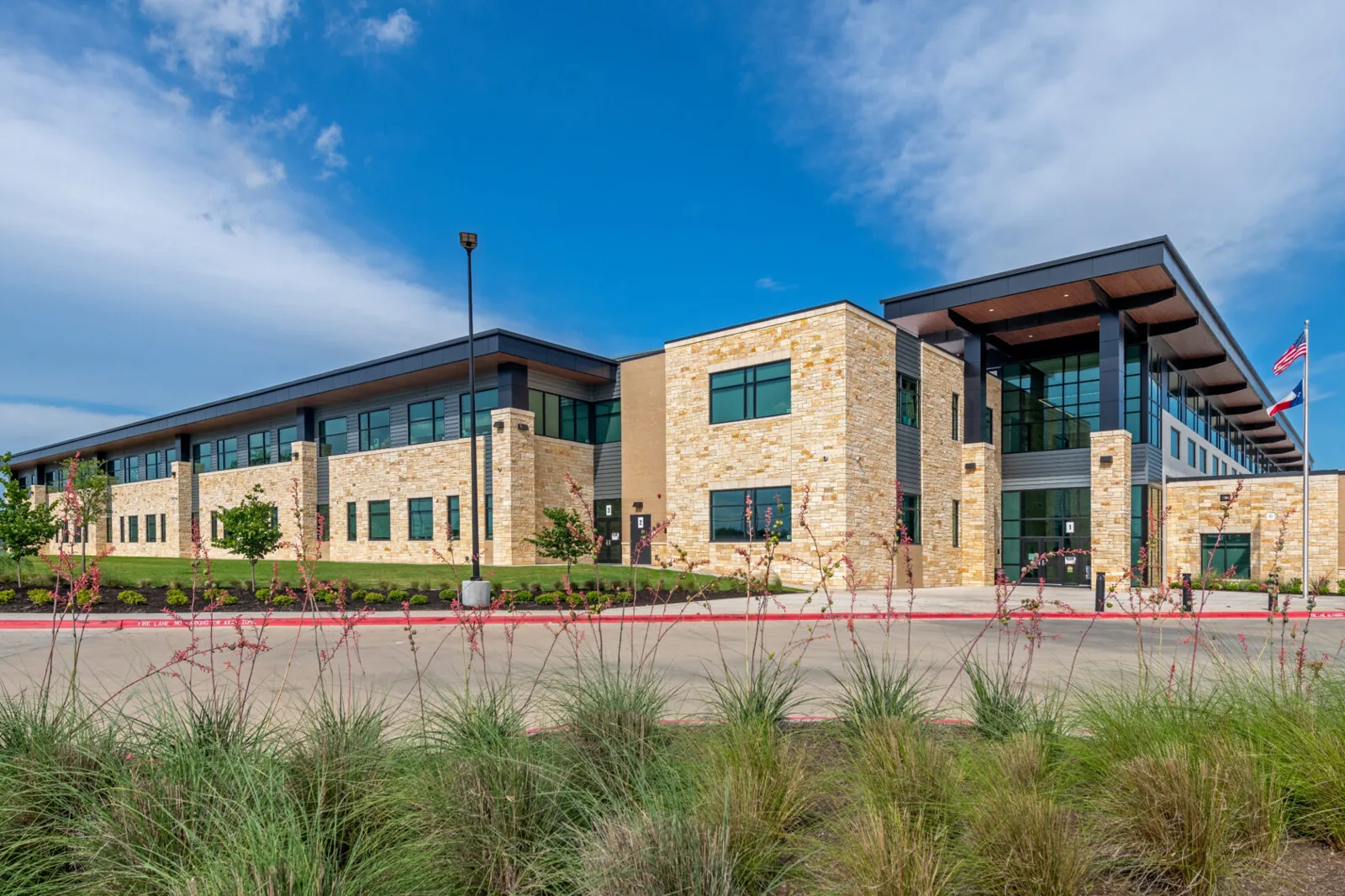
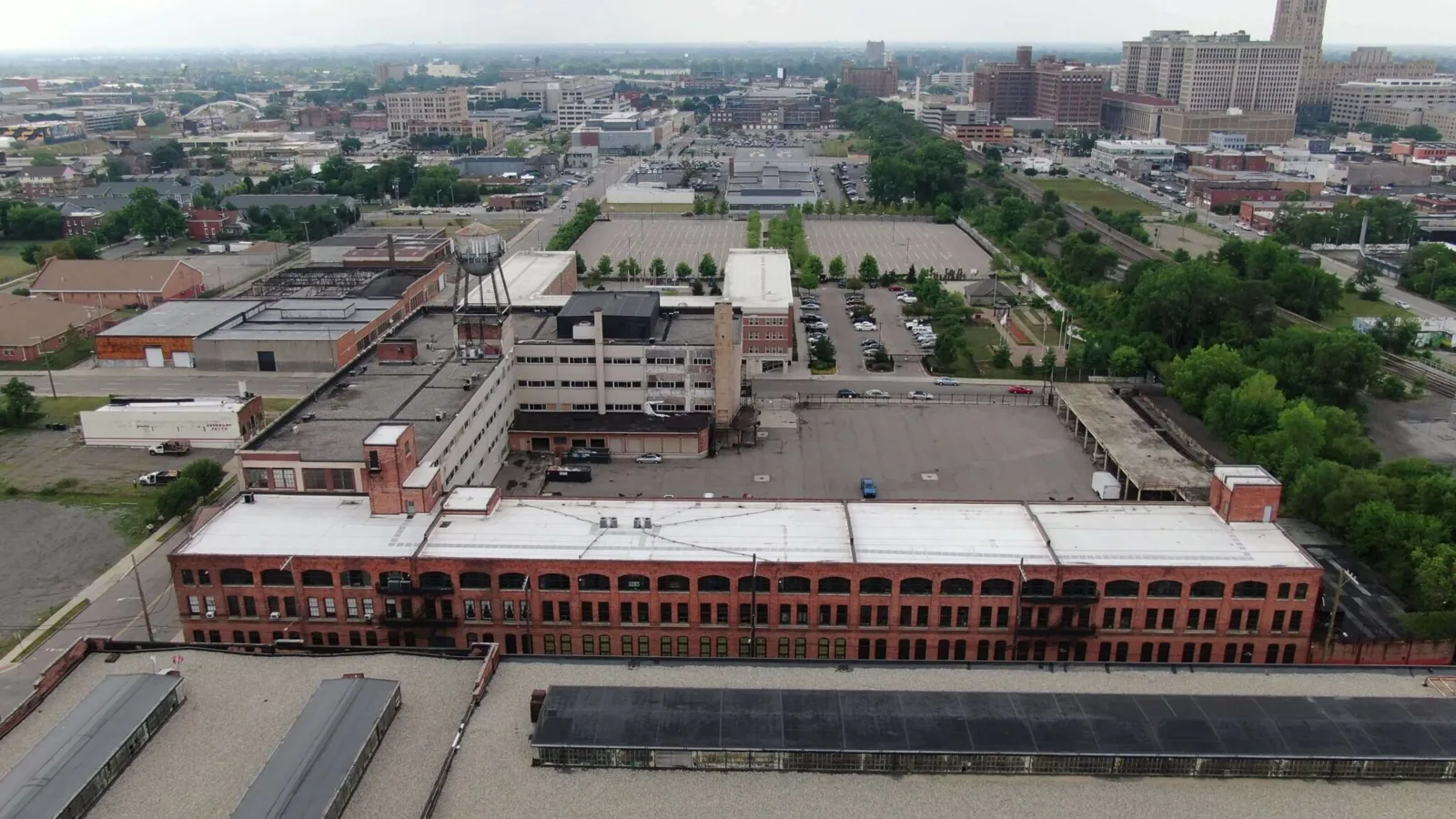
A district holds elementary schools, middle schools, high schools, gyms, auditoriums, transportation facilities and an administration building. Each has its own roof, often with additions from different decades. The Lone Jack C-VI School District in Lone Jack, for example, runs an elementary school, a middle school and Lone Jack High School in its city, and the Hickman Mills C-1 School District serves the Hickman Mills neighborhood of southern Kansas City. Whatever its size, a district's roofs rarely match in age.
We rate each roof on the same scale, so the board sees all of them in one view. A school roof with a failing gym section may rank above a newer wing with a few seam repairs. An infrared moisture survey helps separate roofs that need replacement from roofs that need targeted work, and the results travel with the file.
Gyms and auditoriums need particular care. They have tall walls, large open spans and often a different roof system from the classroom wings. A leak over a gym floor is expensive, and a leak over a stage or an auditorium can damage lighting and rigging. Those spaces are protected below and worked in sections above.
Public districts, like other public agencies, buy roofing through formal bids or approved purchasing paths, and the scope has to be clear enough that bids compare. We write the scope with quantities by building, the system and its limits, the allowed alternates and the closeout documents required. Unit prices for wet insulation replacement are listed, since the amount found cannot be known until the roof is opened.
The roof capital planning report gives the board a basis for a multi-year program: which roofs go first, which can wait and what each phase costs in order of magnitude. Bond or levy planning needs those numbers early, and a written ranking is easier to defend in public than a list of complaints.
When a general contractor manages a larger renovation, the roof scope is written to fit inside that contract. The roof's dry-in date is listed for the interior trades, and the closeout documents follow the district's format. Either way, the board receives one set of records for the roof, whoever held the contract.
At closeout, the facilities office receives a turnover package for each building: dated photographs, the drawing of work done, the closed punch list and warranty documents with their notice requirements. Warranty conditions often require maintenance and prompt reporting, and the package lists them in plain terms.
Spring storms are the main risk to a standing school roof. The April 27, 2024 warning for Lee's Summit mentioned gusts of 60 mph, penny-size hail and roof damage. A pre-storm-season walk of the district's roofs, and a post-storm walk when a warning is issued, keep leaks from reaching classrooms. Emergency crews respond day or night, including holidays.
Maintenance between projects keeps the investment working. Twice-yearly visits clear drains, check seams and photograph the roofs, and the findings feed the next capital cycle. A small repair in October is cheaper than a ceiling replaced in February, and the log shows the board that the roofs were looked after.
The plan shows early which sections must be done, and the building is closed to students above any open area. A partial opening, a later phase or a temporary closure is agreed with the district before work starts.
It is replaced at the unit price in the bid, and the amount is measured and photographed with the district's representative. A moisture survey before bidding narrows the range.
Yes. Walks take place when students are inside, with the crew staying on the roof and away from play areas. Findings feed the next summer's scope.
Compare cost per year of expected life for each building, using the moisture findings and repair history. The ranking in the capital planning report does that for each roof.
A named site lead, with a phone number given to the principal, the custodian and the facilities office. Questions go to one person.
Building drawings if available, past roof reports, warranty documents and the access method for each roof. A list of buildings with known leaks, and the dates when each is free of students, lets the walk be efficient.
Send the building list, summer calendar, board approval dates and any open leak reports. We will walk the roofs with the facilities director and write a building-by-building plan before any scope is priced.
Request a Roof Assessment