
A roof that sat at -25F one winter and 108F another summer has moved a long way, and the membrane on it has moved with it. Holcim Elevate, the maker formerly known as Firestone Building Products, supplies commercial single-ply roofing, including UltraPly TPO, along with EPDM, PVC, metal roofing components and the insulation systems beneath. Lee's Summit, MO has held both of those temperature records, so the way a membrane is attached, lapped and flashed matters as much as the product name on the roll.
We install and repair these systems on occupied mixed-use and commercial buildings, starting each job with the access route, the tenant notice and the point at which the first section must be dry.
Low-slope roofs in Lee's Summit see a January mean high near 39F and a July mean high near 88F, and the record range stretches wider than that. Every degree changes the length of a membrane and of the parapet it terminates against. A well-detailed roof allows for that movement with relief at corners, cut-in expansion at long runs and flashings that can slide.
When a roof is badly detailed, the movement shows up as wrinkles at walls, split seams at corners and pulled flashing at curbs. We mark those signs on the walk and map them to the drawing, since the cause is often one of a few places where the membrane is fixed too tightly. Repairs there are not patches; they are changes to the detail, such as adding a relief cut or a termination bar that holds the membrane without choking it.
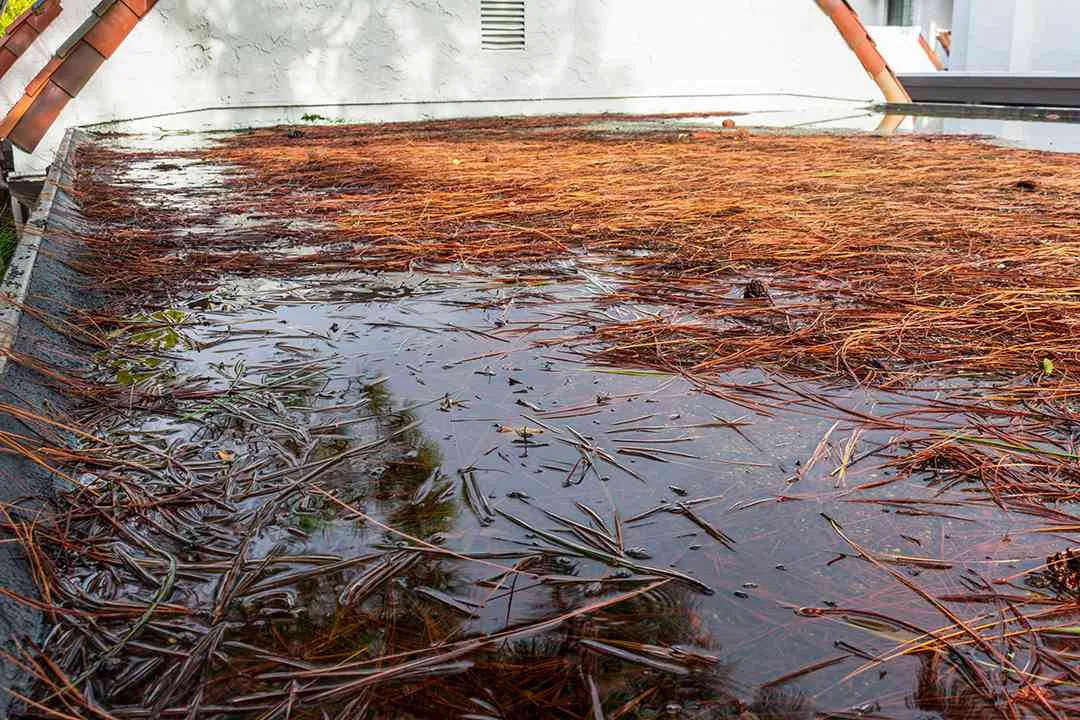
Many single-ply failures begin with water that stays on the roof. Tapered insulation builds slope into a flat deck and sends water to drains and scuppers, and a Holcim Elevate assembly can include a tapered layer for that reason. The layout is drawn with crickets behind units, saddles at valleys and a slope toward each outlet, so water has a path off the roof.
On an existing roof, we measure ponding after a rain and mark the low areas on the drawing. If ponding sits at a drain, clearing the drain may be enough. If it sits mid-field, the insulation is likely compressed or the deck has deflected, and the answer is tapered board added during a replacement or TPO recover. Our ponding water repair list separates the quick fixes from the slope changes.
Downtown Lee's Summit mixes restaurants, shops and offices, and the Hartley Building, at about 15,353 square feet, combines restaurant and retail space on the ground floor with offices on the second. A roof over that mix has several occupants under it, and a restaurant, a retail suite and an office floor each keep different hours.
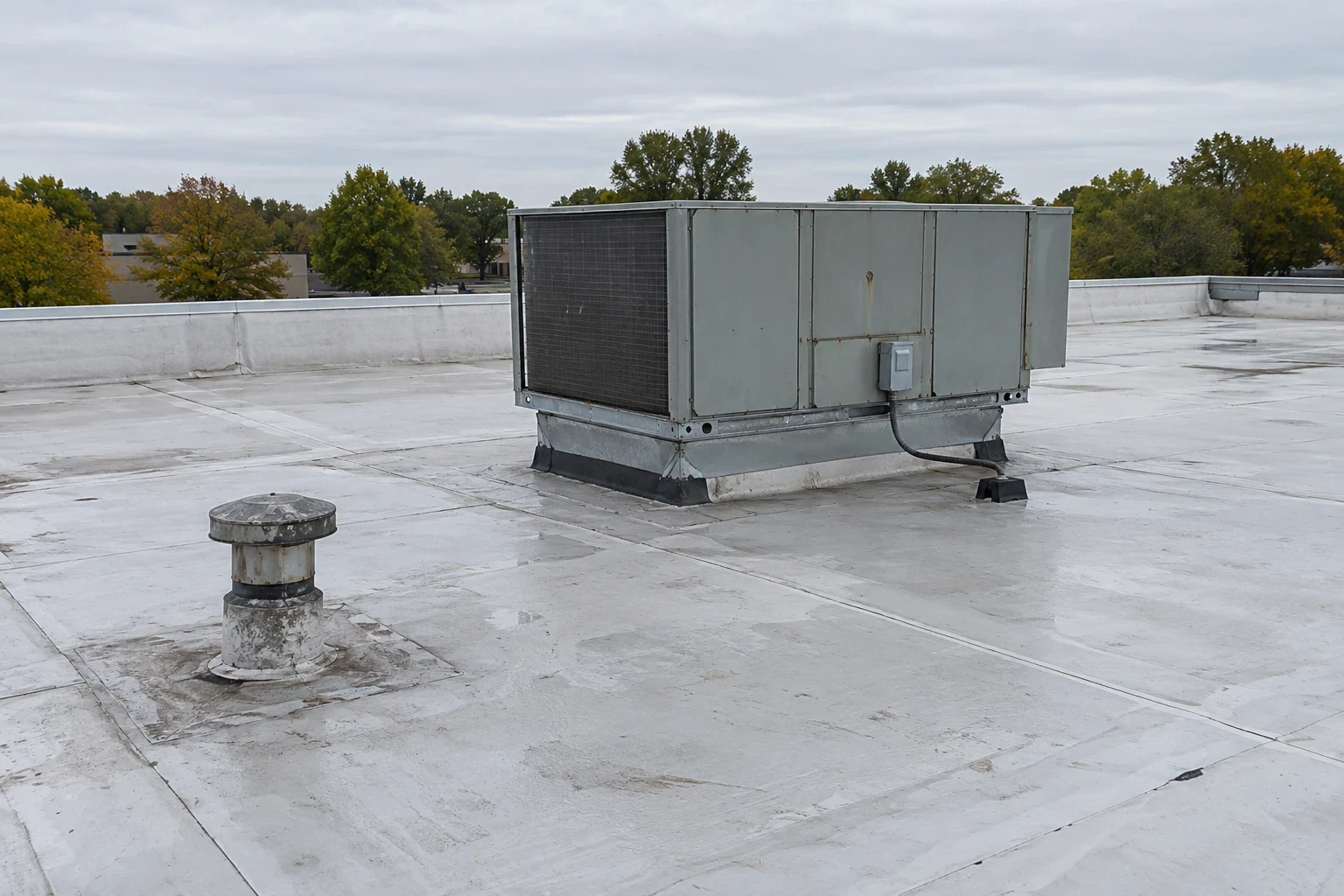
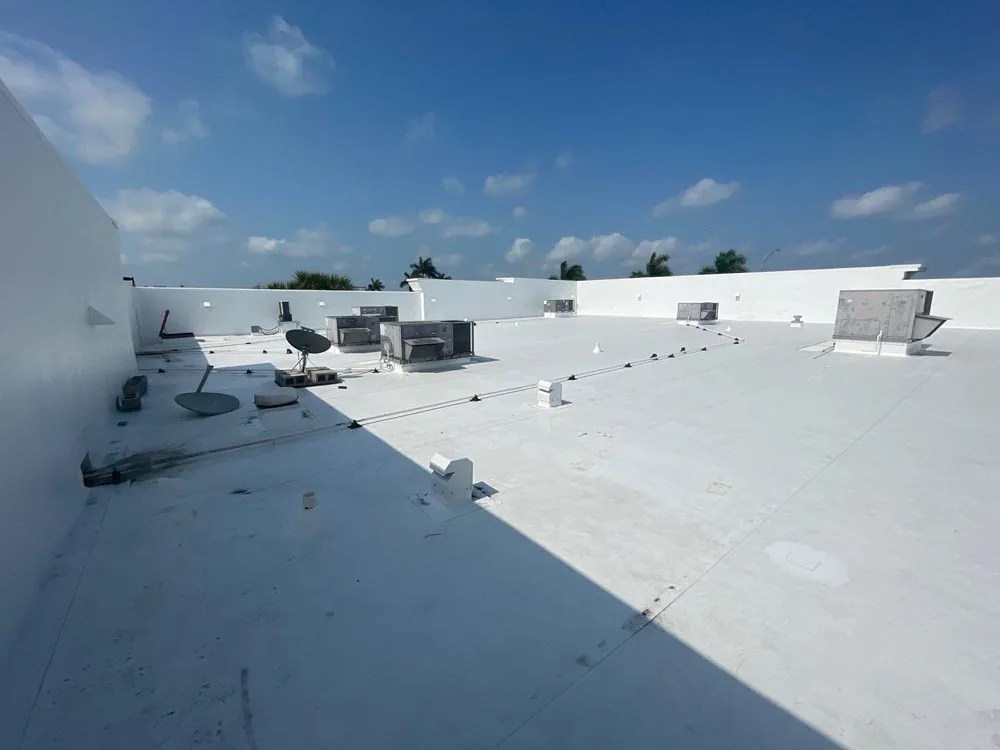
The notice therefore goes to every tenant separately, and the plan staggers the loud work. Roof penetrations from kitchen exhaust, plumbing vents and rooftop units are catalogued before the membrane goes down, and the flashing for each is formed in advance. Buildings in the downtown historic district date from 1850 to 1974 in Italianate and Moderne styles, so the walk checks wall terminations and counterflashing before any membrane is ordered.
EPDM is a cured rubber membrane that many commercial owners already carry, and Holcim Elevate is one of its long-standing makers. On a roof in good condition the main concerns are seam tape that has released, flashing that has shrunk away from a wall and surface cracking at corners. The membrane itself is flexible and tolerant of cold, which suits the winter range in the Kansas City area. The Kansas City ice storm of 2002 showed how long freezing conditions can last, with hundreds of thousands of residents losing power for days or weeks, and a rubber roof that stays pliable at low temperature handles that stretch better than a stiff one.
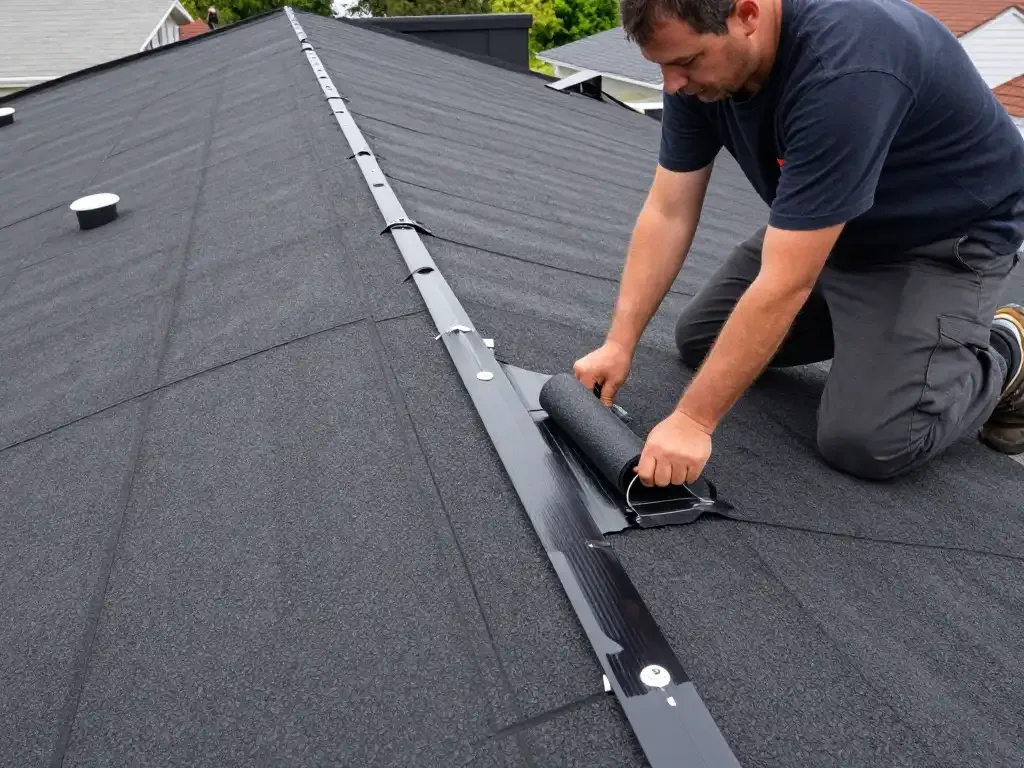
Repairs use cured or uncured flashing, primers and tape rated for the material, and the surface is cleaned before anything is applied. When the roof reaches the end of its service, an EPDM replacement can use a new rubber sheet or switch to a thermoplastic family to gain heat-welded seams, depending on the building's use and traffic.
April 27, 2024 brought a warning for Lee's Summit that carried gusts near 60 mph and penny-size hail. Wind loads on a roof are worst at corners and perimeters, so the attachment density increases there, and edge metal is fastened to resist uplift. Hail leaves bruises on soft membranes and cracks on aged ones, on commercial roofs along I-470 and US 50 as anywhere else in the city, so a post-storm walk checks seams, bruised areas and the edge metal.
An insurance claim on a commercial roof is easier to settle with dated photographs, a roof drawing and a written scope. Our storm damage roof repair process records those items on the first visit, then stabilizes open areas with temporary seals so the building stays dry while adjusters and the owner decide what comes next.
When the work closes, the property manager receives product data, the final roof drawing, photographs of each penetration and a list of items to check on the next walk. Any warranty issued is the manufacturer's and carries its own terms, which is why a complete installation record is kept with the building.
Those records also serve a capital plan. A building owner who holds Duro-Last panels on one site and Holcim Elevate sheet on another can see each roof's age, history and open items in one format, and a roof capital plan can put replacements in the order the roofs actually need them, with Sika Sarnafil or other makers handled the same way.
The company that made Firestone Building Products now operates as Holcim Elevate, and the roofing systems carry on under that banner. Roofs installed under the older name remain in service, and the repair methods and details for them are the same. We confirm the product on the roof by sample before choosing a patch.
Loud work is placed in the windows each tenant can accept, and the sequence is split into small phases. Kitchen exhaust and rooftop units are shut or shielded when needed, and materials are brought up with a hoist at off-peak hours. Each tenant receives a notice that names the phase affecting them.
It removes most of it when the layout is designed for the roof's actual low points. Deck deflection, clogged drains and equipment curbs can still hold water, so each outlet is checked and each low spot is mapped. A good layout aims water at drains and away from curbs.
A wrinkle at a wall is a sign of movement and may be harmless, but one that has pulled a seam, lifted flashing or trapped water needs attention. We check the seam beneath it with a probe and the flashing above it, then relieve the membrane or reset the termination.
Often, if the insulation is dry and the substrate is sound. A separator layer or cover board is added between the two materials since they should not touch, and the new membrane is attached through the old to the deck. Moisture findings come first.
Send the building address list, tenant hours and any leak reports. We will walk the roof with the property manager, identify the membrane in place and return a written sequence plan before any scope is priced.
Request a Roof Assessment