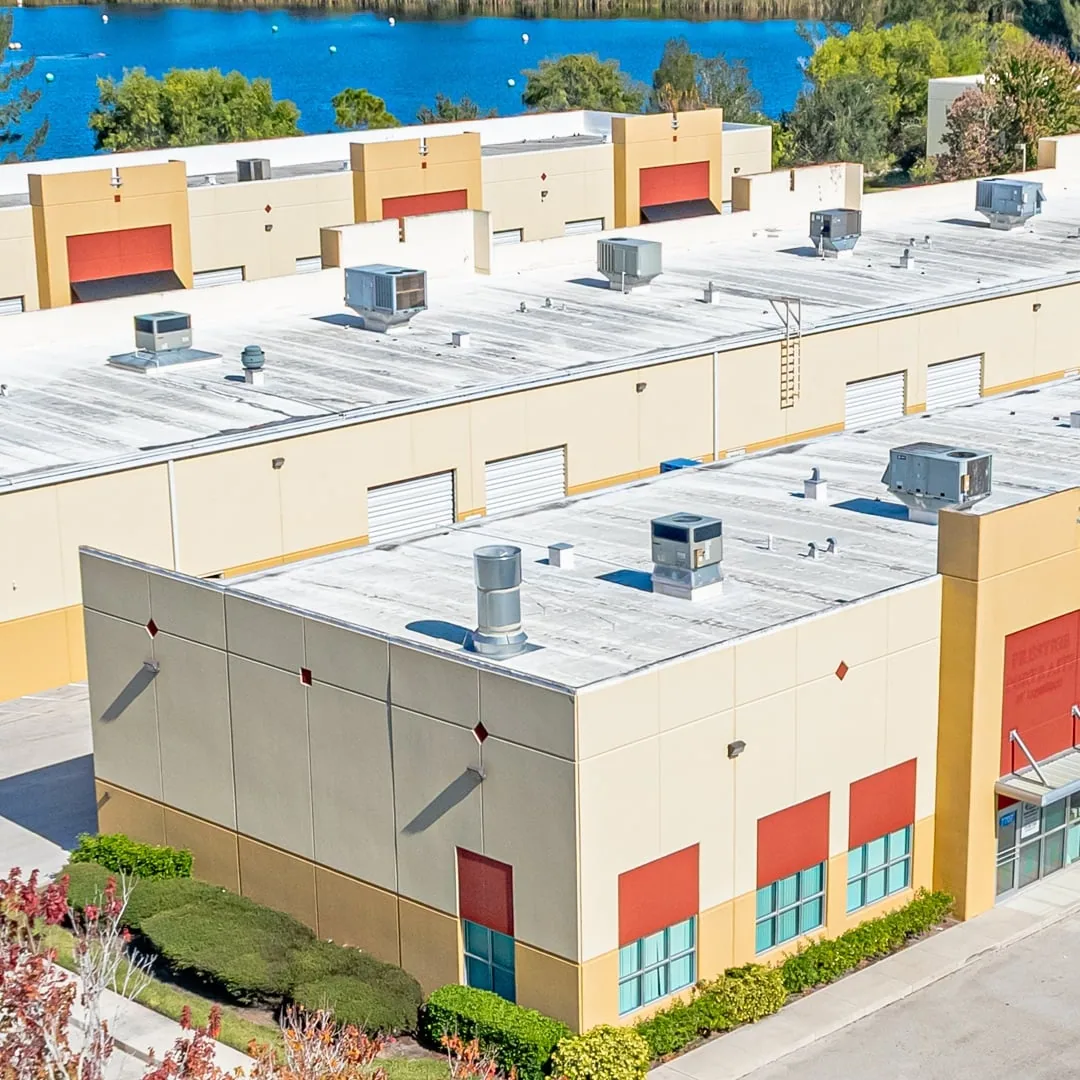

On a dealership, the roof schedule is set by the sales floor and the service drive. Customers walk in through the showroom, vehicles move through the service lane all day, and the lot is full of inventory that a falling tool or a puddle of sealant can damage. We begin with a site walk of every building on the property, noting how vehicles move, where a lift can stand and where each roof section will be sealed for the night. In Lee's Summit, MO, where commercial areas line I-470, US 50 and MO 291, dealership roofs also sit in the path of spring hail. From there the roof's condition points toward a repair, a recover or a phased commercial roof replacement.
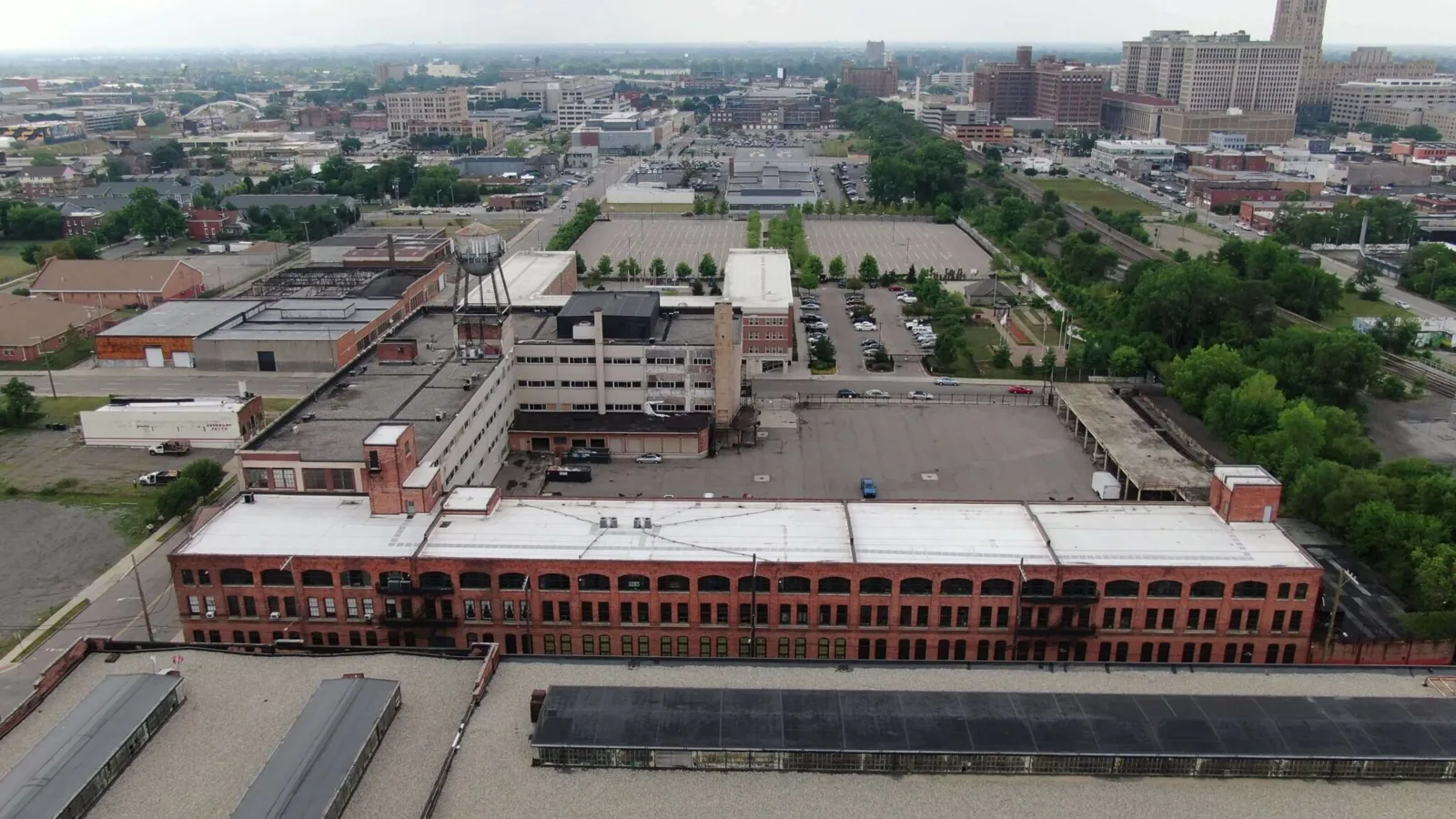
A dealership is usually several roofs under one name. The showroom is a finished space with glass and displays beneath it, a lot like the interiors under a shopping center or big-box retail roof. The service building is a taller, noisier structure with exhaust fans and make-up air units. Canopies over the delivery area or the service drive are exposed to wind and often have their own drainage.
Each roof gets its own plan. Over the showroom, work is slow and protective, with extra interior covering and a leak watch. Over the service bays, rooftop equipment and exhaust discharge are the main concerns. Canopies are checked for fastener condition, edge trim and drainage, since a clogged canopy drain can drop water onto customers and cars.
Signage is part of the roof story. Pylon bases, parapet-mounted letters and showroom canopy signs all have fasteners that pass through the roof or wall, and those penetrations leak when sealant ages. We list each sign attachment on the roof drawing and reseal or reflash it during the work, coordinating with the sign vendor when a panel must be removed.
Condensation and interior humidity can mislead a showroom walk. A stained ceiling tile under a glass wall may come from the glazing, not the roof, and a stain under a unit may come from a drain pan. We trace each stain to its source before cutting into the roof, since the cheapest repair is the one aimed at the right spot.
The inventory lot is the largest constraint. Cars cannot be parked beneath a lift or a hoist, and the manager may have to move vehicles before work begins. We mark the staging footprint on the lot plan and agree the move list with the sales and service managers in advance.
Deliveries are timed before opening, material is hoisted in a single lift, and debris is removed through a chute to a container placed off the customer route. A spotter handles trucks that cross the service drive. Crew vehicles park off the front rows, so the lot looks open to customers throughout the project.
Customer safety comes before schedule. Fall protection, barricades and overhead protection are in place before the first panel moves, and no one works above an open door or walkway. If the service drive must stay clear, the crew completes that section in early morning hours and releases the area before the first appointment.
Vehicles are the first thing people think about in hail, and the roof is the second. Forecasters warned Lee's Summit on April 27, 2024 about gusts reaching 60 mph and penny-size hail, and they listed roofs among the likely damage. A membrane roof may show bruising, a metal canopy may dent, and rooftop equipment can lose fins or covers.
After a storm, we walk each roof, mark damage on the drawing and photograph it with a scale. That record sorts leaks from cosmetic marks, so the owner enters any claim discussion knowing which items are working defects. A hail damage roof repair scope follows from what the walk found, not from a general assumption about the storm.
Timing of the walk matters. Hail marks on a membrane can fade or get covered by dirt within weeks, and an adjuster wants to see them while they are clear. We schedule the post-storm walk as soon as the roof is dry and safe, and we keep the original photographs together with the drawing so the sequence of events is clear for months afterward.
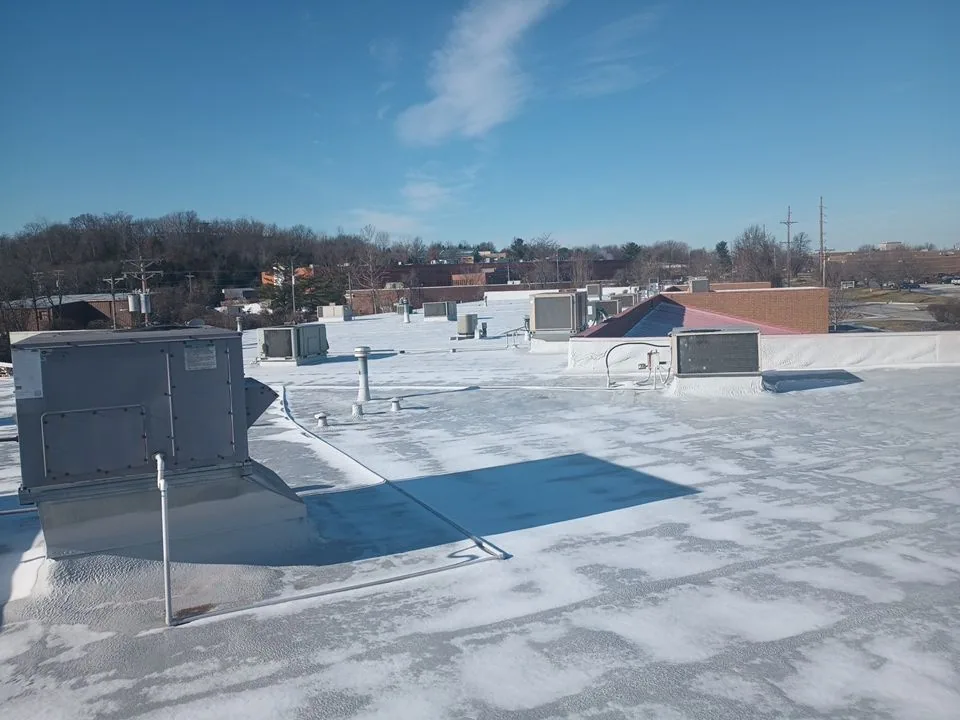
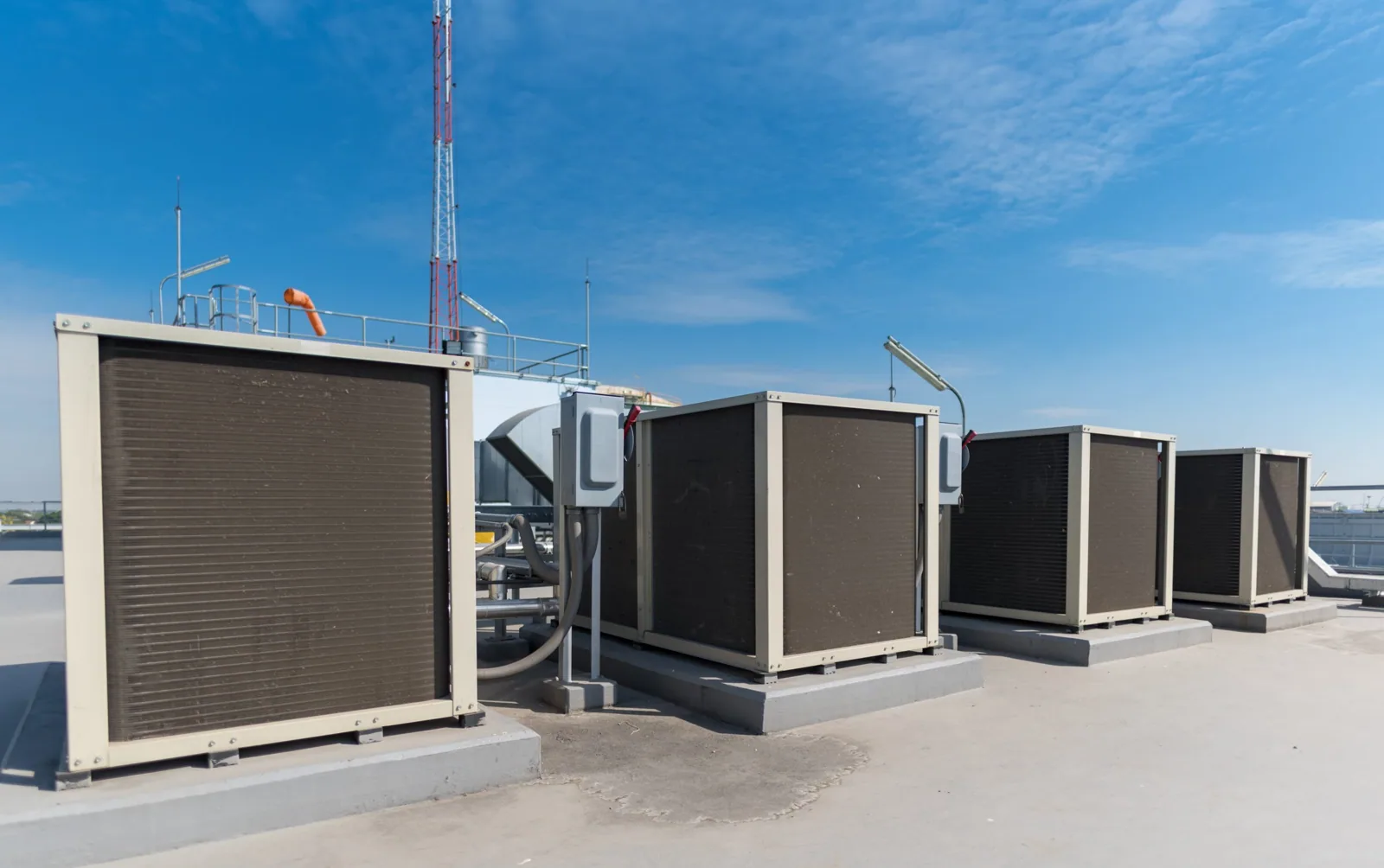
Service buildings carry heavy rooftop equipment, and each unit sits on a curb that was flashed when it was installed. Vibration, condensate and years of heat wear on those curbs, and a leak at a curb often appears above a service bay or parts room. We inspect the curb flashing, the fasteners and the sealant at every unit.
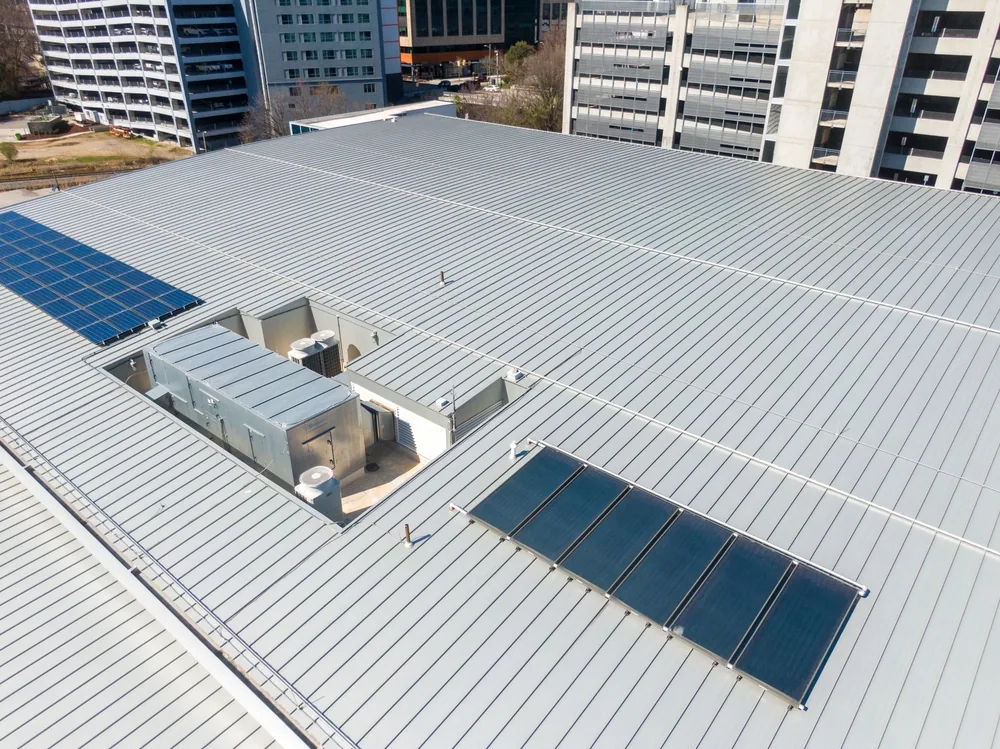
When equipment is due for replacement, the curb should be renewed while the old unit is off. Rooftop equipment curb and support work is sequenced with the mechanical contractor so the unit comes off, the curb is rebuilt and the unit goes back on within a single visit. Exhaust discharge near the membrane is checked for chemical or heat damage.
Drainage on a large service roof deserves its own pass. Sumps, scuppers and roof drains collect oil mist and dirt from exhaust, and clogged drains lead to ponding that stresses seams. We clean and test the drains, check the slope toward them and note any area where tapered insulation would restore positive drainage.
Some dealerships follow facility standards set by the vehicle manufacturer for finishes, signage and building appearance. Where those standards touch the roof, such as parapet colors or sign attachment points, we ask for them at the start and record how each was met in the turnover package.
The package also holds dated photographs, the punch list, warranty documents and a note on the next inspection. A dealership group with rooftops in several locations can use the same format in each, and a multi-site roof program then ranks the properties by roof condition rather than by who called last. A group with locations in Blue Springs and Grandview, as well as Lee's Summit, gets the same record at each.
The walk-off sequence on a dealership is done with the general manager or the facilities lead: showroom roof first, service building next, canopies last. Each is checked from the ground and from the roof, drains are flushed, and any open item goes on the punch list with a date for closure.
Only the vehicles under the lift path, the staging footprint and the work lane. We mark those areas on the lot plan, and the sales and service managers decide the move list.
Yes, in most cases. Interior protection goes up first, loud steps are placed in slower hours, and a leak watch stays in place until the section is dry-in complete.
Not always. Cars show dents at once, while roof damage may be bruised membrane, loosened seams or damaged equipment fins that appear later as leaks. The post-storm walk looks for those items and records them.
The amount of rooftop equipment, the condition of the deck and insulation, the number of curbs and the access over a busy service drive. Each is listed in the scope so it can be compared.
We do. The unit is disconnected, lifted, the curb is renewed and the unit is reset in a single scheduled visit, with a written time window for the manager.
Frequently, since canopies are outside the sales floor and above the delivery area. Night work depends on lighting, noise rules and the neighbors, so we confirm the hours with the owner and the city before scheduling it.
Send the site plan, sales and service hours, inventory lot layout and any open leak reports. We will walk each roof with the manager and write a sequence plan before any scope is priced.
Request a Roof Assessment