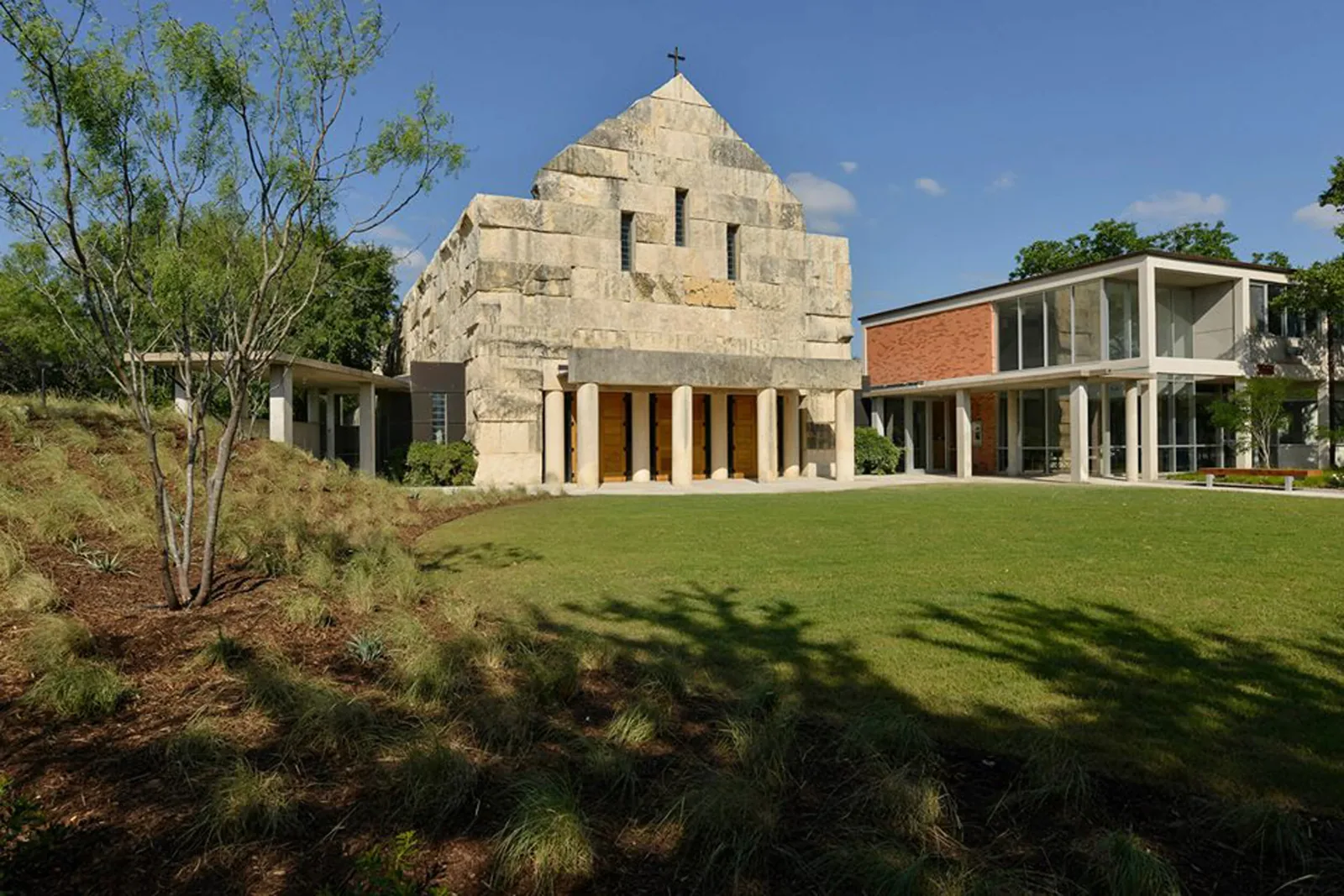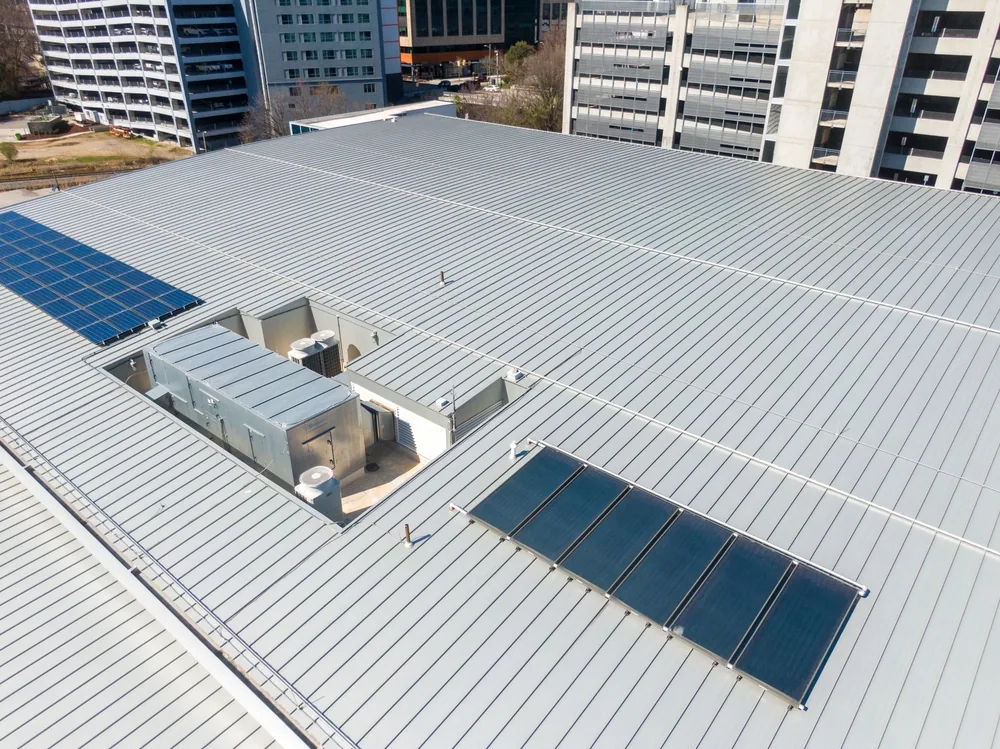

A church roof job starts with the calendar, because worship, weddings, funerals and weekday programs fill the building through the week. The access route has to stay open for Sunday arrivals, the staging footprint cannot sit on the parking spaces the congregation uses, and the dry-in point must land before the next service. In Lee's Summit, MO, whether the church sits off I-470 or on a side street near US 50, a roof plan for a house of worship therefore begins with a conversation among the trustees, the facilities volunteer and the crew lead. Only after that do we read the roof: a steep sanctuary slope, a low-slope fellowship hall, or both on one building. That reading points either to a commercial roof repair or to a full replacement.
We ask for the full weekly calendar before anything is priced: services, rehearsals, child care, food pantry hours, funerals and community rentals. Roof work is then placed in the gaps. Noisy tear-off may run Monday through Thursday while the building is quiet, and the crew is off the roof by Friday afternoon so the sanctuary is clean for the weekend.
Funerals and weddings cannot be moved, so we keep a short notice line to the church office. If a service is added, the crew pauses loud work and moves to a quieter task, such as flashing preparation on the far side of the building. The phase boundary on the roof drawing follows the wing in use, not the convenience of the schedule.
Rentals and community groups need notice too. If the fellowship hall is booked for a weekday event, the lift and the debris chute move to the opposite side of the building, and a note goes to the renter with the work hours. Keeping those small commitments is how the crew stays welcome in the building through a multi-week job.
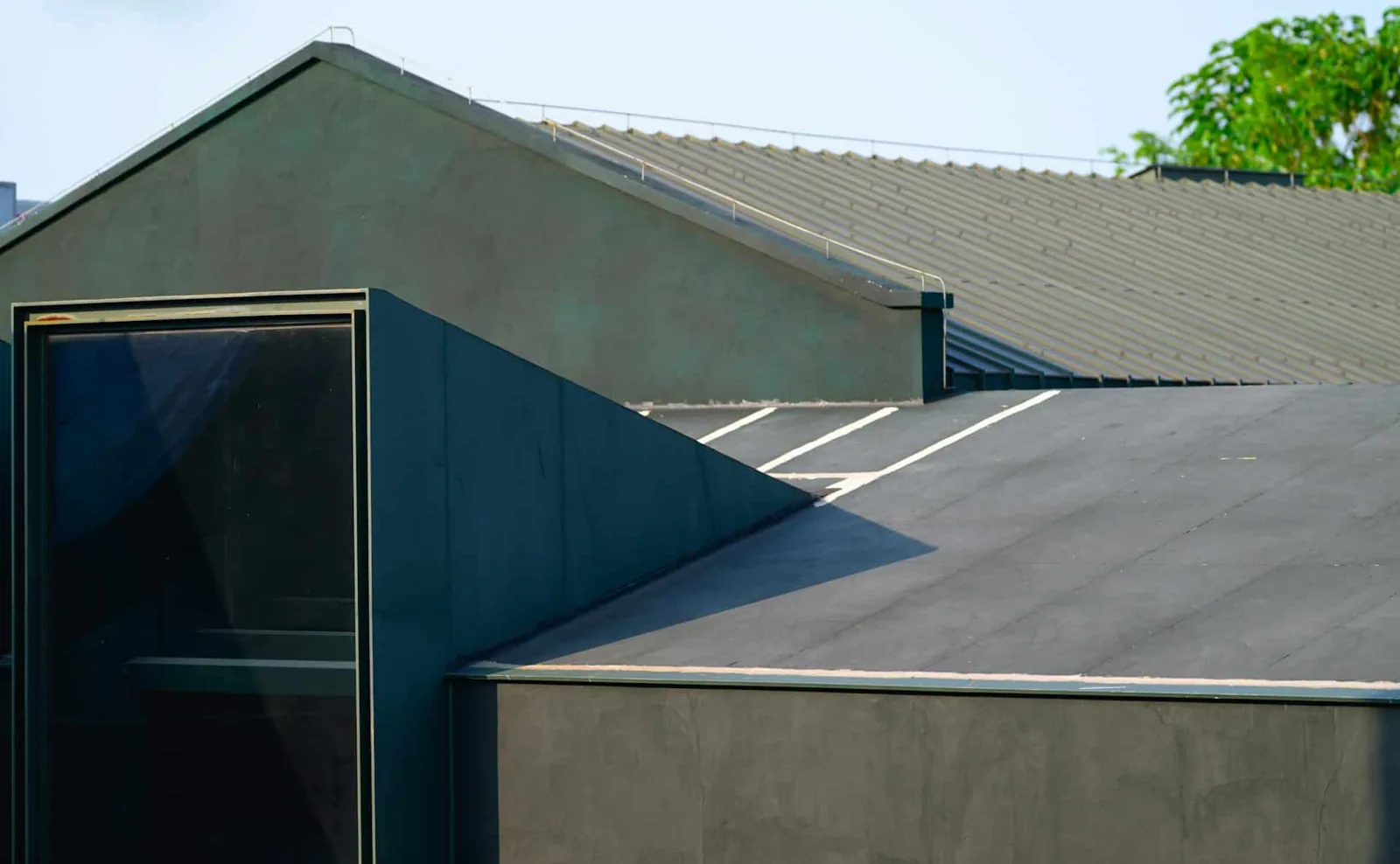
Many churches combine a steep or tall sanctuary roof with flatter additions built later: a fellowship hall, classroom wing, entry canopy or office. Each section has its own material, slope and age, and each fails in its own way. Steep sections shed water fast but concentrate it in valleys and at wall intersections. Low-slope sections hold water if drains clog.
The first walk records each roof as its own system. We look for slipped or cracked shingles and tile where those exist, worn sealant at chimney and vent flashing, and ponding on the flat sections. The modified bitumen or single-ply layer on an addition may need a different repair than the sanctuary slope, and the report separates them so the board can fund them in order.
The most expensive leaks on a church usually begin at details: the base of a steeple or cross, a valley between two slopes, a wall that rises above a lower roof, or a skylight over a stairway. These are places where two materials meet and where movement is greatest. A small gap at a step flashing lets water run down a wall and appear in plaster far from the source.
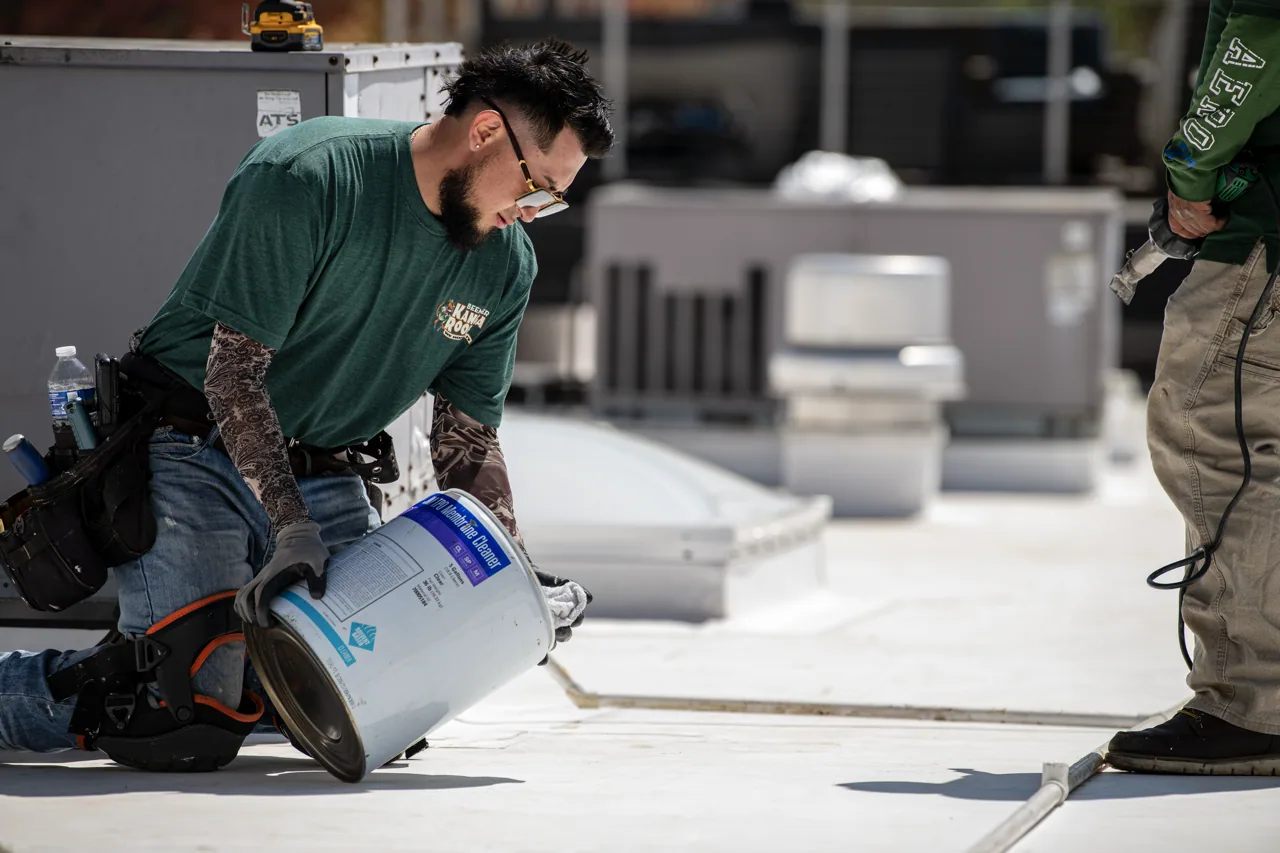
We inspect those joints from a lift or by roof access, photograph them and test the suspect ones with a controlled water check. Repair may mean replacing flashing metal, resetting counterflashing or rebuilding a saddle so water leaves instead of pooling. Work at height on a steeple is planned with fall protection and a closed drop zone, so no one walks beneath it during the lift.
Gutters and downspouts on older churches often discharge near foundation walls or into buried lines, so we trace where the water goes after it leaves the roof. A downspout that dumps beside a basement wall can cause damage that looks like a roof leak and costs far more to correct.
Lee's Summit has a Downtown Historic District with Italianate and Moderne commercial buildings from 1850 to 1974, and the Unity Village campus holds a Tower and office building opened in 1929 and listed on the National Register. A congregation with an older sanctuary faces similar questions: whether to match original materials, how to hide new drainage, and which parts of the building may carry preservation restrictions.
What a particular building contains comes from the record and the roof. We ask for drawings, past repair invoices and any preservation paperwork, then open a small test area where records are missing. After the Unity Village tornado damaged roofs on July 1, 2015, the lesson for any older building is the same: know the roof's weak details before a storm tests them.
A board often funds a roof in stages, and a manager who also handles school buildings or senior living communities can reuse the same phased format. We write the scope as phases with clear boundaries: urgent leak repairs first, then the most worn roof area, then the remainder. Each phase has its own photographs, quantities and completion record, so a finance committee can approve one step at a time.
Where a capital campaign is planned, the roof capital planning report gives the committee a written basis for the target amount. It lists what each roof area needs now, what can wait and which items are cheaper to do together because they share access and staging.
Lee's Summit received a severe thunderstorm warning on April 27, 2024, and it spoke of 60 mph gusts, penny-size hail and damage to roofs. Spring is when a church roof is most exposed and also when many boards want it done before summer events. Our weather hold rule keeps the plan honest: nothing is opened that cannot be dried in by dark, and tarps and temporary seals are staged on the roof before the forecast turns.
After any storm, a post-event walk checks ridge caps, flashing, vents and the gutters. Findings go to the facilities lead the next morning, and a photo record supports an insurance conversation if damage is found, and the insurance restoration documentation follows the same format. When the walk does find hail bruising, the hail damage roof repair scope is written from what was found on the roof.
Protection and debris control decide it. We cover the interior openings below the work area, use enclosed chutes for debris, and sweep magnets over the lot daily. The sanctuary is checked and released before each weekend.
Volunteers can help with interior protection and with clearing the area below, but roof access stays with the trained crew. Insurance and safety rules on roofs are strict, so work at height is reserved for the roofing crew.
It is scoped as its own item with its own access plan, since reaching it may need a lift or scaffold. The report prices the steeple separately so the board can decide whether to do it with the main roof or in a later phase.
The moisture picture comes first. Localized wet areas point to repair, and widespread wetness or repeated failures point to replacement. We map the evidence and present both options with the likely timing.
Crews respond around the clock, including weekends and holidays. The first goal is a temporary seal that keeps water out of the sanctuary, followed by a written scope for the permanent repair.
Send the building address, the weekly calendar, past repair records and any leak reports. We will walk the roof with the facilities lead and write a phased sequence plan before any scope is priced.
Request a Roof Assessment