
A gym opens before most offices and closes after most shops, so the quiet hours that roofers rely on barely exist. Members arrive at dawn, classes run through the evening and a rec center may host youth leagues on weekends. The first site walk therefore starts with the open-hours calendar, the member entrance and the loading door that staff actually use, and from those it works out truck routes, material storage and where each section will be sealed for the night. In Lee's Summit, MO, a fitness facility may sit in a free-standing building along I-470 or US 50, or in a suite of a multi-tenant center like Summit Woods Crossing or Summit Fair, where the roof is shared with neighbors, as in any shopping center roofing job. The roof's condition then points to a commercial roof repair, a recover or a replacement.
The quietest hours for a gym are often mid-morning and early afternoon, between the early rush and the after-work crowd. Tear-off and fastening are placed in those windows. Yoga, cycling and child-care rooms are noted on the plan, and loud work stays away from the roof above them.
For municipal rec centers, which a public agency often runs on a published calendar, the schedule includes leagues, camps and rentals. We ask the program director for dates that cannot move, such as tournaments, and schedule the roof work around them. A tenant notice goes to members through the front desk, with dates and a phone number for the site lead. Debris and staging stay off member parking so the lot works as normal.
Safety rules for members do not pause for the roof. Barriers, signs and a spotter keep members out of the work lane, and a crew member meets each delivery at the gate. If a member is injured or a door is blocked, the front desk has a number that reaches the site lead at once.
Gyms and rec centers run warm and humid inside, particularly where pools, saunas or showers are present. That moisture rises toward the roof, and in cold weather it can condense inside an assembly that lacks a proper vapor path. Lee's Summit's climate is humid continental, with roughly 38 inches of precipitation in a year and a January mean high of 39F, so condensation in cold weather is a genuine risk.
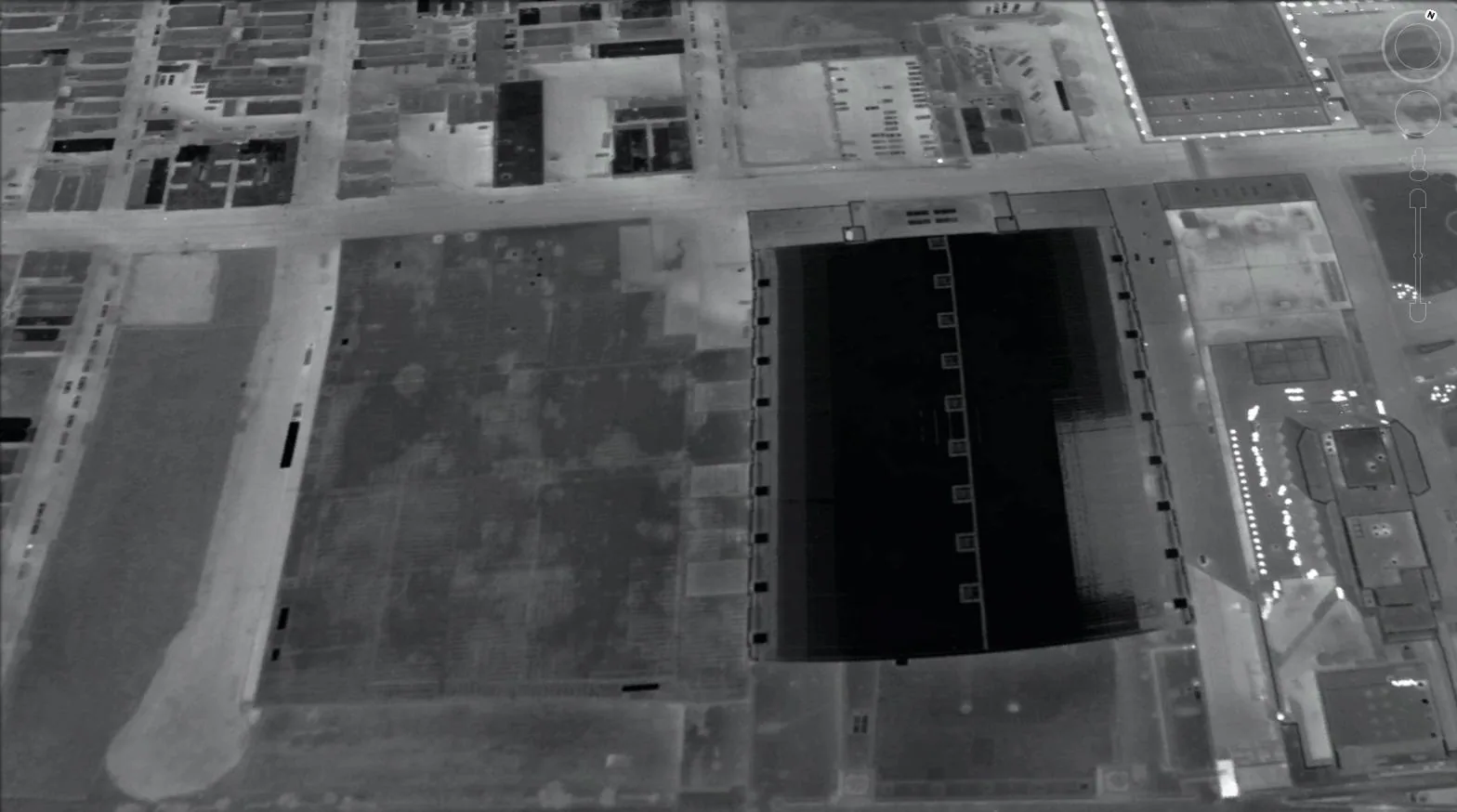
The same moisture load shows up over a hotel pool deck, and the first walk looks for staining along the interior ceiling edge, corroded fasteners and damp insulation near exhaust and make-up air units. An infrared moisture survey helps separate leak moisture from condensation moisture, since the repair for each is different. A leak is fixed at the membrane, and condensation is fixed in the assembly or the ventilation.
Exhaust from locker rooms and pool areas often discharges through the roof, and those vents corrode and leak sooner than dry-air vents. We inspect each hood and boot, replace the ones that are cracked or rusted and make sure the discharge points away from the membrane. Treated metal or stainless fittings are worth the extra cost in these locations.
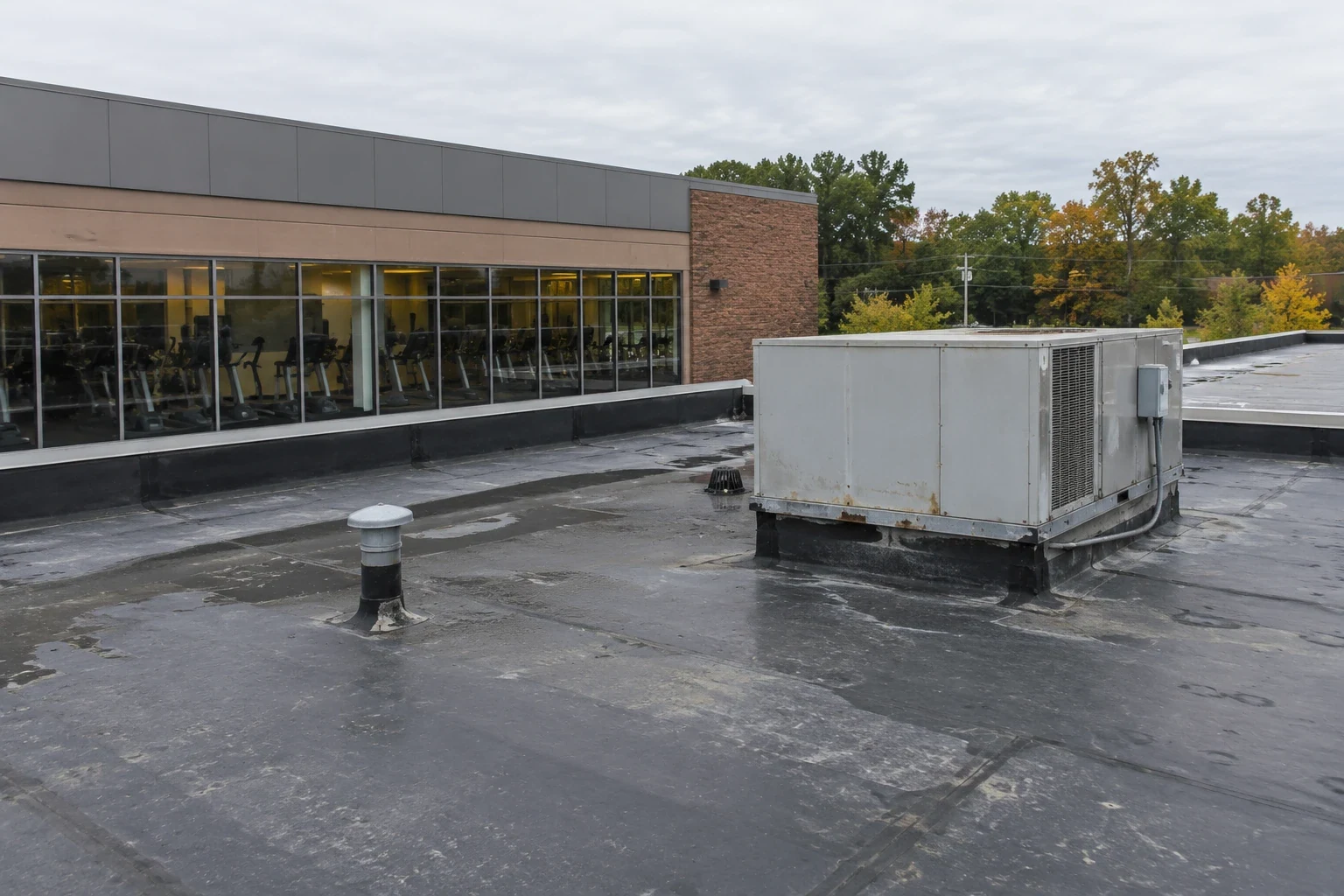
Fitness buildings carry large ventilation, dehumidification and cooling equipment, and the units are heavy. Each sits on a curb that supports weight and carries water away from the opening. We check the curb for settlement, the flashing at the corners and the sealant at every duct and conduit.
When a unit is changed, the curb gets renewed while the old one sits on the ground. We coordinate with the mechanical contractor so removal, curb work and reset all fall within one visit. With a July mean high of 88.3F in Lee's Summit, cooling cannot be down for long, so the shutdown window is agreed in writing with the facility manager and kept short.
Noise from the units themselves can mask work noise, but it also hides early signs of trouble. A unit that vibrates against its curb will wear the flashing under it, and the wear shows up as a stain a season later. We note vibration and clearances during the walk so the mechanical contractor can adjust the unit while the roofing is still open.
Gym floors, courts and indoor tracks need clear heights, so the roof over them is usually carried on long-span framing with a high ceiling underneath. A leak in such a space does not drip on a person but on a court surface, and a wet wood floor can cost more than the roof repair. Courts are protected with sheeting before any work on the roof above them.
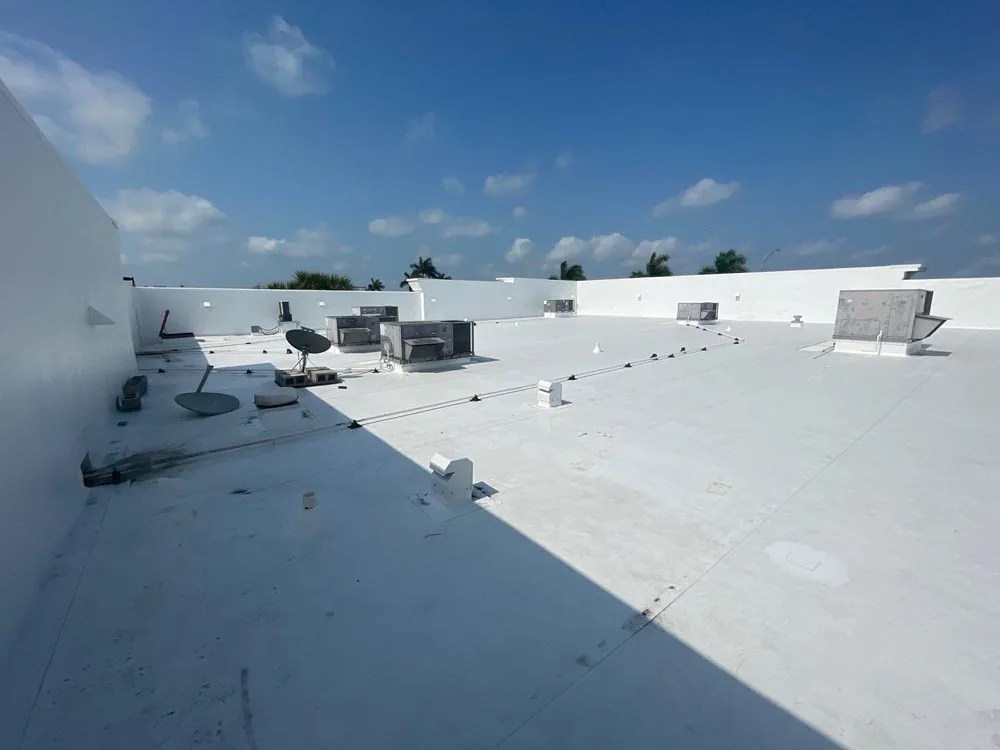
Because access to the roof deck from inside is limited, the first steps depend on what is visible from above. We walk the roof, check seams and drains, and use the moisture survey to decide where to open. A TPO or similar single-ply system is a common candidate for a large low-slope area, and the choice follows the existing deck and insulation.
Skylights over pools or atriums are a special case. Their curbs, glazing seals and condensation gutters all have to work together, and a failure at any of them looks like a roof leak. The skylight and penetration flashing check covers each part so the repair goes to the real source.
The spring storm window decides how much roof opens at once. Lee's Summit was warned on April 27, 2024 about 60 mph gusts and penny-size hail, so work on a facility full of members is limited to sections that can be closed the same day.
At the end of the job the manager receives a turnover package: photographs, the roof drawing, the punch list and a note on the next walk. A fitness operator with several clubs, in Belton, Raymore or Lee's Summit, can keep the same file format for each and compare roofs by condition when budgets are set.
Reserve planning follows from the same file. A club that expects to renovate in a few years can see whether the roof will outlast the renovation, and a municipal operator can show a council why a repair now defers a larger bill. Either way, the next decision is stated in writing, with the evidence beside it.
Usually, if the work is phased and the interior below the work area is protected. Member areas under active sections may close for short periods, and the manager decides which hours to restrict.
With sheeting, plywood or temporary ceiling protection placed before the roof is opened. The area is checked at the end of each day, and a leak watch is kept until the section is dry-in complete.
Condensation is the likely cause. Warm, humid air meets a cold surface inside the assembly. A moisture survey and a look at ventilation tell us whether the fix is at the roof or in the air handling.
Late spring through early fall gives the longest dry periods, but spring storms need strict weather holds. Cold months make adhesives and sealants harder to work, so schedules follow the product limits.
We do. The unit's disconnect, lift and reset are scheduled with the contractor so the building is without cooling or ventilation for the shortest practical time.
Send the building address, member hours, program calendar and any open leak reports. We will walk the roof with the manager and write a sequence plan before any scope is priced.
Request a Roof Assessment